








After putting in a lot of effort, you did not get the important internship you wanted and started feeling, “Maybe I am not good enough” This interpretation of the situation will decide how you feel. You might feel disappointment, sadness or self-doubt. In psychology, this process is called cognitive appraisal: “It is how we make sense of a situation or evaluate it and decide what it means to us emotionally. “But our first interpretation does not necessarily mean it is the final one.
After some time, you may think, “Not being selected means there could be various reasons”, so you appraise the situation and think accordingly. “Have you ever thought about what this process could be and what exactly happened while making the second interpretation? The latter one is what we call cognitive reappraisal in psychology. “It is reconsidering your initial interpretation and giving it a different meaning for the same situation.” The reappraisal of the situation also depends on various factors such as personal investment, individual differences, novelty, attentional activity, cognitive flexibility and situational context (Yeo and Ong, 2024). But have you ever thought about how this process actually works?
Underlying Psychological and Neural Processes
When a person reappraises the situation, they undergo two processes: one happens inside their mind, which is known as a psychological process, and the second is a neural or biological process that happens in the brain.
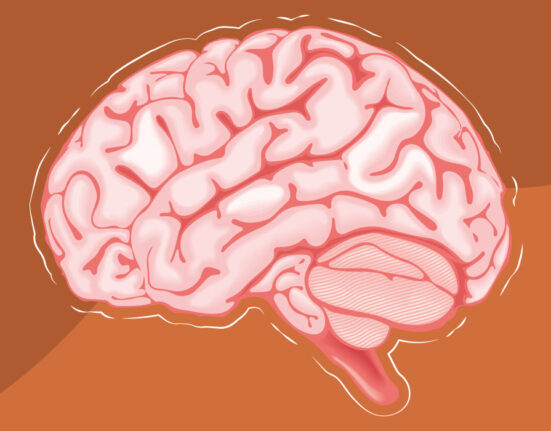
Biologically, more activity happens in the medial and lateral regions of the prefrontal cortex. These areas communicate with emotion-related regions, which are called the amygdala, involved in processing emotional arousal, particularly negative arousal, while the hippocampus provides context and past experiences to help an individual reinterpret the situation. Thus, cognitive reappraisal involves the brain reinterpreting and regulating emotional responses. (Wang and Yin, 2023).
Psychologically, cognitive reappraisal involves three mechanisms: changing people’s interpretation, shifting their attention and challenging their automatic thoughts. They can change the interpretation of the situation from different perspectives, shift their attention by focusing on other aspects of the experience and challenge automatic thoughts by questioning their own reaction, whether it is accurate or not. These processes help to give the situation new meaning, reducing negative emotions and helping them respond more effectively (Cognitive Reappraisal, 2026).
Cognitive reappraisal in Stress and Mental Health
Cognitive reappraisal plays an important role in shaping how a person responds to stressful situations and its subsequent influence on their mental health as well. Stressful events are often accompanied by negative emotional responses, but individual differences can exist in perceiving and responding to the same situation. This can be partly explained by cognitive appraisal, as the interpretation of a situation in a threatening manner may intensify negative emotions, whereas viewing it as manageable or challenging may facilitate more adaptive responses. Cognitive reappraisal is built on this process to modify an individual’s interpretation of an emotion-eliciting situation. This helps people understand the situation and respond to it in a healthier way (Shum et al., 2024; Wang & Yin, 2023).
Thus, cognitive reappraisal might serve as an effective protective resource by influencing individuals’ reactions to stress in ways that protect their mental health. Some studies indeed link greater engagement of cognitive reappraisal with reduced levels of anxiety, depression, negative affect and increased levels of psychological well-being and life satisfaction (Xu et al., 2020).
Research on its Effectiveness
Various Research on cognitive reappraisal emphasises its effectiveness in managing people’s own negative emotions, particularly while dealing with stressful situations, which can aid in alleviating the negative influence. Individuals may reframe negative events from a more positive perspective. This can help them to respond to stressful experiences and thought processes more adaptively.
Meyers et al. (2025) conducted a study on how cognitive reappraisal can be effective in regulating an individual’s emotions and moods both in controlled settings through an experiment and how it works in daily life as well. The study found that cognitive reappraisal was more effective when individuals experienced it as an emotion related to a specific situation. But it wasn’t as successful in less intense sadness when it appeared as the general state of sadness, not associated with anything specific.
These results indicate that cognitive reappraisal may be especially effective in cases in which people can perceive and alter the meaning they ascribed to an event, interestingly highlighting the fact that cognitive reappraisal might not be effective for all emotions or thoughts we experience rather it is totally depend on the nature of emotions, its intensity, what kind of meaning we are assigning to the particular events and the situation in which it occurs and what individual tries to focus on regulating. Similarly, Smoski et al.(2013) found that effectiveness also depends on the emotional context, and not only reappraisal but distraction can also help to reduce intense negative emotions for a short duration.
Read More: The Brain’s Negative Bias: Why We Anticipate the Worst
Practical Applications in Everyday life and therapy
- Cognitive reappraisal is applicable in both daily life and during therapy, so that individuals dealing with the problem can be helped to manage difficult emotions and thought processes to make a better evaluation of the situation.
- In everyday life, it involves looking at stressful and problematic situations from a different and more realistic perspective. Instead of reacting, just pause for a moment, assess the situation calmly and more objectively. This not only helps in reducing stressful thoughts or emotions, but it also improves decision-making. For example: a student who thinks I failed this exam, so I am not capable of doing well, “May reappraise the situation as ” I think this result shows me where exactly I need to put in more effort and improve, and I can prepare differently next time.”
- In therapeutic settings, cognitive reappraisal is very helpful in identifying the maladaptive thoughts of individuals having issues. It also examines whether the interpretations by the clients are accurate, useful and supported by evidence. However, learning reappraisal in a laboratory or therapy setting may not always ensure that individuals can use it successfully in everyday situations.
- Its effectiveness can vary depending on individual abilities and contextual factors, and repeated attempts at reappraisal may not always be successful. Therefore, practical application should involve repeated practice across different real-life situations, allowing individuals to develop more flexible ways of interpreting emotional experiences. (Meyers et al., 2025; Wang & Yin, 2023; De Paul Savarimuthu et al., 2024).
Conclusion
Cognitive reappraisal is more than looking at the same situation differently to make it less emotionally intense and stressful. It is a very dynamic process through which an individual not only reevaluates emotional experiences. But also regulates their responses, which in a way helps people cope with everyday challenges and intense thoughts more effectively. This process involves underlying Psychological processing and neural processing as well, and through this ability of an individual to reinterpret situations, Cognitive reappraisal plays an important role.
However, its effectiveness is not the same for every individual and situation. Emotional intensity, the environment a person is living in, and the cultural context can also play a crucial role. For this reason, it may be more useful when an individual practices applying it across many life situations rather than learning it only theoretically and in controlled settings. So cognitive reappraisal is not about suppressing your negative emotions or thoughts. Rather, it involves developing a more flexible and balanced approach.
References +
- Cognitive reappraisal. (2026, May 15). Psychology Today. https://www.psychologytoday.com/us/basics/cognitive-reappraisal
- De Paul Savarimuthu, V., Joseph, D. a. M., & Irulandi, M. (2024). Emotion Regulation through Cognitive Strategies. In IntechOpen eBooks. https://doi.org/10.5772/intechopen.1006361
- Meyers, S., Hu, D., & Tamir, M. (2025). Cognitive Reappraisal is More Effective for Regulating Emotions than Moods. Affective Science, 6(3), 477–488. https://doi.org/10.1007/s42761-025-00310-3
- Shum, C., Dockray, S., & McMahon, J. (2024). The Relationship between Cognitive Reappraisal and Psychological Well-Being During Early Adolescence: A scoping review. The Journal of Early Adolescence, 45(1), 104–133. https://doi.org/10.1177/02724316241231918
- Smoski, M. J., LaBar, K. S., & Steffens, D. C. (2013). Relative effectiveness of reappraisal and distraction in regulating emotion in Late-Life Depression. American Journal of Geriatric Psychiatry, 22(9), 898–907. https://doi.org/10.1016/j.jagp.2013.01.070
- Wang, Y., & Yin, B. (2023). A new understanding of the cognitive reappraisal technique: an extension based on the schema theory. Frontiers in Behavioural Neuroscience, 17, 1174585. https://doi.org/10.3389/fnbeh.2023.1174585
- Xu, C., Xu, Y., Xu, S., Zhang, Q., Liu, X., Shao, Y., Xu, X., Peng, L., & Li, M. (2020). Cognitive reappraisal and the association between perceived stress and anxiety symptoms in COVID-19 isolated people. Frontiers in Psychiatry, 11, 858. https://doi.org/10.3389/fpsyt.2020.00858
- Yeo, G. C., & Ong, D. C. (2024). Associations between cognitive appraisals and emotions: A meta-analytic review.Psychological Bulletin, 150(12), 1440–1471. https://doi.org/10.1037/bul0000452




Leave feedback about this