








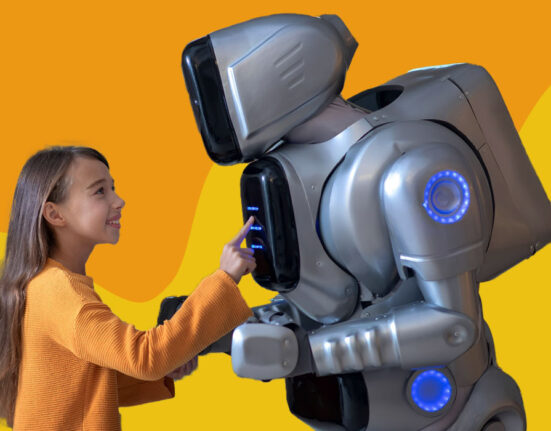
The integration of artificial intelligence into the domestic and educational spheres is not merely a change in toy preference; it represents a fundamental shift in the “social ecology” of childhood. From smart speakers that answer bedtime curiosities to socially assistive robots (SARs) used in clinical therapy, children are now growing up with entities that occupy a grey space between the living and the inanimate. This new reality demands a re-evaluation of classical developmental theories, moving beyond the question of screen time to explore how these “smart machines” are rewriting the architecture of the developing mind.
The New Ontological Category: Neither Person nor Thing
Historically, developmental psychology has operated on a clear animate-inanimate dichotomy. Children learned to distinguish between “alive” things (people, pets) and “non-living” things (blocks, toasters). However, contemporary research suggests that children are developing a novel ontological category specifically for AI. According to Xu et al. (2024), children treat AI agents differently than humans, exhibiting less active communication and a reduced willingness to resolve misunderstandings.
This shift is rooted in the way children attribute intelligence. Druga et al. (2018) discovered that by age eight, children’s perceptions of machine intelligence become remarkably similar to those of their parents, suggesting that the mental models children build about technology are heavily scaffolded by the adults around them. Younger children (ages 4–7) often rely on sensory and social-emotional cues, such as whether a robot “looks hungry, to judge intelligence.
As they mature, this “cybernetic intuition” shifts toward an understanding of programming and strategic problem-solving. This transition marks the birth of a new cognitive toolset where computational objects are seen as a “unique social category” that transcends traditional definitions of life (Xu et al., 2024).
Read More: Why We Talk to Objects: The Psychology of Human Connection with the Inanimate
The Neurobiology of the Digital Interaction
The effects of digital devices on the developing brain are severe, mainly because of the high plasticity of the organ in the first five years of life. Clemente-Suárez et al. (2024) also state that digital interaction influences neural networks by modulating dopamine and the prefrontal cortex. Reaction times and Visuospatial abilities can be improved by interactive tasks, whereas passive, excessive consumption is associated with less myelination in the white matter and decreased functional connectivity in language and executive functional areas.
This presents a two-sided sword to mental development. Although action games may enhance the ability to pay attention, continuous partial attention that multitasking demands may negatively affect deep concentration (Clemente-Suarez et al., 2024). Moreover, the so-called Google Effect, which consists of externalising memory due to the easy availability of information on the Internet, can radically change the process of memorising and recalling information in children. To optimise the knowledge of the location of information, the brain loses the need to internalise the facts. Which may result in a weakening of the long-term memory consolidation required to think in a complex and critical manner.
Read More: How Playing Video Games Changes Your Brain: Know the Psychology behind
Transfer of Social Skills and the Anthropomorphism Problem
Children are inherently anthropomorphizers. This is how they are biologically designed to perceive the world around them as agentic and intentional. According to Hoehl et al. (2024), infants and preschoolers are very susceptible to the design elements that imply the agency of humans, including large eyes or a human shape. Inappropriate trust and social conformity may arise as a result of this so-called social over-attribution. In some cases, children are more likely to conform to a robot’s group consensus than adults are, suggesting that AI could play an unprecedented role in cultural transmission (Hoehl et al., 2024).
A critical risk in this dynamic is the potential for negative “social skill transfer.” When a child is used to communicating with a commercial AI that does not demand politeness or social reciprocity. They can normalise such patterns in communication. Xu et al. (2024) caution that children could carry the mean-spiritedness or absence of conversational effort they exhibit towards AI into their human lives. Where social interactions are not fraught with friction, the requirement to negotiate, empathize or apologise, the developmental muscles in the nature of healthy human-to-human relations might not be built.
Read More: Importance of Social Interaction in Early Childhood Development
Clinical and Educational Scaffolding
Even with these dangers, intelligent machines have transformative potential in clinical and educational settings. Social assistive robots (SARs) have been indispensable in Autism Spectrum Disorder (ASD) intervention among children. Marchetti et al. (2022) emphasise that robots, due to their predictability and lack of intimidation, can become the so-called social mediators and allow the child to engage in triadic interaction with a robot and a therapist. Robots in the medical context have proven to have a powerful effect on the perception of pain and anxiety in vaccinations and dental care, including the reduction of pain through breathing methods and distraction (Marchetti et al., 2022).
The movement in the classroom is toward a culture of competence. According to Benvenuti et al. (2023), the concept of AI can be examined in the framework of the Activity Theory as a mediating instrument that will not supplant human interaction but optimise it. Computational Thinking (CT) is becoming a new literacy, which educates children to break down problems, identify patterns, and be able to think algorithmically. The children also develop metacognitive skills that enable them to plan and self-regulate their learning when transitioning into creators of technology (Benvenuti et al., 2023).
Read More: Psychological Insights into Metacognition and Learning
The Crisis of AI Literacy and Parental Scaffolding
The Empowerment Paradox proposes that basic awareness of AI does not necessarily result in resistance. Instead, it may result in naïveté in the case of real literacy. Xu and others (2024) note that AI literacy is a progressive requirement. Children must be taught that AI is a “coded entity” with specific limitations and biases. Interestingly, it has been demonstrated that the openness regarding the programming of a robot does not decrease the interaction of a child. Rather, it makes the child more realistic and critical about the machine (Xu et al., 2024).
The parent role is the most significant moderator of these effects. According to Druga et al. (2018), the window of influence of the mental model a child holds about technology is the most open one when the child is younger than eight years of age. The parents who are involved in co-viewing and discuss inner reality of devices support their children in overcoming the dilemma of whether a robot is alive or programmed. Through scaffolding these experiences, parents can make sure that technology will improve and not replace sensorimotor and symbolic play, which forms the foundation of healthy growth (Clemente-Suárez et al., 2024).
Conclusion
The experience of growing up with intelligent machines represents a tour through a topography of unprecedented mental possibility and serious psychological danger. The Smart Machines that we create are not merely tools, but socialising agents, biased and automating our attention. In order to make the next generation remain human-centred, we should focus on child-centred design. Wherein we put more emphasis on transparency as opposed to deception and effort as opposed to efficiency.
The final aim of developmental psychology in the era of AI is to ensure that educators teach children to work with code. But they do not lose the skill to move through the unpredictable and beautiful reality of the human condition. The first step of agency reclamation is the understanding that even the most intelligent toy in the room is still the growing child. As long as they have room to grapple, to fantasise, and to play.
References +
Benvenuti, M., Cangelosi, A., Weinberger, A., Mazzoni, E., Benassi, M., Barbaresi, M., & Orsoni, M. (2023). Artificial intelligence and human behavioural development: A perspective on new skills and competences acquisition for the educational context. Computers in Human Behaviour, 148, Article 107903. https://doi.org/10.1016/j.chb.2023.107903
Clemente-Suárez, V. J., Beltrán-Velasco, A. I., Herrero-Roldán, S., Rodríguez-Besteiro, S., Martínez-Guardado, I., Martín-Rodríguez, A., & Tornero-Aguilera, J. F. (2024). Digital device usage and childhood cognitive development: Exploring effects on cognitive abilities. Children, 11(11), Article 1299. https://doi.org/10.3390/children11111299
Druga, S., Williams, R., Park, H. W., & Breazeal, C. (2018). How smart are the smart toys? Children and parents’ agent interaction and intelligence attribution. In Proceedings of the 17th ACM Conference on Interaction Design and Children (IDC ’18) (pp. 231-240). Association for Computing Machinery. https://doi.org/10.1145/3202185.3202741
Hoehl, S., Krenn, B., & Vincze, M. (2024). Honest machines? A cross-disciplinary perspective on trustworthy technology for children. Frontiers in Developmental Psychology, 2, Article 1308881. https://doi.org/10.3389/fdpys.2024.1308881
Marchetti, A., Di Dio, C., Manzi, F., & Massaro, D. (2022). Robotics in clinical and developmental psychology. In G. J. G. Asmundson (Ed.), Comprehensive clinical psychology (pp. 121–140). Elsevier. https://doi.org/10.1016/B978-0-12-818697-8.00005-4
Xu, Y., Prado, Y., Severson, R. L., Lovato, S., & Cassell, J. (2024). Growing up with artificial intelligence: Implications for child development. In D. A. Christakis & L. Hale (Eds.), Handbook of children and screens (pp. 612–617). Springer. https://doi.org/10.1007/978-3-031-69362-5_83


Leave feedback about this