Take the case of a twenty-eight-year-old software engineer in Bengaluru, who gets more than twenty phone calls a day from his mother. His mother asks what he ate for lunch and makes desperate pleas for assistance with little household chores. If the job application is considered in some other city, the mother does not give him a great deal of pride, but a physical disability, a sudden bout of chest pain or “nerves,” when they find a new home is in the air, then it vanishes, it never catches up, except as a result, the move is cancelled.
This is not just “closeness” or traditional Indian deference to elders; it is a live show of emotional enmeshment. Enmeshment signifies a condition in which the distinction between individual and family grows increasingly unclear, and where personal freedom is sacrificed on the altar of family unity.
The Anatomy of Enmeshment
Enmeshment happens when family members’ emotional boundaries are so porous that the emotions of one group member start to bleed over into the emotions of another (Minuchin, 1974). In such systems, a child doesn’t simply feel empathy for a parent (not a happy person) who is in distress; they can feel the distress as their own, and may not be able to differentiate between their own needs and the needs of others for help in the family.
“Loyalty” is weaponised in these places. Disagreement is depicted as betrayal, and independence as abandonment. As Barber and Buehler (1996) argue, enmeshment prevents the emergence of a sustainable self in the “pseudo-self” that mimics the needs of the primary caregivers.
The Indian Context: Collectivism and Interdependence
Understanding enmeshment in Indian families requires seeing it through the lens of interdependent self-construal. In contrast to Western “independent” paradigms, Indian social structures prioritise Dharma (duty) and Filial Piety (a core virtue emphasising deep respect, obedience, and care for parents, elders, and ancestors) (Chadda & Deb, 2013). Here, the family is the central unit of identity.
- Social Conditioning: In many Indian families, parents instruct children from a young age to prioritise harmony over individual expression.
- Joint Family Tradition: The psychological blueprint of the joint family persists in a nuclear setup, even in today’s society. Decisions about the future as well as those of future parents, wives and children–in many ways family choices are about communal rather than individualistic (Sethi & Bhargava, 2003).
- Attachment Styles: Many Indian families will normalise an “anxious-preoccupied” attachment style. And parents can view a child’s independence as a threat to the family’s structural integrity, triggering “helicoptering”( overparenting, where parents are excessively involved in their child’s life) or emotional guilt-tripping (Roland, 1988).
Read More: How Does a Child Develop Attachment Style?
The Lens Of Erikson: The Crisis Of Autonomy Vs. Shame
Erik Erikson’s stages of psychosocial development form a crucial foundation for understanding how enmeshment holds humans back in their development. More specifically, the second and fifth stages are the ones in which the most harm of enmeshment occurs.
1. Autonomy vs. Shame and Doubt (1-3)
It is at this stage that children start to assert their independence. In enmeshed Indian households, a parent’s over-protectiveness, sometimes under the guise of “love”, can hinder the child’s ability to explore their world around them. If a parent responds with an excessive level of fear or a dominant influence, a child develops an ingrained sense of shame (Erikson, 1950).
2. Identity vs. Role Confusion (Adolescence)
This is the crucible of selfhood. Adolescents must “repudiate” certain parental values to find their own, Erikson (1968) argued. But in an enmeshed system, this “psychological moratorium”(a period of active exploration and experimentation) is denied to the adolescent. Instead of recognising the child as a separate person, parents blur roles, keep the child stuck, and make them carry their unfulfilled dreams forever.
The Control Mechanism: Guilt as Regulation
Enmeshed Indian families are not controlled through physical discipline; control is less so with direct force, with emotional induction being the way they get to control. It is the “sacrifice narrative,” in which parents continually remind their children of the pain and suffering they experienced to raise them.
- Emotional Blackmail: Sharing updates about “lonely parents” or of health deterioration while children attempt to establish boundaries (Forward, 1997).
- Narcissistic Extension: The child is not seen as an independent individual but as an extension of the parent’s ego. A child’s success is a parent’s success; a child’s failure is the parent’s own humiliating personal experience. This creates an environment where the child feels they must “perform” their identity to keep the parent emotionally regulated.
The Dilemma of “Letting Go”: The Parents’ Struggle
The biggest point of friction occurs when Indian families migrate to adulthood. In healthy systems, parents engage in “strategic withdrawal,” allowing the child to guide his or her own life. In enmeshed systems, this “letting go” has the feeling of a symbolic death.
Parents who have invested all parts of themselves into the “Parent” role often feel empty as their children grow up. This triggers triangulation, in which the parent may use the child as a mediator through conflict with a spouse or as a parentification, where the child becomes the emotional caretaker of the parent (Bowen, 1978). Since social conditioning in India rewards parental sacrifice, parents might feel entitled to be around their children’s emotional and physical presence permanently, where boundaries in this regard are seen as Western “insults” against Indian values (Misra, 1995).
The Expensive Tension Between Boundary Conception and Blurred Conceptions
A deeper psychological impact from enmeshment has been found. People brought up in such systems frequently battle with:
- Decision paralysis: the struggle to make decisions without parents’ approval.
- Chronic Guilt: Feeling as though they are responsible for the happiness or health of a parent (Kapadia, 2011).
- Intimacy Problems: Problems forming healthy romantic attachments, as there is no time for a loving partner because of the parents’ “primary” relationship.
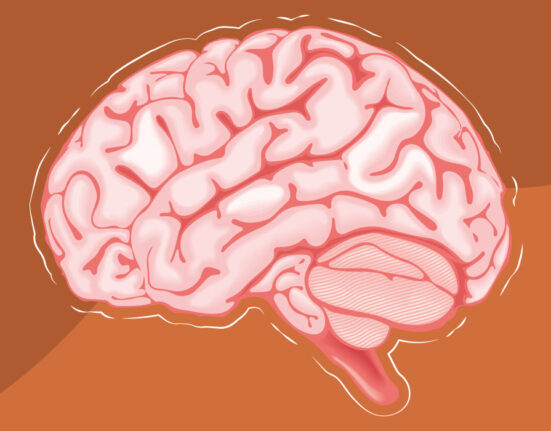
The Neuropsychological Brain Aftermath of Blurred Limits
Long-lasting intermingling has implications for the psychological and physiological well-being of the individual. Chronic over-involvement on the part of the parents may result in:
- Hyper-vigilance: The child becomes an expert at “reading the room,” constantly scanning the parent’s facial expressions and tone of voice to avoid emotional “explosions.” This keeps the nervous system in a state of chronic sympathetic activation (Fight or Flight).
- Decision Paralysis: Since someone spent their entire life looking for validation, the prefrontal cortex, the same part that controls executive function and decision making, struggles when parental input is absent.
- Chronic Guilt and Anxiety: The person develops “Separation Anxiety” all the way through adulthood, feeling a sense of impending doom whenever they act in their own self-interest (Kapadia, 2011).
Breaking the Cycle: Toward Differentiation
The path toward health in an enmeshed system is characterised by differentiation of self— being able to maintain one’s emotional objectivity while having meaningful connectedness to one’s family (Bowen, 1978).
1. Intellectual vs. Emotional Functioning
The process of breaking that cycle starts with the challenge of separating thoughts from feelings. The enmeshed person often operates from a place of “emotional autopilot,” where the expression of a parent activates a primal response of guilt or anxiety. Differentiation forces the patient to slow down and then employ their thinking to assess the situation: “My mother is upset that I am going out, but that doesn’t mean that I am doing something wrong” (Kakar, 1981).
2. The Architecture of Boundaries
Limits in an enmeshed family are perceived as these “walls” of exclusion, but the “gates” that allow for healthy interaction, clinically, may be interpreted as these.
- Cognitive Boundaries: This is an internal understanding that one doesn’t have responsibility for a parent’s emotional regulation or their physical health (Forward, 1997).
- Physical and Digital Boundaries: Restricting the “constant access” that parents expect from their children via smartphones is just one aspect of this in today’s world. Transitioning from twenty calls a day to two is a structural shift that creates the self-breathing psychological space.
- Material Boundaries: Financial independence is frequently the cornerstone of psychological differentiation in Indian middle-class families. As long as a parent provides financial support, they often feel entitled to emotional “ownership.”
3. Navigating the “Counter-Move”
According to systems theory, when one member of a family changes, the rest of the system (i.e., the primary family) will tend to pull the new member back to the same place, for the sake of the status quo; this phenomenon is referred to as the “Change Back” signal or “Counter-move” (Bowen, 1978). In Indian families, these counter-moves may be pronounced:
- The Sickness Move: A parent can experience psychosomatic symptoms (chest pain, migraines) from the moment that a boundary is set.
- The Third-Party Move (Triangulation): Enlisting aunts, uncles, or siblings to pressure the “rebellious” person into compliant behaviour (Varghese & Kirpekar, 2017).
4. Re-parenting the Self and Intergenerational Trauma
Parents in enmeshed systems themselves were products of enmeshment. They struggle to let go of their fear of abandonment and feel insecure about forming an identity outside their role as parents. Breaking the cycle takes a radical empathy—attending to the parent’s trauma, but at the same time rejecting being a victim of it. Practical approaches like Cognitive Behavioural Therapy (CBT) or Transactional Analysis (TA) can encourage the user to recognise their “Adult” ego state so that they can interact with parents not as the “Compliant Child” but in a developmental manner (Roland, 1988).
Conclusion
Deep love and suffocating control are such a complicated blend that the Indian context is one of intense emotional enmeshment. But while the warmth of a close-knit family offers protection against many mental health issues, it may be a liability when this shields an individual from becoming a whole person. Recognising that boundaries are not obstacles to love, but gates to healthy love, can help break the cycle of enmeshment. For the Indian family to progress, however, that “closeness” must change from being a box for people with obligations into a safety net that extends to any future conflict.
References +
Barber, B. K., & Buehler, C. (1996). Family cohesion and enmeshment: Different constructs, different effects. Journal of Marriage and the Family, 433–452.
Bowen, M. (1978). Family therapy in clinical practice. Jason Aronson.
Chadda, R. K., & Deb, K. S. (2013). Indian family systems, collectivistic society and psychotherapy. Indian Journal of Psychiatry, 55(Suppl 2), S299–S309. https://doi.org/10.4103/0019-5545.105555
Erikson, E. H. (1950). Childhood and society. W. W. Norton & Company.
Erikson, E. H. (1968). Identity: Youth and crisis. W. W. Norton & Company.
Forward, S. (1997). Emotional blackmail: When the people in your life use fear, obligation, and guilt to manipulate you. HarperCollins Publishers.
Kakar, S. (1981). The Inner World: An Unpredictable Analytic Study of Childhood and Society in India. Oxford University Press.
Kapadia, S. (2011). Family relationships in the Indian context: A structural-functional analysis. Psychology and Developing Societies.
Minuchin, S. (1974). Families and family therapy. Harvard University Press.
Misra, G. (1995). Culture and self-concept. Psychological Studies.
Roland, A. (1988). In search of self in India and Japan: Toward a cross-cultural psychology. Princeton University Press.
Sethi, S., & Bhargava, S. C. (2003). Child-rearing practices and their relationship to adolescent behaviour problems. Indian Journal of Psychiatry.
Varghese, M., & Kirpekar, V. (2017). Family interventions in the Indian context. Indian Journal of Psychiatry, 59(Suppl 1), S152–S159. https://doi.org/10.4103/0019-5545.196847