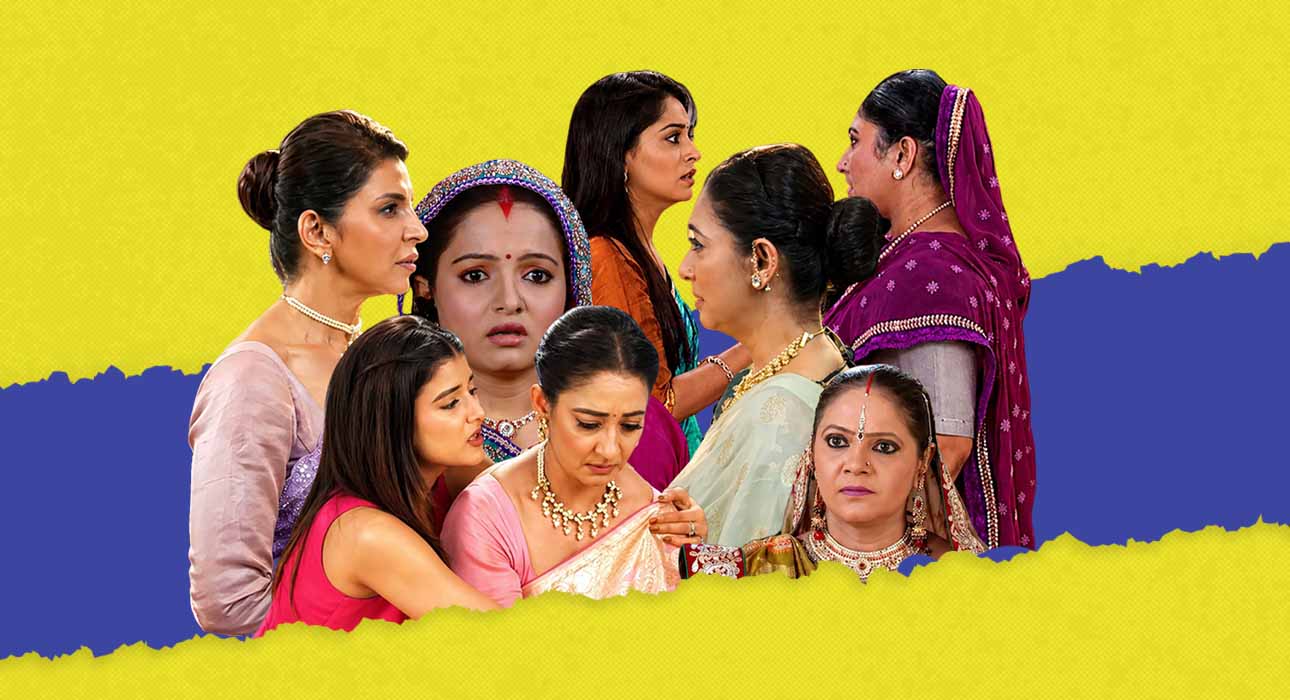
Think of a Saturday morning in the kitchen of a newly married couple. The wife is cooking a meal, meticulously following a recipe she has mastered. Her mother-in-law walks into the room, takes a breath, raises her hand, picks up a spice jar, and adds a pinch to the pot. “In our family,” she says with a grin, “we always put a little more cumin to bring out the warmth.” This might sound trivial in the context of the kitchen. However, examined through a Family Systems Theory viewpoint, the “pinch of cumin” is part of a high-stakes act within an intricate emotional play.
In general, tension between a MIL and a DIL never concerns the spice, the holiday schedule, or the laundry. It is about the battle of a living, breathing organism -the family, that is attempting to re-balance its bearings after a significant structural rearrangement. By looking beyond personal deficiencies towards the circular communication loops and emotional triangles that keep in place the misinterpretations, it is possible to start seeing the MIL-DIL conflict not so much as a power struggle as a systemic quest for a balance (Minuchin, 1974).
The Architecture of the In-Law Triangle
In family systems therapy in particular, the “triangle” is the basic building block of emotional stability (Minuchin, 1974). Two people – the husband/son and the wife – are often “triangling in” a third person (the mother) to maintain a steady state.
Take, for example, Sarah and her mother-in-law, Martha. If Sarah’s husband, Mark, is pressured at work, he can complain to his mother about the stress at home. Feeling her son in distress, Martha “helps,” dispensing advice on Sarah’s parenting or housework. Sarah expects it to be an invasion. Martha subsequently feels spurned and tells Mark about Sarah’s hostility.
The issue here isn’t Martha’s overbearingness or Sarah’s sensitivity. The issue is triangulation (A process where two family members involve a third person to reduce tension between them) (Minuchin, 1974). Mark is using his mother to vent some marital strain, and Martha is using her son to help her maintain the feeling that she is “needed.” This blocks the two from resolving their arguments and treats the DIL as the outsider to an already established alliance.
The Challenge Of Changing Boundaries
Families are shaped by boundaries – the invisible fences that dictate who participates in which part of the system (Haley, 1976). According to Haley and Whitaker’s theory, “the primary boundary has to change from the family of origin to the couple, after a marriage of the new couple.
- Enmeshment: If the MIL’s family of origin be enmeshed(A family condition where boundaries between members are overly blurred or rigid), that is, if there are few boundaries and the attachment of the MIL’s family of origin leads to a high degree of emotional reactivity, the appearance of a DIL would be interpreted as a risk to the family’s survival (Napier & Whitaker, 1978).
- The outsider: The DIL often comes in as a ‘permanent outsider’. She doesn’t speak the family’s “shorthand,” their private jokes, the family’s history. For example, consider the “Sunday Dinner” conflict. Sunday dinner, in many families, represents a sacred ritual. When a DIL recommends skipping dinner to visit her own family, she is not just skipping a meal; she is breaking a rule that is systemic. The MIL can see this as a personal attack on the family’s honour, prompting what can even be called a defensive “closing of the ranks.”
Read More: Family Expectations vs Personal Choice in Modern Weddings: A Psychological Perspective
Cultural Blueprints
Cultural contexts act as the invisible blueprint for the family system, dictating whether the MIL-DIL relationship is viewed through a lens of hierarchy or partnership.
1. Vertical Hierarchy (Collectivist/Eastern Cultures):
In many Asian and Middle Eastern cultures, authority flows downward from senior family members. The MIL acts as the guardian of family traditions and the ultimate decision-maker in the household. Here, the DIL is expected to assimilate fully into this existing family system. Conflict often arises when the DIL’s desire for autonomy clashes with cultural expectations. Such challenges are perceived as systemic threats to family unity (Rittenour & Kellas, 2015).
2. Horizontal Nuclear Unit (Individualistic/Western Cultures):
Western cultures tend to favour a horizontal structure that prioritises the nuclear couple’s independence. The MIL’s role is less central, and new couples are expected to establish separate systems. This creates boundary ambiguity: MILs often offer advice as a “duty of care,” but DILs may perceive it as intrusive or controlling. Thus, the same behaviours can be interpreted as caring support in one culture and hostile interference in another (Fingerman, 2004).
Communication Cycles and Feedback Loops
Communication in MIL-DIL relations follows circular, not linear, pathways. Conflict usually involves cycles of feedback where each party’s behaviour responds to and escalates the other’s reactions (Watzlawick, Beavin, & Jackson, 1967).
1. A common pattern is the Pursuer-Distancer dynamic:
- The MIL, feeling excluded, pursues contact by calling frequently or dropping by unannounced.
- The DIL, feeling overwhelmed, distances herself through brief texts or limited engagement.
- The DIL’s withdrawal heightens the MIL’s insecurity, causing her to pursue even more intensely.
- This creates a self-perpetuating cycle where attempts to solve the issue by “more of the same” behaviour only intensify the conflict (Watzlawick et al., 1974).
Developmental Movements: Loss and Identity
Conflicts flare up around major life transitions, including the birth of a child. At the nursery, she is no longer the “mother,” she is the “grandmother” on the outside (Carter & McGoldrick, 1989). If the MIL’s identity is steeped in being the “expert parent”, she may unconsciously subvert the DIL to win back her lost status. The DIL, trying to find her own sense of who she is as a new mother, interprets the suggestion as one more vote of no confidence. This is not a challenge of changing a diaper; it is a challenge of who is the functional head of the family (Satir, 1983).
Role of the Gatekeeping Figure and the Son’s Dilemma
The husband/son occupies a pivotal yet often uncomfortable position between two powerful women: his mother (MIL) and his wife (DIL). Family systems theory highlights how his role as a “bridge” or “gatekeeper” can significantly influence the intensity and resolution of MIL-DIL conflicts (Kerr & Bowen, 1988).
1. Loyalty Bind
The son is frequently caught in a loyalty bind where any allegiance to one woman risks alienating the other. If he defends his mother’s intrusions or involvement, he may be seen by his wife as neglecting or undermining their marital boundary – potentially a “bad husband.” Conversely, if he supports his wife’s desire for autonomy and resists his mother, the mother may perceive him as a “bad son” who disrespects or rejects family traditions and authority. This paradoxical situation creates intense emotional strain and often paralysis.
Without firm boundaries, the MIL and DIL may escalate their competition for the role of “primary woman” in the family—one person who wields emotional authority and influence over the son/husband (Fingerman, 2004).
2. Unclear Boundaries and Passive Communication
In many cases, the son struggles to establish clear boundaries between his family of origin and his marriage. To avoid conflict, he may communicate passively or inconsistently, signalling to his mother that her intrusions are acceptable, while also failing to reassure his wife that he is committed to protecting their couple relationship. This passive behaviour reinforces the existing triangulation and prolongs the conflict.
Strategies for the Son
- Differentiation: The son must work on differentiating himself emotionally from his maternal family system by recognising and managing his own anxieties rather than acting as a conduit of distress between MIL and DIL (Kerr & Bowen, 1988).
- Clear Boundary Setting: He needs to openly and respectfully communicate boundaries with both his mother and wife, affirming his support for the couple’s autonomy without rejecting his mother outright (Haley, 1976).
- Alliance Building: Supporting his wife publicly and privately strengthens the couple’s subsystem, reducing triangulation opportunities and demonstrating unified family leadership (Minuchin, 1974).
- Seeking Support: Sometimes, the son may benefit from counselling or mediation to navigate his loyalty bind and develop clearer strategies to engage both women in healthier relationships (Kerr & Bowen, 1988)
By actively embracing his gatekeeper role with clarity and compassion, the son can help transform the MIL-DIL conflict from a paralysing loyalty struggle into a cooperative family dynamic.
The Daughter-in-Law’s Position and Challenges: Permanent Outsider Status
The DIL often enters the family system without shared history, “shorthand,” or established rituals, making her feel excluded and misunderstood. This outsider position can create feelings of vulnerability and a strong need to assert her place within the family structure (Fingerman, 2004)
- Boundary Setting and Autonomy: The DIL’s attempts to establish healthy boundaries, whether around household management, parenting decisions, or family traditions, are often perceived by MIL as rejection or disrespect. However, from a systemic viewpoint, these boundaries are essential for the DIL to protect her couple subsystem and to foster autonomy within the new marital family (Minuchin, 1974).
- Emotional Experience: The DIL may experience the MIL’s “help” and advice as intrusive, controlling, or judgmental, which can trigger defensive withdrawal or coldness. This reaction is a protective response to perceived invasion but can unintentionally escalate conflict by increasing the MIL’s sense of rejection (Watzlawick et al., 1967).
Strategies for the Daughter-in-Law
- Active Boundary Communication: The DIL benefits from clearly and respectfully communicating her needs and limits to nurture the couple’s subsystem (Haley, 1976).
- Metacommunication: Engaging in conversations about how communication unfolds—such as acknowledging increased tension in certain topics—can help break the reactive cycles (e.g., saying, “I feel overwhelmed when advice comes without asking; can we find another way?”) (Watzlawick et al., 1974).
- Seeking Support: Building alliances not only with the husband but also with other supportive family members or external counsellors can provide emotional validation and practical strategies to manage tensions (Carter & McGoldrick, 1989).
- Recognising Systemic Anxiety: Understanding that MIL’s intrusions often stem from anxiety about loss or change can help the DIL respond with empathy, reducing reactive defensiveness and opening space for collaboration (Satir, 1983)
Positive Roles and Contributions of the MIL: Guardian of Family Traditions and History
The MIL can serve as a valuable link to the family’s cultural heritage, rituals, and shared stories, helping the couple feel connected to their roots without imposing rigid control. (Rittenour & Kellas, 2015).
- Supportive Advisor: With sensitivity to boundaries, the MIL can offer advice and assistance in ways that feel supportive rather than intrusive (Fingerman, 2004).
- Emotional and Practical Support: The MIL often has unique resources for childcare, household help, and emotional encouragement, especially during stressful life transitions such as childbirth. When offered in a spirit of partnership, this support can significantly ease the couple’s adjustment (Carter & McGoldrick, 1989).
- Role Model for Flexibility: By adapting her role from “mother” to “grandmother” or family elder, the MIL can embrace change positively, thereby reducing identity conflicts. This flexibility validates the DIL’s new position and promotes generational harmony (Satir, 1983).
Encouraging Positive MIL Involvement
- Respect for Boundaries: Positive MIL involvement starts with recognising and honouring the couple’s boundaries, allowing the new family unit to develop its own rules and dynamics (Minuchin, 1974).
- Seeking Feedback and Collaboration: MILs who check in and invite dialogue about how they can best support the couple help reduce misunderstandings and reinforce trust (Watzlawick et al., 1967).
- Self-awareness and Differentiation: When MILs recognise their own emotional triggers and anxieties related to changing family roles, they can better manage reactions and avoid behaviours that escalate conflict (Kerr & Bowen, 1988).
Intervention: Unreconciling the Cycle
- Mindfulness Practices: Encourage all parties to develop mindfulness skills, such as focused breathing or body scans, to increase awareness of emotional triggers before reacting impulsively. For example, when feeling overwhelmed by a comment or intrusion, taking a few deep breaths can help interrupt automatic defensive responses (Satir, 1983).
- Self-Differentiation Exercises: Encourage each individual to identify their own feelings and separate them from others’ behaviour. This means recognising that the MIL’s advice or the DIL’s withdrawal often stems from systemic anxiety, not personal attacks. Practising journaling emotions or reflecting privately before responding can support this differentiation (Kerr & Bowen, 1988).
- Pause and Reflect Technique: Before responding to provoking situations, pause momentarily to reflect on the possible systemic meaning of the behaviour and one’s own emotional state. This pause can prevent escalation by shifting from reactive to considered responses (Watzlawick et al., 1974).
- Assertive Communication Training: Learning to express needs and boundaries clearly, respectfully, and calmly helps reduce misunderstandings and emotional escalation. Using “I” statements (e.g., “I feel overwhelmed when advice is given without asking”) focuses on personal experience rather than blaming (Watzlawick et al., 1967).
- Stress Reduction Strategies: Engaging in regular stress reduction activities such as exercise, progressive muscle relaxation, or hobbies can lower baseline anxiety, making emotional reactions less intense. Family members with lower stress levels tend to approach conflicts more constructively (Carter & McGoldrick, 1989).
- Seeking External Support: Encouraging individuals to build external support networks—friends, counsellors, or support groups—provides a safe outlet for emotional expression and perspective. This can reduce the reliance on family members as sole sources of emotional regulation (Carter & McGoldrick, 1989).
Read More: Mindfulness Meditation has a Positive Effect on Mental Health
Conclusion
Friction between mothers-in-law and daughters-in-law is natural for the system to try to regain its equilibrium after a substantial structural change. Looking at the conflict in systemic terms allows us to move from blame to understanding.
Realising that the MIL is not merely “meddling”, she is trying to stay connected to a shifting family. It shows that this DIL isn’t only “disrespectful: she seeks a healthy boundary for her new family. When the attention shifts again to the patterns that connect them and away from their individual shortcomings, this “tug-of-war” can at last become a shared dance of mutual respect.
References +
Berge, J. M., Loth, K., Hanson, C., Croll-Lampert, J., & Neumark-Sztainer, D. (2011). Family life cycle transitions and the onset of eating disorders: A retrospective grounded theory approach. Journal of Clinical Nursing, 21(9-10), 1355–1363.
Carter, B., & McGoldrick, M. (Eds.). (1989). The changing family life cycle: A framework for family therapy (2nd ed.). Allyn & Bacon.
Fingerman, K. L. (2004). The mother-in-law, daughter-in-law relationship.
Fingerman, K. L., Gilligan, M., VanderDrift, L., & Pitzer, L. (2012). In-law relationships before and after marriage: Husbands, wives, and their mothers-in-law. Research in Human Development, 9(2), 106– 125. https://doi.org/10.1080/15427609.2012.680843 Cited by: 84
Haley, J. (1976). Problem-solving therapy: New strategies for effective family therapy. Jossey-Bass.
Kerr, M. E., & Bowen, M. (1988). Family evaluation: An approach based on Bowen theory. W. W. Norton & Company.
Minuchin, S. (1974). Families and family therapy. Harvard University Press.
Napier, A. Y., & Whitaker, C. (1978). The family crucible: The intense experience of family therapy. Harper & Row.
Rittenour, C. E., & Kellas, J. K. (2015). Making sense of mother-in-law–daughter-in-law conflict: A test of the family-to-family transfer and marriage-to-family transfer models. Journal of Family Communication.
Satir, V. (1983). Conjoint family therapy (3rd ed.). Science and Behaviour Books.
Watzlawick, P., Beavin, J. H., & Jackson, D. D. (1967). Pragmatics of human communication: A study of interactional patterns, pathologies, and paradoxes. W. W. Norton & Company.
Watzlawick, P., Weakland, J. H., & Fisch, R. (1974). Change: Principles of problem formation and problem resolution. W. W. Norton & Company.