







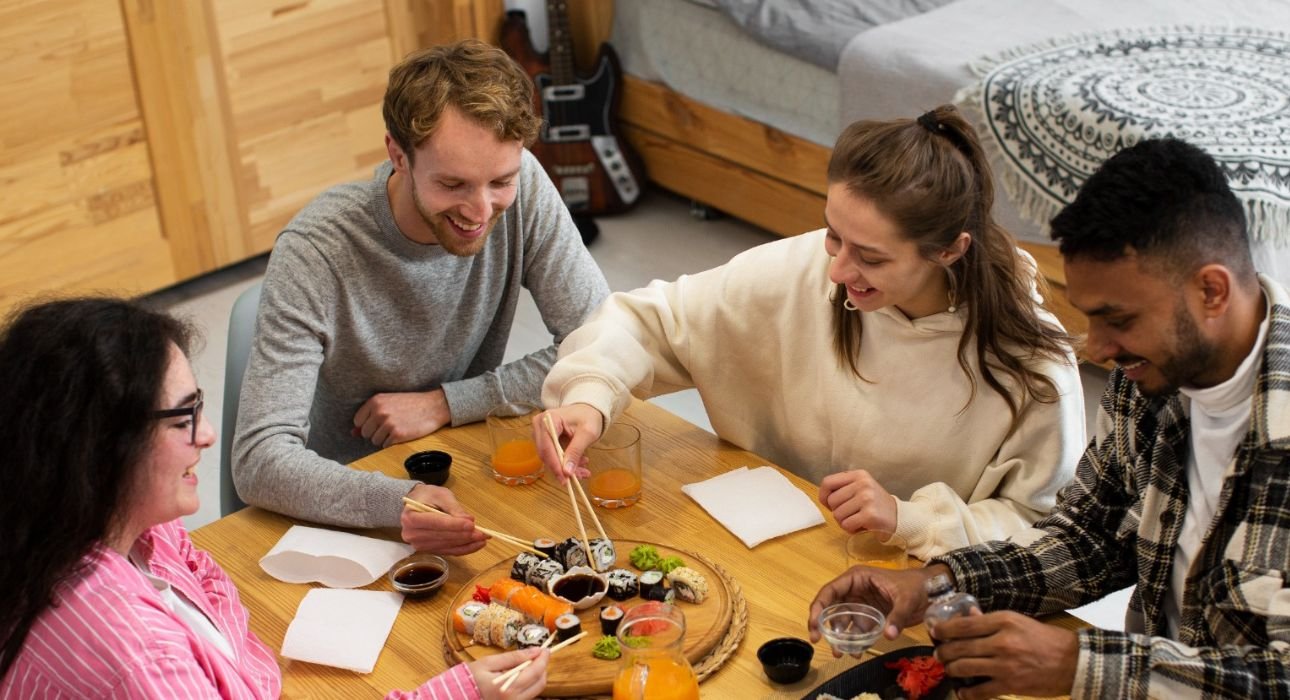
Have you ever seen your Dadi, Nani or your Parosh wali Auntie sitting on a winter afternoon on the terrace with balls of yarn and a set of needles with their favourite group of ladies! Or have you ever waited hungry for hours, because suddenly your father decided to cook?- Well, we all have.
“Engaging in activities particularly once that help you feel connected to something a mission a community a belief system I really valuable for peoples mental health overall” quotes Dr Ken Duckworth, chief medical officer of National Alliance on Mental Illness conducted a study on 130 people with mental conditions the common thread which he found among many of his interviewees was that they used hobbies as a way to manage their stress and mental health.
Hobbies boost Brain Health
If you pursue a hobby that you enjoy, even a single thought associated with it can release various neurotransmitters in the brain very common which is Dopamine, a neurotransmitter in the brain associated with pleasure. Even doing an activity related to hobbies (for example, buying paints for painting as a hobby) can activate the brain’s reward system, let alone actually doing it. Unlike other leader activities like watching television, indulging in shows hobby does not cause a dopamine surge, hence reducing the risk of burnout.
Read More: How Storytelling Hobbies Boost Conceptual Thinking
Hobbies can Help You Find Friends
In today’s era, it might be hard for people to maintain social connections at work – busy lifestyle, tight schedule, deadlines, piling bills, kids and family life tend to fade away college friendships, and colleagues at work are more like competitors than friends. As per an American survey, 60% of adults aged 55 and older would enjoy learning a new activity if someone accompanied them. Similarly, in many scenarios, people with common interests tend to deliberately meet again if they have common interests.
Better social company improves an individual’s mental health. However, not everyone is a social butterfly. Some prefer spending some alone time. Not all hobbies need to be social. Hobbies like crafting, painting, Music, etc, are more soothing hobbies that require precise attention, hence require more alone time. Many individuals who have jobs that require social interaction often take up these hobbies.
Read More: Social Psychology: The Landscape of Human Interaction
Hobbies can Stimulate Neuroplasticity
To this day, many studies support the fact that neuroplasticity does not disappear in adults. It simply becomes slower and selective. Hobbies provide stimulation to the brain, that “This is a new way of doing this “, hence activating the responsible area. In adults, the process of formation of synapse formation slows due to various reasons, including ageing, monotonous routine, lack of physical activity, not learning new things, etc. Having a hobby forces an individual to think and shift their attention to new findings, improving the process of forming synapses.
Read More: Psychology of Novelty: The Appeal of New Experiences
Hobbies can Make Your Brain Young
Neurological analysis finds that creative activities increased connections in brain regions most susceptible to ageing, with expert tango dancers showing the strongest anti-ageing effect. (Conroy, 2025) Ibáñez and colleagues conducted a study using neurological data from 1240 people, studying their functional connectivity. They applied this model to further 232 people( involved in regular recreational activities)in order to find which part of the brain benefited most. The researchers mapped key areas affected by creativity.
They found the biggest effects in the frontoparietal region – crucial for decision making and working memory – one of the areas that declines with age. Experienced participants showed a stronger connection in these regions. Creative hobbies could slow brain ageing at the molecular level. There is also evidence that creative engagement boosts dopamine and BDNF – brain-derived neurotropic factor chemicals that support learning, motivation and the growth of new neurons and synapses, very crucial in delaying the ageing of the brain.
Your Brain Likes Winning
“Winner effect “- where the brain releases dopamine and other chemicals after a win, which can lead to winning behaviours and increase confidence. Overcoming challenges changes the neuroplasticity of the brain. Various researchers point out that the brain can adapt to winning by increasing the number of receptors for hormones associated with winning. Hobbies, especially creative hobbies like painting, crafting, sculpting, making murals, making videos, music, literature writing, that involve creating something new, add to this effect.
Hobbies involve completing tasks, achieving small targets, overcoming distractions (like indulging in watching, etc), leading to small wins in life. These small wins accumulate, creating a bigger impact in one’s life. Hobbies also contribute to winning in life by fostering skills and preventing burnout. For example, individuals active in sports as a hobby generally tend to high threshold for pressure. Nobel prize winners are significantly more likely to have outside interests. Hence, contributing to their knowledge, leading to innovative ideas and solutions.
Read More: How to Stay Focused in a World Full of Distractions
Hobbies help in Improving Cognitive Performance
A series of studies from the Synapse Project demonstrated that older adults who spend several hours a week for a few months learning to participate in a new craft activity should experience improvements in their cognitive performance and neural efficiency as compared to control participants. Another study by Melis Anatürk and colleagues found that weekly visits to the gym or sports club (participants who pursued sports as a hobby)should greater connectivity of the sensory motor network and cerebellar network, relative to infrequent attendance over time.
However, the result could be biased as physical activity tends to improve cognitive health. However, leisure activities represent one set of modifiable factors that potentially support healthy cognitive ageing by promoting brain plasticity (Stern, 2012). For example, higher activity participants have been systematically linked to better cognitive performance, higher regional and global grey matter volume, fewer volume ametric measures of WM lesions and less decline in quality of white matter tracts (Frantioni et al, 2004).
Hobbies might delay the dementia
Dementia, an umbrella term for a group of symptoms, as per DSM, includes memory loss, impaired reasoning, and difficulty performing tasks and daily life activities. According to the WHO, dementia is currently the seventh leading cause of death.
In 2021, 57 million people had dementia worldwide, over 60% of whom live in low and middle-income countries. Every year, there are nearly 10 million new cases. A longitudinal study of ageing found that adults who visited museums and art exhibitions on a regular basis had a lower incidence of dementia over a course of 10 years. Various hobbies would help them improve their attention, memory, motor ability, as well as mood. Hobbies could be simplified for individuals already suffering from memory loss, etc
The Elderly people are most often retired from their jobs. Hence, they tend to develop a feeling of low self-esteem and stagnant. As per Erikson’s stage of development, adults generally tend to focus on contributing towards society, leading to the development of a feeling of generativity (which is important for their mental well-being). Hobbies could be one of the easiest ways of doing so. They could not only help in improving the mental will being but would also improve the self-worth of an individual. Which is very important for having a feeling of a worthy life.
Read More: The Restaurant of Mistaken Orders: A Dementia-Friendly Dining Experience
Question Explained by Experts
Question: How do hobbies or leisure activities influence brain function and emotional regulation?
According to Clinical Psychologist Mansi More, Hobbies are more than pleasant breaks; they actively reshape the brain. They create a calming rhythm that lowers stress hormones and supports emotional balance. Even the simplest hobbies can make a difference. A 10-minute walk can lift your mood by boosting dopamine and reducing stress hormones. Listening to music calms the amygdala, helping the brain regulate emotions more smoothly. Reading for a few minutes strengthens memory pathways, while gentle movement like stretching or dancing resets the nervous system.
When we paint, cook, or garden, the brain forms new neural pathways, boosting creativity and cognitive flexibility. Leisure activities also trigger dopamine, helping us feel motivated and uplifted. Over time, this strengthens the prefrontal cortex, improves focus, and enhances our ability to regulate emotions.
Reference +
Morse L, Price A, Carolyn E. (2018)Crafts as serious hobbies: impact and benefits in later life. Craft Research, Volume 9, Issue 1. https://intellectdiscover.com/content/journals/10.1386/cr re.9.1.93_1
Anatürk M, Suri S, Smith S, Ebmeier K P, Sexton C. (2021). Leisure activities and their relationship with MRI measures of brain structure, functional connectivity and cognition in the UCO Bio Bank cohort. Neurocognitive ageing and behaviour. volume 13 https://www.frontiersin.org/journals/agingneuroscience/articles/10.3389/fnagi. 2021.734866/full
Mikhail A. (2022). The science behind why you need a hobby to boost your brain health and self-esteem. Fortune well https://fortune.com/well/2022/10/16/hobby-to-boost your-brain-health-and-self-esteem/
Randolph J. (2020). The benefits of brain-boosting hobbies. Psychology today https://www.psychologytoday.com/us/blog/the-healthy engaged-brain/202004/the-benefits-brain-boosting hobbies
Conroy G.(2025). Creative hobbies could slow brain ageing at the molecular level: To keep the mind young, dance the tango. Nature 646, 524-525 (2025)



Leave feedback about this