






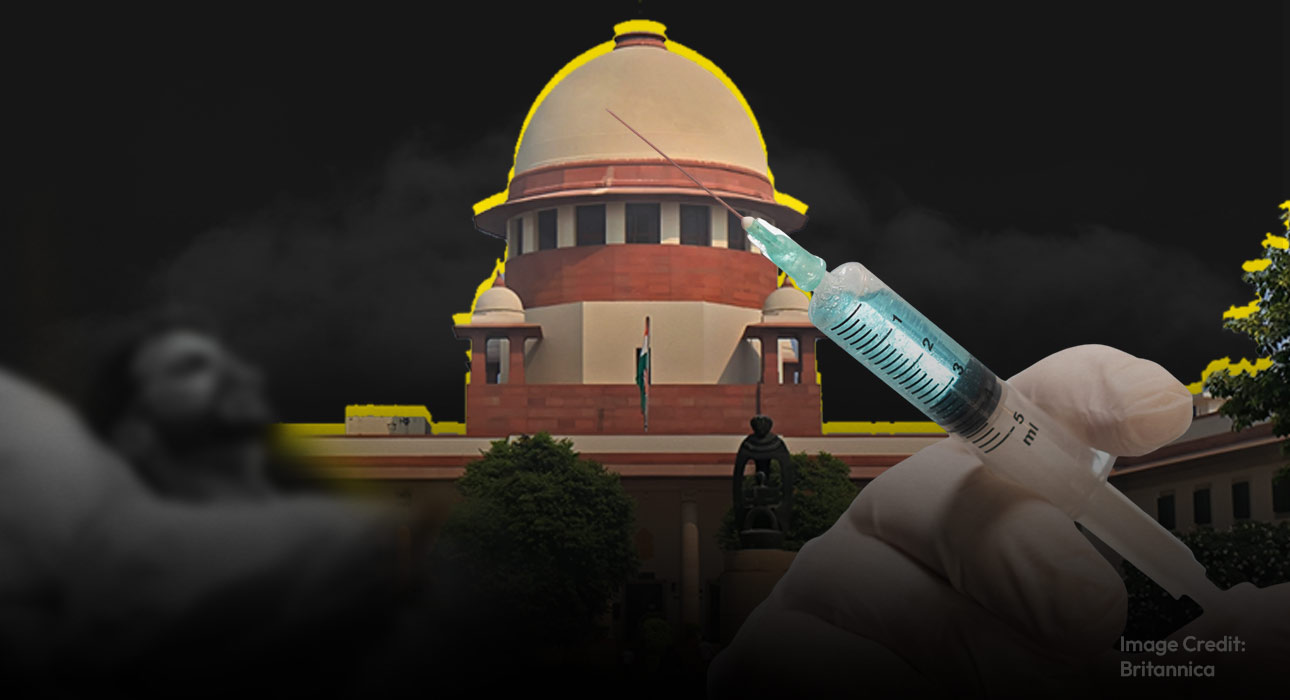
The Supreme Court on Wednesday gave the verdict of withdrawal of the life support system of a 32-year-old man. He has been in a vegetative state since 2013. It was brought to the notice by Justice J.B. Pardiwala that when bodily invasion increases progressively, the prognosis of recovery decreases progressively. A point comes when the state’s interest in preserving life must shift to the dignity of the individual. Therefore, the state cannot override individuals’ right to die.
While studying at University of Chandigarh, Punjab, Harish Rana had fallen from the balcony and had a severe brain injury. Since then, he has been in a vegetative state for approximately the last 12 years. As per the doctors, he has the least chance of recovery, as there is permanent brain damage. His family requested the court to give permission for the withdrawal of the life support system. According to the court, keeping alive a patient who is brain dead or in a vegetative state with the least chances of recovery is against the person’s right to a dignified death. Decisions must be in the best interest of the patient, wherein “dignity” must be upheld and primarily considered.
Passive Euthanasia
Passive euthanasia is an act wherein there is a withdrawal of life support, such as a ventilator, etc. In Indian law, this requires permission from the Supreme Court and is given allowance under certain conditions. Passive euthanasia was legalised in India in the year 2018 after the case of Aruna Shanbaug. While Active Euthanasia is intentionally helping a person to kill themselves by injection or lethal etc and is currently illegal in India.
Key Principles of Judgement
The following are the major points stated in the judgment –
- The central factors should be the best interest and dignity of the patient.
- Biological life cannot be preserved at the cost of persistent suffering.
- Judicial safety, family consent, and the medical board need to be involved while making the decision.
Human Dignity & Autonomy
When an individual is totally dependent on life support for survival, there is an absence of autonomy, control over life, and dignity. The person loses self-determination and quality of life. According to Edward L. Deci and Richard Ryan, autonomy, competence, and relatedness are three basic needs of human beings. Thus, this judgment respects the autonomy of the individual.
Caregiver and Family
Such situations impact families and caregivers to a huge extent. They may experience prolonged grief and decision fatigue. Everyday decisions related to medicine, testing and other medical aspects may become stressful as the caregiver or family needs to make them frequently. Therefore, increasing the stress. An ambiguous loss is also experienced as though the person is physically present but psychological absent.
References +
- https://www.google.com/amp/s/www.thehindu.com/news/national/interest-of-the-state-to-preserv e-life-cannot-overpower-right-to-dignified-death-supreme-court/article70731869.ece/amp/
- https://www.google.com/amp/s/indianexpress.com/article/legal-news/passive-euthanasia-india-s upreme-court-landmark-cases-explained-10576193/lite/





Leave feedback about this