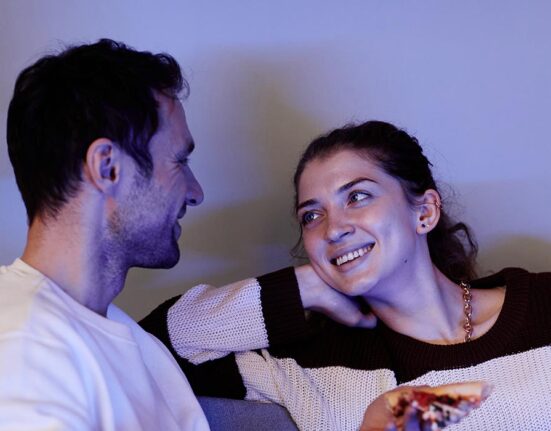
A reason why some kisses last forever in your memory while others leave no marks is not due to how romantic the kiss was, but rather how you processed that kiss in your mind. Even though it may have appeared to be just a mere action of affection, the way your brain codes that moment actually has important implications for how you develop relationships with people.
As lips meet, the body responds not with one reaction, but with waves of neurochemical shifts altering emotion and connection. These internal changes guide attraction patterns, shape pair bonds, and influence long-term relationship paths. Insight into brain activity during such moments reveals reasons behind its emotional weight – its warmth, pull, lingering presence in memory. What seems fleeting carries lasting traces within the mind and physiology.
Read More: What happens in your brain when you’re in love?
Kissing Activates the Brain’s Reward Pathways
Deep within the mind, the act of kissing turns on circuits tied to enjoyment, similar to those sparked by food or songs. Dopamine emerges when lips meet, a substance in the body linked to drive, delight, and repeated behaviour. Lips, highly responsive skin zones, relay data toward neural centres during contact between individuals. From such points, impulses reach deep brain structures tied to motivation and satisfaction regions, including the ventral tegmental zone and nucleus accumbens, see increased activity (Fisher et al., 2016).
Because of this shift, one may start linking another face with positive sensations. Repetition becomes more appealing due to chemical shifts set in motion by touch. Early romance frequently brings strong emotions. Because dopamine rises, attention locks onto a new partner, sometimes bordering on fixation (Acevedo & Aron, 2009). Put plainly, kissing shapes recognition neural pathways that learn comfort through contact.
Read More: Love Isn’t Just Romance: A Healthier Way to Celebrate Love Week
Oxytocin and How People Connect Emotionally
Though dopamine connects with thrill and gain, oxytocin operates in another way. Oxytocin, which is commonly called the love hormone, is released in larger quantities when two people engage in physical contact. Oxytocin also usually produces feelings of trust, safety, and closeness to another person or group of people. Research has shown that increases in concentrations of oxytocin can positively affect the quality of relationships between two people (Carter, 2014).
Kissing can also release oxytocin into the body and may help to decrease an individual’s stress level, creating an overall connection between two people. Especially clear becomes the picture when considering attachment theory, first introduced by Bowlby in 1969. Rooted in biology, human connection emerges as a survival mechanism rather than a mere preference. As people age, love relationships frequently echo childhood bonding styles.
Through oxytocin release, closeness gains strength because safety signals rise between partners. Simply put, desire often comes from dopamine; staying close, however, ties back to oxytocin. Connection driven by longing differs sharply from bonds maintained through quiet trust. One sparks pursuit, the other supports endurance. Where excitement pulls, familiarity holds. The brain’s role in attraction splits urges versus stability neatly.
Endorphins and Comfort
Found within the chemistry of kissing are endorphin substances that ease discomfort while lifting spirits. These compounds relate closely to sensations of peace, reassurance, and often a quiet sense of being alright. Quietly present, yet influential. With time, the early thrill fades. Yet closeness remains. Instead of excitement, a deeper calm appears. Where dopamine once led, different signals take place.
Emotional steadiness grows through quiet bonds. As connections deepen, chemistry shifts. Comfort emerges not from intensity but from presence. Lasting ties form slowly. One study notes this change involves endorphins alongside oxytocin. The spark dims; warmth stays. Not every chemical behaves the same way. Duration comes less from rush, more from rhythm. Security grows where intensity once lived, shaping how lasting bonds evolve. Within such closeness, a kiss shifts its meaning, shaped by comfort rather than excitement.
Read More: Why Forced Hugs Put Child Safety and Emotional Well-Being at Risk
Kissing As a Way People Connect And Communicate
Kissing might help determine how well two individuals match. According to certain studies, flavour and scent offer clues about genetic makeup and variations in immunity, without awareness (Wlodarski & Dunbar, 2013). Because of this, a simple kiss may immediately seem fitting or entirely off. Kissing also has a part in connecting how two people feel emotionally. As couples share a kiss, rhythms of the heart, responses to tension, and hormone activity tend to mirror one another. Over time, such alignment builds a deeper connection through shared inner experiences.
Attachment Styles and Kissing
Different people have different ways of experiencing a kiss. Through their relationships during childhood, they create an attachment style that has created for them secure, anxious, or avoidant patterns. For example, someone who feels secure and connected to loved ones may find intimacy and connection an easy progression, while someone who is more avoidantly attached will usually withdraw from the presence of intimacy.
Comfort arrives through kissing for those who feel safe within themselves. While emotional satisfaction often follows, it stems quietly from inner stability. Not every touch carries such weight; only when security is already present does the act deepen into meaning. Moments like these unfold without effort, simply because trust exists beforehand.
When worry takes hold, a kiss might become a quiet signal of safety. Without it, unease can grow, shaping doubt in relationships. Moments of closeness may then feel uncertain, even fragile. Avoidant individuals may feel uncomfortable with prolonged physical intimacy, including kissing. Such variations suggest that while physiological pathways resemble one another, individual background impacts their expression (Mikulincer & Shaver, 2007).
Read More: The Psychology Behind Love and Romance
How kissing Affects Relationships
Kissing, when viewed through neuroscience, goes beyond romance. This act engages brain systems tied to motivation and connection. Activation of pleasure centres happens during such contact. Closeness grows stronger because of these neurochemical responses. As a result, there tends to be an increase in stress levels after experiencing the two effects of kissing.
Research has shown that kissing can be associated with stronger bonds between two partners through both touch and emotional health (Gulledge et al. 2003). The relationship between these two variables suggests that kisses can create deeper connections than simple gestures, resulting in lower moods and feelings of connectedness. When closeness includes frequent contact, satisfaction tends to rise. Evidence points there. Emotional resilience builds quietly through these repeated exchanges, not grand events. What matters might be found in pauses: a brief hold, a forehead rest, silence shared.
Read More: How Socioeconomic Status Shapes Emotional Intimacy and Relationship Quality
Conclusion
Though kissing seems pretty basic, it activates multiple brain networks along with hormone release. Pleasure and pull come from dopamine; trust plus closeness emerge through oxytocin. Comfort and calm arise via endorphins. These substances, working behind the scenes, influence whether connections start, deepen, or endure across years. Kissing, seen via attachment theory alongside brain science, becomes a mechanism for human bonding rather than a mere expression of warmth. Because of these insights, what appears minor carries deep weight, its impact rooted in survival, not sentiment.
References +
- Acevedo, B. P., Aron, A., Fisher, H. E., & Brown, L. L. (2011). Neural correlates of long-term intense romantic love. Social Cognitive and Affective Neuroscience, 7(2), 145–159. https://doi.org/10.1093/scan/nsq092
- Fisher, H. E., Aron, A., & Brown, L. L. (2006). Romantic love: a mammalian brain system for mate choice. Philosophical Transactions of the Royal Society B: Biological Sciences, 361(1476), 2173–2186. https://doi.org/10.1098/rstb.2006.1938
- Khadka, C. (2022). The Evolution of Attachment Theory: From Bowlby to Modern Perspectives. TUTA Journal, 10(1), 125–140. https://doi.org/10.3126/tutaj.v10i1.74328
- Nummenmaa, L., Tuominen, L., Dunbar, R., Hirvonen, J., Manninen, S., Arponen, E., Machin, A., Hari, R., Jääskeläinen, I. P., & Sams, M. (2016). Social touch modulates endogenous μ-opioid system activity in humans. NeuroImage, 138, 242–247. https://doi.org/10.1016/j.neuroimage.2016.05.063
- Olff, M., Frijling, J. L., Kubzansky, L. D., Bradley, B., Ellenbogen, M. A., Cardoso, C., Bartz, J. A., Yee, J. R., & van Zuiden, M. (2013). The role of oxytocin in social bonding, stress regulation and mental health: An update on the moderating effects of context and interindividual differences. Psychoneuroendocrinology, 38(9), 1883–1894. https://doi.org/10.1016/j.psyneuen.2013.06.019
- Sorokowska, A., Kowal, M., Saluja, S., Aavik, T., Alm, C., Anjum, A., Asao, K., Batres, C., Bensafia, A., Bizumic, B., Boussena, M., Buss, D. M., Butovskaya, M., Can, S., Carrier, A., Cetinkaya, H., Conroy-Beam, D., Cueto, R. M., Czub, M., & Dural, S. (2023). Love and affectionate touch toward romantic partners all over the world. Scientific Reports, 13(1), 1–13.https://doi.org/10.1038/s41598-023-31502-1
- Wlodarski, R., & Dunbar, R. I. M. (2013). Examining the Possible Functions of Kissing in Romantic Relationships. Archives of Sexual Behaviour, 42(8), 1415–1423. https://doi.org/10.1007/s10508-013-0190-1
- Yadav, M. (2025). The Impact of Attachment Styles on Expectations and Realities in Romantic Relationships Among Young Adults. 13(2). https://doi.org/10.25215/1302.075