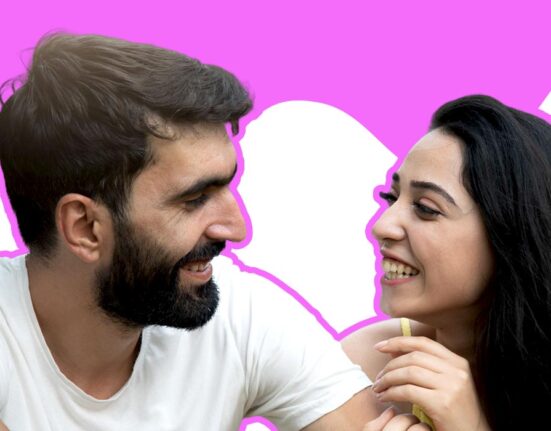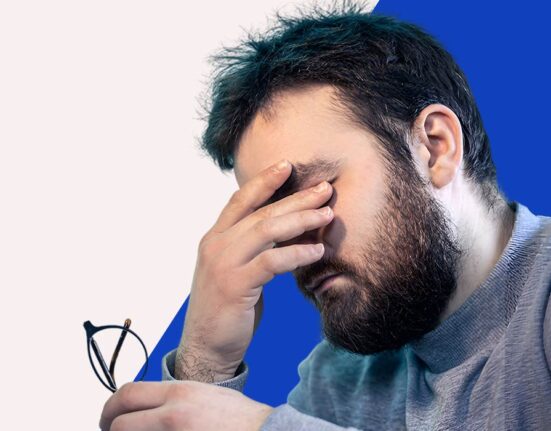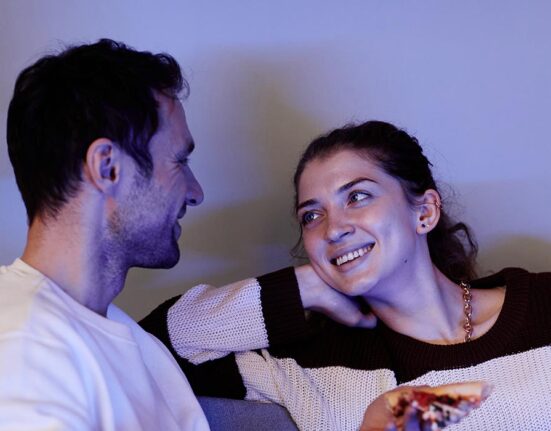
Imagine sitting on your sofa next to your spouse. You’re only inches away from one another, but it might as well be miles. Suddenly, you feel lonely. Maybe you start criticising your partner for being “lazy” or “emotionally unavailable”. Your partner probably feels hurt by your criticisms and shuts down, walking away into another room. Did you fight about who folded the laundry first? Did you actually care about the silence between you two? No. You were triggered, and your partner reacted, creating an experience that replays over and over from your childhood.
Marriage is where we come to feel safe and express our love for another person. However, it’s also where we inevitably bring our childhood conditioning back into the picture. How we viewed our caregivers when we were children tends to mimic how we view our spouse as adults (Bowlby, 1988). This article will touch on how attachment wounds affect your marriage and how we can experience “corrective emotional experiences” to create healing within ourselves, our partners, and children (Alexander & French, 1946).
Understanding the Roots of Emotional Wounds
Anyone who enters married life always hopes and dreams that they will live happily ever after.
However, many factors cause conflicts between spouses in married life, such as financial issues, sex-related issues, and ways of dealing with in-laws (Locke & Wallace, 1959). Conflict occurs regularly in the closest relationships (Brehm, Miller, Perlman & Campbell, 2002). It was also because people’s working models are different, and more often than not, they are related to their attachment styles (Bowlby, 1969). In Attachment theory, Bowlby & Ainsworth (1992) explained that secure people who would tend to have higher satisfaction compared to those with insecure attachment styles. What about married couples who possess different attachment styles? In such a case, this study investigates the relationship between insecure attachment style and how it influences marital satisfaction between partners.
Childhood Attachment Shapes Adult Relationships
Attachment refers to the unseen connection between a child and their caregiver (Bowlby, 1988). It is programmed within us to keep us alive. Growing up with responsive and warm parents leads a child to believe that the world is full of safe people and that uncomfortable feelings can be soothed (a “secure attachment”) (Ainsworth et al., 1978). However, when childhood is marked by emotional neglect, harsh criticism, or inconsistency, “attachment of wounds” is formed. These wounds act like sensitive scars that can be easily triggered in adulthood, especially within the high-stakes environment of a marriage (Mikulincer & Shaver, 2016).
These early experiences create internal working models, essentially mental maps that dictate how much individuals trust others (Bowlby, 1988). For example, a person who was frequently dismissed as a child may grow up believing that their needs do not matter to those around them (Mikulincer & Shaver, 2016). In a marriage, such an individual might struggle to ask for help, fearing that a spouse will also dismiss or ignore the request (Johnson, 2008). Conversely, those who experienced inconsistent parenting may become hyper-vigilant, constantly scanning a partner’s behaviour for even the slightest signs of rejection or abandonment (Ainsworth et al., 1978).
How Emotional Wounds Affect Marital Satisfaction
Psychology breaks them down into styles like anxious, avoidant, or disorganised attachment (Ainsworth et al., 1978). Someone who is anxiously attached needs constant validation because they privately feel scared of being alone (Johnson, 2008). Someone who is avoidantly attached may perceive expressing emotion or being vulnerable as like opening themselves up to attack, and will automatically back away when they feel someone has crossed their boundary (Mikulincer & Shaver, 2016). No one is doing these things to hurt someone else or be manipulative. These are just learned behaviours that we picked up as children for how to best survive when we felt attacked emotionally (Bowlby, 1988). When left unchecked, our emotional triggers can cause a perpetual “pursue-withdraw” pattern that pushes our partners away even more (Johnson, 2019).
Reshaping Patterns through Corrective Experiences
Attachment wounds may feel cemented into one’s personality, but are not necessarily lifelong struggles. Marriage provides an environment or “lab” for emotional transformation called a Corrective Emotional Experience (Alexander & French, 1946). This happens when we receive nurturing and safety from our partner during a moment when we expected to be triggered or hurt like we were in the past (Alexander & French, 1946). For example, we expect to be humiliated by our partner for making a mistake. But are instead met with validation and patience; that tiny sliver of wounding from childhood can begin to resolve (Johnson, 2008).
This occurs through what Johnson calls “emotional responsiveness” or “seeing your partner’s unexpressed anguish and meeting that anguish with comfort instead of retaliation or withdrawal” (Johnson, 2008, p. 177). Rather than defensively responding to their partner’s anger. They may recognise their fear hiding underneath their partner’s anger and offer them words of validation (Johnson, 2019). Each of these tiny moments of reprieve accumulates over time and slowly begins to rewire old mental maps. The more we feel seen and heard by our partner, the more our nervous system calms down. And we can physically stay out of “defence mode” and into “connection mode” (Mikulincer & Shaver, 2016).
Rebuilding Emotional Safety in Relationships
One of the most important ingredients in transforming our “self” is consistency. Because our attachment wounds were developed through chronic conditioning as children. It will take chronic reminders that the world is a safe place to unlearn them (Bowlby, 1988). Validation, simply put, is telling your partner that their feelings make sense, which can help with this process (Siegel, 2012).
When your spouse says, “I can see why that would make you feel lonely,” they are giving your emotions the oxygen they need to live (Siegel, 2012). Slowly but surely, these new experiences with your partner will decrease emotional “triggers” and allow you to argue using more logic and far less fear (Johnson, 2008).
The Impact on the Extended Family
Healing in marriage rarely affects just the couple. As we feel safer in our emotions and react less, we also tend to relate to our parents, siblings, and in-laws differently (Mikulincer & Shaver, 2016). After not seeing rejection in our marriage, we no longer perceive it everywhere we look in our family of origin (Bowlby, 1988). We can encounter the same old family drama without reacting defensively because we are operating from a place of calm and maturity (Siegel, 2012).
We also gain the strength in our marriage to set healthy boundaries with our family members. If we have open wounds with our families. We may allow people to walk all over us or cut them out of our lives entirely out of anger or fear (Mikulincer & Shaver, 2016). But as we learn to regulate our emotions. We can learn to say what we need clearly and without violence (Siegel, 2012). Long-standing family battles can dissipate when one person decides to change how they interact with a family member. Instead of getting “triggered” when your mom tries to tell you what to do, you can realise that criticism is her problem, not yours, and you no longer have to accept it (Bowlby, 1988).
The biggest miracle happens when there are children in the home. Parents often fear repeating what their own parents did wrong when they interact with their kids (Siegel, 2012). When parents heal from their attachment wounds through their marriage, they break the cycle of “emotionally unavailable” or “anxious” parents (Bowlby, 1988). Children who grow up in homes where their parents show them what security looks like, how to apologise, and how to make repairs will have a greater chance of becoming secure children themselves (Ainsworth et al., 1978). In essence, we stop passing down our grandparents’ emotional wounds to our children as family heirlooms (Siegel, 2012).
Read More: Mental Health in Marriage: Legal Rights and Social Realities in India
Navigating the Challenges of Healing
Keep in mind that healing looks different for everyone, and it is by no means a linear process. These attachment wounds can be deep-rooted, and familiar fears can rear their head when you are under a lot of stress (Siegel, 2012). Whether that be financial stress, parenting stress, or stress from illness. When overwhelmed, your partner might “fall back” into their old pattern of shutting down or attacking to try and self-protect (Mikulincer & Shaver, 2016). Healing doesn’t mean you never fight or bicker. It means that when you fight, you have the skills and willingness to “come back together” or “repair” the relationship after the fight (Johnson, 2019).
Self-awareness is key for both partners to understand and process. Everyone has certain “triggers” they must learn to recognise and identify where the fear originated (Mikulincer & Shaver, 2016). A husband may recognise that their deep sense of anger when their partner is tardy on a text is rooted in fear of abandonment that began when they were a young child (Johnson, 2008). Recognising their vulnerable feelings allows them to then share with their partner why they feel offended without being critical or attacking (Johnson, 2019).
Couples can seek help from a therapist that specializes in Emotionally Focused Therapy. EFT helps couples specifically with the attachment bond and can help you recognise what “dance” you two engaged in when you felt pulled away from each other (Johnson, 2008). Therapy can also allow you to explore feelings of vulnerability that may be too intimidating to share in the moment (Johnson, 2019). Healing takes two people who are willing to be patient with each other and understand that we are all doing the best we can to unlearn years of self-protection.
Conclusion
Attachment wounds carried into marriage can cause unhealthy fear, distrust and emotional distance within the relationship (Bowlby, 1988). Marriage can also be a place where wounds are healed. Corrective experiences allow us to learn that intimacy can be safe, and our needs are valid (Alexander & French, 1946). Healing will not happen overnight, but through consistency and allowing ourselves to be vulnerable with our partner, we can learn to love each other well (Johnson, 2008).
Not only will our children benefit from a healthier relationship with their extended family. But future generations can be spared the pain we once experienced (Siegel, 2012). There will be good and bad days, but if we work towards creating a “secure base” for our partner. We can experience life more confidently (Bowlby, 1988). If you find yourself in a relationship where your partner’s history is impacting your relationship, I want you to walk away with this: change can be made when we are intentional about it (Mikulincer & Shaver, 2016). Empathy and consistency can help heal the wounds of yesterday.
References +
Ainsworth, M. D. S (1964). A pattern of Attachment Behaviour shown by the Infant in Interaction with his mother, Merrill- Palmer Quarterly, 10, 51-58. https://www.jstor.org/stable/23082925
Bowlby, J. (1969). Attachment and Loss: Vol. 1. Attachment. NY: Basic.
Cantalupo, N. C., & Kidder, W. C. (2018). A systematic look at a serial problem: sexual harassment of students by university faculty. Utah Law Review, 2018(5). https://doi.org/10.63140/mp.taj0-0e
Edwards, C., Wittenborn, A. K., Morgan, P., Pratt, F., & Heiden‐Rootes, K. (2024). The transition to Teletherapy: Experiences of emotionally focused therapists. Family Process, 64(1), e13068. https://doi.org/10.1111/famp.13068
Fisher, A. R., Stokey, M. F., Sasaki, H. M., & Sexton, T. L. (2014). When It Helps, When It Hurts: Preliminary Results of Relationship Enhancement
Education and <i>The Hold Me Tight</i> Program. Psychology, 05(10), 1254–1259. https://doi.org/10.4236/psych.2014.510137
Javanbakht, A. (2019). A theory of everything: overlapping neurobiological mechanisms of psychotherapies of fear and anxiety-related disorders. Frontiers in Behavioural Neuroscience, 12, 328.https://doi.org/10.3389/fnbeh.2018.00328
Locke, H. J., & Wallace, K. M. (1959). Short marital adjustment and prediction tests: Their reliability and validity. Marriage & Family Living, 21, 251–255. https://doi.org/10.2307/348022.
Lopez, F., Siffert, K. J., Thorne, B., Schoenecker, S., Castleberry, E., & Chaliman, R. (2013). Probing the relationship between selfobject needs and adult attachment orientations. Psychoanalytic Psychology, 30(2), 247–263.https://doi.org/10.1037/a0032514
Sbarra, D. A., & Coan, J. A. (2018). Relationships and Health: The Critical Role of Affective Science. Emotion Review, 10(1), 40–54. https://doi.org/10.1177/1754073917696584
Van IJzendoorn, M. H., Palacios, J., Sonuga-Barke, E. J. S., Gunnar, M. R., Vorria, P., McCall, R. B., Mare, L. L., Bakermans-Kranenburg, M. J.,
Dobrova-Krol, N. A., & Juffer, F. (2011b). I. CHILDREN IN INSTITUTIONAL CARE: DELAYED DEVELOPMENT AND RESILIENCE. Monographs of the Society for Research in Child Development, 76(4), 8–30.https://doi.org/10.1111/j.1540-5834.2011.00626.x
Zarra-Nezhad, M., Suhonen, K., & Sajaniemi, N. (2023). Keeping Early Social-Emotional Learning Developmental: The development, implementation, and preliminary evaluation of a preventive intervention Program for early childhood education and care. International Journal of Developmental Science, 17(4), 113–125. https://doi.org/10.3233/dev-220332