







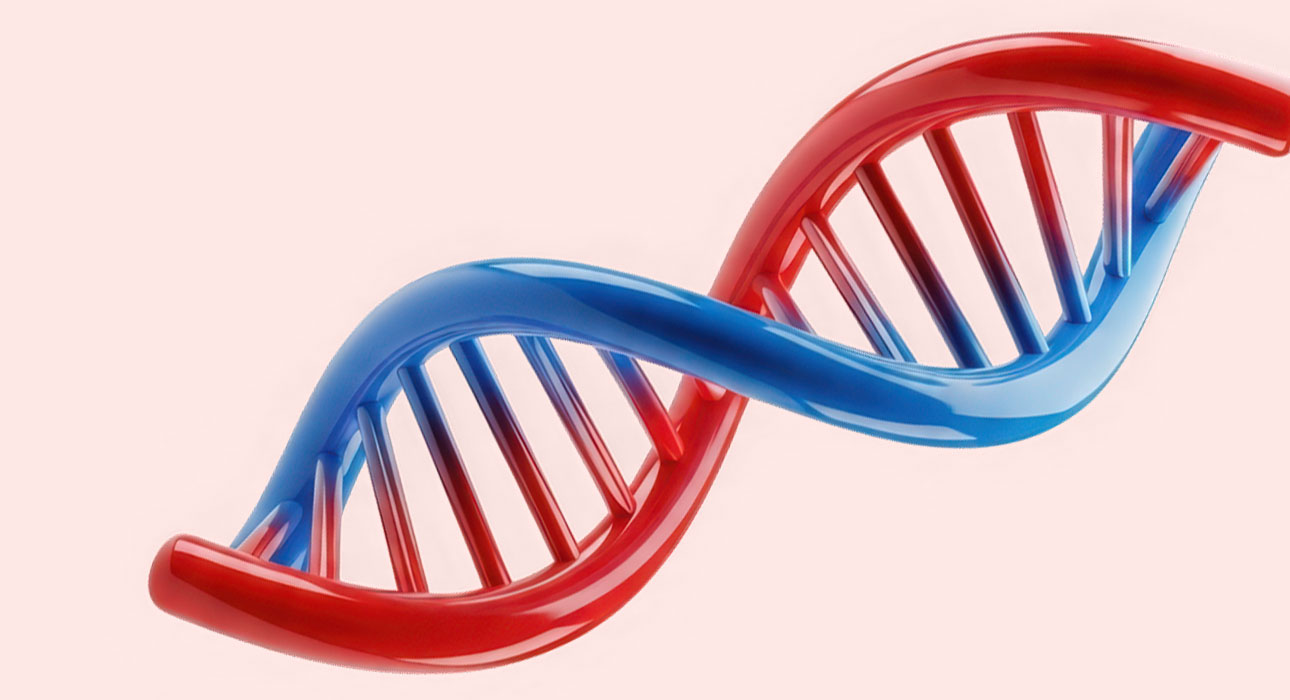
The human drive for connection is often viewed through the lens of early upbringing or personal choice. However, emerging research suggests a more intricate, biological “volume knob” at play. At the centre of this investigation is the oxytocin receptor gene (OXTR) and its common polymorphism, rs53576. Although early theories described the G-allele as pro-social and the A-allele as risk-prone, recent gene-environment (G times E) interaction models show a more balanced reality, namely, that these genetic variants do not dictate the avoidance of attachment but instead dictate the extent to which the relational blueprint of an individual is overwritten by the environmental context.
The Foundations of Social Sensitivity
The initial studies of the rs53576 polymorphism provided a point of reference for the role genetic variations play in social processing. Rodrigues et al. (2009) have shown that homozygous carriers of the G allele (GG) context had greater levels of empathic accuracy and reduced physiological stress reactivity than carriers of the A allele. This original publication hinted that the G-allele could confer a natural benefit in males coping with social complexities.
The extent of this influence is, however, limited. Although the oxytocin system does regulate some of the acute social cues, including the capability to interpret others, it does not seem to be a straightforward designer of personality traits in general. In fact, a meta-analysis conducted by Gong et al. (2020), which involved a substantial sample size, established the fact that OXTR polymorphisms have no significant link with the dimensions of attachment in the general population, indicating that the phenomenon of attachment avoidance cannot be considered a genetic predetermination.
Read More: Genetic Insights into Schizophrenia from Rare Variants
The Gene-Environment (G times E) Interaction Model
The real effects that the variants of OXTR have are revealed when the variants are put in the environment of stress or trauma. The Differential Susceptibility model states that some genotypes are described as plasticity factors, whereby particular genotypes are more sensitive to both positive and negative environmental stimuli.
G-allele, which is actually a high sociability allele, may be an obstacle in the presence of childhood maltreatment. Hostinar et al. (2014) have also discovered that maltreated adolescents of the GG genotype reported a significantly reduced social support and higher internalising symptoms when compared to A-carriers. This is to imply that it is this very social sensitivity that enables GG individuals to flourish in a supportive environment, and which renders them more sensitive and harmed in an abusive environment. On the other hand, A-carriers, in a sense, seem to be more resilient to poor conditions as they seem to buffer the psychological effect of maltreatment (Hostinar et al., 2014).
Read More: Genes and Human Behaviour: How DNA Shapes Emotions, Intelligence, and Resilience
Neurobiological and Epigenetic Alterations
The manner in which genes and the environment interact is physically carved into the design of the brain. Malhi et al. have noticed that adolescent girls of AA type who were subjected to high emotional trauma had smaller left hippocampal values (2020). This loss of volume, which is an important area of emotion regulation, was associated with social support systems in the family, which suggests that the hippocampus reacts differently to social signals, depending on the genetic inclination of the individual to the trauma.
Moreover, it is possible to silence these genes by epigenetic changes that the environment imposes on them. Ein-Dor et al. (2018) also found that the OXTR promoter DNA methylation is specifically related to attachment avoidance in young adults. When the environment is perceived as consistently unsupportive, the body may chemically “cap” the oxytocin receptor gene, reducing the individual’s biological drive for proximity-seeking as a protective mechanism against relational pain.
The Cultural Sponge: Contextual Plasticity
Beyond individual trauma, the overarching cultural environment also shapes how these genes manifest. LeClair et al. (2016) demonstrated that G-allele carriers act as “cultural sponges.” In individualistic cultures like the United States, G-carriers align with the norm of secure attachment and report lower loneliness. However, in collectivist contexts like Japan, where relational caution may be a norm, the same genotype can lead to more avoidant attachment tendencies. This reinforces the idea that OXTR variants do not cause avoidance; rather, they enable the individual to more deeply absorb the relational “rules” of their specific world.
Conclusion
The synthesis of current research suggests that OXTR polymorphisms like rs53576 serve as markers of social plasticity. While they do not directly cause attachment avoidance. They determine how much an individual’s surroundings shape their neurobiology and behaviour. Whether through the structural moulding of the hippocampus. Or the epigenetic silencing of receptor expression. These genetic variants ensure something important. Our biological capacity for connection remains in constant, dynamic conversation with the world we inhabit.
References +
Ein-Dor, T., Verbeke, W. J. M. I., Mokry, M., & Vrtička, P. (2018). Epigenetic modification of the oxytocin and glucocorticoid receptor genes is linked to attachment avoidance in young adults. Attachment & human development, 20(4), 439–454. https://doi.org/10.1080/14616734.2018.1446451
Gong, P., Liu, J., & Li, S. (2020). The OXTR polymorphisms are not associated with attachment dimensions: A three-approach study. Psychoneuroendocrinology, 120, 104780. https://doi.org/10.1016/j.psyneuen.2020.104780
Hostinar, C. E., Cicchetti, D., & Rogosch, F. A. (2014). Oxytocin receptor gene polymorphism, perceived social support, and psychological symptoms in maltreated adolescents. Development and psychopathology, 26(2), 465–477. https://doi.org/10.1017/S0954579414000066
LeClair, J., Sasaki, J. Y., Ishii, K., Shinada, M., & Kim, H. S. (2016). Gene–culture interaction: Influence of culture and oxytocin receptor gene (OXTR) polymorphism on loneliness. Culture and Brain, 4(1), 21–37.
Malhi, G. S., Das, P., Outhred, T., Dobson-Stone, C., Bell, E., Gessler, D., Bryant, R., & Mannie, Z. (2020). Interactions of OXTR rs53576 and emotional trauma on hippocampal volumes and perceived social support in adolescent girls. Psychoneuroendocrinology, 115, 104635. https://doi.org/10.1016/j.psyneuen.2020.104635
Rodrigues, S. M., Saslow, L. R., Garcia, N., John, O. P., & Keltner, D. (2009). Oxytocin receptor genetic variation relates to empathy and stress reactivity in humans. Proceedings of the National Academy of Sciences of the United States of America, 106(50), 21437–21441. https://doi.org/10.1073/pnas.0909579106




Leave feedback about this