







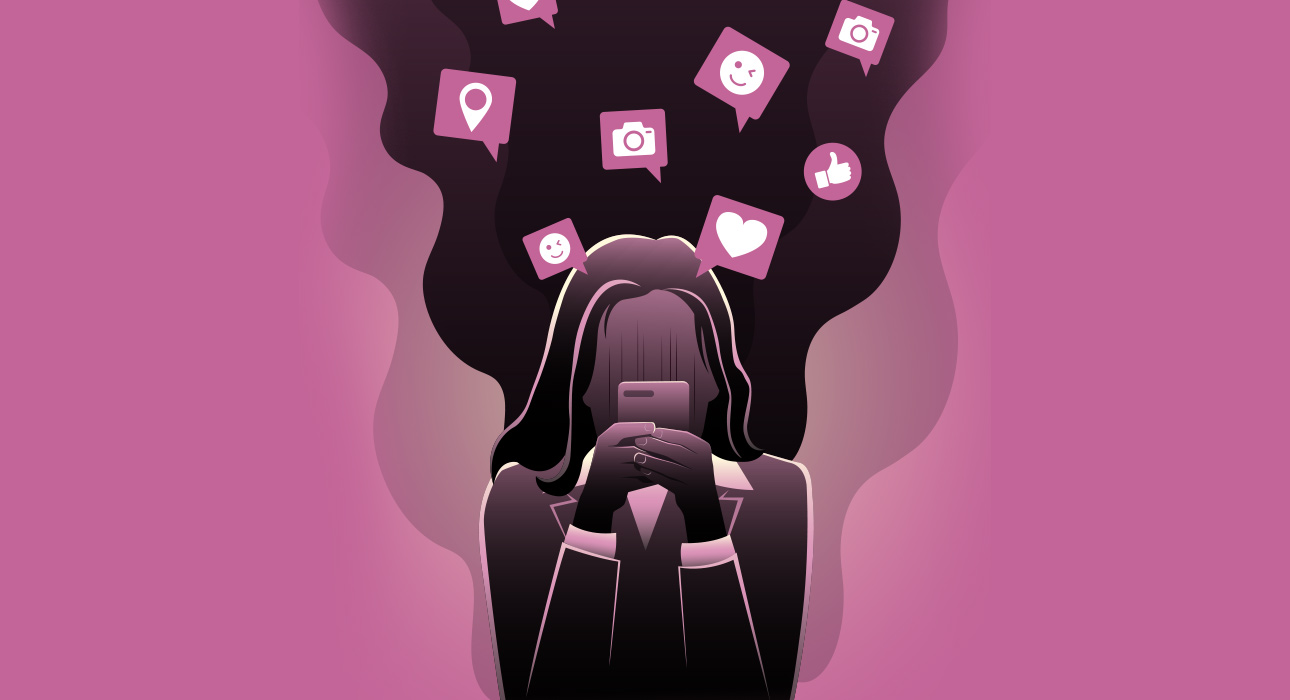
Digital media and technology have become deeply intertwined in our lives. Without even realising, it has slowly and deeply strengthened its roots in our daily life, for example, the moment we wake up, the first thing we do is check our phones. Tapping, scrolling, searching, we do not even realise how much time of our day we’ve spent. Not only for entertainment purposes, but all our communication and meetings take place through smartphones, tablets and laptops.
It has become an inseparable part of the lives of children and adolescents. Machines control our mindset and have made us dependent on them. It seems that when the machines stop working, society will collapse. Although it has brought revolutionary changes in the world, does it impact our brain functioning and structure?
Read More: Communication in the Digital World: Why Understanding Matters More Than Speed
Digital Media Impact on the Brain
Several studies have been done to study the impact of digital media and how every digital activity performed regularly leaves a watermark on brain structure and function. Digital media, including the use of the internet, smartphones, applications like TikTok and Facebook, all have neural effects. Digital media, in simple terms, can be understood as any content, whether visual or audio, text or graphic, created with technology and distributed through social media and website applications (Katie Price, 2025).
The difference between physical and digital media is that physical media includes things like books, CDs, DVDs, and newspapers, which can be held in one’s hands. Digital media differs in format, distribution and consumption. With the increasing use and popularity of digital media, physical media is declining. While digital media is cost-effective and more accessible, it hurts our brains. These include,
Read More: Forgetting in the Digital Age: Are Smartphones Weakening Our Memory?
1. Memory Encoding and Retrieval
The term used to describe the impact of digital media on memory is called “Google effect” or “digital amnesia” (Fayiye PV, 2025). It is a phenomenon where increased reliance on easily accessible online information reduces our ability to retain knowledge. Social media encourages individuals to document and share experiences rather than fully immerse and enjoy themselves in those experiences.
This disrupts memory consolidation. Not only this, but a constant influx of fragmented information strains the working memory, making it difficult to retain valuable information. Not only this, but dependence on digital media for recall of past events reduces our confidence in natural memory recall.
2. The Dopamine Loop
Neurotransmitters are endogenous chemicals that allow neurons (the building blocks of our nervous system) to communicate with each other throughout the body ( Zachary M. et al., 2023). They enable the brain to perform a variety of functions, and alterations in their levels are related to neurological disorders. Social media platforms exploit the reward system of our brains. They are designed in such a way that it particularly triggers the dopamine release through notifications, likes and comments.
These trigger intermittent and unpredictable rewards that produce effects similar to gambling and drug use disorders. The unpredictability of rewards strengthens the behaviour of repeatedly checking devices. Repeated stimulation of dopaminergic neurons and associated areas leads to neuroadaptation, where more activity is required for the release of dopamine and experiencing pleasure (Andreassen, 2015).
Read More: The Phantom Phone Syndrome: Why We Imagine Hearing Notifications That Don’t Exist
3. Feelings of Overriding Control
Social media acts as a window to the outside world and has increased the availability of social support and belongingness. But it also exposes people to social comparison, bullying and even the fear of missing out. The constant influx of information on one hand keeps the brain in a state of high arousal, which leads to increased cortisol (the stress hormone), while on the other hand, it leads to the experience of negative emotional states. This high cortisol and negative emotional state interrupts the neurotransmitter homeostasis, which leads to a decline in serotonin.
Decrease in serotonin is correlated with the development of depressive symptoms, anxiety disorders, and impulsivity (Cowen PJ and Browning M, 2015). Not only this, but emotional states of envy, inadequacy and loneliness may also be experienced. Emotional dysregulation due to serotonin deficiency and high cortisol can also lead to an increase in maladaptive coping, including excessive screen usage. Hence, it becomes a vicious cycle (Twenge JM, Campbell WK, 2019).
Read More: Misinformation in Your Feed: When Social Media Becomes a Mental Health Risk
4. Brain’s Rewiring
Neuroplasticity is the brain’s ability to adapt and rewire itself based on repetitive experiences and inputs. Repetitive exposure to digital content may reinforce maladaptive neural patterns, while balanced screen use may support positive mental stimulation and learning( Mathiak and Weber, 2006). A study from Stanford University indicated that adults aged 18-25 who engaged in digital media usage for longer periods exhibited thinning of the cerebral cortex, the brain responsible for processing memory and cognitive functions, for example, decision making.
This thinning of the cortical layer may impair learning and memory and also increase the risk of neurodegeneration ( Descourouez, 2024). Content consumed on digital media also plays an important role in shaping neuroplastic outcomes. For example, engagement with violent or fast-paced digital content has been linked to activation of dopaminergic and reward pathways. It reinforces maladaptive neural patterns associated with ADHD.
Read More: What Is the Growing Concern Behind Digital Addiction?
5. Fragmented Focus
The rapid increase in digital media usage has brought the challenge of maintaining sustained focus. It is easier to be constantly distracted now. Excessive use of digital media is associated with poor attentional control ( De Sola Gutierrez et al., 2016). Digital media keeps the human brain in a state of perpetual partial attention, which involves continuously monitoring multiple sources of information without dedicating full attention to any single task or information.
This leads to feelings of attentional overload (when environmental demands exceed an individual’s capacity for attentional resources). This also leads to a superficial understanding of information, reduced productivity, decreased memory retention and increased stress levels. Individuals tend to compensate for the distractions by working harder to make up for the lost time or to regain focus, resulting in higher frustration and stress levels.
Read More: How AI Rewires the Brain: Cognitive, Memory & Social Effects Explained
6. The Altered Architecture of the Brain
A study was conducted by Samson Nivins and Bruno Sauce et al., to examine long-term effects of digital media usage on the development of the cortex (which performs higher mental functions), the striatum (for habit formation and learning) and the cerebellum (for motor control, movement and coordination) across three different time points spanning from mid-childhood to adolescence. Results found that children who spent more time using social media had a subtle decrease in the volume of the cerebellum.
No changes were found in the development of the striatum and cortex. However, changes in the cerebellum were consistent over time and were more visible in late adolescence. Apart from movement and coordination, the cerebellum is associated with learning, self-control, and decision-making. Any abnormality in the cerebellum is linked to ADHD, depression, and anxiety disorders (Samson Nivins et al., 2024)
7. Instant Pleasure Culture
Researchers describe impulsivity as a multidimensional and complex construct. It reflects a person’s tendency to respond to environmental stimuli or inner impulses without considering the consequences of such behaviour. People use digital media in two ways: environmental cues, such as push notifications, trigger their use, or individuals actively seek digital media for immediate gratification when ongoing activities do not feel rewarding.
This preference for immediate gratification over delayed rewards is a key feature of impulsivity. Many studies show that the current generation of adolescents is less capable of waiting for rewards, due to the omnipresence of digital media in their lives (Richtel, 2010). Although technology and digital media usage have enhanced connectedness, they are also rewiring our brains to constantly crave instant gratification rather than investing in future goals (Greenfield, 2013).
Conclusion
Digital media is an important part of the revolutionary world. It has brought positive changes to society, where it has increased connectedness, flow of information and support for individuals. On one hand, specific games and apps may improve fluid intelligence and multitasking, but they may also increase the risk of the Google effect or popcorn brain.
Popcorn brain is a psychological state where thoughts, as well as attention, jump rapidly from one topic to another due to overstimulation of the brain from digital media. Hence, digital media is not only changing the world but also changing our brains. We can reduce and control its impact by cultivating habits of conscious digital engagement.
References +
- Andreassen CS. Online social network site addiction: A comprehensive review. Current Addiction Reports. 2015;2(2), 175–184.
- Montag C, Reuter M. Internet Addiction: Neuroscientific Approaches and Therapeutical Implications Including Smartphone Addiction. Springer. https://doi.org10.1007/978-3-030-02616-1.
- Cowen PJ, & Browning, M. What has serotonin to do with depression?. World Psychiatry. 2015; 14(2): 158–160.
- Twenge JM, Campbell WK. Media use is linked to lower psychological well-being: Evidence from three datasets. Psychiatric Quarterly. 2019; 90: 311–331.Mathiak, K., & Weber, R. (2006). Toward brain correlates of natural behaviour: fMRI during violent video games. Human Brain Mapping, 27(12), 948–956. https://doi.org/10.1002/hbm.20234
- De-Sola Gutiérrez, J., Rodríguez de Fonseca, F., and Rubio, G. (2016). Cell-phone addiction: a review. Front. Psychiatry 7, 175. doi: 10.3389/fpsyt.2016.00175
- Descourouez, M. G. (2024, May 30). What excessive screen time does to the adult brain. Cognitive Enhancement.https://longevity.stanford.edu/lifestyle/2024/05/30/what-excessive-screen-time-does-to-the-adult-brain/
- Mark, G., Iqbal, S., and Czerwinski, M. (2017). “How blocking distractions affects workplace focus and productivity,” in Proceedings of the 2017 ACM International Joint Conference on Pervasive and Ubiquitous Computing and Proceedings of the 2017 ACM International Symposium on Wearable Computers (New York, NY: ACM), 928–934. doi: 10.1145/3123024.3124558
- Nivins, S., Sauce, B., Liebherr, M., Judd, N., & Klingberg, T. (2024). Long-term impact of digital media on brain development in children. Scientific reports, 14(1), 13030.
- Richtel, M. (2010). Growing up digital, wired for distraction. The New York Times, 21, 1-11.
- Greenfield, P. M. (2013). The changing psychology of culture from 1800 through 2000. Psychological science, 24(9), 1722-1731.
- van Straten, R., & Peeters, D. G. T. (2019). Does new media use make us more impulsive (Doctoral dissertation, Master’s Thesis. Tilburg University Communication and Information Sciences, Tilburg, The Netherlands).
- Das, I., Thomas, A., & Shrestha, P. L. (2025). Impact of digital engagement on mental health and neuroplastic changes in adults. SXC JOURNAL., 2(1), 1–20. https://doi.org/10.3126/sxcj.v2i1.81658
- Sparsh, T. (2025, September 17). Serotonin: the mood molecule. Sparsh Diagnostic Center. https://www.sparshdiagnostica.com/serotonin/
- Sheffler, Z. M., Reddy, V., & Pillarisetty, L. S. (2023, May 1). Physiology, neurotransmitters. StatPearls – NCBI Bookshelf. https://www.ncbi.nlm.nih.gov/books/NBK539894/
- Shanmugasundaram, M., & Tamilarasu, A. (2023). The impact of digital technology, social media, and artificial intelligence on cognitive functions: a review. Frontiers in Cognition, 2. https://doi.org/10.3389/fcogn.2023.1203077
- Korte, M. (2020). The impact of the digital revolution on the human brain and behaviour: where do we stand? Dialogues in Clinical Neuroscience, 22(2), 101–111. https://doi.org/10.31887/dcns.2020.22.2/mkorte
- Six Ways Digital media Impacts the brain. (n.d.). NMSBA. https://www.nmsba.com/news/740-six-ways-digital-media-impacts-the-brain
- Staff, S. (2025, January 15). What is digital media | Types, importance, and applications. Sessions College. https://www.sessions.edu/notes-on-design/what-is-digital-media/
- P V, Fayize. (2025). The Impact of Social Media on Cognitive Function and Brain Health. Volume 6.
- Pandey, Kritika. (2025). Effects of Excessive Social Media Use on Neurotransmitter Levels and Mental Health: A Neurobiological Meta-Analysis. Era’s Journal of Medical Research. 12. 56-60. 10.24041/ejmr.2025.11.


Leave feedback about this