







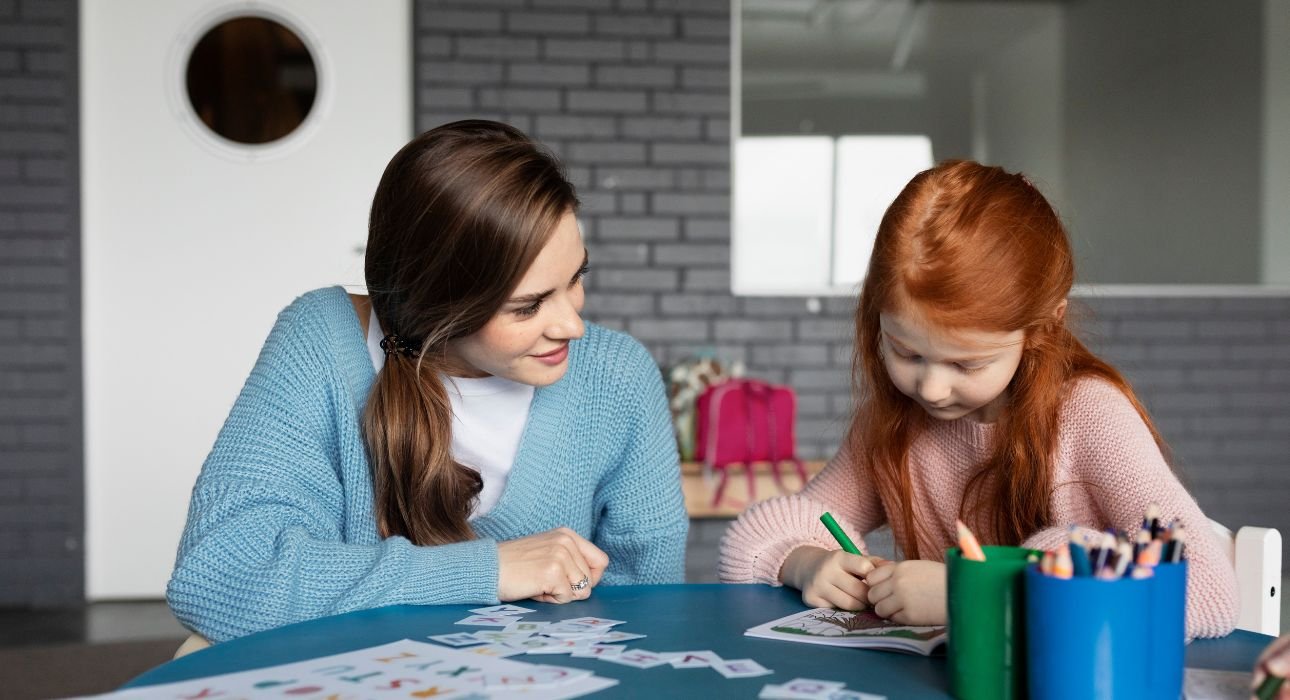
Childhood can be described as a world of small wonders, such as first friendships, first arguments, and first efforts to unravel what another person may be thinking or feeling. Beneath these commonplace instances is more. A deeper, slower transformation of the development of empathy. In classrooms, playgrounds, story-time circle and daily school routines, children are constantly learning how other people think and feel. They notice emotions, react to them and begin to understand that not everyone experiences the world in the same way. This gradual process is how empathy grows.
But empathy is more than a moral notion passed from a loving teacher. It develops through daily interactions, relationships, and exposure to people who are different from us. This is where neurodiversity education becomes especially important. Neurodiversity challenges the idea that all children learn, feel, or communicate in the same way. When children are taught that difference is not a mistake, instead a form of what it is to be human, they become transformed emotionally, moving from fear to understanding, to close the gap to develop connection, and to be curious instead of stigmatising.
Read More: The Psychological Impact of Peer Education on Neurodiversity in Schools
What Empathy Really Means for Growing Minds
For children, empathy means noticing how someone else feels and responding with care. This skill develops over time. Early on, children may cry when another child cries. As they grow older, they begin to understand why someone feels a certain way and how they might help.
Researchers often talk about two parts of empathy. Affective empathy is when children automatically feel what someone else is feeling. Cognitive empathy is when they try to understand another person’s thoughts or perspective (Bulgarelli et al., 2023).
By toddlerhood, children are beginning to give comfort and assistance in their interactions, marking an important developmental change associated with the emergence of intentional prosocial behaviours. By middle childhood, they understand that other people can think or
feel differently from them—an important step in perspective-taking (Frontiers, 2025). These skills contribute to and direct how children interact, cooperate, and work through social dilemmas.
Schools play a major role in developing empathy. Social and Emotional Learning (SEL) programs give children regular practice in recognising emotions, managing reactions, and understanding others (Hosokawa et al., 2024; Silke et al., 2024). When empathy is taught through stories, group discussions and shared activities, children learn that emotions are flexible and can be understood together.
Comprehending neurodiversity enhances these capacities. Misunderstandings happen not necessarily as a result of unkindness, but due more to unfamiliarity with neurodivergent means of communication or sensory experience. Delivering an accurate and strengths-based account of autism to typically developing students about their intellectual peer is known to properly reduce stigma and gain acceptance (Davidson et al., 2023; Tsujita et al., 2023). Learning about differences through experience helps empathy feel real rather than abstract.
Given this, empathy is not just a learned behaviour but an evolving capacity. When children are taught to engage in thinking in diverse ways, their own emotional intelligence deepens, and they become more generous with their responses to differences.
Read More: Social Emotional Learning
Why Teaching Neurodiversity Changes Children’s Emotional Worlds
Teaching neurodiversity reshapes children’s emotional lives by reducing misunderstanding and exclusion. Rather than attempting to “correct” neurodivergent children, this approach focuses on adapting school environments to foster acceptance and emotional safety (Chen et al., 2023).
A key mechanism is stigma reduction. Many misinterpretations of autistic behaviour occur because peers lack explanatory knowledge. When children learn about sensory sensitivities or communication differences, those behaviours stop seeming strange or intentional (Davidson et al., 2023). Breakthrough programs that engaged sensory experiences with video-based exposure have been shown to reduce negative attitudes and overall negative perception, for it was found that the positive attitude remained for weeks after the experience (Shin & Lee, 2021).
Neurodiversity education is also an important facilitator of perspective-taking. Activities that incorporate differentiation and highlight strengths have demonstrated a better understanding of diverse contrived and social patterns (Silke et al., 2024). Programs like Activating Social Empathy show that increased empathy leads to more helping behaviour, emotional awareness, and social responsibility (Diemer et al., 2023).
These changes help make school more predictable and socially supportive of neurodivergent children. Many students who are autistic have said that traditional classrooms are overwhelming; when their peers are aware of their sensory and communication differences, school is safer and more accessible (Chen et al, 2023). SEL programs in inclusive settings also help children manage emotions and reduce behavioural difficulties (Hosokawa et al., 2024). Thus, teaching neurodiversity changes the climate of classrooms by replacing judgment with understanding and including all children more fully.
Read More: Understanding and Supporting Neurodiversity in the Classroom
What the Research Shows
Across studies, there is a common theme: teaching children to understand minds that are different from their own increases empathy in sustained and inclusive ways. The Activating Social Empathy (ASE) program reported that adolescents who participated had higher empathy, thus mediating increases in prosocial behaviour, emotional efficacy and social responsibility (Silke et al, 2024). SEL programs for younger children see similar positive results: for example, the Fun FRIENDS anti- bullying program with preschoolers decreased aggression, impulsivity, anxiety and withdrawal, demonstrating the impact of early and continual emotional education (Hosokawa et al, 2024).
Scholarly literature on neurodiversity education consistently indicates significant effects on stigma reduction. For example, an autism-sensory-perception intervention utilising simulated experiences and personal video testimony to combine mind and body experiences promotes reductions in negative attitudes up to six weeks after the intervention (Tsujita et al., 2023). A virtual acceptance program focused on autism intervention over five weeks demonstrated increased knowledge, attitudes, and intentions about autistic peers and that knowledge and attitudes can be measured a year later (Davidson et al., 2023).
Research also shows that direct teaching—such as modelling kind behaviour, practising responses, and giving feedback—helps children respond more empathetically to autistic peers across different situations (Schrandt, 2009). Taken together, these findings provide evidence that empathy is easily taught. Children’s emotional intelligence can become more inclusive and lasting when children learn how different minds sense, process, and communicate.
Read More: Parenting with Neurodiversity: Nurturing Diverse Minds
Bringing Neurodiversity into the Classroom
The Neuroinclusive School Model (Chasen et al., 2024) encourages schools to shift from changing children to changing environments. Differences in thinking are treated as natural, not problems.
1. A Foundational Shift
Teaching peers why autistic children behave differently reduces stigma and fosters acceptance. Sensory simulation paired with video contact significantly decreases negative attitudes (Tsujita et al., 2023), while virtual acceptance programs strengthen knowledge and positive behavioural intentions (Davidson et al., 2023).
2. Elements of a Neuroinclusive Classroom
- Social Environment: Classrooms that celebrate strengths and openly discuss differences create belonging. Research shows that autism awareness education improves peer acceptance (Davidson et al., 2023)
- Physical Environment: Low sensory and well-organised classes lead to engagement and emotional regulation. Lowering sound and visual distractions reduces sensory overload, while visual supports help children understand expectations (Kapp et al., 2020).
- Activities & Routines: UDL is flexible and allows for options to choose materials, pacing and formats for activities (CAST, 2018). Staying consistent in routines and providing advance information alleviates stress.
3. Interventions and Professional Support
Empathy can also be intentionally taught. Behavioural-analytic techniques have been shown to improve children’s empathic responding with autistic children, and school-wide SEL initiatives have demonstrated positive influences on empathic understanding and prosocial behaviour (Schrandt et al., 2009; Silke et al., 2024). The continued inclusion of children with autism requires more support for teachers, as lower confidence was found in teachers who have low preparation (Norwich & Eaton, 2023).
Read More: The Beauty of Neurodiversity: Celebrating Our Unique Minds
The Road Ahead
The establishment of inclusive education is often too difficult or impossible to achieve because of insufficient training and resources for teachers, and the failure to develop policy structures for additional assistance. (Florian, 2014; Symes & Humphrey, 2011). Most of the work surrounding empathy has been done in a Western context, and more longitudinal studies are needed to investigate the longer-term implications of school-based intervention programs on children’s empathy (Taylor et al., 2017). Research on autism-acceptance intervention needs to be conducted with larger samples and collect perspective from more autistic individuals (Gillespie- Lynch et al., 2021). Lastly, early-childhood study researchers need to foster a better methodological approach to examine aspects of empathy and emotional contagion (Decety, 2010).
Neuroinclusive conditions shift the load from the child to the context. Modifying both sensory and social environments counters barriers that neurodivergent learners experience in greater proportions, which creates psychological safety (Doyle & McDonnell, 2022). Children who learn accurate information about autism show more understanding and compassion toward autistic peers (Jones et al., 2021). Evidence-based programs show that empathy can grow. SEL programs and neurodiversity education reduce stigma and improve emotional skills (Segal et al., 2017; Jahromi et al., 2023). Virtual programs also help children recognise strengths such as strong memory and attention to detail in autistic peers (Fletcher-Watson et al., 2022).
Read More: Empathy through Exposure: The Emotional Impact of an Inclusive Visual Campaign
Conclusion
Empathy may begin with something small—like a baby crying when another baby is upset— but how it grows depends on the world we create for children. Research clearly shows that when schools teach emotions, respect different ways of thinking, and design environments that include everyone, empathy does more than increase. It becomes flexible, lasting, and inclusive. Neurodiversity education provides a quiet revolution by replacing the old narratives of deficit with stories of variation and reminding children that difference is not in the way of connection but rather one of its most compelling invitations. Through sensory-aware classrooms, strengths-based teaching, and human-centred programs, children learn to see one another as fellow humans rather than strangers
The research provides some positive and hopeful realities: empathy can be taught, stigma can be unpacked, and understanding can be added. Every lesson in compassion, via SEL activities or neurodiversity modules or real-life everyday interactions with opportunities for relateability, will factor in the emotional architecture children carry with them into adolescence and beyond.
In the end, the promise of neuro-inclusive education is that it not only supports neurodivergent learners but also transforms the moral fabric of childhood altogether. It prepares a generation to approach difference with curiosity rather than fear, care rather than judgment. And in doing so, it offers the faintest whispers of what a kinder future may feel like: a world where every child learns not just how another feels, but how another experiences the world of being human.
References +
• Bulgarelli, C., & Jones, E. J. H. (2023). The typical and atypical development of empathy: How big is the gap from lab to field? JCPP Advances, 3(1), e12136. https://doi.org/10.1002/jcv2.12136
• Davidson, D., & Morales, D. (2023). Reducing stigma toward autistic peers: a pilot investigation of a virtual autism acceptance program for children. Frontiers in Psychiatry, 14, 1241487. https://doi.org/10.3389/fpsyt.2023.1241487
• Health, N. L. C. &. A. (2024). Evidence-based kindness and empathy for autistic children. The Lancet Child & Adolescent Health, 8(5), 311. https://doi.org/10.1016/s2352-4642(24)00080-4
• Hosokawa, R., Matsumoto, Y., Nishida, C., Funato, K., & Mitani, A. (2024). Enhancing social-emotional skills in early childhood: intervention study on the effectiveness of social and emotional learning. BMC Psychology, 12(1), 761. https://doi.org/10.1186/s40359-024-02280-w
• Rajotte, E., Grandisson, M., Couture, M. M., Desmarais, C., Chrétien-Vincent, M., Godin, J., & Thomas, N. (2024). A neuroinclusive school model: focus on the school, not on the child. Journal of Occupational Therapy Schools & Early Intervention, 18(2), 281–299. https://doi.org/10.1080/19411243.2024.2341643
• Schrandt, J. A., Townsend, D. B., & Poulson, C. L. (2009). PHYSICAL ACTIVITY IN HOMES 13 TEACHING EMPATHY SKILLS TO CHILDREN WITH AUTISM. Journal of Applied Behavior Analysis, 42(1), 17–32. https://doi.org/10.1901/jaba.2009.42-17
• Silke, C., Davitt, E., Flynn, N., Shaw, A., Brady, B., Murray, C., & Dolan, P. (2023). Activating Social Empathy: An evaluation of a school-based social and emotional learning programme. Social and Emotional Learning Research Practice and Policy, 3, 100021. https://doi.org/10.1016/j.sel.2023.100021
• Sultan, M. A., & Khan, N. N. (2025). Rethinking empathy development in childhood and adolescence: a call for global, culturally adaptive strategies. Frontiers in Psychology, 16, 1575249. https://doi.org/10.3389/fpsyg.2025.1575249
• Tsujita, M., Homma, M., Kumagaya, S., & Nagai, Y. (2023). Comprehensive intervention for reducing stigma of autism spectrum disorders: Incorporating the experience of simulated autistic perception and social contact. PLoS ONE, 18(8), e0288586. https://doi.org/10.1371/journal.pone.0288586
• Woolfson, L. M. (2024). Is inclusive education for children with special educational needs and disabilities an impossible dream? British Journal of Educational Psychology, 95(3), 725–737. https://doi.org/10.1111/bjep.12701



Leave feedback about this