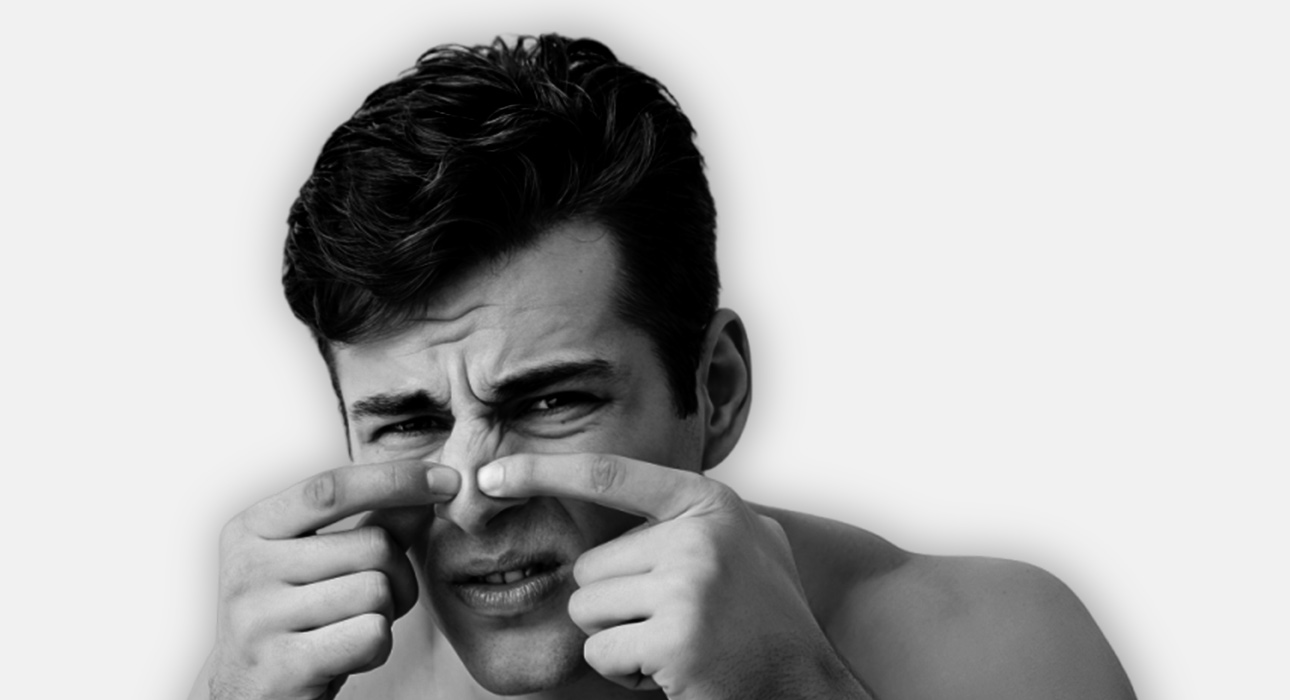
Almost everyone has been told at some point in their life to stop picking at a scab or rough patch of skin by a parent or elder, only to find themselves doing it again minutes later without even realising it. However, for a select group of people, this seemingly harmless childish habit grows to become an uncontrollable compulsion that they can do nothing to stop, despite the damage it may cause.
A study of medical students in Karachi found that nearly one in ten reported skin picking severe enough to count as a clinical pattern, with even more reporting some form of repetitive body-focused behaviour overall (Siddiqui, Naeem, Naqvi, & Ahmed, 2012). This disorder, known as excoriation, is a psychiatric condition that involves picking that results in damage and distress, and belongs to the same diagnostic family as obsessive-compulsive disorder, but is rarely discussed as a legitimate problem. This article discusses the difference between skin picking as a bad habit and excoriation, the cycle and comorbid conditions that contribute to its development, and the interventions that are proven to help.
What Is Excoriation?
The DSM 5 describes excoriation as picking one’s own skin, causing skin lesions despite repeated attempts to prevent the picking and distress or impairment (American Psychiatric Association, 2013; Grant, Odlaug, Chamberlain, Keuthen, Lochner, & Stein, 2012). The disorder should not be a symptom of another psychiatric condition such as a dermatological problem, substance use, or deliberate self-harm. The primary difference between habitual picking and excoriation is the presence of distress and the inability to control the impulses.
Skin picking occurs in two varieties, automatic picking and deliberate picking. The first kind occurs without the person paying attention while they are doing something else, such as reading, watching TV or lying down in bed. The latter, on the other hand, is focused picking of a specific area in response to a sensation, thought or feeling that something is wrong. The most usual areas for picking are the face, arms, hands and the scalp, and the picking episodes last anywhere from a few minutes to an entire day, using fingers, tweezers or pins to get under the skin. Flessner and Woods (2006) found that people with chronic skin picking often reported significant social, occupational and academic impairment, as well as financial costs for medical treatment and concealing scars, which indicated the disorder affected many areas of life, not just the picking itself.
What Causes the Cycle?
Excoriation follows the same cycle as other body-focused repetitive behaviours, including a building tension or urge, satisfaction or relief from picking and then guilt or tension when something unwanted is noticed. Tucker, Woods, Flessner, Franklin and Franklin (2011) found that this sense of relief was linked to increased rates of interference in life, with picking-related distress predicting social avoidance and cancellations due to appearance concerns.
Excoriation rarely exists on its own, and shares its diagnostic category of obsessive-compulsive and related disorders along with body dysmorphic disorder and other repetitive behaviours (Grant & Chamberlain, 2015). Flessner and Woods (2006) found that many people who engage in compulsive picking suffered from anxiety or depression, and the symptoms were related to interference. The relationship between picking and depression or anxiety was explained in part by high levels of experiential avoidance, in that picking was used as a way to escape from thoughts or feelings rather than an end in itself. This makes intervention difficult because excoriation is not simply a matter of willpower. But a disorder that serves an important function for the sufferer, even when it causes them distress.
The Role of Stress and Emotional Triggers
In addition to general comorbidity, anxiety and stress seem to be directly involved in the mechanism of the picking cycle. And not merely exist independently alongside it. According to research conducted by Grant and Chamberlain (2021), there is a significant increase in neuroticism, a personality trait characteristic of emotional instability and proneness to stress, among adults with skin picking disorder as compared to those without the disorder, and this increase is strongly correlated with the severity of the picking. This further supports the claim that day-to-day stress reactivity, in addition to clinically diagnosed anxiety, contributes to the severity and persistence of picking episodes and, therefore, is often taken directly into consideration during treatment.
Not everyone picks for the same underlying reason, however. Grant et al. (2021) identified two broad patterns behind skin picking: an “emotional” or “reward” pattern, seen in the majority of people with the disorder, where picking is triggered by negative emotions such as anxiety, frustration, or boredom and functions to regulate that feeling rather than target any specific blemish. A milder “functional” pattern involves lower urges and less associated distress. This distinction is important because emotion-triggered picking cannot be stopped by willpower alone. It is a coping strategy, albeit dysfunctional and a means of control rather than a lack of self-control.
The Role of Perfectionism and the Need for Control
Perfectionism is a common occurrence in excoriation, but not in the way that people might think. Grant and Chamberlain (2021) found that people with skin picking disorder scored lower on conscientiousness, a trait linked to organisation and self-discipline, than people without the disorder. This can seem to contradict how perfectionistic many patients describe feeling about their own skin specifically. Related research into body-focused repetitive behaviours has identified an “impulsive or perfectionist” presentation, where the person feels as if they have to fix a perceived flaw, and they find it hard to stop themselves, even when they start, being triggered by the feeling or sight of a minor skin irregularity which other people would hardly ever take any notice of (Grant et al., 2021).
Someone in this pattern finds picking as an impulse to control their lack of self-esteem, to smooth out an imperfection. They cannot stand it, and as a result, pick much more than the original blemish would cause. Recognising this pattern is important, since it reframes the problem completely, taking it away from being a self-indulgent moral failing and into a perfectionist-based coping mechanism, which exacerbates the underlying problem of the person’s expectations of their own skin being unattainable.
Diagnosis and Intervention
Excoriation often co-occurs with OCD or body dysmorphic disorder. The diagnostic evaluation of excoriation includes forming an impression that follows DSM‑15 criteria. A physical exam checks severity and rules out other skin disorders. After that, healthcare providers screen for conditions such as anxiety, depression, and OCD. These conditions often appear together with excoriation.
Because excoriation is common in patients who have OCD or body dysmorphia. The healthcare provider will ask the patient to explain why the patient picks. The healthcare provider will ask the patient whether certain thoughts or feelings trigger the picking. Whether the picking happens at a time of day and how the picking changes the patient’s overall functioning. The presence of damage on the skin is not used as a primary assessment guide since most patients show similar levels of damage despite reporting significantly different symptoms.
Habit Reversal Training and Treatment
Once the diagnosis is made, the client should ideally begin the intervention process using habit reversal. This is a behaviour therapy comprising three components. Awareness training helps clients recognise warning signals that trigger picking. The second component is competing response, where the patient replaces picking with another task. This can range from making a fist to squeezing to holding an object. The third element is stimulus control, which entails modifying the environment to reduce opportunities for picking or creating barriers such as avoiding the use of tweezers or removing mirrors. According to Teng, Woods and Twohig (2006), a treatment protocol that employs habit reversal resulted in significantly fewer cases of picking among the treatment group compared to those on a waitlist, with maintained progress following up to three months post-intervention.
For the medical side, no medication is officially recommended for excoriation. However, N-acetylcysteine has shown promising results as an over-the-counter supplement that reduces glutamate activity. In a controlled trial, patients who took N-acetylcysteine displayed significantly reduced picking severity compared to a placebo group over twelve weeks (Grant, Chamberlain, Redden, Leppink, Odlaug, & Kim, 2016). Other medications more commonly used for OCD, such as SSRIs, have shown more inconsistent results for excoriation specifically. This is part of why the disorder is now classified as related to OCD. But distinct from OCD rather than a direct subtype of it (Grant & Chamberlain, 2015).
A supportive, non-judgmental network and combined therapies can help manage excoriation disorder.
Conclusion
Excoriation(Skin Picking) is a psychiatric illness that significantly decreases the quality of life by interfering with many areas such as daily routines, relationships, money and general well-being. This disease is strongly connected with obsessive-compulsive disorder, often occurs with depression or anxiety, but can be successfully treated. Habit reversal training has been shown to treat excoriation, along with emerging medical interventions such as N-acetylcysteine. Managing expectations is a vital part of supporting someone with excoriation. It can be difficult to deal with the urges and guilt of compulsive picking. But recovery is not a straight line, and picking can resume after periods of abstinence, no matter how long.
References +
- American Psychiatric Association. (2013). Diagnostic and statistical manual of mental disorders (5th ed.). https://doi.org/10.1176/appi.books.9780890425596
- Flessner, C. A., & Woods, D. W. (2006). Phenomenological characteristics, social problems, and the economic impact associated with chronic skin picking. Behaviour Modification, 30(6), 944–963. https://doi.org/10.1177/0145445506294083
- Grant, J. E., Bethlehem, R. A. I., Chamberlain, S. R., Peris, T. S., Ricketts, E. J., O’Neill, J., Dougherty, D. D., Stein, D., Lochner, C., Woods, D. W., Piacentini, J., & Keuthen, N. J. (2021). Neurobiology of subtypes of trichotillomania and skin picking disorder. CNS Spectrums. https://doi.org/10.1017/S109285292100095X
- Grant, J. E., & Chamberlain, S. R. (2015). Trichotillomania and skin-picking disorder: Different kinds of OCD. Focus, 13(2), 184–189. https://doi.org/10.1176/appi.focus.130212
- Grant, J. E., & Chamberlain, S. R. (2021). Personality traits and their clinical associations in trichotillomania and skin picking disorder. BMC Psychiatry, 21, 203. https://doi.org/10.1186/s12888-021-03209-y
- Grant, J. E., Chamberlain, S. R., Redden, S. A., Leppink, E. W., Odlaug, B. L., & Kim, S. W. (2016). N-acetylcysteine in the treatment of excoriation disorder: A randomised clinical trial. JAMA Psychiatry, 73(5), 490–496. https://doi.org/10.1001/jamapsychiatry.2016.0060
- Grant, J. E., Odlaug, B. L., Chamberlain, S. R., Keuthen, N. J., Lochner, C., & Stein, D. J. (2012). Skin picking disorder. American Journal of Psychiatry, 169(11), 1143–1149. https://doi.org/10.1176/appi.ajp.2012.12040508
- Siddiqui, E. U., Naeem, S. S., Naqvi, H., & Ahmed, B. (2012). Prevalence of body-focused repetitive behaviours in three large medical colleges of Karachi: A cross-sectional study. BMC Research Notes, 5, 614. https://doi.org/10.1186/1756-0500-5-614
- Teng, E. J., Woods, D. W., & Twohig, M. P. (2006). Habit reversal as a treatment for chronic skin picking: A pilot investigation. Behaviour Modification, 30(4), 411–422. https://doi.org/10.1177/0145445504265707
- Tucker, B. T. P., Woods, D. W., Flessner, C. A., Franklin, S. A., & Franklin, M. E. (2011). The Skin Picking Impact Project: Phenomenology, interference, and treatment utilisation of pathological skin picking in a population-based sample. Journal of Anxiety Disorders, 25(1), 88–95. https://doi.org/10.1016/j.janxdis.2010.08.007