From Gen X to Gen Z, Indian youth have marched out in large numbers in protest against various acts of injustice and questioned authority in a bid to build a future that they desire. However, what makes an individual feel frustrated to come together collectively?
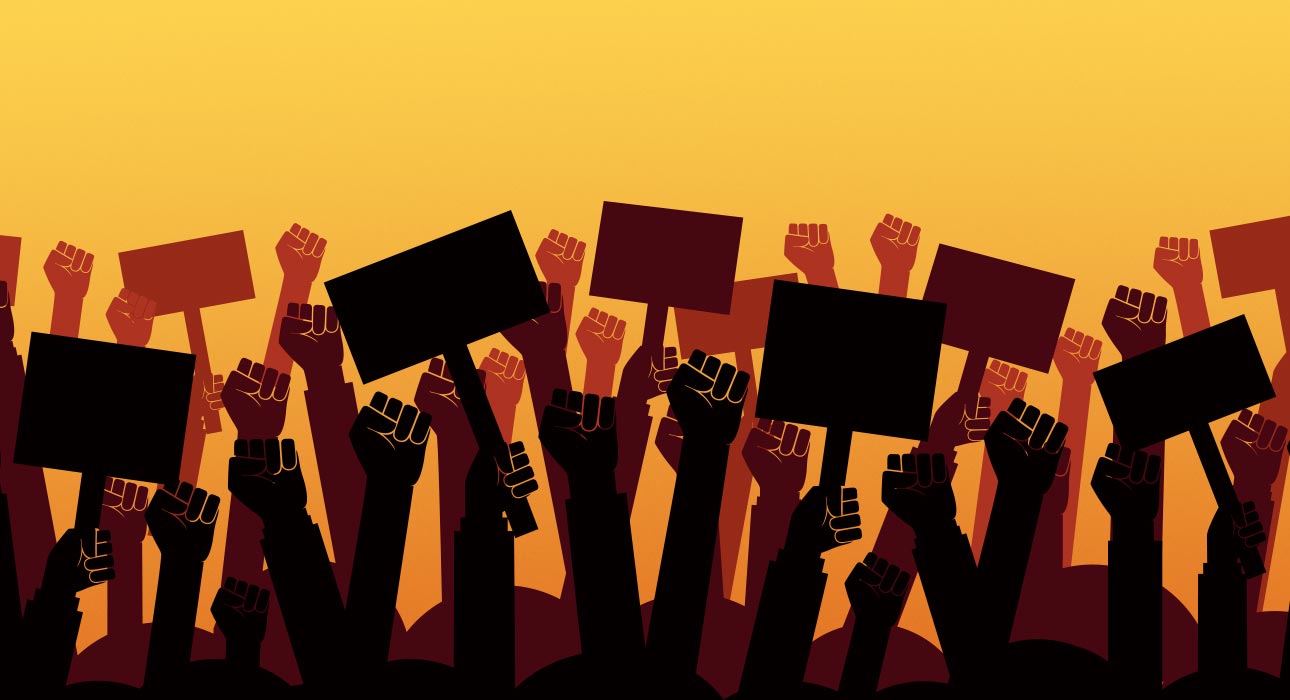
In the streets, youth come together holding placards and shouting to bring about change. Frustrations felt on a personal level can turn into collective action when there is the realisation of shared problems and common objectives. Frustration occurs due to certain hurdles which hinder people from reaching their objectives (Yazdi et al., 2024). Similarly, when youth find themselves to be facing injustices, inequalities and lack of opportunities, they are motivated to participate in civic activities.
The Psychology of Perceived Injustice
Injustice is defined as a situation where an individual or his/her social group perceives itself as being treated unjustly or excluded from some privileges or opportunities. Research reveals that group-based deprivation, anger, and moral outrage can lead to collective action (da Costa et al., 2023). Frustration with lack of response of authorities to such issues as women’s safety, unequal opportunities regarding education, unemployment, discrimination, and corruption among others can be the source of grievances for the youth in India.
If individuals identify that others have the same experience, their grievances may turn into a collective action and demand for justice. Nevertheless, injustice is not enough to make one go out to protest. People may keep quiet, use legal means, participate in politics, etc. These actions will depend on different things like shared identity, opportunities, belief in effectiveness of collective action and so on. In addition, even if they join the same demonstration, their reasons for doing so might differ. This knowledge helps understand why perceptions of injustice can push the youth to protest but not assume that all protesters have the same motives.
Read More: The Emergence of Student-Led Digital Protests in India
Finding Strength in a Shared Identity
In the theory of social identity, the process of belonging to some group determines the development of self-concept, sense of belonging, and behavior (Tajfel & Turner, 1979). Belonging to such groups as students, women, workers, or members of the local community can lead one to understand that the same problems are faced by all people. This fact helps form solidarity, motivates people as a team, and makes people request changes collectively.
Social identity, perceived injustices, and perception of the efficiency of collective actions are among the main motivations for participating in social movements (van Zomeren et al., 2008). In India, a common identity can bring young people together regarding the issues of unemployment, gender discrimination, education, etc. Moreover, social media can serve as a tool for networking, through which people can unite around the same goal. However, group affiliation does not necessarily mean protest participation. It is contingent upon certain conditions and beliefs in the efficiency of collective actions.
Read More: Understanding Gender Dysphoria in Adolescence: Identity, Distress, and Mental Health Outcomes
From Anger to Hope: The Role of Emotions
Emotions become the motivational force that drives youth into protesting and anger is rooted in the feeling of injustice, discrimination or lack of responsiveness of the institution. It drives people to fight for justice and responsibility. However, fear and sadness become the consequences of the threat of violence or loss of somebody close and the feeling of solidarity and pride helps youth build strong relations between each other and strive for a common goal. Finally, hope is the emotion that makes protesters feel that collective efforts will contribute to making tomorrow better.
The emotions that unite people can lead to developing the common identity of the group and motivating them to engage in collective actions. Collective efficacy that means people’s common belief in the possibility of changing something and being successful in their efforts can drive people to action even more (van Zomeren et al., 2008). At the same time, the activism process may produce some negative emotions among youth.
Social Media, Peer Influence, and Mobilisation
It has been noted that social media provides a platform that is essential in the dissemination of information and organization of protests. The use of hashtags, video uploads, and group chats helps the youths to share their experiences, express their grievances, declare their intended protest, and look for the assistance of people who share the same ideas. Research has established that the use of online networks helps in the organization of the protest by providing the necessary information and the messages that can help the groups to develop group identity and motivation (Jost et al., 2018).
Additionally, researchers in India have studied social media activism. It highlights how the digital networks can be empowering for the marginalized community. However, it does not automatically translate into offline mobilization (Roy, 2025). Social influence also matters since the sight of other people participating in online networks, particularly friends. It Helps to inspire individuals to join in the protest as the participation becomes socially acceptable. Despite this, digital mobilization brings a number of dangers, including manipulation through misinformation, manipulation of videos, online coercion, and polarized discussion.
Read More: Misinformation in Your Feed: When Social Media Becomes a Mental Health Risk
Indian Protests: When Young People Demand Change
Young Indians have participated in demonstrations on various issues For instance, during the anti-Citizenship Amendment Act (CAA) demonstration between 2019 and 2020, the students and youth demonstrated against the law that they felt was unjust in the sense that it compromised the principle of secularism and equality among people of various religions (Express Web Desk, 2019). Universities such as Jamia Millia Islamia and Aligarh Muslim University have played a critical role in these demonstrations.
One of the demonstrations has been related to the sexual assault that occurred to a young girl in New Delhi in December 2012. This act triggered widespread public anger among which the young members were actively involved in calling for justice for the victim, safety of women in the region, and action against sexual violence (Human Rights Watch, 2012). The recent recruitment examination irregularities and examination irregularities among other protests have been based on the issues of fear for justice and the fear of lack of job opportunities. These recruitment examination irregularities have affected more than a million Indians from various states of India (Baruah et al., 2024).
Read More: When Childhood Is Violated: The Lasting Impact of Child Sexual Abuse
Does Protest Create Empowerment and Belonging?
Protest actions may make youth believe that their voices are being heard and that they have the capacity to make a difference within society. Speaking in public, organizing, and working with other people can assist them in developing the skills of leadership and communication, as well as critical thinking and problem-solving. They may provide them with a sense of increased social connectedness through interactions with people who have the same goals.
Protest actions may lead to self-efficacy or a belief that individuals have the ability to act and collective efficacy or a belief that they can create changes collectively. Social identity, perception of injustice, and collective efficacy are considered three major factors that stimulate collective actions based on empirical findings (van Zomeren et al., 2008). However, participation in protest actions does not guarantee empowerment for youth. Youth may suffer from stress, conflicts, personal risks, criticism, or conflicts within their families. Disappointment and burnout may happen when people’s demands remain unheeded.
Reasons for Not Participating in Protests
It is not every young person who participates in protest demonstrations despite having similar fears and concerns. Fears of arrest, violence, repercussions on studies, or future employment prospects could deter someone from participating in demonstrations. The expectations of family members, economic conditions, high travel cost, and lack of time could also be other factors. There are those who might have less trust in political organizations, may oppose the method used by the movement, and would rather engage in voting, voluntarism, and online activism.
There may be others who do not feel that the protests will affect the decision-makers. Thereby undermining their feeling of political efficacy. Studies have found that perceptions of injustice, group identification, and effectiveness of collective actions are linked with participation in protests (van Zomeren et al., 2008). Other social factors like approval by peers, family, and disapproval could deter one from participating in protest. While approval by peers and family members could motivate participation. Therefore, non-participation of young people should not be taken as indifference.
Conclusion
People protest because there are injustices that affect their identities and they use passion to change the state of affairs. Social media could be the site for solidarity, and hope and action may make the youth believe that there will be something better in the future. However, civic participation of youth is different from person to person and depends on their own experiences. Civic participation does not consist solely of participation in protests; rather, it can be understood as volunteering, advocacy, and communication among others.
References +
- Baruah, S., Mohan, A., Khan, H., & Janyala, S. (2024, February 6). The big all India exam leak: Over 5 years, 1.4 crore job seekers in 15 states bore the brunt. The Indian Express. https://indianexpress.com/article/express-exclusive/the-big-all-india-exam-leak-over-5-years-1-4-crore-job-seekers-in-15-states-bore-the-brunt-9145910/
- da Costa, S., Páez, D., Martí-González, M., Díaz, B., & Bouchat, P. (2023). Social movements and collective behavior: An integration of meta-analysis and systematic review of social psychology studies. Frontiers in Psychology, 14, Article 1096877. https://doi.org/10.3389/fpsyg.2023.1096877
- Express Web Desk. (2019, December 16). From AMU to Loyola College: Students across India protest against police crackdown in Jamia. The Indian Express. https://indianexpress.com/article/india/from-amu-to-loyola-college-universities-jamia-students-citizenship-act-protests-6169517/
- Human Rights Watch. (2012, December 29). India: Rape victim’s death demands action. https://www.hrw.org/news/2012/12/29/india-rape-victims-death-demands-action
- Jost, J. T., Barberá, P., Bonneau, R., Langer, M., Metzger, M., Nagler, J., Sterling, J., & Tucker, J. A. (2018). How social media facilitates political protest: Information, motivation, and social networks. Political Psychology, 39(S1), 85–118. https://doi.org/10.1111/pops.12478
- Roy, S. G. (2025). Social media, youth and civil unrest in India: A new rebel’s dilemma. Asian Journal of Comparative Politics, 10(2), 133–151. https://doi.org/10.1177/20578911241254165
- Schmieder, L., Gaynor, K., Lynch, J., & D’Alton, P. (2023). Perceived injustice and its impact on psychological distress in cancer patients and survivors. Supportive Care in Cancer, 31(7), Article 433. https://doi.org/10.1007/s00520-023-07833-0
- Tajfel, H., & Turner, J. C. (1979). An integrative theory of intergroup conflict. In W. G. Austin & S. Worchel (Eds.), The social psychology of intergroup relations (pp. 33–47). Brooks/Cole.
- van Zomeren, M., Postmes, T., & Spears, R. (2008). Toward an integrative social identity model of collective action: A quantitative research synthesis of three socio-psychological perspectives. Psychological Bulletin, 134(4), 504–535. https://doi.org/10.1037/0033-2909.134.4.504
- Yazdi, H., Wickman, C., Ljung Aust, M., Selbing, I., Kowalski, L., & Axelsson, J. (2024). Understanding frustration triggers and emotional responses in driving situations. Scientific Reports, 14, Article 28613. https://doi.org/10.1038/s41598-024-76792-1