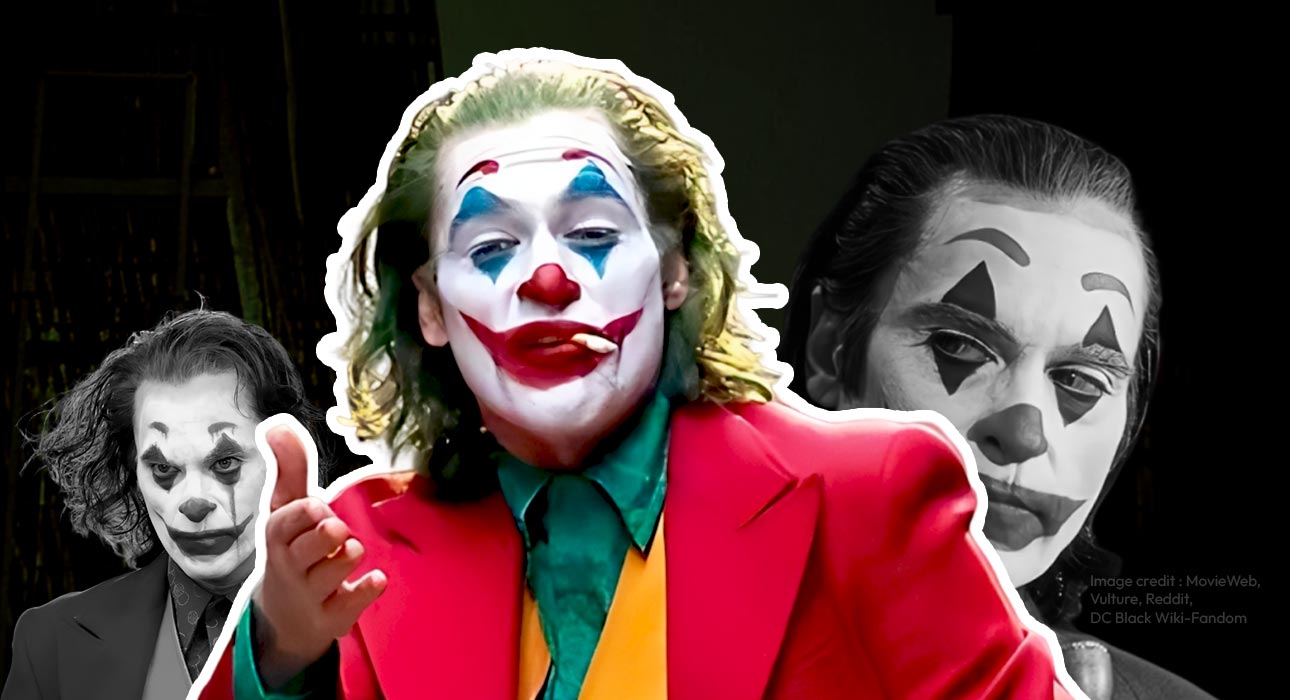
Why did the Joker movie stay with the viewers after it ended? How is it that whenever people talk about Joker movies, they remember how Arthur Fleck’s character transformed into the Joker persona? Why is it important to understand the difference between Fictional storytelling and clinical understanding? Joker (2019) is a fictional movie in which the central character is Arthur Fleck, and throughout the movie, all the people around him behave inappropriately, don’t support him, and humiliate him.
Throughout the movie, this character has shown that he has been going through a lot. He was going through both Psychological and social factors that were responsible for his transformation into the Joker persona as portrayed in the movie. Arthur went through childhood trauma, social isolation, and limited social support. Gradually, Arthur Fleck’s character transformed into a Joker persona, which created a place in the hearts of many. The psychological meaning behind his laughter. In this article, we are going to elaborate on the same: “The Psychology Behind Joker”.
Read More: Morally Wrong, Emotionally Right: Understanding the Psychology of Villain Appeal
The Psychological Meaning Behind Arthur’s Laughter
Arthur’s psychological meaning behind his laughter is rooted in his childhood. Arthur’s father used to physically abuse his mother and him. One day, Arthur was injured by his father, resulting in a brain injury. This was the main reason why Arthur developed a medical condition of uncontrollable laughter that didn’t match his feelings. Whenever he got nervous and anxious, he used to laugh because of this condition. His laughter doesn’t usually match what he was feeling. This was the highest cost that Arthur had to pay for his childhood trauma.
Childhood trauma can affect adults later on in their lives. A study by Nyfors (2025) examined Arthur Fleck in Joker (2019) through trauma theory and dissociation, while focusing on how trauma is expressed through his body, behaviour, and emotional responses. The study highlights Arthur’s childhood abuse, which he initially cannot remember, and then connects this trauma with amnesia, shame, emotional suppression, attachment difficulties, and dissociation. His involuntary laughter, self-destructive behaviour, and dancing are interpreted as bodily expressions of emotions that he struggles to verbalise, as observed in the movie.
The study further suggested that his unresolved trauma and increasing dissociation contribute to the psychological separation between Arthur and his Joker identity, while also highlighting the role of social marginalisation and neglect. These social factors were also present. (Nyfors, 2025) Throughout the movie, Arthur went through a lot due to his uncontrollable laughing condition, which was an impact of his childhood trauma.
Many times he got mistreated by the people surrounding him. People often misunderstood his laughing condition. There were many instances when he tried to explain his condition to others, but before he could say anything, people often arrived at some conclusions, and as a result, he got humiliated, misunderstood, physically abused, and rejected by others.
Read More: Why We Laugh at Things That Should Offend Us: Laughter as a Defence Mechanism
Psycho-social Factors In Joker
There wasn’t a single factor that caused Arthur to transform and adapt himself into the Joker persona. He faced childhood trauma, went through social isolation, humiliation, misunderstanding by people, neglect, rejection, and growing resentment due to the social environment he went through daily. As a result, he transformed into the Joker persona as a combination of both his psychological and sociological experiences he went through. In a study, the authors say that modern society treats people with mental issues, showing that leaving poor or struggling people alone can ruin their lives. (Dewi et al., 2025)
There were lasting impacts on him of his childhood trauma and neglect, which later on impacted his emotional world, relationships, and his sense of feeling safe. Profound social isolation and repeatedly struggled to form meaningful connections throughout the story but couldn’t do so. He was trying to fulfil his need to seek recognition and acceptance from others.
But his repeated experiences of rejection, humiliation, and perceived injustice contributed to his resentment towards society. He has the desire to become a comedian, which also reflects his need to be seen and valued, but repeatedly he failed this also. This helps to strengthen the gap between the identity he wanted to create for himself and the way others perceived him throughout the story.
When people started liking his Joker persona, that was the first time he felt accepted by his social environment around him. This has created a sense of safety, confidence and authority in him. In his Joker persona he experienced a greater sense of agency and control. In his Joker persona, he could fulfil his desire for recognition, which he couldn’t achieve earlier throughout his life.
Read More: From Gabbar to Voldemort: Why Villains Are So Important?
Where Fiction Ends, and Clinical Understanding Begins
When portraying psychological concepts in fictional storytelling, creators must do so carefully because the portrayal might affect people’s perception of, and attitudes towards, mental illness in the real world. According to the researchers, the film shows a direct link between mental illness and extreme violence through Arthur’s character.
They say that real-world individuals with severe mental health issues are far more likely to be victims of violence rather than perpetrators. They did criticise the film’s foggy and vague diagnosis of Arthur’s condition. (Driscoll et al., 2019) This study explored how the portrayal of mental illness in the movie can affect the attitudes of the viewers towards people’s mental health conditions.
They say that the film initially shows Arthur dealing with several factors, which can create sympathy in viewers towards the character. However, the authors argue that the film directly connects Arthur’s mental health condition to his increasing violent behaviour. This can reinforce the stereotype that people with mental health conditions are dangerous, whereas in reality this is not true. They point out that the film often portrays Arthur’s violence as planned and revenge-driven rather than as a direct result of the hallucinations or delusions he was going through.
Suggesting that we should not automatically treat mental illness and violence as the same phenomenon. The authors raise concerns that an entertaining fictional portrayal such as Joker may contribute to mental health stigma. This is particularly because audiences may interpret the cinematic association between psychological distress and violence as representative of real people with mental illness. (Durham et al., 2020)
Read More: Why are people Scared of Clowns?
Conclusion
The Psychology Behind Joker’s Character: In the article, we saw topics like the psychological meaning behind Arthur’s laughter. Additionally, we looked at psychosocial factors in Joker. Finally, we explored where fiction ends and clinical understanding begins. The final takeaway from the Joker is that we can psychologically explore Arthur Fleck through trauma, loneliness, rejection, identity, and social factors. However, we should not treat his fictional portrayal as a clinical representative of mental illness.
If Arthur had received treatment for his childhood trauma, he might not have turned into the Joker persona. Moreover, if the people around him had treated him fairly, his whole narrative could have been different. This suggests the importance of treating mental health issues. Furthermore, it shows how important it is to get access to mental health treatment in a timely manner.
References +
- Nyfors, M. (2025). Body narratives: The embodiment of trauma and dissociation in the character Arthur Fleck in Todd Phillips’ film Joker (2019). International Forum of Psychoanalysis, 34(3), 167–176. https://doi.org/10.1080/0803706X.2024.2435647
- Bhatia, G., Patel, S., & Paladiya, B. (2023). Movies and matters of the mind: Portrayal of psychiatric illnesses in Bollywood over the last two decades: A content analysis. Asian Journal of Psychiatry, 80, 103398. https://doi.org/10.1016/j.ajp.2022.103398
- Dewi, A. P., Wijaya, M. Z., & Faisal, F. (2025). The evolution of madness: A characterisation of Arthur Fleck in the movie Joker (2019) by Todd Phillips. JEPAL: Journal of English Pedagogy and Applied Linguistics, 5(2). https://doi.org/10.32627/jepal.v5i2.1188
- Driscoll, A., & Husain, M. (2019, October 21). Why Joker’s depiction of mental illness is dangerously misinformed. The Guardian. https://www.theguardian.com/film/2019/oct/21/joker-mental-illness-joaquin-phoenix-dangerous misinformed
- Durham, R., & Wilkinson, P. (2020). Joker: How ‘entertaining’ films may affect public attitudes towards mental illness—Psychiatry in movies. The British Journal of Psychiatry, 216(6), 307. https://doi.org/10.1192/bjp.2020.56
- Gajanan, M. (2019, September 24). What to know about the controversy surrounding the movie Joker. TIME. https://time.com/5684823/joker-movie-controversy/
- Quint Entertainment. (2019, October 3). Does Joker warrant backlash for glorifying violence? The Quint. https://www.thequint.com/entertainment/cinema/does-joker-film-glorify-violence
- Scarf, D., Zimmerman, H., Winter, T., Boden, H., Graham, S., Riordan, B. C., & Hunter, J. A. (2020). Association of viewing the films Joker or Terminator: Dark Fate with prejudice toward individuals with mental illness. JAMA Network Open, 3(4), e203423. https://doi.org/10.1001/jamanetworkopen.2020.3423