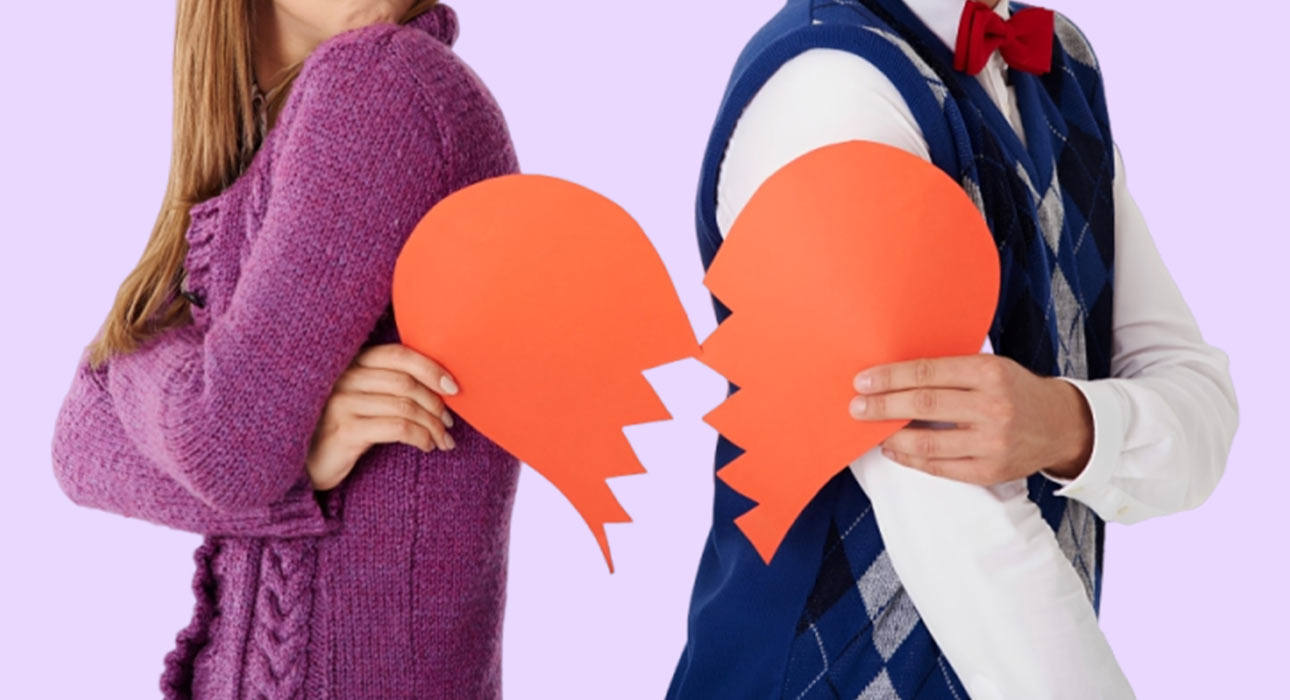
Seeing a famous couple break up makes some people feel as if they have lost someone close to them. Some say they actually feel sad. Others feel an ache. Like a quiet disappointment. Even though they’ve never met either person. Is that silly? Or is there something real happening here? Psychologists have been asking this question for decades, and the answer involves parasocial relationships, one-sided friendships, imagined couples, and the way the media sits in people’s daily lives. The article presents the results of their research and what it may say about expectations of love.
Intimacy at a Distance
The term parasocial interaction came from Horton and Wohl in 1956. They used it to describe the sense of closeness an audience member may feel toward a performer seen through the media. The relationship is one-sided because the performer does not personally know the individual viewers (Horton & Wohl, 1956). Parasocial interaction is not the same as a parasocial relationship even though they overlap in some ways. Parasocial interaction is more about the viewer’s response while they watch a show or read a post.
A parasocial relationship is the longer-term bond that can build up from repeated interactions and continue after the viewing ends (Dibble et al., 2016). It is this lasting bond, rather than any single moment of viewing, that makes a celebrity breakup feel personal. Researchers have proposed that these bonds form gradually. Tukachinsky and Stever (2019) suggested that parasocial relationships develop through stages, much as real relationships do. They can also take different forms, including para-romantic love and para-friendship (Tukachinsky, 2011).
As they develop, these bonds take on characteristics of interpersonal relationships. Perse and Rubin (1989) concluded that an interpersonal framework works well for analysing them. Cohen (2004) studied people’s relationships with their favourite television characters and described how these parasocial relationships are similar to close social relationships. This helps explain why sadness over a celebrity’s breakup can feel legitimate. The bond behind it has some real-life relationship attributes, even though only one side is taking part. A bond that develops over time may run deeper than it looks from the outside.
When a One-Sided Bond Ends
Researchers have also studied what happens when such relationships end. Cohen (2003) built a scale to measure reactions to parasocial breakups, adapting items used to assess reactions to real romantic breakups. The expectation behind it was simple: the stronger and more meaningful a relationship, the harder its ending will be. Researchers tested this idea by conducting a survey on the final episode of the TV show Friends, which involved 279 student participants.
It was found that the intensity of the parasocial relationship with a favourite character was the strongest predictor of breakup distress (Eyal & Cohen, 2006). Those studies looked at fictional characters and shows that ended, not real celebrity couples. But the logic carries over, at least as a reasonable guess: the people most upset by a celebrity split are likely to be those with the strongest connection to the couple. While this explanation makes sense, further research is needed to establish whether it holds for celebrity couples.
There is also a difference between the two situations. Attachment to an individual character is a bond with one person, and it ends when the show does. Investment in a celebrity couple involves two real people and a relationship between them, and the end of that relationship is announced publicly. A fan of the couple may therefore be mourning the pairing itself as well as each person. This difference is a reasoned distinction rather than a tested finding, and it is one reason why research on celebrity couples is still needed.
Following the Couple, Not Just the Person
Some fans may be attached to the couple itself, not only to each partner separately. Dajches and Barbati (2023) proposed the idea of para-couple relationships. A para-couple relationship is a long-term association with a media couple, treated as a unit, that develops during viewing but lasts beyond it. The same authors also built a questionnaire to measure these bonds and tried it out with young adults. How fans react also seems to depend on what kind of bond they feel.
A study of nearly 400 people asked how they would expect to react if a favourite celebrity were unfaithful. Women who saw their connection as romantic expected to be more troubled than women who saw it as friendship, while men who saw it as romantic expected to be less troubled than men who saw it as friendship (Hu et al., 2024). These were expected reactions to a hypothetical situation, not actual reactions, and the study examined unfaithfulness rather than a breakup. Even so, it shows that the same news can land very differently on different fans.
Closer Than Ever
A study of 316 adolescents found that exposure to media figures on Twitter was linked to stronger parasocial relationships with them (Bond, 2016). The author suggests that Twitter provides insight into the everyday life of public figures, hence increasing the sense of connectivity. Through media sources, such as Twitter posts, television interviews, and public appearances, audiences can get sufficient amounts of information to be familiar with certain public figures. The regular sharing of pictures of day-to-day happenings or the celebrity’s partner can make the celebrity feel closer to the audience.
Because a celebrity’s profile is always a tap away, the person can feel easy to reach even though the connection stays one-sided. This is likely part of why a separation announcement feels like news about someone familiar, and why the end of a celebrity relationship can feel close to home. That link is an inference, not something the study measured. Social media also gives people a public place to react. In one study, researchers examined the fallout on Twitter when a large-market radio host was removed from the air, and found evidence of a parasocial relationship and of feelings of parasocial breakup among listeners (Gregg, 2018).
What a Split May Mean for Ideas About Love
One-sided bonds may also be linked to how people think about relationships. Tukachinsky and Dorros (2018) studied 153 adolescents and 274 college students. In both groups, emotional attachment to a media personality was related to more idealised romantic beliefs. Among college students, emotional involvement with a media figure during adolescence was linked to lower satisfaction in relationships and less favourable perceptions of a partner. However, physical attraction to the media personality did not correlate with these outcomes. This study does not prove that the presence of parasocial links causes discontent because it is correlational in nature.
However, it is plausible that the romanticised notion of love might not correspond with the realities of less ideal and more complex relationships. The studies discussed here did not test how a celebrity breakup affects people’s views of their own relationships, so what follows are possibilities, not established findings. After seeing a “perfect” celebrity couple break up, some individuals might question whether genuine love lasts. For others, it might make their own relationships feel more substantial by comparison.
Research would be needed to show whether either reaction actually occurs. That said, the existence of parasocial bonds does not signify that they are necessarily harmful. In 2026, investigators collected data from studies that looked at relationships between followers and social media influencers. Their findings indicated that there were connections with both positive outcomes, such as well-being, and negative outcomes like social media addiction (Li et al., 2026). Even though the influencers are not celebrity couples, findings from the analysis suggest that these bonds can have both positive and negative sides.
Conclusion
The breakup of a celebrity couple is likely to cause sadness to many people. The sadness that they feel does not indicate that they are being silly. Research shows that people share similarities with the bonds people form in real life. In addition, it has been observed that teenagers who follow celebrities on social media tend to report stronger bonds with them. While the relationship may be only one-sided, the emotions felt are real.
The fans may have never personally known the couple, but the emotion stems from the months or years of following the love story, and that emotion is genuine even though the relationship is not mutual. What ends is the story fans were following, but the sense of loss belongs to them. Understanding this allows people to acknowledge their feelings and grieve without losing perspective on their own relationships.
References +
- Bond, B. J. (2016). Following your “friend”: Social media and the strength of adolescents’ parasocial relationships with media personae. Cyberpsychology, Behaviour, and Social Networking, 19(11), 656–660. https://doi.org/10.1089/cyber.2016.0355
- Cohen, J. (2003). Parasocial breakups: Measuring individual differences in responses to the dissolution of parasocial relationships. Mass Communication & Society, 6(2), 191–202. https://doi.org/10.1207/s15327825mcs0602_5
- Cohen, J. (2004). Parasocial break-up from favourite television characters: The role of attachment styles and relationship intensity. Journal of Social and Personal Relationships, 21(2), 187–202. https://doi.org/10.1177/0265407504041374
- Dibble, J. L., Hartmann, T., & Rosaen, S. F. (2016). Parasocial interaction and parasocial relationship: Conceptual clarification and a critical assessment of measures. Human Communication Research, 42(1), 21-44. https://doi.org/10.1111/hcre.12063
- Dajches, L., & Barbati, J. L. (2023). Looking to the stars: Validating the existence of para-couple relationships among emerging adults. Psychology of Popular Media, 12(2), 136–146. https://doi.org/10.1037/ppm0000409
- Eyal, K., & Cohen, J. (2006). When good Friends say goodbye: A parasocial breakup study. Journal of Broadcasting & Electronic Media, 50(3), 502–523. https://doi.org/10.1207/s15506878jobem5003_9
- Gregg, P. B. (2018). Parasocial Breakup and Twitter: The Firing of Barb Abney. Journal of Broadcasting & Electronic Media, 62(1), 38–50. https://doi.org/10.1080/08838151.2017.1402900
- Horton, D., & Wohl, R. R. (1956). Mass communication and parasocial interaction: Observations on intimacy at a distance. Psychiatry, 19(3), 215–229. https://doi.org/10.1080/00332747.1956.11023049
- Hu, M., Xu, H., Liu, S., & Cai, J. (2024). Whose bed have your boots been under? People’s expected responses toward celebrities’ romantic relationship infidelity. Psychology of Popular Media, 13(1), 92–101. https://doi.org/10.1037/ppm0000450
- Li, Y., Liu, Z., & Liu, F. (2026). Parasocial engagement with social media influencers and mental health outcomes: Systematic review and meta-analysis. JMIR Mental Health, 13, Article e96331. https://doi.org/10.2196/96331
- Perse, E. M., & Rubin, R. B. (1989). Attribution in social and parasocial relationships. Communication Research, 16(1), 59–77. https://doi.org/10.1177/009365089016001003
- Tukachinsky, R. H. (2011). Para-romantic love and para-friendships: Development and assessment of a multiple-parasocial relationships scale. American Journal of Media Psychology, 3(1/2), 73-94.
- Tukachinsky, R., & Dorros, S. M. (2018). Parasocial romantic relationships, romantic beliefs, and relationship outcomes in USA adolescents: Rehearsing love or setting oneself up to fail? Journal of Children and Media, 12(3), 329–345. https://doi.org/10.1080/17482798.2018.1463917
- Tukachinsky, R., & Stever, G. (2019). Theorising development of parasocial engagement. Communication Theory, 29(3), 297–318. https://doi.org/10.1093/ct/qty032