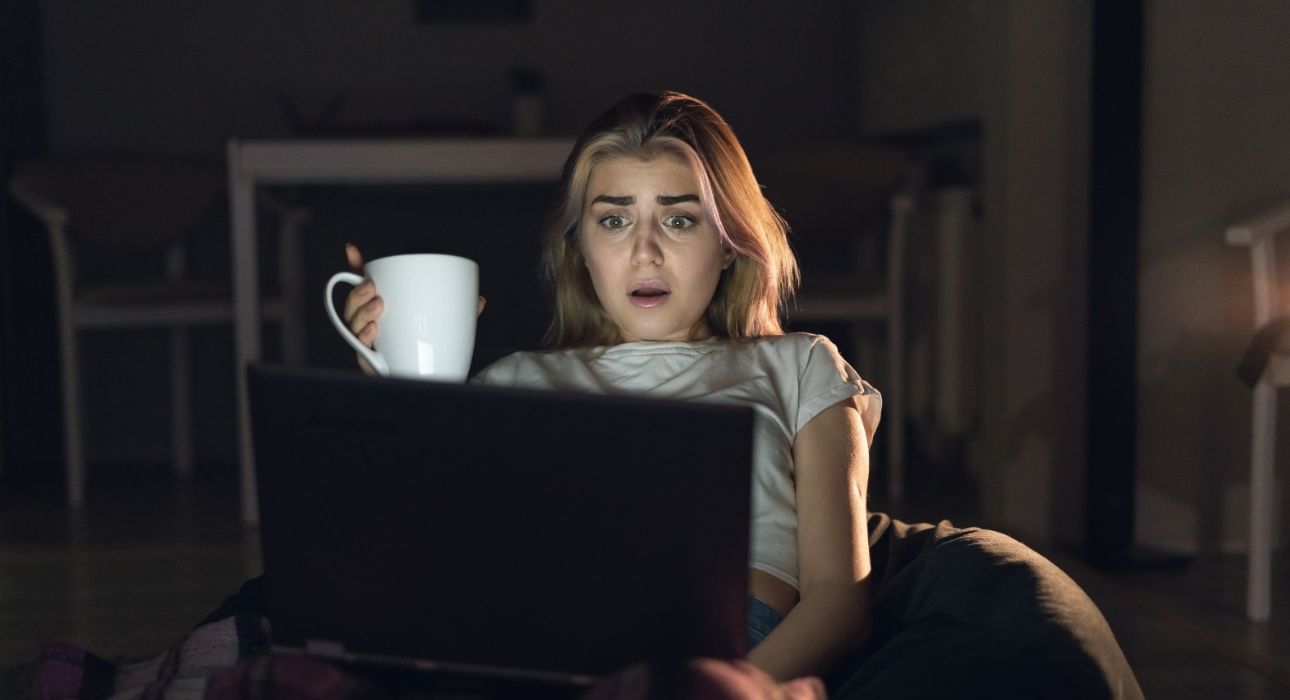
It is 11:30 p.m. The episode ends. Tomorrow starts early, but the screen immediately displays the next episode. There is no real decision to make. The countdown begins: “Next episode in 5… 4… 3…” “Just one more,” the viewer thinks. An hour later, it is 12:45 a.m. Most people who have engaged in binge-watching will relate to this. An intention to start watching just an episode turns into watching three or four episodes silently. Why do some find it so much easier to begin but not stop? It can be explained to some extent by what the brain does in the anticipation of a reward.
Why the Next Episode Feels So Difficult to Resist
Imagine watching a mystery series. The episode ends just as the main character opens a suspicious door. The screen cuts to black. Now the question is no longer, “Do I want to watch another episode?” It becomes, “What happened behind that door?” Reward anticipation plays its role at this stage. It is not just the reward that triggers reactions in the brain; anticipation of something rewarding may have a motivational impact on behaviour too.
Viewers who feel that they will be getting their questions answered, or some emotional fulfilment in the upcoming episode, find watching further episodes more enjoyable. Curiosity and narrative fulfilment have been found to play a role in continued binge-watching behaviour (Ulusoy et al., 2025). The result is a psychological tug-of-war between a future goal, “I need to sleep”, and an immediate reward, “I need to know what happens.”
Cliffhangers Leave the Story Unfinished
Cliffhangers are not accidental annoyances. These are techniques used for generating suspense for the audience to wonder about something. Imagine how an episode ends where two people meet, and secrets are unveiled or where a character’s fate remains uncertain. Stopping there can feel psychologically incomplete. This sensation of incompleteness may make the watching of the next episode even more appealing than merely engaging in another activity.
Studies related to future media use have indicated that individuals have a greater tendency to plan binge-watching activities where episodes have a sequence and are strongly related to each other (Lu et al., 2024). In other words, the more a show makes one episode feel like a continuation of another, the easier it is to think, “Well, why stop now?”
When Watching Becomes a Habit
At times, there is not even an intention to binge-watch any more. The routine becomes so clear: after finishing dinner, opening the app for streaming, watching the episode and starting another one until exhaustion. This is where habit formation enters the picture. Habits develop when behaviours are repeatedly associated with particular situations or cues.
Eventually, the situation itself can trigger the behaviour with less deliberate decision-making. Research on binge-watching has found that habitual viewing is associated with stronger intentions to continue watching and greater binge-watching engagement (Bastos et al., 2024). That means the question may not always be, “Why can’t this person control themselves?” Sometimes, it may be, “How many times has this pattern been exhibited within the same context?” As the pattern becomes increasingly automatic, the easier it will be to decide to observe it and, indeed, to recognise that a choice has been made to do so.
Sometimes, the Episode Is an Escape
Not everyone watches several episodes because they are highly engaged by the plot. Sometimes, the plot just becomes an escape route from reality because it is overwhelming. Having had a tough day at school, office, or even at home, it is good to relax within a fantasy world. A familiar comedy may create comfort. A dramatic series may distract from worries. At least for some time, fiction may stand in for reality.
Fictional problems that lead to problematic behaviours have been associated with coping and escapism motivations among individuals who struggle with emotion regulation. Problematic binge-watching might thus go beyond being entertaining when it becomes a repeated way of escaping from unpleasant emotional experiences (Alfonsi et al., 2023). This does not mean watching television to relax is unhealthy. Entertainment can be a perfectly ordinary way to unwind. The concern begins when watching becomes the main or automatic way of avoiding uncomfortable emotions.
“I’ll Stop After This One”: The Self-Control Problem
One of the strangest parts of binge-watching is that people can know they should stop and still continue. A student may think, “I have an exam tomorrow,” while simultaneously thinking, “But I can study in the morning.” The immediate reward wins over the future consequence. Self-control may be affected by several issues, including tiredness, stress, emotional state, and the environment where the decision is being made.
It may be very easy to continue due to the fact that switching from one episode to another demands absolutely no effort. According to recent experimental studies regarding the usage of Netflix, turning off autoplay made participants view less per day and reduced the duration of the session (Schaffner et al., 2025). It does not force users to keep viewing; however, it eliminates the natural stopper.
The Streaming Platform Knows What Keeps You Watching
Traditional television usually had built-in boundaries. An episode ended, advertisements appeared, and the next programme might not begin for another half hour. Streaming changed that experience. In today’s time, a viewer can switch from one episode to another without facing any disturbance at all. Recommendations immediately provide another option. Entire seasons can be available at once.
Presentation style alone may affect future viewing. People tend to plan binge-watching when platforms present content in a sequential and coherent format, suggesting that the format itself can influence future viewing behaviour (Lu et al., 2024). The outcome of this situation is an environment where continuing to watch is effortless, while not doing so requires an action.
Is Binge-Watching Always a Bad Thing?
Necessarily not. Viewing multiple episodes during the weekend, holiday or even after deliberately taking out some time may not pose a problem per se. Current studies indicate that intentional binge-watching can create a positive experience, whereas spontaneous binge-watching may contribute to goal conflict and negative emotions (Ulusoy et al., 2025).
The more relevant question in this case is not, “How many episodes have you watched?” But: “Was your decision to continue watching, or were you continuing to watch without making an actual decision?” A person who watches three episodes since he decided to spend the evening at leisure, for example, would not pose much of a problem. Someone who repeatedly finds himself unable to sleep or shirking responsibilities due to continuous viewing would need more attention.
Breaking the “One More Episode” Cycle
Stopping does not necessarily require giving up favourite shows. Sometimes altering the environment itself is sufficient. One could choose to turn off autoplay, pre-decide how many episodes they would watch, set an ending time, or not start an episode just before bedtime. It may be useful to consider why the drive to proceed keeps coming: ‘Is it curiosity?’ Or is the story genuinely enjoyable? Or, “Is the person bored?” Or, “Are they trying to avoid thinking about something happening in real life?” That small pause can help them turn an automatic habit into a conscious choice.
The Real Psychology Behind “Just One More”
“Just one more episode” appears to be a small choice, but a number of psychological factors can be hiding behind this statement: anticipation of something upcoming, curiosity created by cliffhangers, habitual watching, escapism and comfort brought by the screen, ease created by the platform itself. However, the aim is not to label all people who marathon as having problems. Sometimes, it is just a really good show. But when “one more episode” repeatedly becomes “why did I stay up until 3 a.m.?” it may be worth looking beyond the screen. Because sometimes, the hardest part of a marathon is not finding something to watch. It is finding the moment when the brain is finally ready to say, “This episode really is the last one.”
References +
- Alfonsi, V., Varallo, G., Scarpelli, S., Gorgoni, M., Filosa, M., De Gennaro, L., Musetti, A., & Franceschini, C. (2023). “This is the last episode”: The association between problematic binge-watching and loneliness, emotion regulation, and sleep-related factors in poor sleepers. Journal of Sleep Research, 32(1), e13747. https://doi.org/10.1111/jsr.13747
- Alimoradi, Z., Jafari, E., Potenza, M. N., Lin, C.-Y., Wu, C.-Y., & Pakpour, A. H. (2022). Binge-watching and mental health problems: A systematic review and meta-analysis. International Journal of Environmental Research and Public Health, 19(15), 9707. https://doi.org/10.3390/ijerph19159707
- Bastos, M., Naranjo-Zolotov, M., & Aparício, M. (2024). Binge-watching uncovered: Examining the interplay of perceived usefulness, habit, and regret in continuous viewing. Heliyon, 10(6), e27848. https://doi.org/10.1016/j.heliyon.2024.e27848
- Lee, J., Shokparova, A., Asrymbetova, Z., Lahcine, O. F., & Kim, Y. (2024). The effect of personality traits on over-the-top service use and binge-watching. Acta Psychologica, 245, 104234. https://doi.org/10.1016/j.actpsy.2024.104234
- Lu, J., Karmarkar, U. R., & Venkatraman, V. (2024). Planning-to-binge: Time allocation for future media consumption. Journal of Experimental Psychology: Applied, 30(1), 169– 186. https://doi.org/10.1037/xap0000482
- Schaffner, B., Ulloa, Y., Sahni, R., Li, J., Cohen, A. K., Messier, N., Gao, L., & Chetty, M. (2025). An experimental study of Netflix use and the effects of autoplay on watching behaviours. Proceedings of the ACM on Human-Computer Interaction, 9(CSCW1), Article 150. https://doi.org/10.1145/3710928
- Ulusoy, E., Wirz, D. S., Eden, A., & Ellithorpe, M. E. (2025). Boundaries on a binge: Explicating the role of intentionality in binge-watching motivations and problematic outcomes. Acta Psychologica, 252, 104666. https://doi.org/10.1016/j.actpsy.2024.104666
- Zhao, Z., et al. (2024). The role of affective temperaments in binge-watching addiction. Journal of Affective Disorders Reports, 16, 100731. https://doi.org/10.1016/j.jadr.2024.100731