Have you ever seen people merely recording an incident that happened on the road, like a fire breaking out or an accident? Surely everyone has done that at least once in their lives. What is this phenomenon where people feel it is not their responsibility to help? They wait for others to step in. Have they ever wondered why?
Well, this phenomenon is called the bystander effect, which was first postulated by Darley and Latane(1968) as a “diffusion of responsibility” to help a person in need when in the presence of other bystanders. Simplifying, they said, as the number of individuals increases during an emergency, so does the likelihood of not helping the needy. However, we often see such incidents on roads, in malls, and in other public places, and research has shown they occur online as well.
One such study by Markey (2000) found that people on Yahoo Chat groups took longer than expected to respond to solving computer equations when there were more people online, as compared to when only a particular set of people was asked the question, leading Markey’s study to postulate how the bystander effect also takes place in the online world. One must have thought the digital age meant something happening in 2026, but seeing the literature, it feels the bystander effect in the digital age has been there ever since people started connecting online.
Read More: The Bystander Effect: Past, Present, and the Digital Age
The Digital Era
Since the internet was launched and its accessibility grew among users, it has become an important medium to help people unite socially and serve as an active platform for generating social awareness. Some prominent moments that went viral online in recent times, like #Gaylifematters, which was started to combat discrimination, violence and inequality towards the LGBTQAI(+) community. For everything to be heard and to be reached by the public, there are hashtag campaigns for it.
New problems brought about by social media include cancellation culture and online shaming. The recent controversy around “India’s Got Latent” shows how internet backlash can affect people, which leads to unprecedented social and professional repercussions.
Social media promoters also facilitate creating awareness around these programs. Some notable people who worked towards creating awareness for the LGBTQAI(+) community are Rani Kohinoor(Sushant Divgikar), Ella D Verma and Trinetra Haldar. u Influencers are a part of a broader trend in digital activism, where social media may use pictures, reels or videos to both induce desensitisation and raise awareness.
Read More: How Emotional Awareness Is Redefining the Next Generation
The Bystander Effect in the Digital Era
Activists now talk a lot about the bystander effect. This is because of concerns about justice. It is especially noticeable on media sites, like Facebook, Instagram and X.
- There are kinds of online activism.
- Some people do campaigning work.
- Others just show off. Do not actually do anything.
This kind of activism is sometimes called “anti-activism.” In it, people seem like they are involved. They do not actually take action. This performative activism involves selective image sharing. In the free Palestine movement, the AI-generated “All Eyes on Rafah” image received over 45 million Instagram shares, while a photograph of deceased individuals in body bags received only about 500,000 shares. The AI image published by Instagram user @shahv4012 gained popularity because of its less graphic and more visually appealing nature, allowing for easy sharing with minimal pain.
However, people often fail to accurately depict the upsetting situation. This selectivity highlights the propensity for performative activism in online encounters, which frequently lacks a deeper commitment or understanding of the realities underlying the photographs. According to Burga (2024), social media users engage in activism without confronting unpleasant truths by focusing on a sanitised AI image rather than a real-life scenario.
People who support a cause these days can come together. Learn from each other because of modern activism. Modern activism is really good at promoting solidarity and universal knowledge. Sometimes modern activism can also make people just do the bare minimum, like share a post on social media. This is a way that the bystander effect is happening, and it is happening because of the digital age and modern activism.
Understanding Cyberbullying
It is one of the most prominent issues in today’s world. Let’s understand what exactly it means. It is when someone is mean to another person on purpose, using the Internet or a phone. This can happen over a long period, and it is hard for the person being bullied to stop it. (Smith-et-al,2008). Many influencers talk about cyberbullying because it leads to an unpleasant state of mind. Almost all the content creators have shared their experiences of cyberbullying.
This includes mockery and unnecessary hate comments on the post. Some people even get called names or stalked on the internet. The Pew Research Centre did a survey, and 73 per cent of the people they asked said they had seen someone being bullied online. In a research by Duggan et al. (2017), 2017 found 66% users online have been bullied at some point in time. Most people who use the Internet have had experiences online. In fact, 66 per cent of Internet users have been treated online. This kind of thing usually happens on networking sites.
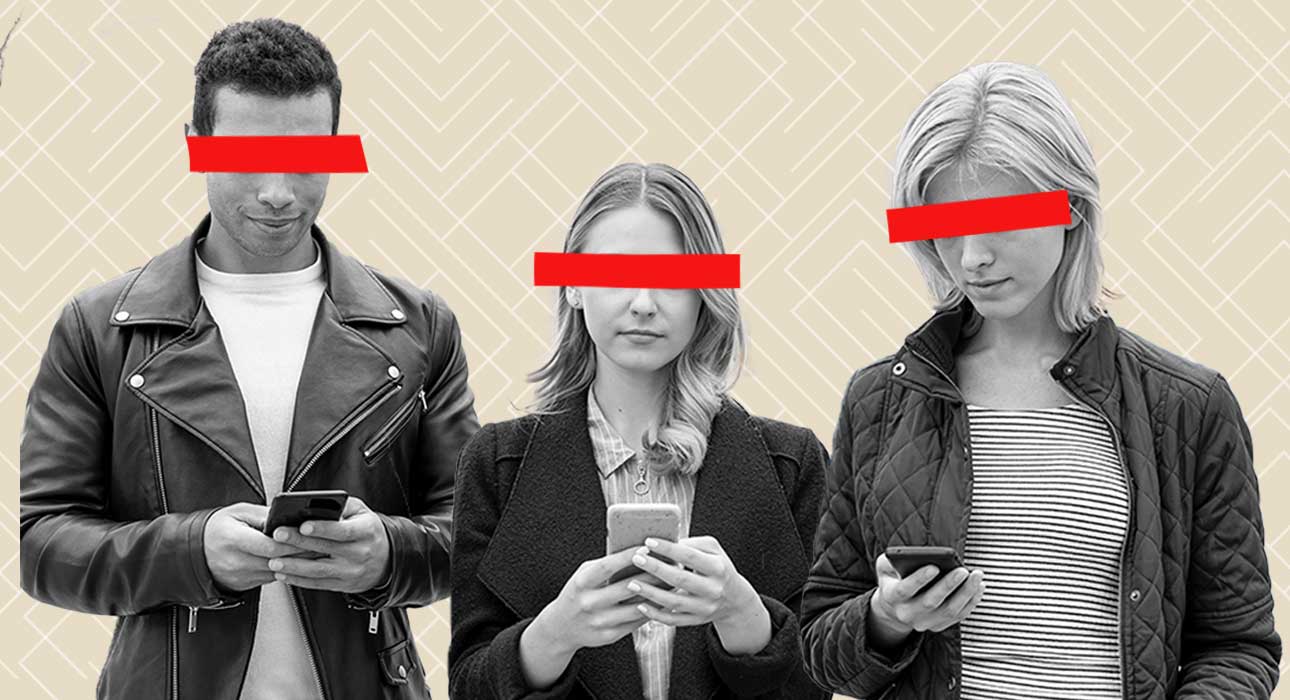
There are simply bystanders of cyberbullying who sometimes just enjoy what is going on. They often reinforce the bullies’ actions indirectly instead of stepping in to support the person being harassed. Whatever they do, bystanders influence what happens with cyberbullying, according to a study by Duggan in 2017. Cyberbullying is a problem, and it is something that we should all think about.
According to qualitative studies, anonymity as a component of cyberbullying has increased people’s concern because anyone in the world, even family members and most trusted friends, can be a cyberbully in today’s environment (Badiuk, 2006). On the internet, anonymity can take many forms. Although many intellectuals have remarked that anonymity isn’t a requirement for cyberbullying activity (Barlett et al., 2016).
In this instance, the role of cyber bystanders emerges and is critical in understanding the dynamics of cyberbullying, particularly when considering potential solutions to cyberbullying. As a result, whether bystanders assist the perpetrator or the victims, or remain anonymous online, their role in determining the dynamics of cyberbullying is distinct (You & Lee, 2019).
Read More: CyberBullying and its relation to Suicide Ideation
The Cyber Bystander Concept
We refer to people who become directly or indirectly involved in cyberbullying as “cyber bystanders.” It primarily refers to those who saw the incident online. Previous research indicates that, depending on the form of bystander intervention, there are primarily three types of reaction behaviour:
- Passive response: those who observe the incident but take no action to protect the victim or confront the bully. The spectator may fall into the category of a mere observer in this scenario, which could offer the bully a legitimate advantage in continuing the behaviour.
- Supportive response: is when a bystander helps the victim by providing social or psychological assistance or by reporting the problem to the appropriate authorities in an effort to put an end to cyberbullying. Bystanders can provide indirect support to victims of cyberbullying by this kind of supportive action, and it is always possible for an upstander to become a bystander.
- Knowledge and expertise: Shows your promptness to handle the situation. We are more aware and reactive when we have experience and knowledge in doing so. Learning techniques like CPR may help you feel more capable and prepared to deal with emergencies. This will also lead to feelings of contentment.
- Confrontational intervention: a bystander actively confronting the cyberbully by interacting with them directly in an attempt to stop them. According to Fischer et al. (2011), bystanders’ decisions to react reactively are most influenced by the seriousness and urgency of the issue.
- Keeping a connection: Researchers have known for a long time that we are more likely to help people we know personally. We tend to care more about those close to us. This is why personal connections are really important. When we know someone, we are more willing to lend a hand.
Most online users experience online misbehaviours either for themselves or for others. The factors such as the relation quality between the victim and bystander, diffusion of responsibility, and visual anonymity also play a significant role in determining the propensity of bystander intervention (Nicholas & Anita, 2016).
Factors That May Help Reduce the Impact of Bystanders
Although the bystander effect can negatively impact prosocial behaviour, generosity, and heroism, researchers have identified various characteristics that help people overcome this tendency and increase their likelihood of engaging in helpful actions. Among them are:
- Vicarious Learners: Seeing helping others makes others also motivated to provide help to the needy. For example, if we see someone giving blood, we are more likely to give blood well. This is what some researchers found out, like the people who worked with Studte and others in 2019. They found that Vicarious Learners, like us, are more willing to do things when we see other people doing them, and that is really interesting. Vicarious Learners are people who learn from seeing what other people do. That is why we are more likely to donate.
- Sympathising: Helping those when there is a need or setback in their life. Understanding the tough times they are going through could be as little as being mentally and emotionally supportive.
- Possessing knowledge and experience: Knowledge regarding what action to take in the situation, calling the ambulance, police, doc, firebragid, etc.
- Keeping a personal connection: Researchers have long recognised that we are more likely to help those we know. By adopting a few crucial actions, individuals in need can foster a more individualised response in an emergency, even when dealing with strangers. (Hortensius-et-al,2018).
- Viewing Others as Seeking Aid: People are more likely to aid others if they believe the person deserves it. Participants in a well-known study offered money to a stranger more readily when they believed their wallet had been stolen than when they believed the individual had just spent it all. This may assist in explaining why some people are more likely than others to give money to people experiencing homelessness. Donations are more likely to come from those who believe that homeless people are genuinely in need of assistance than from those who believe that they are in this situation because they are lazy or unwilling to work.
Because of the bystander effect, people may think that their online behaviours directly affect the real world and that by liking, sharing, or commenting, they are freed of their act of silence.
Question Explained by Experts
Question: What psychological impact does cyberbullying have on teenagers and young adults?
According to Rehabilitation Counsellor and Educational Psychologist Vanshika Khanna, Bullying is when an individual repetitively and intentionally harms another person with a recognition of power imbalance. With a rapid rise in the digital era, cyberbullying has become one of the most common forms of bullying among youth. It occurs through electronic platforms like social media, messengers, gaming communities, or online forums. From my perspective of working with children and adolescents, pre-teens and adolescents are more vulnerable to cyberbullying as they are in a stage wherein identity formation, peer acceptance, social & self image becomes deeply important.
The effect of cyberbullying can have both short and long-term consequences. The victim could have disturbed sleep & appetite, a decline in academic performance, feelings of helplessness or shame, difficulty concentrating, skipping school or reporting constant headaches as a short-term effect. Over time, repeated experiences could contribute to lower self-esteem, increased confusion about self-worth, social withdrawal, loneliness, insecurity, and emotional distress.
The impact is not just limited to the victim, but bystanders and bullies also get psychologically affected. Aggressive and overpowering behaviour, such as making someone feel inferior, humiliating, trolling, and abusing, is often learned behaviour from the environment, including caregivers, stakeholders, peers, social culture, media exposure, etc. The normalisation of such behaviours soon becomes a form of social interaction and desensitises youth to the emotional harm. It also explains the cycle of victims becoming perpetrators later. The bystanders could also turn into perpetrators or become hyper vigilant to their peers, fearing bullying, making them vulnerable.
References +
- Hortensius, R., & De Gelder, B. (2018). From Empathy to Apathy: The bystander Effect revisited. Current Directions in Psychological Science, 27(4), 249–256. https://doi.org/10.1177/0963721417749653
- Studte, S., Clement, M., Soliman, M., & Boenigk, S. (2018). Blood donors and their changing engagement in other prosocial behaviours. Transfusion, 59(3), 1002–1015. https://doi.org/10.1111/trf.15085
- Ingole, M. R., Kanvaria, V. K., & Mandal, H. K. (2023). Cyber Bystander’s effect on cyberbullying in India. SSRN Electronic Journal. https://doi.org/10.2139/ssrn.4358013
- You, L., & Lee, Y. (2019). The bystander effect in cyberbullying on social network sites: Anonymity, group size, and intervention intentions. Telematics and Informatics, 45, 101284. https://doi.org/10.1016/j.tele.2019.101284
- Boles, S. G. (n.d.). When Silence Speaks: Understanding the bystander effect in the digital age. Belmont Digital Repository. https://repository.belmont.edu/spark_presentations/419
- Cieciura, J. (2016, November 1). A summary of the bystander effect: Historical development and relevance in the Digital age. Inquiries Journal. http://www.inquiriesjournal.com/articles/1493/a-summary-of-the-bystander-effect-historical-deve lopment-and-relevance-in-the-digital-age
- Markey, P. (2000). Bystander intervention in computer-mediated communication. Computers in Human Behaviour, 16(2), 183–188. https://doi.org/10.1016/s0747-5632(99)00056-4