The only number most people still have memorised is their mother’s or some other family member’s number, saved not just in the phone, but in the mind as well. For what occasion exactly, though? That’s harder to pin down. What’s certain is that even a passenger riding with a driver who has spent years navigating the same routes still feels the pull to check Google Maps. The blue dot on the screen doesn’t move on its own, yet it creates a strange sense of being crowded and stuck, rather than guided. There’s a kind of lostness that persists even while being driven by someone who already knows the way.
Now think about yourself. What do you do every day? What do you usually think about? Do you reflexively reach for your phone when it’s quiet, scroll through feeds to kill time, or rely on digital calendars to keep track of every appointment?
Digital Amnesia: Are We Outsourcing Our Minds?
While talking about the human mind in today’s era, do we use our mind to the potential it has? Do we? The answer is what we all know increasingly: the answer seems to be no. Why is it so? Because we use our phones for storing information, we use Google for almost everything, and we do not memorise things anymore because we know we have the internet, search engines, calendars, maps, and whatnot.
Now, what we additionally have is Artificial Intelligence, which has increasingly begun to take over parts of human information processing and decision support. That is what we call digital amnesia. Amnesia is simply a medical condition involving memory loss. Digital amnesia is a newer phenomenon; although it is not medical in nature, it affects memory habits, thinking, creativity, self-reliance, and the way information is processed. Digital amnesia refers to the tendency of humans to forget information because they trust digital sources for information encoding, storage, and retrieval (Kumar, 2024).
Cognitive Offloading and the Human Mind
Researchers suggest that this phenomenon is closely connected to cognitive offloading, where people shift mental work onto external tools instead of performing it internally (Risko & Gilbert, 2016). Let me take you toward another phenomenon. Think about the times when you remembered something, maybe academic content, simply by writing it down either in your notes or on a whiteboard. Why is that? Have you ever thought about why people have the easiest access to information through phones and the internet, yet the information rarely sticks in memory? One explanation is that when you write something down, you actively engage multiple brain processes along with physical movement.
The mind processes information more deeply and naturally compared with simply saving it on a phone, where the brain may not fully encode the information. That is exactly what cognitive offloading is. Cognitive offloading refers to the practice of delegating mental work to external tools to reduce stress on working memory (Risko & Gilbert, 2016). A 2024 review on cognitive offloading argued that the phenomenon may represent both a risk and an opportunity: memory performance for details may decrease, but cognitive resources may become available for higher-order thinking tasks and complex problem solving (Gilbert, 2024).
This idea is not entirely new. One influential study found that when people expected information to remain accessible online, they were significantly less likely to remember the information itself and more likely to remember where to find it later, a phenomenon known as the Google Effect (Sparrow et al., 2011). Technology gave us access to everything. But how much do we actually retain?
There are so many things we have searched, Googled, or used AI for, but how many of them can we recall? How many times have we looked up a recipe but still could not make it without searching again? How many times can we recall a restaurant’s location without using Google Maps? This is the double-edged sword of technology: it gives us access to everything, yet we retain almost nothing.
Smartphones, Attention, and Learning
One of the most important memory technologies nowadays is smartphones. People’s attention allocation is altered by their continuous accessibility. Frequent disruptions may hinder long-term learning and retention since attention is required for memory encoding. According to research on digital memory settings, using smartphones to record events can change how people see and remember them. For instance, snapping pictures all the time could split one’s focus between experiencing and recording events. Similar issues are seen in educational situations.
Despite evidence that active recall improves memory formation, students are increasingly depending on note-storage apps and search engines rather than repeated retrieval exercises. Research shows that retrieval practice regularly results in greater long-term retention than passive review techniques, and that frequent smartphone-driven interruptions can undermine this process (Skulmowski, 2023).
As a result, while technology makes life easier, it may also limit deep processing opportunities. At the same time, technology can promote learning through personalised reminders, spaced repetition systems, and improved accessibility to educational content. Therefore, the impact depends primarily on how technologies are used rather than technology itself (de Barros, 2024).
Read More: How Smartphones and Social Media Rewire Our Brains: A Neuroscience Perspective
Cloud Storage and the Rise of External Memory
Cloud storage has further expanded the externalisation of memory. Individuals now preserve photographs, conversations, academic notes, and personal records across digital platforms. Researchers describe this as memory augmentation, where technology supplements human recall capacity. Studies on lifelogging, continuous digital recording of personal experiences, suggest that external archives may improve recollection and support autobiographical memory, though dependence on archived experiences can also reshape how memories are constructed and interpreted (Gilbert, 2024). This change begs the philosophical question: Does remembering become a cooperative process between people and machines if memory is becoming more and more external to the brain?
The Future of Memory and Artificial Intelligence
A new phase of memory transformation is introduced by artificial intelligence. AI is capable of organising, retrieving, summarising, and even anticipating information demands, in contrast to static storage systems. Instead of serving as passive databases, AI assistants are increasingly acting as intelligent memory companions. However, concerns remain regarding overdependence, reduced critical engagement, and questions of cognitive autonomy.
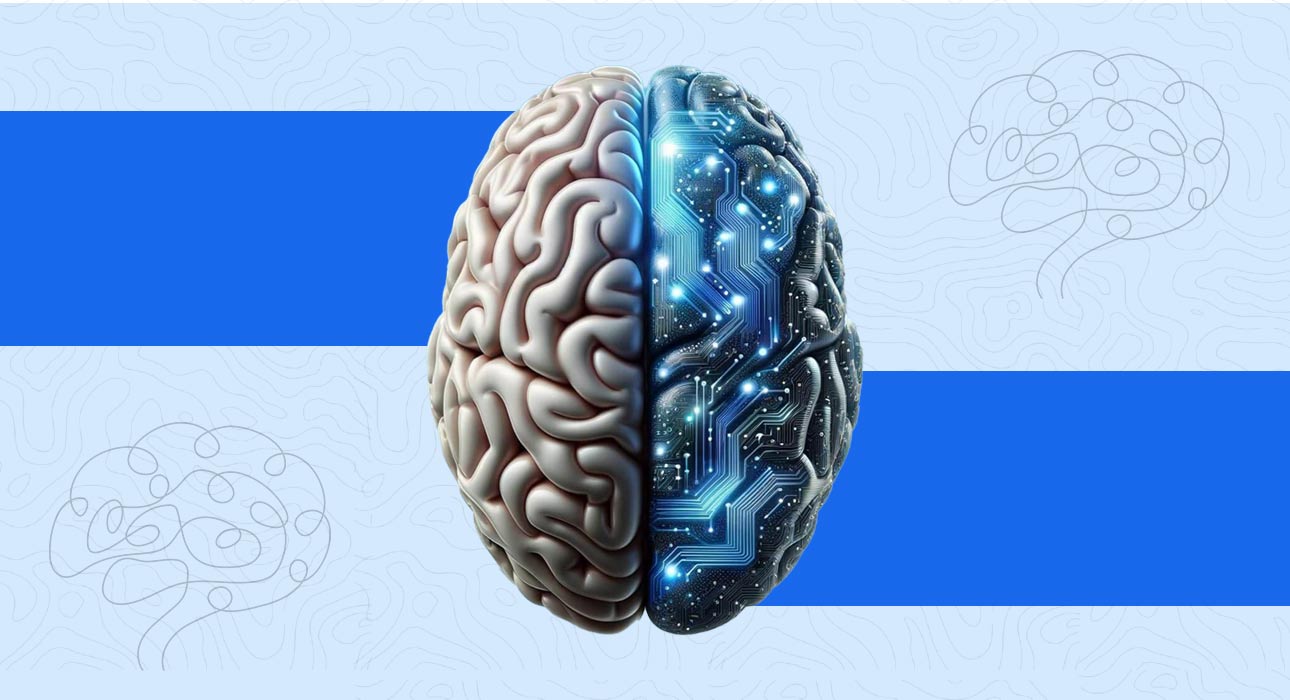
Recent reviews suggest that digital technologies may create an “efficiency–atrophy paradox,” where short-term performance improves while internal cognitive effort may gradually reduce over time. Rather than replacing memory, AI may transform memory into a hybrid system where human understanding combines with machine-supported retrieval. Technology may not be making humans less intelligent, but it may be changing what humans choose to remember.
Conclusion
Human memory has been redefined by technology rather than eliminated. These days, artificial intelligence, cloud storage, smartphones, and search engines all serve as extensions of human cognition, altering how people store, retrieve, and process information. People are depending more on external systems that provide constant access to information rather than internal memory due to digital amnesia and cognitive offloading (Risko & Gilbert, 2016). Opportunities and difficulties are brought about by this change.
On the one hand, lessening the strain on working memory would free up mental resources for higher-order thinking, creativity, and problem solving (Gilbert, 2024). Conversely, an over-reliance on technology may impair focus, limit opportunities for deep learning, and progressively alter conventional memory processes (Sparrow et al., 2011). Therefore, the question is not whether technology is improving or degrading human memory. Instead, it concerns whether people continue to actively participate in their memory or become passive consumers of external memory systems.
Memory in the future may be a hybrid of human comprehension and technological assistance rather than being wholly biological or fully digital. Instead of rejecting technology, the issue is to use it purposefully so that access to knowledge does not come at the expense of meaningful understanding, and convenience does not take the place of intellect.
Read More: How AI Rewires the Brain: Cognitive, Memory & Social Effects Explained
References +
- de Barros (2024). A narrative review of how digital technology affects human cognitive processes. S. J. Gilbert (2024). Digital technology, cognitive unloading, and memory enhancement. 110–112 in Psychological Inquiry, 35(2).
- M. Kumar (2024). Cognitive emancipation or digital amnesia? Analysing how cognitive offloading affects memory.
- Gilbert, S. J., and Risko, E. F. (2016). offloading of cognition. Cognitive Sciences Trends, 20(9), 676–688.
- Skulmowski (2023). Digital externalisation’s cognitive architecture. Review of Educational Psychology, 35, 101.
- Wegner, D. M., Liu, J., and Sparrow, B. (2011). Google’s effects on memory: The cognitive ramifications of always having access to information. Science, 333 (6043), 776-778.
- Kelly, S. D., Risko, E. F., and Lu, Y. (2020).A review of how cognitive offloading affects memory. 84(4), 989–1002; Psychological Research.
- Richmond, L. L., and Morrison, A. B. (2020). Offloading working memory: The advantages of external memory aids for the brain and cognition. Behavioural Sciences Current Opinion, 32, 28–33.
- Wen, W., Bohbot, V. D., and Fan, C. K. (2022). Reduced grey matter in the hippocampus and caudate nucleus is linked to long-term GPS use. 12, 13456; Scientific Reports.
- M. Beaudoin and associates (2024). Studies on memory adaptation and digital cognition.