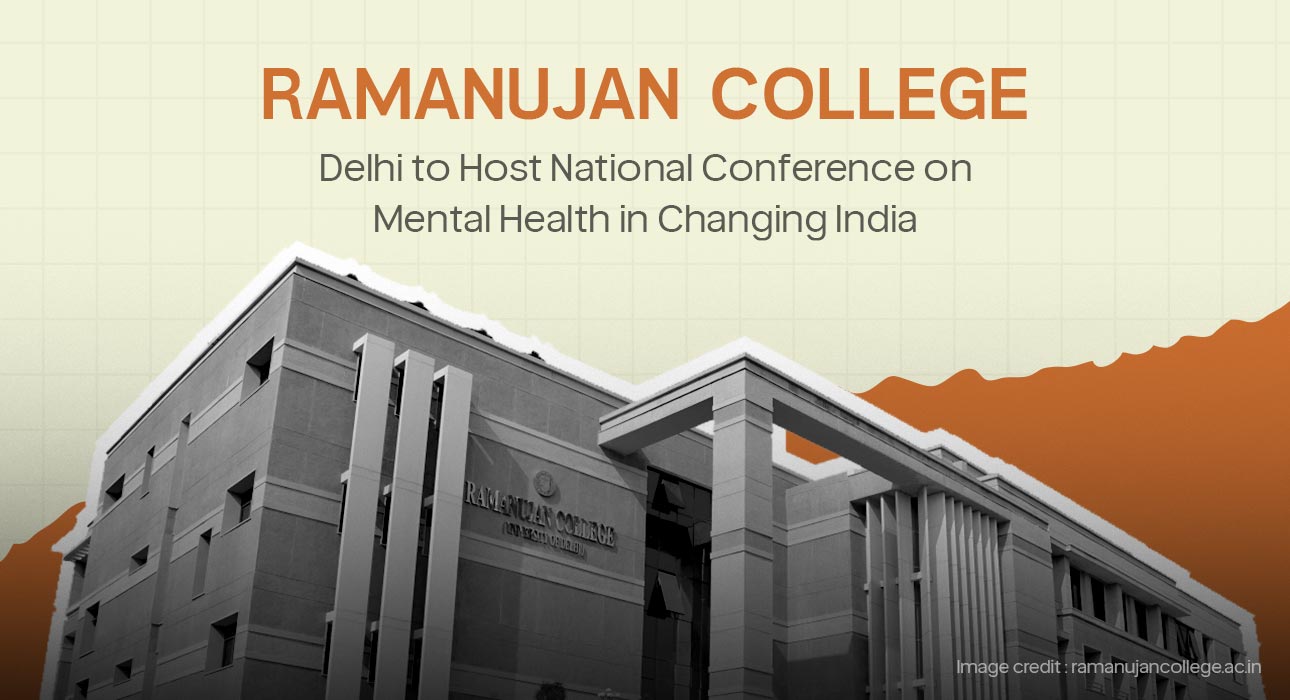
A two-day academic national conference on Mental Health in a Changing India (MHCI) will be held in New Delhi on 18th and 19th November, 2026. It is organised by Manan, the society of the Department of Applied Psychology, Ramanujan College. The conference will be an interdisciplinary meeting that creates discussions and publicises research on relevant mental health issues and impactful solutions. The conference will provide a united platform for scholars, practitioners, educators, researchers, students and mental health professionals.
The theme is Mental Health in a Changing India: Emerging Challenges, Innovations and Inclusive Interventions towards a Viksit Bharath @2047. It will build effective academic dialogue around contemporary mental health in India and look for effective solutions. It also allows students, academics, and researchers to share their work and help to build a mentally aware and resilient India. The speakers include distinguished names who have extensively contributed to Psychology, research, and Awareness in India and abroad, including Professor Aruna Broota, Professor Purnima Singh, Professor Urmi Nanda Biswas and Professor Girishwar Mishra.
Ramanujan College and Manan Society
Ramanujan College, affiliated to the University of Delhi, was established in 1958 as Deshbandhu College (Evening) and renamed in 2010 after the world-renowned mathematician Srinivasa Aiyengar Ramanujan. It embodies the spirit of dedication, perseverance and intellectual curiosity with a commitment towards academic excellence, holistic education and innovative learning.
MANAN- The Applied Psychology Departmental Society was founded in 2014 to provide a platform that encourages critical thinking, psychological awareness and research-oriented engagement among students. The society encourages discussions on mental health, human behaviour and well-being through seminars, workshops, interactive sessions and student-led initiatives. Manan aims to build a culture of sensitivity, inclusivity and mental health awareness through scholarly discourse.
Mental Health in India
India has one of the largest mental health treatment gaps, and the National Mental Health Survey has found that 10.6% of Indian adults live with a mental disorder. The rise of Mental Health challenges, particularly depression, anxiety, ADHD, and schizophrenia, besides substance abuse, has urged the government to roll out several programs dedicated to prevention and treatment. This is despite a shortage of mental healthcare professionals in the country for its fast-growing population. It has also been noted that suicide is the largest cause of death among young Indians.
Sub-Themes of the Conference
The conference will focus on creating efficient dialogue and finding impactful solutions related to the following sub-themes.
1. Mental Health and Viksit Bharath @2047
- Mental Health as a Pillar of Human Capital and National Development
- Psychological Well-Being, Productivity and Quality of Life
- Mental Health Indicators for a Developed India
- Mental Health, Social Justice and Inclusive Growth
- Cross-sectoral Approaches Linking Health, Education, Employment and Community Development
2. Youth, Students and Emerging Adulthood
- Academic Stress, Examination Pressure and Career Uncertainty
- Identity, Belonging, Loneliness and Relationship Concerns
- Campus Mental Health, Counselling and Peer-Support Systems
- Resilience, Life Skills and Emotional Regulation Among Youth
- Suicide Prevention and Early Intervention in Educational Settings
3. Digital Life, Social Media and Cyberpsychology
- Problematic Internet and Social Media Use
- Cyberbullying, Online Harassment and Digital Identity
- Gaming, Screen Dependence and Digital Fatigue
- Online Relationships, Parasocial Bonds and Loneliness
- Digital Well-Being, Media Literacy and Healthy Technology Use
4. Artificial Intelligence, Technology and Mental Health
- AI-Enabled Mental Health Assessment and Intervention
- Tele-Mental Health, Apps, Chatbots and Digital Therapeutics
- AI Companions and Changing Human Relationships
- Ethics, Privacy, Trust and Algorithmic Bias in Mental Health Technologies
- Human-Centred Innovation for Accessible Psychological Care
5. Workplace Mental Health and the Future of Work
- Burnout, Occupational Stress and Work-Life Integration
- Emotional Regulation, Psychological Safety and Employee Well-Being
- Hybrid Work, Automation, AI and Changing Occupational Identities
- Leadership, Organisational Culture and Mental Health Promotion
- Meaningful Work, Productivity and Psychological Capital
6. Family, Relationships and Social Change
- Changing Family Structures and Intergenerational Relationships
- Parenting, Caregiving and Family Resilience
- Marriage, Intimate Relationships and Conflict
- Migration, Urbanisation and Social Connectedness
- Loneliness, Social Support and Community Belonging
7. Gender, Diversity and Inclusive Mental Health
- Women’s Mental Health and Psychosocial Well-Being
- Men’s Mental Health and Help-Seeking
- Gender Diversity, Stigma and Access to Care
- Disability, Neurodiversity and Inclusive Psychological Services
- Intersectionality and Mental Health Across Social Locations
8. Community Mental Health and Vulnerable Populations
- Rural and Underserved Communities
- Older Adults, Caregivers and Ageing
- Migrants, Economically Disadvantaged and Socially Excluded Groups
- Community-based Prevention, Peer-support and Grassroots Interventions
- Mental Health Literacy, Stigma Reduction and Service Accessibility
9. Clinical, Counselling and Preventive Psychology
- Anxiety, Depression, Trauma and Stress-related Concerns
- Addiction, Self-Harm and Suicide Prevention
- Early Identification, Prevention and Relapse Reduction
- Evidence-based Psychotherapy and Counselling Innovations
- Integrated, Stepped-Care and Recovery-oriented Models
9. Indian Psychology, Culture and Indigenous Approaches
- Indian Perspectives on Mind, Self and Well-Being
- Yoga, Meditation, Mindfulness and Contemplative Practices
- Bhagavad Gita and Psychologically Relevant Concepts
- Spirituality, Meaning, Compassion and Resilience
- Culturally Grounded and Decolonial Approaches to Psychological Intervention
10. Positive Psychology, Resilience and Human Flourishing
- Hope, Optimism, Gratitude and Compassion
- Meaning In Life, Purpose and Psychological Well-Being
- Strengths, Emotional Intelligence and Psychological Capital
- Resilience After Adversity and Post-Traumatic Growth
- Well-Being Interventions in Schools, Workplaces and Communities
11. Mental Health Policy, Public Health and Governance
- Mental Health Policy and Implementation in India
- Mental Healthcare Act and Rights-based Approaches
- Public Health Models of Prevention and Promotion
- Mental Health Workforce, Service Delivery and Financing
- Evidence Translation, Policy Innovation and Institutional Accountability
12. Innovation In Psychological Assessment and Research
- Culturally Appropriate Scale Development and Psychometrics
- Digital Assessment and Technology-assisted Data Collection
- Mixed Methods, Longitudinal and Implementation Research
- Open Science, Ethics and Responsible Psychological Research
- Translating Research into Practice and Public Policy
13. Climate Change, Disaster and Environmental Mental Health
- Climate Anxiety and Ecological Distress
- Disaster-related Trauma and Psychosocial Response
- Displacement, Livelihood Stress and Community Resilience
- Nature, Green Spaces and Mental Well-Being
- Sustainable Living and Psychological Adaptation
14. Mental Health Across the Lifespan
- Child and Adolescent Mental Health
- Emerging Adulthood and Mid-Life Transitions
- Ageing, Dementia-related Psychosocial Concerns and Geriatric Well-Being
- Developmental Transitions, Identity and Adaptation
- Intergenerational Approaches to Resilience and Care
15. Miscellaneous and Emerging Areas
- Other Emerging and Interdisciplinary Issues Relevant to Mental Health and Well-Being
- Novel Psychological, Social, Cultural and Technological Perspectives not covered under the above Themes
- Context-specific Mental Health Challenges and Innovative Interventions
- Contemporary Topics Aligned with the broader Conference Theme and Viksit Bharat @2047
Scope of Submission
The conference accepts original empirical studies, review papers, systematic/scoping reviews, conceptual papers, case studies, intervention studies, policy analysis and practice-based papers. Paper submissions that address other contemporary issues related to the broader conference focus are also invited.
Abstract Submission Guidelines
The following are the guidelines to be followed for abstract submissions
- Only English submissions based on the related theme or sub-theme using the APA 7 format
- Submissions must use the template of introduction, methodology, results, conclusion and keywords
- Include the name and affiliation of all authors
- Submit in a Word file only, with a 300-word limit
- Kindly use APA 7th Edition, Times New Roman font with size 12 point and double spacing
- The notification of acceptance will be received after the abstract is submitted to mentalhealthindia1819@gmail.com
Presentation Guidelines
The following includes basic information related to the Presentation
- The conference invites original submissions related to the themes, which must follow all provided guidelines
- Certificates will be given to the best paper for each scientific session
- Selected Research Papers will be published in an Edited Book Volume
- All presenters must submit their PPT on the given date with not more than 10-12 slides focusing on abstract, introduction, methodology, results, discussion, conclusion, implications and references in APA 7 format
Dates To Remember
| Last Date for Abstract Submission | 25th October 2026 |
| Acceptance Notification | 30th October 2026 |
| Deadline for Registration and Payment | 8th November 2026 |
| Full Paper and PPT Submission | 12th November 2026 |
| Conference Days | 18th &19th November 2026 |
How To Register
Please read the following instructions to stay informed and prepare for the national conference
- Participants can register as attendees or presenters
- Participants must provide verified and updated information, which will be used for official communication and participation certificates
- Registration is compulsory for participation
- The program schedule and presentation guidelines will be shared via the official email
- This is a hybrid conference which can be attended online or offline
- Registration is compulsory for all attendees and authors of selected papers to receive the certificate of participation/presentation
- The conference fee will cover conference kit, participation certificate, meals and refreshments, and networking opportunities. Please note that kits and meals are only applicable to offline participants
- A screenshot of the completed payment will have to be uploaded to the Google form
- Please register on https://docs.google.com/forms/d/e/1FAIpQLSesjNBpW1Ofs1TDPica-h5hrGiG5Ny9dwd_EyJqmcMuuTc3pg/viewform?pli=1&pli=1&pli=1
Fee Details
- Attendees: Rs. 800/-
- Presenter UG and PG: Rs. 1000/-
- Research Scholar: Rs. 1500/-
- Academician and Teacher: Rs. 2000/-
Payment Details
- A/C Name: Principal, Ramanujan College, formerly Deshbandhu College Eve
- A/C – 0156000100254657
- IFSC: PUNB0015600
For further enquiries, please email mhci2026queries@gmail.com