Imagine waking up from your sleep and walking to your washroom to get your toothbrush in the usual place. Even before the eyes had fully registered the scene, your brain had predicted where the toothbrush was. However, if the toothbrush is not in that spot, all of a sudden, your entire attention is now focused on finding the toothbrush. The brain predicted where the toothbrush is; if it was correct, you barely notice anything else, or your attention is captured. This approach of the brain is termed predictive processing.
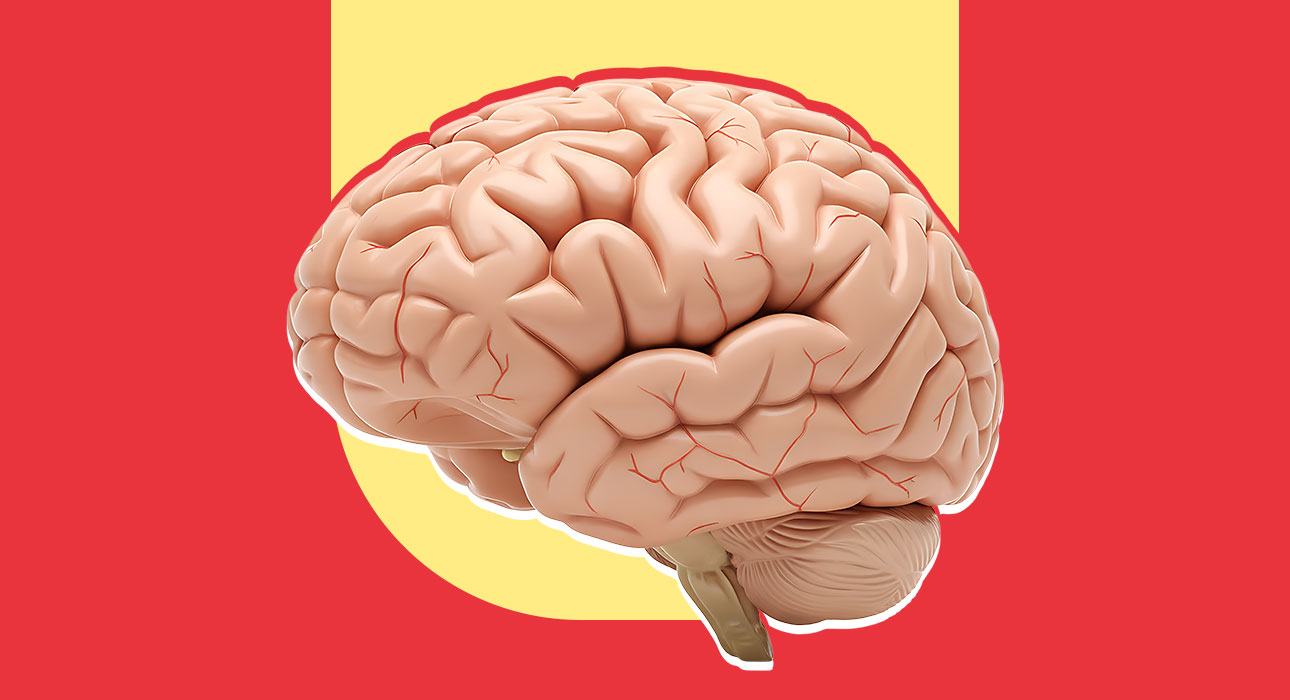
Certain research has described the brain as an active engine generating predictions about the world based on the scenarios it has encountered previously. When the expectation and reality differ, the brain updates itself (Friston, 2010). While this is still a hypothesis, the theory provides an entirely different perspective about perception, emotions, learning and mental health.
Is the Brain Reactive or Predictive?
Traditionally, perception was viewed as a bottom-up process. The information detected by the sensory organs would travel via the nervous system to the brain, which would construct a picture of reality. However, the concept of predictive processing challenged the traditional view. Predictive processing suggests that the brain, instead of waiting for sensory organs to send the information, creates predictions based on previous experiences and memories.
The received information from the sensory organs is then compared against the predictions. Only the differences, if any, need extensive processing (Rao & Ballard, 1999). This makes the brain much more efficient, as it does not need to process every single detail from scratch.
Read More: Interoceptive Prediction Error in Panic Disorder: The Hidden Mechanism Behind Panic Attacks
Why Does Prediction Matter for Perception?
Have you ever read a sentence with a few letters missing? You must have noticed that not just you, but most people, can effortlessly understand it even though a few letters are missing. This is because the brain predicts missing information using context. Similarly, optical illusions are described by the brain’s approach to prioritise the most probable interpretation over the objectively correct one. Studies have shown that expectations significantly influence perception (Summerfield and Egner, 2009).
This is why an experienced professional often notices patterns invisible to others. A radiologist might detect a subtle tumour in an X-ray, while to an inexperienced individual, it is only shades of grey. Years of experience refine the brain to be able to make more accurate predictions.
Every Mistake Helps the Brain to Update
Whenever the prediction and reality differ, the brain utilises the information to update its system to make future predictions more accurate. These differences are termed ‘prediction errors’. The prediction error helps the brain system to learn and make more accurate predictions. The brain constantly adjusts expectations based on experiences, helping an individual learn what to expect in the future (Montague et al., 1997).
Further studies have suggested that the brain constantly tries to reduce uncertainty by minimising prediction errors. Whether it is about learning a new skill, recognising a face or navigating in an unfamiliar place, the brain constantly compares its prediction with reality and updates the system if any mismatch is found (Friston, 2010). Thus, learning is not just about collecting newer information but about refining the brain’s ability and accuracy to predict. Every mismatch, i.e., the occurrence of an unexpected event, helps the brain to improve its understanding of the world.
Read More: How the Brain’s Anti-Reward System Fuels Cocaine Relapse
Emotions Are Not Automatic
Predictive processing extends beyond perception into emotional experience. Traditionally, emotions have been described as an automatic response to external events. However, modern research argues that emotions might not just be an automatic reaction. Instead, they are actively constructed by the brain using predictions influenced by past experiences, sensations and social context (Barrett, 2017).
For example, a racing heartbeat before a public speaking event might be interpreted as anxiety by one person, while the other person might interpret it as excitement. Although the physiological signals are similar, the brain’s predictive interpretation differs. This perspective explains why, in the same scenario, the emotional experiences might vary between individuals. Our emotional response is not only influenced by external events but also by the predictive system within our brain built over a lifetime.
Read More: How the Amygdala Shapes Our Emotions and Behaviour
We Predict Before We Realise
Humans constantly predict the behaviour of others. Often, while having a conversation, we know what the other person would say before they complete their sentence. In a tennis match, an athlete predicts the movements of their opponent in milliseconds. Musicians playing synchronously anticipate each other’s timing without conscious effort. These aren’t mere coincidences. Research suggests that prediction is the fundamental mechanism by which the brain understands intentions and coordinates behaviour (Kilner et al., 2007). Social interactions would become extremely slow if every action required a complete analysis before responding.
What Happens When Prediction Is Wrong?
The concept of predictive processing has had a unique way of explaining psychological disorders. The cases of hallucinations, delusions and schizophrenia have been described as a result of prioritising internally generated predictions while failing to properly register the incoming sensory information (Corlett et al., 2019). Furthermore, autism has also been examined through this framework. Research has hypothesised that autistic individuals may rely less on prior experiences, which causes less reliance on expectations, leading to a perception that is driven more by immediate sensory input (Pellicano and Burr, 2012). While this hypothesis is actively debated, it continues to generate newer, valuable research directions.
Anxiety disorders can be viewed under this framework as an overly pessimistic prediction system. Individuals consistently expecting danger even in relatively safer situations might trigger fear responses in harmless events. Depression can be classified as an outcome of continuously predicting negatively about oneself, which makes the predictive system more biased to negative predictions and resistant to contradictory predictions, i.e., positivity. Although predictive processing does not fully explain these conditions, it offers a unified model for understanding them.
Is Predictive Processing the Absolute Framework?
While predictive processing is a strong framework, it has attracted criticism as well. Researchers have argued that any behaviour can be interpreted as a prediction due to the broadness of the framework. Furthermore, researchers have also argued that many findings attributed to predictive processing might instead be a reflection of attention or decision-making biases (Firestone and Scholl, 2016). Although the predictive processing framework is a powerful theoretical claim, many of its broader aspects remain under active empirical investigation.
Conclusion
Despite criticism, the predictive processing framework remains a relevant topic of discussion. It is uncertain whether it will become a dominant theory of cognition, yet its influence remains undeniable. The framework delivers an elegant explanation of why perception feels effortless, why emotions differ among individuals and how disruption in expectation can be a contributing factor in the emergence of mental disorders.
Predictive processing gives a new perspective on the brain. Instead of considering the brain an observer waiting for reality to arrive, the framework portrays the brain as a system continuously predicting possible realities, matching them and learning from every mismatch. In this sense, an evident portion of consciousness is predicting what reality is most likely going to be.
Reference +
- Schultz, W., Dayan, P., & Montague, P. R. (1997). A neural substrate of prediction and reward. Science, 275(5306), 1593–1599.
- Rao, R. P. N., & Ballard, D. H. (1999). Predictive coding in the visual cortex: A functional interpretation of some extra-classical receptive-field effects. Nature Neuroscience, 2(1), 79– 87.
- Kilner, J. M., Friston, K. J., & Frith, C. D. (2007). Predictive coding: An account of the mirror neuron system. Cognitive Processing, 8(3), 159–166.
- Summerfield, C., & Egner, T. (2009). Expectation (and attention) in visual cognition. Trends in Cognitive Sciences, 13(9), 403–409.
- Friston, K. (2010). The free-energy principle: A unified brain theory? Nature Reviews Neuroscience, 11(2), 127–138.
- Pellicano, E., & Burr, D. (2012). When the world becomes “too real”: A Bayesian explanation of autistic perception. Trends in Cognitive Sciences, 16(10), 504–510.
- Clark, A. (2013). Whatever next? Predictive brains, situated agents, and the future of cognitive science. Behavioural and Brain Sciences, 36(3), 181–204.
- Firestone, C., & Scholl, B. J. (2016). Cognition does not affect perception: Evaluating the evidence for “top-down” effects. Behavioural and Brain Sciences, 39, e229.
- Barrett, L. F. (2017). How emotions are made: The secret life of the brain. Houghton Mifflin Harcourt.
- Corlett, P. R., Horga, G., Fletcher, P. C., Alderson-Day, B., Schmack, K., & Powers, A. R., III. (2019). Hallucinations and strong priors. Trends in Cognitive Sciences, 23(2), 114–127.