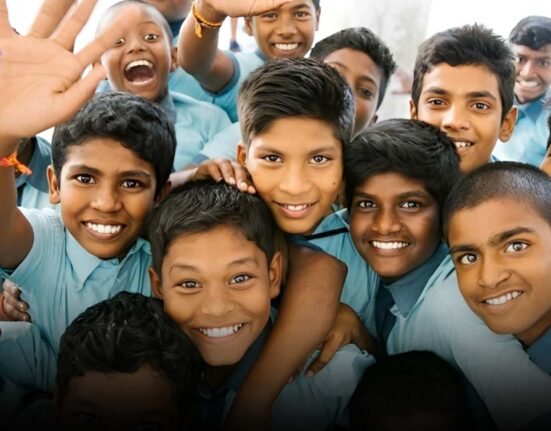
Madhya Pradesh becomes the first state to integrate mandatory mental health awareness into college induction programmes, signalling a shift towards preventive student well-being.
The transition from school to college is often described as an exciting new chapter. However, for many students, it also brings academic pressure, homesickness, anxiety, social isolation and emotional uncertainty. Recognising these challenges, the Madhya Pradesh government has introduced a landmark policy that makes mental health awareness programmes compulsory for all first-year college students across government and private higher education institutions beginning with the 2026–27 academic session (Economic Times Education, 2026).
The initiative marks one of India’s most comprehensive state-level efforts to embed mental well-being into higher education from the very first day of college, reflecting a growing understanding that academic success and psychological health are deeply interconnected.
A Preventive Approach Instead of a Reactive One
According to a directive issued by the Madhya Pradesh Higher Education Department, every college must organise Mental Health and Wellness Programmes for newly admitted students starting July 1, coinciding with the commencement of the academic session (Economic Times Education, 2026).
Rather than waiting until students experience severe emotional distress, the government aims to create awareness at the outset of college life. The induction programmes will familiarise students with common psychological challenges such as stress, anxiety and depression while equipping them with practical coping mechanisms. Officials stated that the objective is to ensure students understand that seeking psychological support is both normal and encouraged, thereby reducing stigma around mental health.
What the Programme Will Include
The mandatory sessions will cover a broad range of life skills and emotional wellness topics designed to help students navigate the challenges of higher education. These include Stress management, Time management, emotional regulation, positive thinking, meditation, mindfulness, life skills development, Access to counselling services, Mental health awareness and Psychological first aid.
Institutions have also been instructed to invite psychologists, counsellors and mental health professionals to interact directly with students, providing expert guidance and introducing available campus support systems (NDTV, 2026). Alongside mental health awareness, induction programmes will include sessions on anti-ragging regulations, cyber safety, grievance redressal mechanisms, mentor–mentee systems and responsible digital behaviour, ensuring that students receive holistic orientation before beginning their academic journey (NDTV, 2026).
Creating Safer and More Inclusive Campuses
The Higher Education Department emphasised that student mental health is fundamental to academic achievement, personality development and overall well-being. Officials noted that colleges must strive to build “safe, inclusive and supportive educational environments” from the very beginning of the academic session (Economic Times Education, 2026).
To ensure effective implementation, colleges have been instructed to maximise student participation and submit reports, photographs and documentation of the programmes to the department. Education experts believe the directive moves mental health from being an optional support service to becoming an institutional responsibility.
Why the Decision Matters
The announcement comes amid increasing national concern over student stress, burnout and mental health crises in educational institutions. Research by the World Health Organisation defines mental health as a state of well-being that enables individuals to cope with life’s stresses, work productively and contribute to their communities. The organisation has consistently emphasised that adolescence and early adulthood are critical periods for preventing long-term mental health disorders.
Similarly, the University Grants Commission recently released guidelines encouraging higher educational institutions to establish comprehensive mental health policies, counselling centres and early intervention systems aligned with the National Education Policy (UGC, 2026). The Madhya Pradesh initiative closely reflects these national recommendations by embedding mental health education into institutional culture from the first day of college. Experts suggest that preventive programmes are more effective than crisis-based interventions because they encourage help-seeking behaviour before psychological problems escalate.
A Model for the Rest of India?
Mental health has increasingly become a policy priority in Indian education. Earlier this month, the Union Ministry of Education reviewed a draft National Mental Health and Well-Being Policy for Schools aimed at creating emotionally supportive learning environments across the country (Economic Times, 2026).
Against this backdrop, Madhya Pradesh’s decision represents a significant policy shift. Instead of treating mental health as a specialised service accessed only during emergencies, the state has integrated it into every student’s educational journey. If implemented effectively, the initiative could inspire similar reforms in other states and contribute to a nationwide transformation in how colleges address student well-being. For thousands of freshers entering college this year, the message is clear: mental health is not separate from education- it is an essential part of it.
The Madhya Pradesh government’s decision reflects a growing recognition that higher education must nurture emotional resilience alongside academic excellence. By making mental health awareness compulsory for every fresher, the state has taken a proactive step towards creating campuses where students feel supported, informed and empowered to seek help when needed. As conversations around mental health continue to evolve across India, initiatives like these demonstrate that student well-being is no longer an afterthought but an educational priority.
References +
- Economic Times Education. (2026, June 25). The MP govt makes mental health awareness compulsory for college freshers. Retrieved from https://education.economictimes.indiatimes.com/news/higher-education/mp-govt-makes mental-health-awareness-compulsory-for-college-freshers/131980350
- NDTV. (2026, June 24). The MP Government makes mental health awareness compulsory for college freshers. Retrieved from https://www.ndtv.com/health/mp-govt-makes-mental-health-awareness-compulsory-for college-freshers-11681696
- University Grants Commission. (2026). Guidelines on Uniform Policy on Mental Health and Well-being for Higher Educational Institutions. Retrieved from https://www.gbpuat.ac.in/16-01-26Annexure%20-I%20Advisory.pdf
- Economic Times. (2026, June 5). Education Minister Dharmendra Pradhan reviews the draft National Mental Health and Well-Being Policy for Schools. Retrieved from https://m.economictimes.com/news/india/eucation-minister-dharmendra-pradhan reviews-draft-mental-health-policy-for-schools/articleshow/131524147.cms