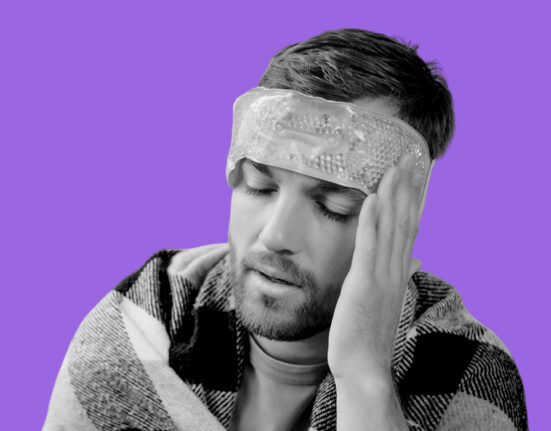
Imagine waking up for the 4th or 5th night in a row after sleeping for only a few hours without adequate sleep. You get to work or college, and all of a sudden, your plans need to change, and you can’t cope. You make impulsive decisions, you get really irritable when something slightly goes wrong, and the basic tasks seem too difficult to complete.
Most of the people have experienced a scenario like this at least once in their lifetime, perhaps due to exams, work stress, the rigours of parenthood, or the demands of shift work. In today’s “hustle and bustle” of a society where sleep deprivation is almost seen as a ‘Badge of Honour ’. As anyone who has knowledge of neuroscience knows, there are vast consequences to sleep deprivation that not only make us sleepy, but impair decision-making skills, behavioural flexibility, as well as risk and reward evaluation (Killgore, 2010; Lim & Dinges, 2010).
The impact of these changes may affect everyone in academic performance, work productivity, control over one’s emotions, and even safety and security. That’s why explaining mechanisms behind the impact of severe and chronic sleeplessness on decision-making and cognitive flexibility has become very prominent in psychology and Neuroscience research. Based on both the theory of executive function as well as theories regarding sleep and neurobiology, this has proven to have detrimental impacts on top levels of cognition and the functioning of the brain, particularly the prefrontal cortex (Durmer & Dinges, 2005; Walker, 2017).
Understanding Chronic Sleep Deprivation
Sleep deprivation refers to obtaining less sleep than the body requires for optimal functioning. While one sleepless night may temporarily impair alertness, chronic sleep deprivation occurs when reduced sleep continues over days, weeks, or even months (Watson et al., 2015). There are some common reasons why people are unable to maintain a sufficient amount of sleep:
- Chronic stress or anxiety,
- Academic pressure or examinations,
- Long work hours and late-night shifts,
- Sleep disorders like insomnia,
- Parental responsibilities and child caregiving,
- Excessive use of mobile phones or social media before going to bed.
These days, many individuals are deprived of getting enough sleep, so now the definition has been widened to include less than 7 hours of sleep to be considered as having insufficient sleep (Watson et al., 2015). It is a part of many people’s modern lifestyles to be short on sleep nowadays due to many factors discussed earlier and more.
In these cases, researchers have demonstrated that a loss of sleep leads to multiple deficiencies in executive function, including working memory, problem solving, decision-making and cognitive flexibility (Lim and Dinges, 2010), although in both instances these effects cannot possibly be more obvious if these issues affect academic performance and the ability to operate an optimal level of functioning.
Read More: The Psychology and Neuroscience of Sleep Deprivation in Modern Society
Executive Function Theory: Brain’s Planning Department
“Executive functioning” is used to describe the high-order cognitive functioning that enables individuals to regulate thoughts, emotions, and behaviour in pursuit of goals. According to executive function theory, these processes depend largely on the prefrontal cortex (PFC), a brain region responsible for coordinating complex cognitive activities (Miyake et al., 2000). Core executive functions include:
- Working memory,
- Inhibitory control,
- Cognitive flexibility,
- Planning and organisation,
- Problem-solving,
- Decision-making.
Executive functions have been seen as comprising a network that includes the brain areas of working memory, attention and executive planning, as well as self-control and social behaviour management skills.
However, for all components of executive functioning, it appears that the one most negatively impacted factor because of lack of sleep is cognitive flexibility, as it requires to shift focus rapidly and dynamically, adapt to changing environments, switch between tasks, and generate alternative solutions when new information or changing conditions arise (Diamond, 2013).
However, it is seen that research and studies continue to demonstrate the damage that insufficient sleep causes, which can result in our executive functionality becoming inefficient and eventually detrimental (Durmer & Dinges, 2005).
Read More: The Impact of Sleep Deprivation on Health and Well-being
Effect of Sleep Deprivation On Cognitive Flexibility
Cognitive flexibility is the ability to adapt the way individuals think and behave according to their environment and information. It allows people to question assumptions, learn from their mistakes and behave appropriately in an unexpected situation (Diamond, 2013). It has been established long ago that with persistent sleep deprivation, cognitive flexibility begins to break down in multiple areas such as:
- The ability to switch between tasks is challenged,
- Repeated difficulty thinking out of the box,
- Poor adaptability to shifting rules,
- Difficulty unlearning incorrect information,
- Decreased innovation or a limited range of responses,
- Increased rigidity and mentally “getting stuck” in certain modes of thinking.
These mean that the chronically under-slept individual becomes less effective and efficient because they’re too stuck to shift course, repeat old mistakes as if they never happened, or change the approach when the situation calls for it (Killgore, 2010). Research on the task-switching paradigm (swapping from one task and back to another) of sleep deprivation reveals slower reaction times, decremented performance levels and worsened accuracy in sleep-deprived students, even when students believe they have sufficiently compensated for the deficit in sleep (Lim & Dinges, 2010).
It reveals that increased sleep deprivation leads to increased difficulty in any required mental adjustments (Lim & Dinges, 2010). These adjustments are difficult due to communication interruptions in the prefrontal cortex that deals with attention, memory and mood control to the rest of the parts of the brain involved, since insufficient sleep inhibits one’s ability to accurately modify information, ignore previously conditioned behaviours with regard to a situation, and create novel responses for complex situations (Durmer & Dinges, 2005).
Read More: Impact of Sleep Deprivation on Cognitive Thinking
Effect of Chronic Sleep Loss On Decision Making
Decision making includes evaluating alternatives, planning future choices, balancing risks and rewards, and their outcomes. It relies on many “executive” functions and emotional processing skills that all break down as a result of chronic sleep deprivation. Researchers have demonstrated that over extended, prolonged wakefulness, individual choices can become markedly riskier, due to increased sensitivity to reward (Venkatraman et al., 2011). This happens because people may:
- take unnecessary risks
- make impulsive decisions
- overestimate potential rewards
- underestimate possible consequences
- show inconsistent judgement
- struggle with long-term planning
Unfortunately, the people in these situations cannot adequately evaluate consequences or future possibilities. This can affect anything from workplace behaviour to financial decisions (Killgore, 2010). For example, sleep-deprived pilots may fly unsafe flight plans; healthcare professionals working for prolonged shifts may make medical errors; drivers may underestimate hazards on the road; and financial professionals may engage in riskier investment decisions after inadequate sleep.
Read More: How Waiting Impacts Stress and Decision-Making
Neurobiological Models of Sleep
Neurobiological models propose that sleep is essential for restoring neural efficiency, strengthening memory consolidation, regulating emotional processing, and maintaining metabolic health (Walker, 2017). The following events may happen as part of the brain adaptation process.
- Decreased prefrontal cortex activity: Functional neuroimaging studies have established that an increased amount of wakefulness time decreases overall activity within the prefrontal cortex (an area responsible for executive control, reasoning, planning, decision-making, problem solving and behavioural regulation) (Durmer & Dinges, 2005).
- Increased emotional reactivity: Sleep deprivation increases activity in the amygdala while reducing regulatory input from the prefrontal cortex. Consequently, emotional reactions become stronger and less controlled, influencing decision-making and interpersonal behaviour (Walker, 2017).
- Altered Neurotransmitter Levels: Dopamine, serotonin, norepinephrine, and other key brain chemicals that play a crucial role in brain alertness, motivation and attention are all depleted as a direct result of sleep loss, leading to poor decision-making and difficulty in adjusting one’s thoughts (Killgore, 2010).
- Decreased brain activity: The ability of communication between subcortical and cortical regions decreases; the brain cannot function with proper control and connectivity to integrate information necessary for flexible thinking and sound judgment (Lim & Dinges, 2010).
Read More: The Psychology of Sleep Disorders: Causes, Symptoms & Treatment
Implications for Mental Health and Day-to-Day Life
The effects of chronic sleep deprivation extend far beyond the laboratory setting and negatively impact psychological well-being and day-to-day life functioning.
Mental health consequences
Mental health implications of chronic sleep deprivation include:
- increased symptoms of anxiety,
- increased risk of developing depression,
- impaired emotional regulation,
- reduced ability to cope with stressful stimuli,
- experience of burnout (Walker, 2017)
Decreased cognitive flexibility likely contributes to obsessive negative thoughts and a reduced ability to cope with negative experiences (Walker, 2017).
Day-to-Day Functioning
The everyday functional consequences of sleep-related executive dysfunction include:
- Decreased academic functioning
- Reduced productivity at work
- Lessened interpersonal interactions
- Poor driving performance
- Low quality of life (Lim & Dinges, 2010)
These deficits may pose a threat in work environments that demand precise and rapid decision-making, such as emergency services, aviation, healthcare, and transportation, where even the slightest sleep loss may have negative outcomes.
Read More: The Sleep Anxiety Spiral: Why Worrying About Sleep Makes It Worse
Recovering Cognitive Functioning through Healthy Sleep
While sometimes sleep loss is unavoidable, practising healthy sleep habits can improve executive functioning and decision-making. Key strategies include:
- Maintaining a regular schedule of sleep and wakefulness,
- Avoiding screens and electronic stimulation close to bedtime,
- Caffeine restriction at night,
- Creating a quiet and dark bedroom environment for sleep,
- Relaxation and mindfulness techniques (i.e., meditation, deep breathing)
- Regular physical activity
- Treating sleep disorders (Watson et al., 2015)
The public safety and quality of public goods depend on maintaining workplace safety. Organisations can significantly mitigate the risks associated with sleep-related executive dysfunction by implementing reasonable work hours, limiting excessive overtime, promoting adequate rest breaks, and educating employees regarding sleep hygiene.
Conclusion
Sleep is vital for optimal cognitive performance and involves important brain functions related to thinking critically, regulating one’s emotional state, and the capacity for sound decision-making. This can be viewed from different perspectives; in relation to executive functioning theory, the prefrontal cortex plays a vital role for optimal functioning and is disrupted by chronic sleep deprivation. The neural systems for cognitive flexibility and decision-making are also disrupted by sleep deprivation.
Every facet of individuals’ lives, from personal growth to work to relationships, is affected by the depletion of sleep-related cognitive abilities. Today, so many aspects of modern daily life prioritise work and output over necessary rest, which is why it is more important than ever to consider the costs of sleep deprivation. Moreover, investing in sleep is not only about preserving people’s own well-being; it is also about the well-being of the public and their capacity to think efficiently. Ultimately, it can be said that “The quality of our decisions often hinges upon the quality of our sleep.”
References +
- Harrison, Y., & Horne, J. A. (2000). The impact of sleep deprivation on decision making: A review. Journal of Experimental Psychology: Applied, 6(3), 236–249.
- Miyake, A., Friedman, N. P., Emerson, M. J., Witzki, A. H., Howerter, A., & Wager, T. D. (2000). The unity and diversity of executive functions and their contributions to complex “frontal lobe” tasks. Cognitive Psychology, 41(1), 49–100. https://doi.org/10.1006/cogp.1999.0734
- Durmer, J. S., & Dinges, D. F. (2005). Neurocognitive consequences of sleep deprivation. Seminars in Neurology, 25(1), 117–129. https://doi.org/10.1055/s-2005-867080
- Yoo, S. S., Gujar, N., Hu, P., Jolesz, F. A., & Walker, M. P. (2007). The human emotional brain without sleep—A prefrontal-amygdala disconnect. Current Biology, 17(20), R877– R878. https://doi.org/10.1016/j.cub.2007.08.007
- Killgore, W. D. S. (2010). Effects of sleep deprivation on cognition. Progress in Brain Research, 185, 105–129. https://doi.org/10.1016/B978-0-444-53702-7.00007-5
- Lim, J., & Dinges, D. F. (2010). A meta-analysis of the impact of short-term sleep deprivation on cognitive variables. Psychological Bulletin, 136(3), 375–389. https://doi.org/10.1037/a0018883
- Venkatraman, V., Huettel, S. A., Chuah, Y. M. L., Payne, J. W., & Chee, M. W. L. (2011). Sleep deprivation biases the neural mechanisms underlying economic preferences. Journal of Neuroscience, 31(10), 3712–3718. https://doi.org/10.1523/JNEUROSCI.4407-10.2011
- Diamond, A. (2013). Executive functions. Annual Review of Psychology, 64, 135–168. https://doi.org/10.1146/annurev-psych-113011-143750
- Watson, N. F., Badr, M. S., Belenky, G., et al. (2015). Recommended amount of sleep for a healthy adult: A joint consensus statement of the American Academy of Sleep Medicine and Sleep Research Society. Sleep, 38(6), 843–844. https://doi.org/10.5665/sleep.4716
- Walker, M. P. (2017). Why We Sleep: Unlocking the Power of Sleep and Dreams. Scribner.