Have you ever been in a situation where you wanted to say no but somehow couldn’t and ended up being in an uncomfortable situation? Or has there been a situation where you felt anxious the whole day but couldn’t understand why you were feeling that way? Or you saw both your friends fighting over an assignment, and you didn’t know how to navigate the solution to that conflict. Now think if, in the above situations, you had the skills of assertion, understanding of emotions and feelings, and strategies of conflict management. These are not just any random situations—we encounter them in our daily lives. We refer to the abilities needed to handle them as life skills education.
Dealing effectively with the demands and challenges of everyday life through abilities for adaptive and positive behaviour is called life skills, according to the World Health Organisation. Thus, life skills prepare individuals to live independently and productively in society (Nic Gabhainn et al., 2020). General examples where life skills are applicable include time management, understanding why one behaves in a specific way, making informed choices, or how to be a part of a social circle. Though it sounds like these are adult things, however, they are useful across all ages.
What are life Skills?
Life skills are a term that has a varied definition depending on the application of it. For example WHO defines it as abilities that support adaptive and positive behaviour, enabling individuals to deal effectively with the demands and challenges of everyday life. Life skills focus on a balance of three areas: Knowledge, attitudes, and skills through behaviour changes or development, according to UNICEF.
Moving beyond the health domain World Bank defines life skills as a set of social and behavioural skills that enable us to deal effectively with the demands of everyday life. This definition focuses on gender norms and human rights. The terms have driven meaning through multifaceted perspectives based on the interventions aimed at the development of specific skills, from leadership to empathy (World Bank Group, 2013).
Life skills are attitudes, abilities, and socio-emotional competencies that enable individuals to learn, make informed decisions, and exercise rights to lead productive and healthy lives. These skills are further useful to move towards achieving the 17 Sustainable Development Goals (SDGs) of the United Nations (UN). It empowers young people to take positive steps to participate in their community, engage in continuous learning, able to protect themselves and promote healthy and positive social relationships.
Why Life Skills for Adolescents?
Adolescence is a period in the stages of life where a huge amount of changes take place, from the development of secondary sexual characteristics to romantic feelings for someone. Though many people associate adolescence with biological changes, that’s not all it involves. It is true that it begins with biology but ends in society. This is because the expectations of society from adolescence differ from any other stage of childhood.
The teenage years are a time period that seems like a trailer of adulthood. Thus, people immediately connect any activity adolescents indulge in to how they are likely to behave during adulthood. Thus, adding societal and emotional pressure. Adolescents face a range of issues, including peer pressure, substance use and abuse, bullying, sexual abuse, academic pressure, social media addiction, body image issues, and much more.
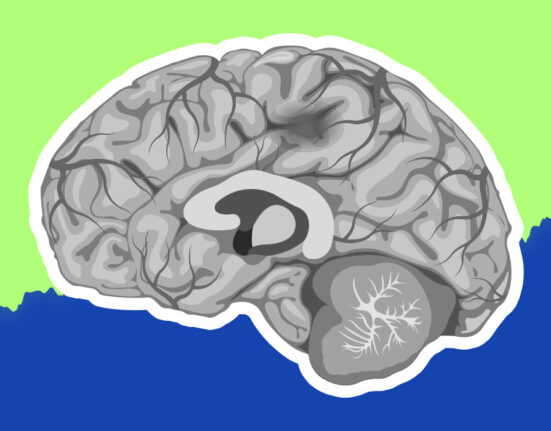
Along with bodily change, the frontal lobe of the brain, which is the major area of planning, decision-making, and critical thinking, basically executive function, is still developing. Therefore, adolescents base major decisions on emotions, as their amygdala, which is the emotional part of the brain, is already developed. To facilitate adolescent in their journey of development, inculcating life skills becomes an essential feature. These are building blocks in becoming a dynamic citizen who can cope with challenges.
Importance of life skills beyond academics
Education is not just limited to academics that prepare us for life. It is life itself; thus, learning to support our growth and development through various skills is essential, according to John Dewey. Though academics are an essential part of any educational institute, however it do not lead to holistic education. In the fast-paced, ever-changing world multi-strategic approach is significant in empowering the psychological-social competency of individuals.
Implementing sessions of life skills education is the need of the hour as it addresses the needs of children, motivates them, and provides practical, cognitive, emotional, social, and self-management skills. The life skills session acts as a protective and supportive factor for adolescents. It strengthens the ability of an individual to meet the demands and needs of daily life (Prajapati et al., 2017).
Why life skills in School?
Research indicates that educators need to include life skill education as part of the curriculum to help prevent mental health issues and promote well-being. Research on implementing life skills education also improves student-student and teacher-student relationships. Therefore, making it a part of the intervention process. Some research also indicates improvement in academic performance, school attendance, a decrease in bullying, and fewer referrals for specialist psychoeducational services (Nic Gabhainn et al., 2020).
In India, the Central Board of Secondary Education (CBSE) recognised this need and made life skill education a compulsory part of the curriculum. Life skill Education is important in developing pro-social behaviour, decreasing behavioural and social problems, improving interpersonal relationships, conflicts, and anger. Therefore, enhancing psychosocial competencies and self-esteem (Prajapati et al., 2017). Life skills have been categorised into three major domains –
- Social Skills: The ability to effectively interact and communicate with others. Also, relating to others and navigating social situations.
- Thinking skills: Skills that enhance logic using analytical abilities, thinking creatively and critically, thus improving decision-making and developing problem-solving.
- Emotional Skills: Understanding and being comfortable with oneself, including managing and coping with stress and emotions. Thus developing resilience.
Core Life Skills
The world bodies such s UNICEF, UNESCO, and WHO (1997) have listed 10 core life skills (Birrell Weisen et al., 1997; Gupta, 2015) –
- Self-awareness: Recognising and understanding oneself, including strengths and limitations, desires, likes, and dislikes. The more an individual is aware of themselves, the better they can adapt to the demands and needs of life.
- Empathy: The understanding of others’ situations and emotions, and being able to reciprocate the understanding. It helps us to understand and accept others who may be very different from us, improving social interaction.
- Effective Communication: Able to express ourselves verbally or non-verbally, which is appropriate in the culture and situation.
- Interpersonal Relationship: Relating to people we interact with positively and building & maintaining healthy relationships with others.
- Critical Thinking: Analysing situations, information, and experiences in an objective manner. It prepares a person to think rationally and gain the skills of reasoning, questioning, and investigation.
- Creative Thinking: Enables us to explore alternatives and look at situations or events from a new perspective. The skill also facilitates problem-solving and decision-making. It helps to look beyond direct experiences and respond adaptively and with flexibility to the situation of daily life.
- Decision-Making: Strategies that help us make choices and the best possible course of action by analysing the situation and possibilities.
- Problem Solving: Dealing constructively with problems in our lives by applying strategies that are solution-based.
- Coping with stress: Identifying the sources of stress, recognising its impact on daily life, and developing strategies that could help to balance the level of stress.
- Coping with emotions: Recognising own and others’ emotions, being aware of how emotions affect one’s behaviour, and being able to respond to emotions appropriately.
Designing Life Skills Education Programs
Designers should remember the following points while creating life skill sessions (Birrell Weisen et al., 1997; World Bank Group, 2013):
- Needs-based assessment should be conducted to understand the specific needs of the target audience.
- The content and length of the sessions must be realistic to implement
- The availability and accessibility of resources for activities to be delivered during the session should be checked and verified
- The session must have activities wherein individuals can relate to the skills and be able to visualise their applicability in real life
- At the end of each session short evaluation must be conducted to be aware of the level of understanding achieved by the participants.
Implementation of Life Skills
The implementation of Life skills is based on the Knowledge, Skills, and Attitudes (KSA) approach. Wherein Knowledge is what one knows, skills indicate what one can do, and attitudes point to what one believes and values. These help the facilitator stay more objective and outcome-oriented while planning and implementing the life skill sessions. Life skills result in holistic and quality education. Methodology to impart life skills education includes discussions, role play, case studies, reflective activities, brainstorming, group work, games, storytelling, and debates (Team et al., 2018).
These skills are not limited to life skills sessions under life skill education, but also to being able to apply them in everyday life. Such as giving students age-appropriate responsibilities, leadership roles, and participatory opportunities in discussions and debates. Different activities that can enhance life skills in academic institutions example which are discussions, brainstorming, role plays, educational games, analysis of situations, poetry, storytelling, debate, art and music, community service projects, and case studies. Activity-based learning and project-based learning as a part of the curriculum also enhance life skills (Birrell Weisen et al., 1997).
Gaps in Implementation
Many schools have understood the significance of life skill education for their students. Thus, it has become a part of their school curriculum. However, we still need to address some loopholes.
1. Burden on one
In the majority of schools, there is one school counsellor who is given the role of being a wellness teacher as well, who conducts life skill education. This is along with taking group and individual counselling sessions, administering screening tools, providing psychoeducation to parents, and training teachers. Therefore, it creates a burden on an individual rather than forming a team. This impacts the quality of planning and implementation of sessions, along with the frequency of life skill sessions.
2. Stigma still prevails
Life skill education includes topics that are still stigmatised by many in our society. For instance, the concept of consent, discussion on substance abuse, or suicide, etc. Many teachers and school authorities filter these essential topics from the curriculum.
3. Sudden addition
Life skill sessions are for adolescents; however, in many schools, during preschool and primary years, no sessions are conducted. Thus, sessions become novel for students as a result, sometimes it’s taken as a free period or chill class. Preschool and primary students also require skills and support that can be oriented to socio-emotional learning. Early introduction acts as a protective factor for students, and by the time life skills sessions are introduced, they are already aware of their benefits.
4. Lack of Integration
Many schools have a separate class for life skills education. However, the sessions and skills discussion become limited to that class, overlooking the broader goals. The skills are not just to be understood but applied in real-life scenarios. Thus, linking them to further classes and curriculum is essential. As it would become a value education class that are attended for the sake of it.
Conclusion
Life skills are essential tools that empower students, especially adolescents, to navigate complexities and be adaptive to everyday life. Adolescents face significant biological, cognitive, social, and emotional transitions. The life skills, such as decision making, empathy, coping with stress, etc, become a critical part of their protective kits. These skills not only support them in academic success but also foster personal growth, resilience, and positive social behaviour.
Integrating life skills in the curriculum creates a foundation of holistic education. However, effective design and implementation are required, but there are systemic challenges that need to be navigated through. Thus, a collaborative, need-based approach can ensure life skills education does not end up becoming a class for the sake of it. Rather, it facilitates the creation of a supportive environment where every student reaches their maximum potential.
References +
Team, A., Kapoor, S., Acharya, P., & SAMpAT-rAwAL, S., Dr. (2018). HANDBOOK OF ACTIVITIES ON LIFE SKILLS. https://aif.org/wp-content/uploads/2018/10/Lifeskills-2018a_MAST.pdf
Nic Gabhainn, S., Barry, M., Kelly, C., Ben Abdelaziz, F., Storr, S., Westad, J., Daltry, R., Makino, Y., Nichols, T., REKVE, D., ENGESVEEN, K., Willumsen, J., FU, D., Gordon, B., Barnekow, V., Weber, M., Jourdan, D., World Health Organization, & WHO Collaborating Centre for Health Promotion Research, National University of Ireland Galway, Ireland. (2020). Life skills education school handbook: prevention of noncommunicable diseases – Introduction (Inis Communication, Ed.) [Handbook]. World Health Organisation. https://iris.who.int/bitstream/handle/10665/331948/9789240004849-eng.pdf?sequence=1
Prajapati, R., Sharma, B., Sharma, D., & Fiji National University. (2017). Significance of life skills education. In Contemporary Issues in Education Research (Vol. 10, Issue 1). https://files.eric.ed.gov/fulltext/EJ1126842.pdf
Gupta, P. (2015). IMPORTANCE AND NEED OF LIFE SKILLS EDUCATION FROM AN INDIAN PERSPECTIVE. In Journal of Emerging Technologies and Innovative Research (Vol. 2, Issue 12, pp. 492–493) [Journal-article]. https://www.jetir.org/papers/JETIR1701765.pdf
World Bank Group. (2013). Life Skills: What are they, Why do they matter, and How are they taught? https://www.worldbank.org/content/dam/Worldbank/document/Gender/1323447_AGI_LearningFromPracticeSeries.pdf
Birrell Weisen, R., Orley, J., Evans, V., Lee, J., TACADE, Life Skills International, & Mandat Plus Prevention. (1997). LIFE SKILLS EDUCATION FOR CHILDREN AND ADOLESCENTS IN SCHOOLS. In J. Ferguson, J. T. Jones, G. O. Aqetula, L. Mantilla Castellanos, E. Nightingale, J. Oliver, R. Takanashi, UNICEF, U. Deseniss-Gros, B. Dick, R. Faul-Doyle, A. Hewett, L. Wickramasinghe, & M. Jalloh, WHO/MNH/PSF/93.7 A.Rev.2. https://iris.who.int/bitstream/handle/10665/63552/WHO_MNH_PSF_93.7A_Rev.2.pdf?sequence=1#:~:text=Decision%20making%20%E2%80%A2%20Problem%20solving,constructively%20with%20decisions%20about%20our