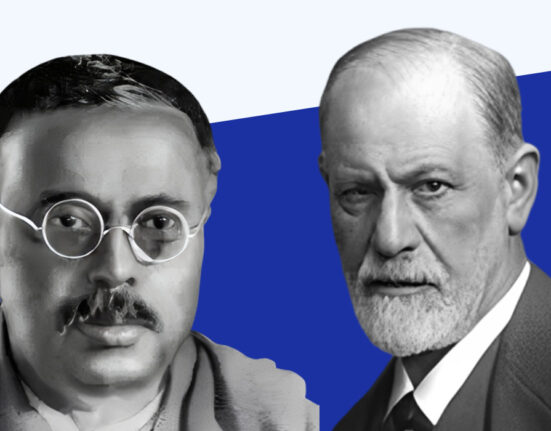
Why does it feel safer to blame, and do people feel discomfort with accountability? Why are people always blaming others? From childhood to adulthood, people find ways to escape from negative outcomes. When it comes to positive, ready to take credit. Failed to maintain balance in taking credits and responsibility. Reasons for blaming for over responsibilities have multiple psychological layers to define them. Blaming leads to implicit and explicit impact, often changing their behaviour to restore internal consistency (Festinger, 1957). The defence mechanism of denial and rejection shields from blame (A. Freud, 1936/ 1966). Finger-pointing is being effortless rather than taking responsibility. Here is how blame shifting happens, and taking responsibility for one’s own mistakes leads to growth.
Blame vs Responsibility
Blaming is a conscious or unconscious act of protecting oneself from negative outcomes. Blame gives temporal relief from the action, but it leads to shame, guilt, fear, and a withdrawal mindset. Responsibility is owning one’s role in the situation, addressing mistakes, and taking a wise move forward constructively. Taking responsibility is taking accountability, building a growth-mindset, and demonstrating leadership quality. It is an act of accepting the positive and negative outcomes of past actions, accountability, and personal agency. It is also taking ownership of one’s actions. Blame and responsibility are internalised psychological concerns of cognitive dissonance (Festinger, 1957).
Blame-Scapegoating
Scapegoating is the act of blaming an out-group when the frustration of the in-group experience is blocked from obtaining a goal (Allport, 1954). In the group, an innocent individual or group is being blamed for analysing negative experiences, such as failure or abuse by others. In society, the scapegoat is being normalised by the people who justify discrimination. It is a kind of trigger used by the dominant over the innocent. Scapegoating is not just about a group of people who are objectively responsible but failed to take responsibility for someone or something (Mestrovic, 2007)
Attribution Theory
Humans have this habit of taking credit for positive outcomes, but when things go wrong, they fail to take responsibility; however, they attribute failure to external factors or blame others. How one’s own action is shaped by circumstances, but others’ actions are a reflection of their character (Weiner, 1985). So, this human cognition as Actor-observer bias. Bernard Weiner’s attributional theory distinguishes internal and external attribution as well as stable and unstable causes. People with stable attribution for negative events take responsibility rather than blame (Weiner, 1985).
For Example, “I worked hard.” The statement gives credit for wins. “The instructions were unclear.” “No one supports me.” These statements are blaming failures. When others fail to do so, he throws on them like he is not capable, and fails to do such things. Then the same thing happened to them. Pointing out others for the reason of failure.
Cognitive Dissonance
According to Leon Festinger, cognitive dissonance posits that people are motivated to maintain internal consistency among their beliefs, values, faith, and actions. One’s own behaviour interrupts self-image; here, psychological discomfit happens as blame shifts onto others, denial of responsibility, and rationalisation among their beliefs, values, faith, and actions. This may happen often, unconsciously, framing narratives to win for themselves, defending their self-image, and proving to the world.
Example: A person constantly trolled and criticised for conservative posts and opinions in social media, rather than accept the criticism, they might blame “cultureless people”, preserving their self- concept at the expense of honest self- reflection (Festinger, 1957).
Read More: Exploring Self-Concept, Authenticity, and Self-Esteem in Humanistic Psychology
Defence Mechanisms: Shield from Blame
According to Sigmund Freud and Anna Freud, defence mechanisms are unconscious resources used by the ego to deny and reject. These are unconscious strategies the ego uses to manage anxiety and internal conflict. Anna Freud’s systematisation of defence of projection, denial, repression, and rationalisation distorts reality to protect the self (S. Freud, 1936; A. Freud, 1936/1966).
Projection – attribute flaws
Projection is a defence mechanism that attributes flaws to others over one’s undesirable traits, feelings, emotions, thoughts, or impulses to other people. Here, the changing internal inability is transformed into external exchange. Projection happens largely outside of conscious awareness and serves to protect the ego from anxiety and guilt (S. Freud, 1936).
Denial – escape from reality
Denial is a rejection of accepting realities that are threatening to acknowledge. It protects from the anxiety of failure and external judgment. One who confesses their own errors and exaggerates other faults. They maintain the illusion of competence. People are doing denial as a habitual action over time, making it a defence mechanism (A. Freud, 1936/1966).
Read More: Denial or Defence? The Psychology Behind Why People Justify Addiction
Consequence of blaming
- Blaming creates disaster in a relationship, leading to withdrawal, conflict, or emotional distance.
- Blaming and posting offensive statements on social media amplified a collective expression of public shaming and cancel culture. It creates a mob mentality to shame others.
- Chronic blaming causes a severe psychological disorder
- Blame feels defensive and leads to negative emotional conditions.
- Avoidance of ownership and leadership quality
- Trust issues in the relationship and workplace.
- Lack of emotional intelligence and empathy
- Incompetence at work
- Low self-esteem
Read More: How To Overcome Low Self-Esteem?
Shift from blame to responsibility
- Self-reflection and Self-awareness: When blame happens, fail to address the underlying emotions like fear, inferiority, shame, and insecurity. It is necessary to address things like “what I feel now?” or “what can I learn?“ and explore the emotions to help build responsibility.
- Errors as Learning: Mistakes happen in any situation. Don’t rush to push themselves and other blaming. View errors as opportunities for growth. Taking mistakes as a learning space rather than threats to self- worth.
- Emotional Intelligence: Addressing one’s own emotions and recognising them helps reduce blaming. Empathising with others and oneself improves responsibility.
- Reducing scapegoating: Identify the patterns of blame shifting and break the pattern. Especially in the workplace, managers reducing scapegoating, avoiding partiality, organising plans, and following up reduces blame shifting.
- Acceptance and review feedback: Accept feedback about work and address concerns transparently. Reviewing feedback rather than refusing or blaming tends to build trust and responsibility.
- Therapy: Cognitive-Behavioural Therapy (CBT) and Acceptance and Commitment Therapy (ACT) help to recognise chronic blaming and challenge blame patterns, develop healthier coping strategies, and build resilience.
- Ownership and Personal Accountability: With the growth mindset, people do not resort to blame-shifting but take accountability for the success or failure. When the person takes responsibility for their actions and outcomes, it leads to influencing the future. Accountability and ownership inspire continuous growth.
Conclusion: Choosing responsibility over blame
Stop normalising blaming; start taking responsibility. Change cannot happen in one day or a short time span. It is a progressive and rational process to evolve. It can be taught from childhood to educate the value of responsibility over blaming. Cognitive restructuring and reframing help adults to develop this quality. Between the chaos of cognitive distortion value, beliefs, and system and self-image, need to address the blame shifting onto people. The process of taking responsibility needs willingness to look inward, courage, and humility. It can help lead to healthy and mindful personal and professional relationships.
References +
Allport, G. W. (1954). The Nature of Human Prejudice. Cambridge, MA: Addison-Wesley.
Festinger, L. (1957). A theory of cognitive dissonance. Stanford University Press.
Weiner, B. (1985). An attributional theory of achievement motivation and emotion. Psychological Review, 92(4), 548–573. (doi.org in Bing)
Freud, S. (1936). The ego and the mechanisms of defence (A. Freud). International Universities Press.
Freud, A. (1936/1966). The ego and the mechanisms of defence. International Universities Press. (Original work published 1936)
Mestrovic, S. (2007). Scapegoating. The Blackwell Encyclopedia of Sociology, 1-2.
Heider, F. (1958). The psychology of interpersonal relations. Wiley.
Tangney, J. P., Stuewig, J., & Mashek, D. J. (2007). Moral emotions and moral behaviour. Annual Review of Psychology, 58, 345–372.