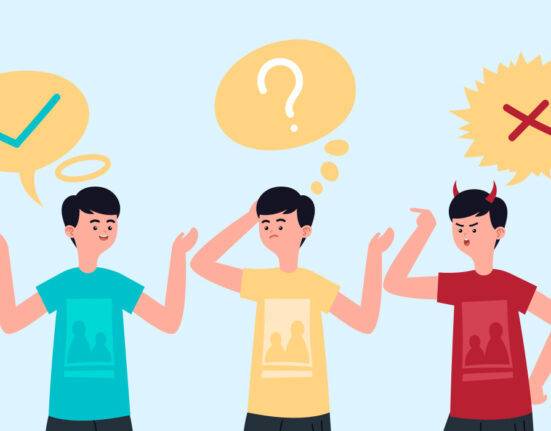
Life does not always go as planned. For example, a student may appear for an exam but not do well after preparing it rigorously or an individual loses a true or good friend, someone experiences a relationship breakup, falls ill, loses a job or sudden relocation. During these times, a person may ask, “Why did this happen to me?” “What does this mean?” and “What should I do now?” These questions belong to a process called meaning-making.
Making sense is nothing more than our effort to make sense of a traumatic experience and know that it’s part of the larger context of our lives. It doesn’t necessarily mean trying to find something good about suffering. Sometimes, it just means making sense of what transpired, recognising that our perspective on life has shifted, that the experience has changed us, or how we begin to carry on (Park, 2022).
“Research indicates that making meaning may actually be an important coping strategy for easing stressful experiences and promoting one’s health and well-being. Yet this process does not operate identically across all individuals: People vary in the timing of their attempts to make sense of an experience, the meaning they derive, and the process by which they interpret it.”
What Does Meaning-Making Actually Mean?
There’s an everyday example of a simple process of meaning-making. Consider a girl at school who always thought, “If I work hard, I’ll do well”. She works hard preparing for an exam and works diligently during it, but gets a bad grade. Initially, she may think: “I am simply not good enough” or “Nothing I ever do is successful”. However, eventually, she may give the incident a different meaning. She might see that she needs to change the way she studies, be reassured that one exam does not show how clever she is or even that she has a totally different goal. The incident has not changed, but the meaning she gives it has changed.
In line with Park’s (2022) meaning-making model, individuals hold wide-ranging assumptions, goals, desires and beliefs about life, termed global meaning, as well as contextual meaning to help make sense of particular events. Incongruence between a challenging event and an individual’s global meaning can lead to distress. For instance, somebody might think that “the individuals I care about will always be there for me.” This impression may change following a hard breakup. The person might take a while to discover what took place, what the relationship was, what failed and also what it indicates in his or her life.
Why Do Difficult Experiences Lead to Meaning-Making?
Difficult experiences make a person feel that life has become confusing and sometimes not right. When something unexpected has happened, then the person wants to know the reason for it and restore order in life.
For example, loss is another one. Someone who has lost someone who was important to them will have moments of remembering that person and the relationship, and will do that for the rest of their life, and think about what life will be without that person. After some time, meaning may mean developing a new perspective of the loss, maintaining bonds in memories, or understanding how a loss has changed the person (Martino et al., 2019).
Failure can also result in meaning-making. For example, suppose someone failed the test and the first interpretation would be that they proved that the person is incapable. Then, at some later time, that person might reinterpret and arrive at another definition of their circumstances, such as what needs to be done differently. In the face of so much uncertainty, people find meaning in many things. COVID-19 changed our everyday life with less human interaction. Every day was different, and each day had a different prognosis. Making meaning was how people processed the pain (Yang et al., 2021).
A major life event can lead to someone asking themselves, “Who am I now?” Going to college, having a baby, getting a new job, breaking up with a long-term partner, or retiring might lead a person to ask themselves, “Who am I now?” Thus, in meaning-making, both the event’s influence on the person and what transpired may be considered.
Cognitive Coping: How People Make Sense of What Happens
Cognitive coping refers to the ways people use their thoughts to understand and respond to stressful situations or experiences. Individuals may examine what happened, consider alternative explanations for the event that happened, and reconsider their beliefs about themselves and the world. Meaning-making research highlights the role of appraisals and cognitive processing in understanding difficult experiences. For instance, a person who may lose a race may initially think, “My career is over.”
After some time and some reflection, the person may recognise that loss can occur for several reasons and consider options to improve performance rather than dwelling upon it. The event remains unchanged, but its interpretation may become more flexible. However, cognitive coping does not mean ignoring reality or forcing positive thought; rather, it involves considering whether an initial interpretation reflects the entire situation. Repeatedly thinking about an event without reaching a clearer understanding may also increase distress (Park, 2022).
How Difficult Experiences Can Change Our Beliefs
People often have thoughts about themselves and the world, e.g. I am safe; I can trust others; life is predictable. What if a traumatic event/interaction challenges some of these? For example: Having been in an accident, someone who thought, “I’m a careful person; nothing bad is going to happen to me”, may start to think about dangerous situations and risk. The original prediction no longer seems totally accurate.
Assumptions have been shattered; research has demonstrated the way a negative event can cause an individual to adopt a less positive belief about the world. Making sense may refer to developing a new or updated, more positive perception of the world. The person is not required to return to the original core belief “Nothing bad is going to happen to me”. A new core belief can be “Bad things can happen, but I can be safe and get help if I need to.
Please keep in mind that there may be more of these. This may imply that making sense of these experiences is not simply about reorienting the person back to their original mode of thinking. Occasionally, it might be about establishing a new meaning for oneself and one’s world (Schuler & Boals, 2016). This process shows that meaning-making does not always involve returning to an earlier way of thinking. Sometimes, it involves developing more flexible beliefs that acknowledge both life uncertainties and an individual’s ability to respond to them.
Meaning, Identity, and Personal Beliefs
How a person views himself can often be determined by the story they are living through. Sometimes, a hard or difficult experience can turn into a defining chapter in that story. For instance, after losing a job, you might think, “I’m a failure.” But that might get incorporated into your self-image and affect your self-esteem. And eventually, you may reinterpret this experience as: “I lost that job, but it gave me some space to think about the kind of work I really want to do.” And this is not to say the second idea is more “right,” or to suggest the person in mind is required to think that way. What it does say is that the same life experience can become part of a person’s sense of who she is in two very different ways.
Personal stories also serve to relate who they once were to who they are now and might be in the future. Studies on narrative identity show that people shape their life stories to allow a sense of cohesion and coherence between different life experiences (Deriu et al., 2024). Another way that meaning-making might vary between people is that two people might interpret the experience completely differently.
We all hold different beliefs, cultures, experiences, lives, relationships, and “worldviews” of life. For instance, one person might have a “religious” or “spiritual” interpretation for a difficult experience, while somebody else might see the experience as a lesson for their own self-development. Meaning is subjective; it’s based on the one person’s interpretation of their experience.
From “Why Did This Happen?” to “What Now?”
Another aspect of meaning-making is shifting from “Why did this happen?” to “What can I do now?” Certain horrible things may always have a foggy resolution. You might not ever know why you became sick, why your relationship broke down or why you lost someone. Not having a real reason can be frustrating. Sometimes you ask yourself: “What can I do now?” You are focusing on the future.
This can help a person decide what is still important, what is still doable, and what they want to do. If students flunk the test, the grade cannot be amended. However, the student may alter their approaches to learning, may receive help from a teacher, may alter their expectations, or can go on to learn something new. Therefore, that alone is not sufficient to account for what happened.
It can also derive from looking ahead, acting upon a decision and orienting oneself towards the future. This shift does not imply that we stop asking questions about the past; it simply means that we accept what is past and what we have no control over while also exploring what we do have control over. We can make meaning, and it can be both in the past and future.
The Influence of Emotions on Meaning-Making
Emotions such as sadness, anger, fear, guilt, confusion and disappointment shape the way a person explains a painful event and the choices they make. The power of emotion can also make it hard for people to comprehend what has happened right after a traumatic event. For instance, after a breakup, a person might feel depressed and continuously wonder about his or her self-worth.
The feeling of anger might lead one to attend to unfairness, while fear might generate concerns about current relationships. As emotions, these can change the meaning that was initially attached to the experience. The person’s view may change as their feelings change over time. Over time, they may slowly come to see that the loss of a relationship does not mean that they are unlovable or that every other relationship will inevitably fail.
They can reach this conclusion over time without feeling any less sad. Feelings aren’t hindrances that need to be disregarded in order to find meaning. They might tell us about what we value, or what we stand to gain or lose, in a situation. When difficulties are deep-seated, or feelings are especially powerful, they can cloud your perspective and make it more difficult to generate a positive or balanced reading. Accepting feelings rather than trying to take them on might be a necessary first step (Kamijo & Yukawa, 2018).
How Does Meaning-Making Affect a Person?
Life Has Meaning. Life with meaning has been found to be associated with greater well-being. Someone with a sense of meaning in life has greater life satisfaction and overall greater levels of well-being. If a person has no logic of living or views life as being pointless, it is not easy to understand the subtle reasons for happenings or predict the future. 3 main features of meaning are as follows (Sameer et al., 2023; Wolfram et al., 2023):
- Coherence: understand about yourself what is happening in your life.
- Goal: An indication of the direction we want to be going.
- Meaning: The belief that your life and your experiences are important.
Take this, for example: a woman who is providing care for someone who is ill may find it exhausting and stressful. But if she looks at this with a loving, dutiful view, this becomes her reason for going on, and it gives her comfort, even if it does not take away the pain. It can be associated with strength or resilience, the ability to withstand difficult experiences.
There has been research on the associations between meaning, resilience, and wellbeing, including during the COVID-19 pandemic (Baykal et al., 2026). Meaning-making following trauma has also been associated with better adjustment when the individual is able to relate the trauma to their wider beliefs about life (Park, 2022). But having meaning doesn’t mean one will be exempt from the impact of distress. Even with the added sense of meaning, difficult events can still be painful.
The Role of Resilience in Finding Hope
Resilience is how we respond when faced with a difficult situation and continue to function despite it. Resilience isn’t about being tough all the time and denying feelings of sadness. It might be about taking your time, seeking support, changing your plans, and managing the challenge in front of you. There is also potential for meaning-making to play a role in this process if it results in the person being able to re-engage with their resources, set a different goal or see a reason to work towards a meaningful future.
For example, a person who has lost a job may be initially disappointed and unsure, but then slowly formulate a new career plan, seek support, or become more skilled. Hope could arise from seeing that the loss does not mean the end of all the future. In addition to post-pandemic resilience and well-being, studies have focused on meaning in life following traumatic events (Baykal et al., 2026).
Meaning-making after trauma may help with adjustment if the person can contextualise the event in terms of a larger scheme of life (Park, 2022). But a sense of meaning and resilience does not equal recovery. Individuals may still be in distress even with a clear sense of purpose, and whether they will recover depends on what resources they have to meet the new challenge, social support, the magnitude of the event, and the context of it all (Nidhi, 2018).
Meaning-Making Is Not Always Positive
It is convenient to have the patent process of making meaning: bad things happen, we learn a lesson, we get stronger. The real realities of our own psychologies are nothing of the sort. Understanding takes time. We often don’t make sense of things right away. After a painful event, a person may simply be numb, furious, confused, or overwhelmed by emotion.
Someone who has just been through a painful experience is unlikely to be in the mood for a “lesson learned” mindset. Some research has also found that meaning-making is not always positive. Bonanno (2013) summarises that the link between meaning-making and adjustment to stress is mixed and partly depends on the form, time and context of meaning-making.
As an illustration of this, saying “What did I do wrong?” over and over after a breakup can serve to reinforce blame instead of gaining understanding. As another example, many people who have endured a traumatic event will find that the meaning it creates is “I am a weakling” or “I can trust no one ever again” and may cause more pain, not less. So, you must keep in mind that interpreting the meaning is not the same as thinking positively. One needn’t utter “all things happen for a reason” to get by. They may just get to the point where they can utter, “That was painful, and I’m still not sure I get it all, but I know where I want to go from here.”
How Social Connections Help People Find Meaning
Interactions with family, friends, colleagues, and caring professionals who are not overly critical can help shape a person’s perspective of tough situations. Sharing your feelings with a receptive listener can allow you to voice your feelings, and the listener can reflect your ideas to you and help you see the problem from another angle. It may be better to be heard and understood than to be explained.
For example, if the student passes an important exam, they might first assume that it will make the rest of their life. A friendly and encouraging teacher may point out other pathways for the student and form a plan that the student feels is realistic. The support does not change the exam result, but it can change what it means. Having someone may also help individuals retain some meaning following a loss.
Family customs and reminiscences may help people maintain a sense of connectedness when life changes. Additionally, community participation and supportive friendships can serve as sources of connection. Cultural and religious groups may also serve as sources of meaning. Not everyone welcomes all forms of support. For some, advice, judgment, or demands that they should move on can be harmful. Similarly, idle platitudes like “everything happens for a reason” may also cause harm.
Caring support is calibrated to the individual’s rhythm and can accommodate a variety of emotional responses. The construction of meaning is always an intensely personal process (Van de Ven et al., 2020). This remains true regardless of whether others were involved.
Everyone Makes Meaning Differently
Each person’s experiences influence their understanding of the world. This means that one thing may be helpful for one person but not another. Someone may have a lot of questions or just want to rehash the painful event again and again. Another person may not want to talk about it and simply needs to be left alone. One person may want to express what happened in writing. In contrast, another may need to find meaning in work, relationships, religion, art, volunteering, or simply being alive.
It’s even different within yourself. A thing that is entirely meaningless at age 20 could make a lot of sense years later. This kind of flexibility is significant. Significance is not always something that you find one time, then you have it forever. Significance can be rebuilt as individuals are exposed to other experiences and attain other goals (David & Truţa, 2023; Park, 2022).
Meaning Does Not Erase Pain
The most important thing to remember about making meaning is that understanding an experience does not mean the experience is gone. Understandably, someone can appreciate the significance of a relationship and still grieve it. A pupil can learn a bitter lesson and still feel bitter. A teacher can gain insight after a heartbreak and still mourn the loss.
Meaning and pain can therefore exist together. Meaning-making is not about persuading people that painful experiences are good or even necessary. Instead, it helps people incorporate such experiences into a larger story. As a result, the experience becomes one part of that story. However, it does not define the entire story (Kaftanski & Hanson, 2022; Sameer et al., 2023).
Conclusion
People naturally seek meaning during difficult times because challenging life experiences can threaten their beliefs and sense of direction. Additionally, these experiences can affect their identity and understanding of how the world works. Meaning-making is just one way that people can respond when life gets tough. People can try to make sense of an experience and reconstruct the world in which they live. Additionally, they can rebuild their sense of self, re-engage with their values, or find another way forward.
Research shows that, in some circumstances, making meaning may help with some level of adjustment, resilience and mental health. Not that it will, of course, be a cure-all or an easy resolution. For some people, it may be a matter of some considerable time before they will be able to discover a meaning that works for them. In that case, maybe we don’t need to find the answer to the question, “Why did this happen?” Instead, we can ask a milder question: “Since it happened, what do I want my life to look like now?” However, meaning-making doesn’t make the past vanish. For some, it can help the past find its place in the life they want to continue.
References +
- Baykal, E., Contreras, F., Abid, G., & Aldeanueva-Fernández, I. (2026). Well-being in the post-pandemic era: The role of meaning in life and resilience. Frontiers in Psychology, 16, 1696860. https://doi.org/10.3389/fpsyg.2025.1696860
- Bonanno, G. A. (2013). Meaning making, adversity, and regulatory flexibility. Memory, 21(1), 150–156. https://doi.org/10.1080/09658211.2012.745572
- David, L. T., & Truţa, C. (2023). Well-being and internal resources during the COVID-19 pandemic in relation to meaning in life and existential anxiety. Frontiers in Psychology, 14, 1168641. https://doi.org/10.3389/fpsyg.2023.1168641
- Deriu, V., Altavilla, D., Adornetti, I., Chiera, A., & Ferretti, F. (2024). Narrative identity in addictive disorders: A conceptual review. Frontiers in Psychology, 15, 1409217. https://doi.org/10.3389/fpsyg.2024.1409217
- Kaftanski, W. K., & Hanson, J. (2022). Suffering, authenticity, and meaning in life: Toward an integrated conceptualisation of well-being. Frontiers in Psychology, 13, 1079032. https://doi.org/10.3389/fpsyg.2022.1079032
- Kamijo, N., & Yukawa, S. (2018). The role of rumination and negative affect in meaning-making following stressful experiences in a Japanese sample. Frontiers in Psychology, 9, Article 2404. https://doi.org/10.3389/fpsyg.2018.02404
- Martino, M. L., Lemmo, D., Gargiulo, A., Barberio, D., Abate, V., Avino, F., & Tortoriello, R. (2019). Under fifty women and breast cancer: Narrative markers of meaning-making in traumatic experience. Frontiers in Psychology, 10, 618. https://doi.org/10.3389/fpsyg.2019.00618
- Nidhi. (2016). Growing beyond survival: Resilience, hope and meaning in life. International Journal of Indian Psychology, 3(3). https://doi.org/10.25215/0303.051
- Park, C. L. (2022). Meaning-making following trauma. Frontiers in Psychology, 13, 844891. https://doi.org/10.3389/fpsyg.2022.844891
- Sameer, Y., Eid, Y., & Veenhoven, R. (2023). Perceived meaning of life and satisfaction with life: A research synthesis using an online finding archive. Frontiers in Psychology, 13, 957235. https://doi.org/10.3389/fpsyg.2022.957235
- Schuler, E. R., & Boals, A. (2016). Shattering world assumptions: A prospective view of the impact of adverse events on world assumptions. Psychological Trauma: Theory, Research, Practice, and Policy, 8(3), 259–266. https://doi.org/10.1037/tra0000073
- van de Ven, P., van den Berg, C. J. W., Jelicic, M., & Smeets, T. (2020). The journey of sensemaking and identity construction in the aftermath of trauma: Peer support as a vehicle for coconstruction. Journal of Community Psychology, 48(6), 1825–1839. https://doi.org/10.1002/jcop.22373
- Wolfram, H.-J. (2023). Meaning in life, life role importance, life strain, and life satisfaction. Current Psychology, 42, 29905–29917. https://doi.org/10.1007/s12144-022-04031-9
- Yang, Z., Ji, L.-J., Yang, Y., Wang, Y., & Li, Y. (2021). Meaning-making helps cope with COVID-19: A longitudinal study. Personality and Individual Differences, 174, 110670. https://doi.org/10.1016/j.paid.2021.110670