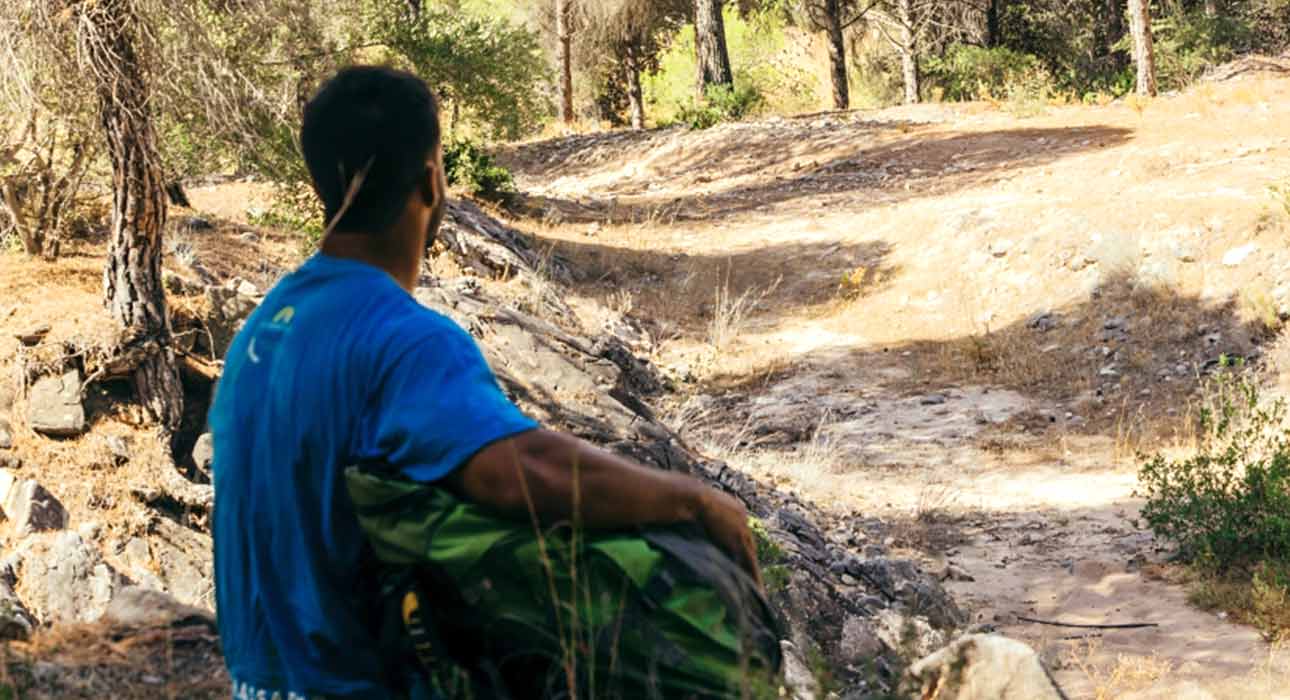
Riya had lived in the same tiny town her entire life of eighteen years. The river and hills on the other side-not just nature in a broad sense, but nature woven into her growing up and made her feel at home. How she missed them all when she left for her undergrad school-such is what we call nostalgia.
However, what happens when a person doesn’t move away but the place actually moves away from them? The once pristine river could become polluted, trees might be felled, or the place could start to feel like a home no longer inhabited despite people remaining within their place of residence. The negative emotional distress this creates is defined by solastalgia, “emotional distress caused by an environmentally disturbing change while still living within the environment (Albrecht et al., 2007).”
Nostalgia is feeling bad when your home isn’t around. Whereas Solastalgia is feeling bad when you are still in your home, but your home isn’t the home it once was. These emotions of feeling displaced while remaining in place result in a series of negative psychological factors, including but not limited to emotions such as distress, anxiety, loss, and disconnection. This vital concept is of growing importance in addressing the negative psychological effects that environmental degradation can inflict on a person’s identity and sense of being, as climate change, deforestation and other phenomena have begun to alter our homes without our physical displacement (Cunsolo & Ellis, 2018; Doherty & Clayton, 2011).
Understanding Solastalgia
Australian environmental philosopher Glenn Albrecht first proposed the concept of solastalgia in 2003 and published it officially in 2007. By examining communities whose present environments are undergoing dramatic change due to suffering a lack of water or being influenced by mining, Albrecht studied this concept, developing it to include the largely ignored psychological aspects of environmental loss: feelings of stress resulting from having one’s home space altered, and often unwillingly (Albrecht et al., 2007).
This concept is clearly aligned with place attachment, defined as the emotional bond people form to significant places. Places can come to be associated with memories, relationships, cultures, and identity. As places are harmed, this can lead individuals to feel that a part of their identity and sense of belonging is being harmed. The concept ‘Spirit of Place’ from which Solastalgia is derived indicates that people are even more profoundly connected to Place than attachment (Borges 2024; Scannell & Gifford 2010).
Climate Change and Environmental Degradation
Examples include flooding, wildfires, sea level rise, droughts, extraction sites, and a loss of biodiversity, where nature has always been a place with personal, economic and cultural meaning for an individual. This can have very detrimental effects on health, wealth and happiness. It is thought that environmental change leads to people suffering from stress, anxiety, depression and mental illness, as well as experiencing increasing climate anxiety (Clayton & Karazsia, 2020; IPCC, 2022).
It is crucial to differentiate Eco-anxiety, which includes fear over the effects of climate change and the prospect of extreme weather, lack of resources, or living in a world without predictable circumstances to secure the well-being of our descendants. However, this environmental distress comes from observations of environmental transformations in places one knows well, while the triggering of solastalgia requires observing ecological changes in one’s locality (Stanley et al., 2023).
Read More: Eco-Anxiety: The Psychological Strain of Climate Change
Grief, Anxiety, and Ecological Loss
Environmental grief and mourning often arise from solastalgia. Mourning cherished or familiar landscapes is possible while not actually moving-mourning for the woods nearby is actually mourning that instead of a favourite patch of childhood woods, there will now be a housing estate on the land; mourning for the little brook into which childish laughter used to spill is actually mourning for the bog of refuse it has become, or mourning for its regular destruction by increasingly fearless storm events.
Mourning can involve sadness, grief, anxiety, fear, frustration, helplessness, hope, or anger. It becomes amplified if one’s personal bonds to those landscapes were ones formed over time, deep, personal attachments, because that landscape became saturated with individual memory, family outings, traditional ceremonies, family relationships and common activities. If that landscape changes, so does our sense of self, our connection to place, even a sense of home. It involves a sense of dread about what is coming.
An individual may not know if their children will see, know and experience the same world that they do. So it is that the current experience of environmental loss can be fused with ongoing fear of its acceleration, yielding a powerful experience of overwhelming, distressing emotion. It’s important to note that profound grief is not in itself indicative of ill-health. Far from it: the shock and trauma associated with losing someone or something truly cared about for the individual can just as often become a galvanising stimulus to nurture beloved traditions and cherished traditions, to stand together to prevent damage and, crucially, (Comtesse et al., 2021; Cunsolo & Ellis, 2018).
Loss of Identity and Belonging
“Place is about more than position. Place is about the feelings of identity, memory, and belonging. Over time, families construct histories and streetscapes, forests and streams with memories, relationships and habits that are rooted in family histories, streetscapes and stream banks. This emotional response is called place attachment.
The damage to forests, rivers, mines or the changing climate of areas to which people feel attached can create a profound feeling of nostalgia, sadness, alienation, loss, frustration, or feeling alienated even in a familiar home. This can impact particularly indigenous groups who feel strongly tied to their territory, which is intricately woven with culture, history, religion, language, and traditional wisdom. This type of environmental devastation results in loss of identity, community life and belonging.(Borges, 2024; Scannell & Gifford, 2010).
Psychological Responses and Community Resilience
There is a wide variety of responses associated with environmental loss. The effects of solastalgia involve grief, anxiety, anger, a feeling of being non-belonging, and experiencing helplessness. Alternatively, humans have active parts they play, like eco-campaigning, ecosystem maintenance and repair, cultural upkeep and giving and receiving support socially. This community participation has been demonstrated to have lessened loneliness and helped to address people’s grieving with environmental change. Ecological grief need not necessarily signal mental health problems, but could also be a profound and necessary process which ultimately enables resilience and collective action (Comtesse et al., 2021; Stanley et al., 2023).
Read More: World Environment Day: The Role of Environmental Psychology
Conclusion
Solastalgia reminds us that climate change is not solely an environmental issue, but also a human issue. For communities living alongside a degenerating river, shrinking woodland or transforming landscape, environmental change is also the decline in memories, values, comfort, and home- home is not so much a location as it is a sentimental space. If we acknowledge these feelings, we can develop more thoughtful and empathetic responses to environmental losses. These feelings of guilt, dread or despair could signal the strength of our links to place as much as our frailty and, at the same time, lead us to protect and nurture remaining sites and to reestablish our relationship with the places we live.
References +
- Albrecht, G., Sartore, G. M., Connor, L., Higginbotham, N., Freeman, S., Kelly, B., Stain, H., Tonna, A., & Pollard, G. (2007). Solastalgia: The distress caused by environmental change. Australasian Psychiatry, 15(Suppl. 1), S95–S98. https://doi.org/10.1080/10398560701701288
- Borges, R. M. (2024). Solastalgia, our deteriorating environment, and Spirit of Place. Australasian Psychiatry. PubMed: https://pubmed.ncbi.nlm.nih.gov/38200671/
- Clayton, S., & Karazsia, B. T. (2020). Development and validation of a measure of climate change anxiety. Journal of Environmental Psychology, 69, 101434. https://doi.org/10.1016/j.jenvp.2020.101434
- Comtesse, H., Ertl, V., Hengst, S. M. C., Rosner, R., & Smid, G. E. (2021). Ecological grief as a response to environmental change. International Journal of Environmental Research and Public Health, 18(2), 734. https://doi.org/10.3390/ijerph18020734
- Cunsolo, A., & Ellis, N. R. (2018). Ecological grief as a mental health response to climate change-related loss. Nature Climate Change, 8(4), 275–281. https://doi.org/10.1038/s41558-018-0092-2
- Doherty, T. J., & Clayton, S. (2011). The psychological impacts of global climate change. American Psychologist, 66(4), 265–276. https://psycnet.apa.org/doi/10.1037/a0023141
- Galway, L. P., Beery, T., Jones-Casey, K., & Tasala, K. (2019). Mapping the solastalgia literature: A scoping review. People and Nature, 1(3), 288–304. https://doi.org/10.1002/pan3.10048
- IPCC. (2022). Climate Change 2022: Impacts, Adaptation and Vulnerability. [https://www.ipcc.ch/report/ar6/wg2/](https://www.ipcc.ch/report/ar6/wg2/)
- Scannell, L., & Gifford, R. (2010). Defining place attachment: A tripartite organising framework. Journal of Environmental Psychology, 30(1), 1–10. https://doi.org/10.1016/j.jenvp.2009.09.006
- Stanley, S. K., Heffernan, T., Macleod, E., Lane, J., & Walker, I. (2023). Climate change as a source of future-oriented distress: Development of the Anticipatory Solastalgia Scale. Journal of Environmental Psychology. ScienceDirect: https://garryrogers.com/2025/07/31/5-solastalgia/