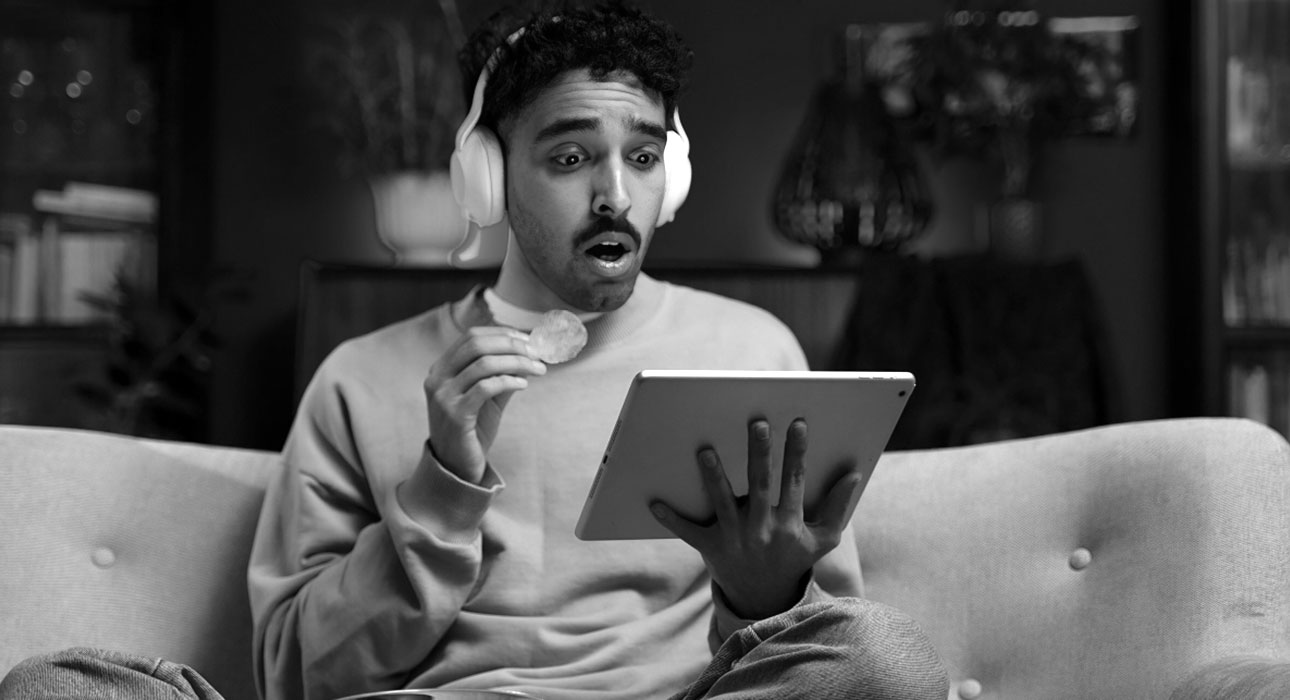
You told yourself just one episode. Now it’s past midnight, and the next one is already counting down on the screen. We all blame ourselves for this, but what if the reason you are not able to stop yourself from watching has very little to do with willpower? A controlled experimental study found that simply turning off Auto-play cut binge watching by about 21 minutes a day (Schaffner et al., 2025). While reading this article, you will find out which psychological pulls are working on you at 1 a.m. Researchers are still debating this topic and how a small change can give control back to you.
The Reward You Can’t Predict Is the One You Can’t Quit
Findings from Skinner’s and his colleagues’ research are still studied today. They said that the behavior that occurs on a fixed schedule is much harder to let go than the behavior that occurs at a predictable time (Ferster & Skinner 1957). A slot machine works on this principle. A TV show does so quietly. We might never find out if the next episode will solve the story, bring in a surprise, or just end on a cliffhanger. Because of this doubt, we have a hard time moving on. Things that are always the same soon get boring. Things that are different and not known keep us watching.
Auto-play Removes the Moment You’d Normally Stop
Old TV shows always gave you a breather. The credits rolled, the screen went black, and you had a second to actually think about whether you wanted to keep watching. Auto-play was built specifically to eliminate that gap. Researchers did a controlled experiment with 76 Netflix users. They found that Auto-play isn’t a small design choice. When Auto-play was turned off, people watched 21 fewer minutes each day. Their individual sessions were also 17 minutes shorter, compared to when autoplay stayed on (Schaffner et al. 2025). That’s not a small change but a difference. It’s a measurable chunk of a night’s viewing that exists only because the platform decided, on your behalf, that the decision point wouldn’t happen.
It’s worth adding some nuance here, since not every study finds autoplay driving behavior quite this strongly. An earlier, smaller study that simply observed people’s natural Netflix habits at home found Auto-play didn’t noticeably change how much time participants spent watching (Castro et al., 2021). Taken together, the two studies show that Auto-play pull isn’t the same for everyone or automatic. It’s real and can be measured when things are controlled. The precise effect depends on the person, their current state of fatigue or mood, and any other distractions that might be present.
Why the Algorithm Knows Exactly What You Need
Personalized recommendations add one more layer to the reward schedule: relevance. When you’re recommended a show because it matches your taste, you skip the whole searching, scrolling, choosing part. It just fits naturally. The deciding phase is where most natural stopping points used to live. Deciding what to watch used to require effort. Recommendation systems also quietly remove one of the opportunities viewers have to pause and reconsider whether they want to keep watching. Interface designers refer to these choices as patterns, a term for design decisions that guide users to the actions a company wants rather than the actions the user would choose themselves (Gray et al. 2018). Auto-play and hyper-relevant recommendations are not accidental side effects of good design.
It can be different for some people than for others. Studies have shown that feeling lonely is a measurable sign that someone might watch a lot of TV shows in a row. The process works in a way: people who feel lonely are more likely to get emotionally attached to characters in the shows, using them as a way to escape. This type of escape then causes them to watch more and more of the shows (Gabbiadini et al. 2021). In this condition, receiving recommendations by the algorithm for the appropriate show will not be a mere convenience but will satisfy a genuine need that can hardly be ignored.
Read More: Psychological Dependence on Algorithms: Who Is in Control—You or the Algorithm?
Decision Fatigue and the Path of Least Resistance
Consider all the little decisions you’ve made during the course of a long day: what food to eat or what to say, among others. Ending your binge is just one of those choices. And it rarely comes at the moment your willpower is strongest. Vohs et al. (2008) ran an experiment on exactly this: people who’d just made a series of choices performed worse on self-control afterward, even on a totally unrelated task.
As if choosing itself drains something finite. That “willpower as fuel tank” idea hasn’t survived replication very well, and researchers are still divided on how much of it is true. But the behavior it describes still checks out. Auto-play asks nothing of you. Stopping takes effort. You have to reach for the remote, close the tab, make the call. And when you’re already tapped out from deciding all day, doing nothing wins. Even when something is just hitting pause.
Instant Gratification Beats a Vague Future Self
Underneath all of this sits a basic asymmetry in how people weigh time, one economists and psychologists have documented extensively under the name present bias, or hyperbolic discounting (Frederick et al., 2002). The pleasure of watching one more episode arrives immediately. The advantage of pausing, acquiring more rest, starting tomorrow earlier, and being mentally more composed can be considered abstract and tied to a version of you from the future, which you cannot listen to. In situations when one must pick between a little reward at present or a bigger one in the future, people almost always prefer the smaller one immediately. Streaming platforms don’t need to invent this bias. They just need to make sure nothing interrupts it.
The Bill Comes Due at Bedtime
That future self isn’t just an abstraction, either. A study looked at how adults watch TV and how they sleep. It found that binge-watching episodes in one sitting was connected to worse sleep quality. People who watched a lot of shows in one go also felt more tired and had more symptoms of insomnia. Exelmans & Van den Bulck (2017) pointed out that the effect was pronounced among those people who had issues with sleeping.
The explanation could be found in pre-sleep arousal. Pre-sleep arousal refers to a condition or situation where the combination of stress, storyline, and visuals does not allow a person’s mind to fall asleep. Therefore, even after the screen turns off, the brain is still working. Ordinary TV watching, notably, wasn’t linked to the same sleep problems in this research. It was specifically the extended, one-more-episode pattern that Auto-play is built to encourage.
Read More: The Psychology of “Just One More Episode”
None of This Means You’re Doing Something Wrong
It is important to spell out the meaning of this research because it would be very easy to look at all of this data and think that heavy viewing is a character flaw. Heavy viewing is not. At least not completely. This research shows that the psychological concepts such as rewards, engineered away stopping points, personalized emotional connection, decision fatigue, and present-focused bias have existed for many decades.
Platforms didn’t create human psychology. They just got very good at designing around it. Knowing this doesn’t make the pull go away. It does make “I have no willpower” a better, more workable question: “What exactly is happening to me right now, and is there any tiny thing I can do to add some resistance, like, turn Auto-play off?”
Conclusion
The next time you find yourself watching just one more episode, remember that this is not a flaw in your character. This is all because of the unpredictable rewards, missing stopping points, custom recommendations, a tired mind, and a habit of choosing now over later, all working together. Scholars keep looking for answers about this issue, and it doesn’t work the same way for everyone. Still, the real takeaway is simple: when stopping doesn’t take any effort, no one can stop you from taking a break. So give yourself the pause back. Turn auto play off. Decide where you will stop before the episode starts. You may still watch another one. This time it will be your choice.
References +
- Castro, D., Rigby, J. M., Cabral, D., & Nisi, V. (2021). The binge-watcher’s journey: Investigating motivations, contexts, and affective states surrounding Netflix viewing. Convergence, 27(1), 3-20. https://doi.org/10.1177/1354856519890856
- Exelmans, L., & Van den Bulck, J. (2017). Binge viewing, sleep, and the role of pre-sleep arousal. Journal of Clinical Sleep Medicine, 13(8), 1001-1008. https://doi.org/10.5664/jcsm.6704
- Ferster, C. B., & Skinner, B. F. (1957). Schedules of reinforcement. Appleton-Century-Crofts. https://doi.org/10.1037/10627-000
- Frederick, S., Loewenstein, G., & O’Donoghue, T. (2002). Time discounting and time preference: A critical review. Journal of Economic Literature, 40(2), 351-401. https://doi.org/10.1257/002205102320161311
- Gabbiadini, A., Baldissarri, C., Valtorta, R. R., Durante, F., & Mari, S. (2021). Loneliness, escapism, and identification with media characters: An exploration of the psychological factors underlying binge-watching tendency. Frontiers in Psychology, 12, Article 785970. https://doi.org/10.3389/fpsyg.2021.785970
- Gray, C. M., Kou, Y., Battles, B., Hoggatt, J., & Toombs, A. L. (2018). The dark (patterns) side of UX design. In Proceedings of the 2018 CHI Conference on Human Factors in Computing Systems (pp. 1-14). Association for Computing Machinery. https://doi.org/10.1145/3173574.3174108
- Schaffner, B., Ulloa, Y., Sahni, R., Li, J., Cohen, A. K., Messier, N., Gao, L., & Chetty, M. (2025). An experimental study of Netflix use and the effects of autoplay on watching behaviors. Proceedings of the ACM on Human-Computer Interaction, 9(2), Article CSCW030. https://doi.org/10.48550/arXiv.2412.16040
- Vohs, K. D., Baumeister, R. F., Schmeichel, B. J., Twenge, J. M., Nelson, N. M., & Tice, D. M. (2008). Making choices impairs subsequent self-control: A limited-resource account of decision making, self-regulation, and active initiative. Journal of Personality and Social Psychology, 94(5), 883-898. https://doi.org/10.1037/0022-3514.94.5.883