We all have our own identity. However, imagine you wake up one day, and your family, home, profession, and freedom have all been taken away. Your name has been replaced with a number. You don’t know if you will even survive the day. Horrifying to imagine, isn’t it? For countless people imprisoned in Nazi concentration camps, this was not an imagined situation but a terrifying reality. Their identities, families, freedom, and sense of security were stripped away, forcing them to confront suffering and uncertainty every day. One of them was Victor Emil Frankl. Frankl had somehow survived this unimaginable experience. Following this, he went on to explore a fundamental question:
What gives a person a reason to live when almost everything has been taken away?
His answer was meaning. Eventually, Frankl’s ideas helped in the emergence of logotherapy, a form of existential psychotherapy centred on the human search for meaning. Although most of his theories were based on his personal experience, they continue to fascinate modern researchers investigating the relationship between meaning, resilience, and mental health (Frankl, 1966; Czekierda et al., 2017). In this article, we will explore Frankl’s early life, the experiences that shaped his thinking, the foundations of logotherapy, and his understanding of meaning, suffering, and the existential vacuum.
Early Days of Viktor Frankl
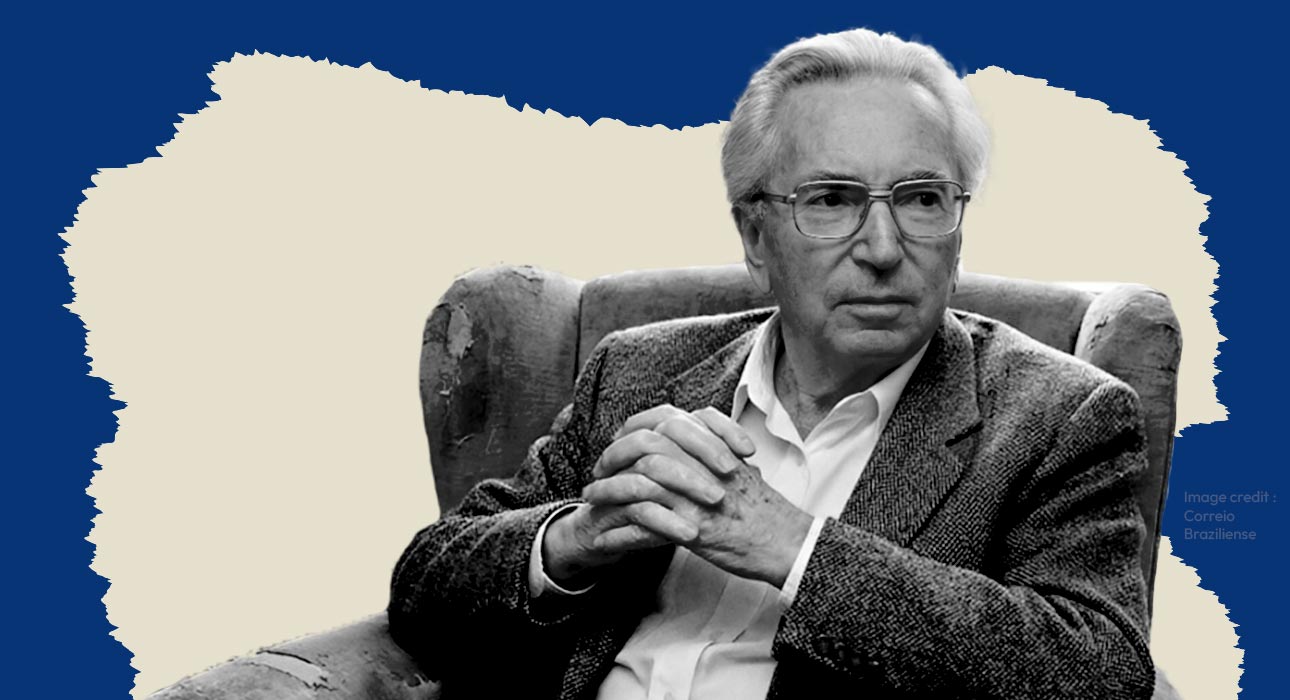
Viktor Emil Frankl was a Viennese, born in 1905. He had studied medicine. Later specialized in neurology and psychiatry. Before the Second World War occurred, Frankl was already deeply fascinated by the psychological struggles surrounding depression and the search for purpose. Although he was mainly inspired by Sigmund Freud and Alfred Adler, his perspective on human behaviour was different. According to Viktor Frankl, individuals are fundamentally motivated by a “will of meaning.” His ideas later became the main pillar of logotherapy (Brownell, 2015; Frankl, 1966). His central question was,
What makes life worth living?
According to Frankl, meaning is something an individual continuously tries to discover throughout their life. It is personal and contextual and differs for every individual.
When Theory Became Survival
Frankl was Jewish. At the time of the Second World War, he and his family were forcefully imprisoned in concentration camps. His family could not withstand the suffering. However, Frankl managed to survive. After liberation, he wrote his experiences and psychological observations in his work titled “Man’s Search for Meaning.” The book spoke of his personal experiences and explained the concept of logotherapy.
However, an important point is that Frankl had never stated that suffering is good. According to him, even when suffering is unavoidable, humans may still manage to determine their responses. Modern research has further clarified that meaning can function like a psychological resource in difficult times. However, it does not eliminate the psychological pain one must endure in those times (Mutuyimana & Maercker, 2024).
What Exactly Is Logotherapy?
The word “logos” refers to meaning. Logotherapy, altogether, places the search for meaning at the very centre of psychological life. Frankl proposed three fundamental ideas:
- Freedom of will: While most people are driven by circumstances, they still possess some ability to choose their response.
- Will to meaning: The search for meaning and purpose is a major human motivation.
- Meaning in life: Life can have meaning even when circumstances are uncertain (Frankl, 1966).
Consider two students who fail an important examination.
One says, “I am a failure.”
The other says, “This failure taught me what I am lacking.”
The event has not changed. The interpretation has.
Modern research supports the idea that a stronger sense of meaning and purpose helps in better psychological functioning (Ouyang et al., 2026; Czekierda et al., 2017).
Meaning Is Not Always a Grand Life Mission
A common misconception is that “finding meaning” refers to discovering some sort of spectacular purpose. In reality, Frankl’s framework is much more integrated in everyday life. Meaning can emerge through any event in our daily life.
- A person might find meaning through work or the contribution they make.
- Nature, creativity, or relationships might also give life significance.
- In unavoidable circumstances, the way an individual chooses to respond to the situation may still carry meaning (Frankl, 1966).
For instance, think of someone taking care of their aged parents. Their everyday life might involve feeling exhausted and frustrated and sacrificing their personal desires. Yet, the entire experience might be deeply meaningful to them. Because it is associated with their love for their parents. Thus, meaning does not always make life easier. Sometimes it just makes the difficult worth enduring.
When Life Feels Empty
Frankl also remarked on the state in which a person experiences emptiness, boredom, and lack of direction in life. He termed this state “existential vacuum.” In this, while nothing appears to be wrong, the person still experiences a lack of motivation and emptiness within themselves. Modern research has repeatedly connected meaning and purpose with the psychological well-being of individuals.
Furthermore, a significant association between a lack of purpose in life and suicidal tendency among young people has been concluded (Costanza et al., 2019). This does not imply that finding a meaning or purpose can prevent mental illness or suicide completely. Rather, this observation states that psychological care must also address questions of identity, belonging, and purpose alongside addressing the symptoms.
Conclusion
The works of Frankl shifted the focus of psychotherapy toward questions that traditional symptom-focused approaches could sometimes overlook, such as
- What matters to the person?
- What kind of life do they desire?
- Which relationships or responsibilities give their life a purpose?
Frankl did not provide a universal answer to what makes life meaningful. According to him, meaning does not always need to be something big and fancy. It might just be the reason why the individual wakes up in the morning. In the end, we must try to find the purpose of life that makes it worth living.
References +
- Frankl, V. E. (1966). Logotherapy and existential analysis—A review. American Journal of Psychotherapy, 20(2), 252–260. https://psychiatryonline.org/doi/10.1176/appi.psychotherapy.1966.20.2.252
- Brownell, P. (2015). Logotherapy. In Encyclopedia of Clinical Psychology. https://www.researchgate.net/publication/344174513_Logotherapy_Encycloped ia_of_Psychotherapy_Entry
- Jin, Y., He, M., & Li, J. (2016). The relationship between meaning in life and subjective well-being in China: A meta-analysis. Advances in Psychological Science, 24(12), 1854–1863. https://www.researchgate.net/publication/312442927_The_relationship_betwe en_meaning_in_life_and_subjective_well-being_in_China_A_Meta-analysis
- Czekierda, K., Banik, A., Park, C. L., & Luszczynska, A. (2017). Meaning in life and physical health: Systematic review and meta-analysis. Health Psychology Review, 11(4), 387–418. https://www.tandfonline.com/doi/full/10.1080/17437199.2017.1327325
- Adhiya-Shah, K. (2017). Book review: The will to meaning: Foundations and applications of logotherapy. Frontiers in Psychology, 8, 2106. https://www.researchgate.net/publication/321633134_Book_Review_The_Will_ to_Meaning_Foundations_and_Applications_of_Logotherapy
- Costanza, A., Prelati, M., & Pompili, M. (2019). The meaning in life in suicidal patients: The presence and the search for constructs. A systematic review. Medicina, 55(8), 465. https://www.mdpi.com/1648-9144/55/8/465
- Li, S., Luo, H., Huang, F., Wang, Y., & Yip, P. S. F. (2024). Associations between meaning in life and suicidal ideation in young people: A systematic review and meta-analysis. Children and Youth Services Review, 158, 107477. https://www.researchgate.net/publication/377765192_Associations_between_meaning_in_life_and_suicidal_ideation_in_young_people_a_systematic_review_ and_meta-analysis
- Mutuyimana, C., & Maercker, A. (2024). How meaning in life and vitality are associated with posttrauma outcomes: A systematic review. Journal of Traumatic Stress, 37(4), 551–562. https://onlinelibrary.wiley.com/doi/10.1002/jts.23040
- Li, D., Geng, X., Yan, X., & Gao, S. (2025). Relationship between meaning in life and resilience: A longitudinal study and a randomised controlled trial intervention. International Journal of Psychology, 60, e70077.https://onlinelibrary.wiley.com/doi/10.1002/ijop.70077
- Ouyang, W.-H., Wang, X.-Q., Cai, J.-Y., Pan, S.-Y., & Li, J.-Y. (2026). A three-level meta-analysis of the relationship between meaning in life and depression. Journal of Affective Disorders, 398, 121045. https://www.sciencedirect.com/science/article/abs/pii/S0165032725024875?via %3Dihub