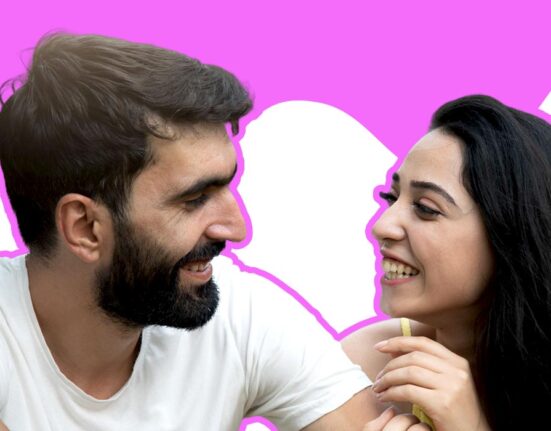
There is a moment when a person appears attractive for some reason- they’re interesting, funny, worth taking a chance on. Then they do something small: They mispronounce a word, wave at a bus too wildly, chew with their mouth open, or put on socks and sandals. After that, all of a sudden, things aren’t working out. The draw or pull is not feeble; rather, it collapses. In modern social discourse, this feeling is described as the ick.
The ick is a feeling of revulsion or rejection that happens when a person instinctively rejects someone because of something that seems trivial or disproportionate to the person (Author, 2025). The importance of psychological interest and the psychological revelation lies in the apparent mismatch between cause and effect. This article explores the what, how and why of the ick, based on research in disgust psychology, cognitive appraisal, attachment, social norms and the importance of experience in determining what we find intolerable in another person.
Disgust as a Relationship Mechanism
Disgust, along with emotion, is one of the most basic and deeply rooted human emotions and plays a large part in the ick engine. The feeling of disgust has its origins in a biological defence mechanism; that is, a response to threats of contamination, including rotten food, disease, bodily wastes and decaying matter, which protected early humans from exposure to sources of infection and illness. The ultimate reason for disgust may be avoidance- the powerful prompt to flee from and avoid ingesting the triggering stimulus (Rozin et al., 2008).
Disgust over time became more than just biological and touched on the social and moral sphere. This is what psychologist Jonathan Haidt and his colleagues referred to as moral disgust (Haidt et al., 1994). Disgust is not just aroused when someone is physically unclean; it’s also aroused when they have certain kinds of personality characteristics and interpersonal behaviours that indicate that they are socially awkward. This expanded disgust is directly relevant to the ick. The behaviour causing it need not be disgusting in a biological sense. It must engage the disgust mechanism, but the disgust mechanism in humans has been socially and culturally “wired” to react to a much broader spectrum of stimuli than to rotten food.
There is a consistent pattern in the research between disgust sensitivity and both the selectivity of romantic partners and the rate at which romantic interest fades when a potential partner is provoked to disgust (Tybur et al., 2009). High disgust sensitivity relates to increased selectivity in choosing romantic partners and an increased rate of loss of romantic interest when a potential partner engages in behaviours that trigger disgust. Those who can be more easily disgusted are, in fact, using a more sensitive romantic alarm system, and when that alarm goes off, the withdrawal of attraction can be quick and feel like it is irreversible.
The experience of the ick is also related to a sense that something bad can pass from the disgusting to the other, known as the contagion heuristic (Rozin et al., 2008). A mild disgust trigger does not neatly separate off the specific behaviour that elicited it from the disgust system. It affects the entire person. Now, the idea of physical contact with them is not the same because the disgust system has marked them out somehow as a contamination risk. That’s why the feeling of ick is often so strong: the behaviour not only makes one thing about the person unattractive; it makes one a different person as well in their eyes.
The Cognitive Appraisal of the ‘Ick’
Disgust isn’t the only driver of the ick. Many of the behaviours that it uncovers are not, in fact, biologically repulsive. But rather awkward or incompatible with the observer’s social norms, or an exposure they would rather not have had. Here is where the cognitive appraisal theory is applicable. The cognitive appraisal is the way the brain processes an event or behaviour and gives it meaning (Lazarus, 1991).
Cognitive appraisal always takes place in the background and mentally evaluates a potential partner based on a set of subconscious standards: Do they appear confident? Do they have social awareness? Are they conducting themselves in a manner that demonstrates competence, status and compatibility? The moments in which the ick-inducing behaviour occurs, the ick falls into this continuous evaluation, and the appraisal system reads this as diagnostic. But nobody who waves awkwardly at a bus is necessarily waving awkwardly. The brain “reads” the behaviour as information: This person is not socially at ease. Whoever says a word incorrectly, but pretentiously, is not simply mispronouncing a word: this person is attempting to appear to be something that she is not.
This is the sense in which the ick is not really disproportionate. The behaviour that is triggered is small. But what it shows- or what the brain chooses to show- may be important: a lack of values or social awareness, or a personality or self-presentation that doesn’t align with the longevity of marriage. Social competence- one’s ability to interact socially with others efficiently and appropriately and to understand others’ social cues- is always rated as one of the most important traits for a long-term partner by numerous studies on mate preferences (Buunk et al., 2008). Often the ick kicks in when a behaviour is a marker of a lack of competence in this area.
Attraction isn’t just towards a person’s nature; it’s also towards a person’s projected identity. In the beginning of a romantic relationship, when little is known of the other person, the mind completes the picture with projections: things that are to be wished for. The ick tends to happen when the idealisation becomes reality, and the other person does something that makes the ideal image untenable. The attraction that came tumbling down is, at least in part, attraction to the imagined version of the person: the behaviour that caused the ick just made the imagined version impossible (Murray et al., 1996).
Read More: How Does Cognitive Appraisal Influence Our Emotional Responses and Behaviour?
Experience, norms and attachment
The most magnificent thing about the ick is that they are so variable among themselves. To some, it comes as a result of one event, but to others it does not. Everybody has their own idea of what they consider adorable and what they consider to be too much. Someone is not at all offended by loud eating. Someone is offended by a relationship the first time she hears it. This variability is not random, but rather influenced by three factors: past experiences, social norms and cultural norms, and attachment style.
Experience- attraction and repulsion, what you like or dislike- is a learnt phenomenon, based on experience, and especially on the emotional residue of past relationships. If a negative or incompatible partner demonstrated a certain gesture, a way of speaking, a repeated social trait, etc., then this gesture can be linked to the negative experience. When a new person demonstrates it, the association activates without any conscious thought and with the full emotional impact of the previous experience (Hazan & Shaver, 1987). It’s classical conditioning with romantic aversion- the signal is the behaviour. The signal equals danger to this person’s nervous system, whether or not it would be to anyone else.
Social/cultural norms- The definitions of socially awkward, embarrassing, low status, and incompatible are not fixed but are culturally determined. What makes one thing icky in one culture is completely normal in another (table manners, public displays of emotion, physical gestures, etc.). This research has repeatedly shown that disgust’s social and moral content is influenced by the norms of the culture to which a person belongs, meaning that the ick map is part of a cultural construct, reflecting what the social environment has deemed to be repugnant, low social status, or incompatible with a desirable partner (Haidt et al., 1994). This is also the reason why many triggers for ick are class-coded around social cues: table manners, vocabulary, how they deal with minor social situations, etc. are all class-coded in many societies, and ick can be a pre-conscious, automatic class-compatibility filter.
Attachment style: The attachment theory began with John Bowlby and was expanded by Hazan and Shaver (1987). This suggests that individuals create a stable, predictable style of attachment with their romantic partners based on their initial caregiving experiences. These patterns not only influence the way individuals conduct themselves in relationships. But also what they are sexually attracted or repelled by. Avoidant attachment styles, those who are not comfortable with getting close and cling to the distance between themselves and others, may be especially susceptible to the ick and employ it as a way to maintain some distance before the intimacy becomes threatening. Avoidant attachment types are more likely to see and react negatively to indicators of dependence, fragility, and enthusiasm in a prospective partner(Spielmann et al., 2013).
Read More: How Does Your Attachment Style Affect Your Relationship?
Conclusion
The ick is not as shallow as it seems. The seemingly disproportionate loss of attraction is the result of a complicated cocktail of psychological processes:
- a disgust system that is disinclined to let anything “contaminate” it
- an evaluation process that continually runs a comparison between the person and implicit compatibility criteria
- a set of social and cultural norms that is encoded in what constitutes a desirable partner
- an idealisation that reality has just punctured
- often, an emotional memory of previous relationships that shapes what behaviours feel like in this particular person.
But none of it is to say that all icks are created equal. Some ick responses are an actual incompatibility. Others may be related to avoidant attachments, to unrealistic expectations of idealisations or to cultural attitudes and stereotypes about class and status that are more about the observer than the observed. The psychological value of knowing what it is reacting to is not to try to ignore the ick or to be hypnotised by it. But to question whether it’s reacting to something real, or something that’s merely conditioned.
References +
- Buunk, A. P., Park, J. H., Zurriaga, R., Klavina, L., & Massar, K. (2008). Height predicts jealousy differently for individuals. Evolution and Human Behaviour, 29(2), 133–139. https://doi.org/10.1016/j.evolhumbehav.2007.11.006
- Haidt, J., McCauley, C., & Rozin, P. (1994). Individual differences in sensitivity to disgust: A scale sampling seven domains of disgust elicitors. Personality and Individual Differences, 16(5), 701–713. https://doi.org/10.1016/0191-8869(94)90212-7
- Hazan, C., & Shaver, P. (1987). Romantic love conceptualised as an attachment process. Journal of Personality and Social Psychology, 52(3), 511–524. https://doi.org/10.1037/0022-3514.52.3.511
- Lazarus, R. S. (1991). Emotion and adaptation. Oxford University Press.
- Murray, S. L., Holmes, J. G., & Griffin, D. W. (1996). The benefits of positive illusions: Idealisation and the construction of satisfaction in close relationships. Journal of Personality and Social Psychology, 70(1), 79–98. https://doi.org/10.1037/0022-3514.70.1.79
- Rozin, P., Haidt, J., & McCauley, C. R. (2008). Disgust. In M. Lewis, J. M. Haviland-Jones, & L. F. Barrett (Eds.), Handbook of emotions (3rd ed., pp. 757–776). Guilford Press.
- Spielmann, S. S., MacDonald, G., Maxwell, J. A., Joel, S., Peragine, D., Muise, A., & Impett, E. A. (2013). Settling for less out of fear of being single. Journal of Personality and Social Psychology, 105(6), 1049–1073. https://doi.org/10.1037/a0034628
- Tybur, J. M., Lieberman, D., & Griskevicius, V. (2009). Microbes, mating, and morality: Individual differences in three functional domains of disgust. Journal of Personality and Social Psychology, 97(1), 103–122. https://doi.org/10.1037/a0015474
- Vaillancourt, T., & Sharma, A. (2011). Intolerance of sexy peers: Intrasexual competition among women. Aggressive Behaviour, 37(6), 569–577. https://doi.org/10.1002/ab.20413
- Zeifman, D. M., & Hazan, C. (2008). Pair bonds as attachments: Reevaluating the evidence. In J. Cassidy & P. R. Shaver (Eds.), Handbook of attachment: Theory, research, and clinical applications (2nd ed., pp. 436–455). Guilford Press.
- Author. (2025). Why One Small Habit Kills Your Attraction: The Ick Factor. Psychologie et Sérénité. https://psychologieetserenite.com/scanmylove/en/blog/why-one-small-habit-kills-your-attraction