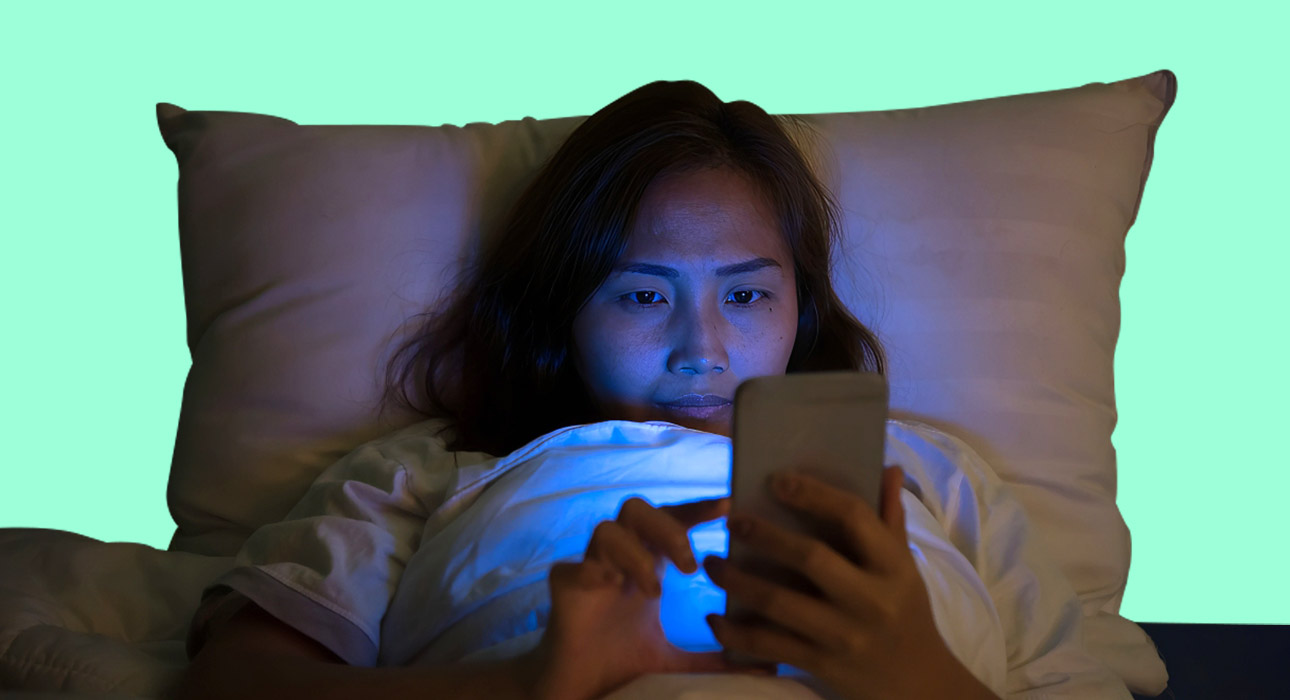
Many of us may know the feeling of not being able to put our phone down and go to sleep. It often begins with a quick check of a notification or a single social media post. Before we realize it, a few minutes can turn into much longer periods of scrolling. This experience may be connected to the Fear of Missing Out (FOMO), which refers to the feeling that other people are experiencing rewarding or enjoyable events while we are absent from them (Brombach & Dietch, 2024).
Social media can make this feeling more noticeable by constantly exposing people to updates, conversations, and activities happening around them. But why can the fear of missing something online become strong enough to delay something as important as sleep? This article explores the connection between FOMO and sleep and the ways in which online habits may influence bedtime and sleep quality.
FOMO on Social Networks
Although the FOMO effect is not particular to the social media environment, this aspect of our lives is most susceptible to these occurrences. People fear missing events, conversations, and knowledge. At the same time, they do not want to be left out at parties and other places where they do not yet know their guests (Huang et al., 2023). Such fears are also amplified by social networks since one usually sees carefully selected photos and videos of other people instead of reality.
For example, a student who wants to go to sleep might see photos and messages of a party that their friends are having. Although they were tired a few minutes ago, the post may prompt them to think about how something important may happen while they sleep. This way, the person will continue to scroll their social media news feed. Moreover, any notification that sounds or vibrates can prompt a sudden desire to check and react to it. Sometimes people check the phone even without specific triggers.
Read More: FoMO to JoMO – Experience the Joy of Missing Out
FOMO and Sleep Interaction
Although the interaction between FOMO with sleep is not limited to just the amount of time spent on social media. It is important to consider what else happens when a person looks at their phone before going to bed. They do not just watch videos and look at photos; instead, they think about what they just saw, what other interesting posts may be, what replies they might get, what other events may occur, and so on. Such desires and thoughts are known as pre-sleep cognitive arousal. The fact that the mind does not slow down. As it should before sleep, negatively affects one’s ability to prepare for it. Scott and Woods (2018) note that evening social network use among adolescents was associated with later bedtime, prolonged sleep latency, reduced total sleep time, and increased cognitive pre-sleep arousal.
The FOMO effect may also be related to bedtime procrastination. Bedtime procrastination refers to intentionally delaying going to bed even when there is no external reason preventing a person from sleeping. People often think that they will go to bed when they do something, reply to a message, watch a video, watch a movie, look at social media status, or do something else. Huang et al. (2023) found that FOMO and bedtime procrastination act as partial mediators between mobile phone dependence and sleep quality in college students. On the other hand, Brombach and Dietch (2024) have found that FOMO is associated with elements of sleep health, including bedtime procrastination, sleep quality, and sleep duration.
Thus, bedtime difficulties may not be caused only by the presence of a phone but also by a person’s desire to remain connected to it. This suggests that people should consider not only what time they go to bed. But also why they continue using their phones when they know they need to sleep.
Read More: How Does Cognitive Appraisal Influence Our Emotional Responses and Behavior?
Why FOMO Affects People Differently
Although studies have established an interaction between FOMO and sleep, these phenomena affect people differently. While certain effects may have negative consequences for some individuals, others may not experience them in the same way. This is especially true for the FOMO effect and the use of social networks before going to sleep. The strength of the interaction will vary from case to case depending on such factors as self-control, social needs, self-confidence, psychological arousal, and others.
For some people, it may be extremely difficult to be offline since this puts them at risk of missing out on important events and conversations. For others, however, switching off is not a problem, and time spent away from the phone allows them to move on to other matters. In addition, a person’s self-control and the ability to resist can be extremely important. Someone may have trouble scrolling further even if they have already spent much time on their phone and feel tired.
Notably, these factors and interactions do not always have empirical data to support them. For example, even though Zhu et al. (2023) found that FOMO had a significant association with social media fatigue, they did not find a direct link between FOMO and sleep disturbances or sleep duration. Similarly, Bao and Li (2025) have found that self-efficacy partially mediated the relationships between FOMO, social media use, and bedtime procrastination among college students. Therefore, we should also consider how individual characteristics influence people’s interactions with social networks and related behaviours.
It is also important to note that many of these studies do not indicate direct causation. That is, although researchers may find that FOMO and sleep disturbances are associated with each other, this does not mean that the first always causes the second. There may be other underlying factors that are responsible for these interactions.
Healthy Habits for FOMO and Sleep Management
Managing FOMO does not necessarily mean avoiding social media completely. The following simple habits can help people create healthier boundaries around phone use, reduce bedtime distractions, and make it easier to prepare for sleep.
- Set specific times for social media use: Instead, everyone should consider allocating specific time that they can spend online. Having a clear limit can prevent social media use from extending into bedtime.
- Turn off notifications before bed: Not later than before going to sleep, a person should turn off all notifications on their phone so that it does not disturb them at bedtime.
- Keep the phone away from the bed: A phone should be kept away from the bed so that a person is less likely to check it repeatedly while trying to sleep.
- Remind yourself that updates can wait: It is important to remember that most posts, messages, and other content can be viewed the next morning. Missing an update for a few hours does not mean missing out permanently.
- Remind yourself that updates can wait: Everyone should also have a daily sleep schedule that they consistently follow. Going to bed and waking up at approximately the same time every day can help establish a regular routine.
- Avoid stimulating activities before sleep: Before going to sleep, a person should avoid looking at their phone or engaging in activities that stimulate the brain. Instead, they can spend a few minutes preparing for the next day or engaging in a calming activity.
- Develop self-regulation: People should also recognize that the desire to remain online may sometimes come from difficulty regulating their impulses. Learning to manage these urges is an important part of reducing bedtime procrastination (Kroese et al., 2014).
Conclusion
FOMO can be an integral part of the interaction between social networks and sleep. Social media content, notifications, and the continuous emergence of new content encourages people not to miss any important events, talks, or updates. However, all this can have negative consequences such as later bedtime, bedtime procrastination, arousal, and poor sleep quality.
Nevertheless, FOMO affects individuals differently. People have different levels of self management, social needs, self-confidence, psychological arousal, and other factors that affect how their interaction with social networks takes place. Therefore, although research links FOMO to sleep problems, it does not affect everyone’s sleep in the same way. However, these factors are useful to keep in mind since they can limit the degree of FOMO and bedtime procrastination before sleep. A fulfilling life extends beyond phones and social media.
Therefore, everyone should set clear limits for themselves when interacting with such technologies. This involves setting specific times for social media use and offline activities before bedtime. People should also remember that they will be able to look at their phone screen in a few hours, so it is useless to try to look at every interesting post now since their sleep will be more important in the short term.
References +
- Bao, H., & Li, S. (2025). Self-efficacy, fear of missing out, social media use, and bedtime procrastination in Chinese college students. Psychological Reports. https://doi.org/10.1177/00332941251329864
- Brombach, R., & Dietch, J. (2024). Fear of missing out and sleep health: A systematic review and meta-analysis. Sleep, 47(Supplement_1), A425. https://doi.org/10.1093/sleep/zsae067.0991
- Huang, T., Liu, Y., Tan, T. C., Wang, D., Zheng, K., & Liu, W. (2023). Mobile phone dependency and sleep quality in college students during COVID-19 outbreak: The mediating role of bedtime procrastination and fear of missing out. BMC Public Health, 23, 1200. https://doi.org/10.1186/s12889-023-16061-4
- Khan, A., et al. (2024). Electronic media use and sleep quality: Updated systematic review and meta-analysis. Journal of Medical Internet Research.
- Kroese, F. M., De Ridder, D. T. D., Evers, C., & Adriaanse, M. A. (2014). Bedtime procrastination: Introducing a new area of procrastination. Frontiers in Psychology, 5, 611. https://doi.org/10.3389/fpsyg.2014.00611
- Scott, H., & Woods, H. C. (2018). Fear of missing out and sleep: Cognitive behavioural factors in adolescents’ nighttime social media use. Journal of Adolescence, 68, 61–65. https://doi.org/10.1016/j.adolescence.2018.07.009
- Zhu, X., Zheng, T., Ding, L., Zhang, X., Li, Z., & Jiang, H. (2023). Exploring associations between social media addiction, social media fatigue, fear of missing out and sleep quality among university students: A cross-section study. PLOS ONE, 18(10), e0292429. https://doi.org/10.1371/journal.pone.0292429