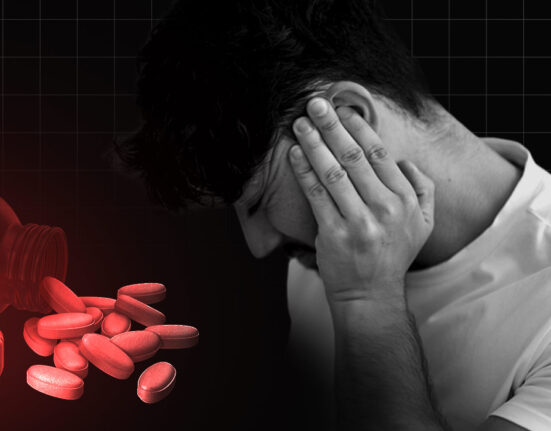
Imagine a situation where 24-year-old Maya, a grad student, is in her second phase of major depression. For the past 2 years, she has been on antidepressants and has been in therapy with a variety of side effects, varying from insomnia to the diminishing of emotions. Each time, it took weeks or months for her psychiatrist to know if the treatment was helping. Along with millions of people worldwide, Maya was stuck in a frustrating merry-go-round of mental health treatment. Think of a second scenario. Maya goes to a clinic, and doctors feed data from her watch, her sleep logs, heart-rate variability, mood, and a quick brain scan. An AI uses this information to pinpoint affected neural pathways within hours, developing a tailor-made treatment plan. It starts the therapy that day, without weeks of ambiguity.
This vision is far from science fiction. It seems mental health is just entering a new direction, as observed within the scientific studies carried out by the fields of psychology and neuroscience. The fields of mental health are in the midst of a revolution as technology in the form of algorithmic brain-mapping, wearables, and machine learning, allows clinicians to diagnose and treatment mental disorders in new and effective ways (American Psychological Association [APA], 2026; Fernandes et al., 2023; Topol, 2019) that are aimed to be the successor of general treatment strategies and instead allow for personalization based on individuals’ individual biological and psychological makeups (Insel, 2022; Menon, 2023).
A New Era in Psychiatric Care
What does this revolution actually mean? Do algorithms really comprehend suffering? Will psychiatry be able to enhance results through data-driven techniques, or will it diminish human experiences into quantitative figures and brain maps? How will the role of technology alter mental healthcare? The relationship between innovative technology and humanistic care will need to be evaluated in depth (Bzdok & Meyer-Lindenberg, 2018; Friesen et al., 2022; Norcross & Lambert, 2019) because although artificial intelligence has proven to be beneficial in predicting treatment outcome and identifying diagnoses more efficiently, it should not disregard empathy, therapeutic rapport and understanding context (Chekroud et al., 2021; Torous et al., 2023).
Read More: Beyond the Synapse: The Future of Psychology Beyond AI and Brain-Computer Interfaces
Transforming Mental Health Through Psychiatry
For many years, diagnosis in psychiatry has been based on symptoms and treatments administered based on these symptoms. Many people have benefited from the use of drugs and therapy based on symptoms, but this often involves years of ‘trial and error’ before the patient is put on the right therapy (Insel, 2022).
Due to recent progress in neuroscience, there is an upcoming idea known as precision psychiatry, whereby scientists are now working on finding ‘biomarkers’ that are unique for a certain psychiatric disorder (Fernandes et al., 2023). Psychiatry is moving towards not only treating depression the same for every patient who has it, as it may be caused by different brain processes for different individuals.
Brain imaging technologies, including MRI, fMRI, DTI, and EEG, can identify brain regions and activity patterns that are linked to depression, anxiety, bipolar disorder and post-traumatic stress disorder (Etkin, 2019). It appears there may be dysfunction within the default mode network, salience network and executive control network, which in turn affect emotional processing and cognition (Menon, 2023). The identification of neural signatures can help clinicians predict which therapy or drug will work best for a particular patient. Simple, revolutionary goal: correct treatment to correct the patient at correct time.
The Rise of Wearables: Turning Daily Life into Clinical Data
A big feature of mental healthcare in recent times is the integration of wearable devices in clinical settings. Wearable devices such as smartwatches, fitness devices and health applications consistently acquire data regarding:
- Duration and quality of sleep
- Variation in heart rate
- Level of physical activity
- Stress markers
- Rhythms of the circadian clock
- Social behaviors
It has been observed that there are also significant connections between the physiological parameters measured and mental health outcomes (Torous et al., 2023), such as sleep disruption preceding a depressive episode or changes in activity level indicating increased anxiety or emotional distress. Wearable devices offer a constant connection in a real-world setting that traditional clinical assessments don’t offer during episodic appointments. These allow for what scientists call a “digital phenotype,” which is essentially a very detailed view of a person’s behaviour and physiological state over a period of time (Onnela & Rauch, 2016).
The advantages are substantial:
- Early identification of worsening mental health conditions.
- Ongoing monitoring between appointments.
- Objective measure of treatment response.
- Tailored treatment according to patient data in real-time.
For clinicians, wearables provide insight into patients’ everyday lives. For patients, they can lead to more proactive mental health care. However, these benefits raise several issues that continue to be of concern in the digital mental health space, namely, data privacy, consent and algorithm explainability.
How Artificial Intelligence is Mapping the Human Mind
This new world of mental healthcare is powered by AI. Today’s machines are capable of sifting through far more data than a human clinician can manage. They can learn from and integrate brain imaging, wearable device data, genetic profiles, medical histories and clinical questionnaires at the same time in order to discover patterns that may be missed otherwise (Topol, 2019). Some key applications include:
- Help in diagnosis- The potential for AI to detect earlier neural and behavioural correlates of risk for later mental illness, before symptoms have escalated (Dwyer et al., 2018).
- Treatment Selection- Algorithms may be able to determine whether a patient is more likely to respond to drugs, therapy, neurostimulation, or combination treatments (Chekroud et al., 2021).
- Relapse Prevention– Through ongoing monitoring systems, relapse warning signals can also be predicted, initiating early intervention before crises can escalate (Torous & Roberts, 2017).
- Personalized treatment pathways– Instead of the current model of universal treatment protocol, a bespoke clinical treatment roadmap can be charted based on the individual biology and psychology of each patient.
Studies suggest that using AI as an aid to decision-making might enhance the diagnosis and treatment outcomes of mental disorders in clinical practice (Shatte et al., 2019), and several studies showed much more accurate prediction of treatment outcome in comparison with existing methods.
However, clinicians warn that AI should serve as an adjunct, not a substitute for human judgment, as mental diseases are complex, entailing emotional, social, cultural and interpersonal dimensions which may not be comprehensively encapsulated in computational models alone (Bzdok & Meyer-Lindenberg, 2018).
Read More: Artificial Intelligence in Mental Health: Challenges in the Indian Context
The Human Cost: Can Algorithms Understand Suffering?
Although technology has exciting potential, there are also philosophical and ethical issues involved. Mental disorder is more than symptoms or neural structures; human suffering is profoundly connected with the personal experience, social relationships, cultural contexts, and sense of identity and meaning; there are arguments that a system’s over-reliance on algorithms could promote a simplistic approach to mental disorder (Friesen et al. 2022). Several concerns deserve attention:
- Lost human connection: The relationship between therapist and client has proven to be the strongest predictor of treatment outcomes (Norcross & Lambert, 2019) and a continued focus on technology could diminish the human-nature of therapy.
- Risks to privacy: Scanned brains and data derived from behavior is among the most sensitive of personal data and could result in detrimental consequences if used inappropriately (Martinez-Martin & Kreitmair, 2018).
- Algorithmic Bias: The degree to which AI is unbiased depends entirely on the data that is used for its development, and could lead to inappropriate treatment recommendations if certain groups of individuals are underrepresented (Obermeyer et al., 2019).
- Over-medicalisation: The continued surveillance that technology could offer may lead individuals to perceive ordinary mood changes as pathological and result in superfluous treatments.
Fundamentally, mental healthcare is not about data and algorithms, but rather a human story. While the algorithms may detect the trends, they can neither understand grief, hope, trauma, resilience, nor human existence. Thus, the future of psychiatry, while advancing technologically, must prioritise compassion, morality, and human-centred care.
Conclusions
Brain-mapping using algorithms is arguably the biggest paradigm shift ever in mental health. When combined with wearable technology, advanced brain imaging, and artificial intelligence, clinicians will be one step closer to providing treatments that are personal, preventative, and scientifically precise. For those who have undergone years of experimental and trial-and-error therapies, the developments offer new hope of finding a speedy diagnosis and more effective treatment.
We cannot reduce mental health to a purely computational problem to solve. Emotional, relational, social and personal narratives are at the core of mental well-being. Smart algorithms are no longer the greatest challenge that we are likely to be facing in 2026; in fact, It’s making technological advancements complement human interactions in healing.
References +
- American Psychological Association. (2026). Emerging trends in mental health care and technology.
- Bzdok, D., & Meyer-Lindenberg, A. (2018). Machine learning for precision psychiatry. Nature Psychiatry, 5(2), 109–117.
- Chekroud, A. M., et al. (2021). Predicting treatment outcomes in depression using machine learning. The Lancet Psychiatry, 8(2), 122–130.
- Dwyer, D. B., Falkai, P., & Koutsouleris, N. (2018). Machine learning approaches for clinical psychology and psychiatry. Annual Review of Clinical Psychology, 14, 91–118.
- Etkin, A. (2019). A reckoning and research agenda for neuroimaging in psychiatry. American Journal of Psychiatry, 176(7), 507–511.
- Fernandes, B. S., et al. (2023). Precision psychiatry: Towards personalized mental health care. Molecular Psychiatry, 28(4), 1415–1428.
- Friesen, P., et al. (2022). Ethical challenges in digital psychiatry. Philosophy, Psychiatry, & Psychology, 29(1), 23–37.
- Insel, T. (2022). Healing: Our path from mental illness to mental health. Penguin Press.
- Martinez-Martin, N., & Kreitmair, K. (2018). Ethical issues for direct-to-consumer digital psychotherapy apps. AMA Journal of Ethics, 20(9), E844–E852.
- Menon, V. (2023). Large-scale brain networks and psychopathology. Nature Reviews Neuroscience, 24(3), 151–168.
- Norcross, J. C., & Lambert, M. J. (2019). Psychotherapy relationships that work. Oxford University Press.
- Obermeyer, Z., Powers, B., Vogeli, C., & Mullainathan, S. (2019). Dissecting racial bias in health algorithms. Science, 366(6464), 447–453.
- Onnela, J. P., & Rauch, S. L. (2016). Harnessing smartphone-based digital phenotyping. Neuropsychopharmacology, 41(7), 1691–1696.
- Shatte, A. B. R., Hutchinson, D. M., & Teague, S. J. (2019). Machine learning in mental health. JMIR Mental Health, 6(11), e15708.
- Topol, E. (2019). Deep medicine: How artificial intelligence can make healthcare human again. Basic Books.
- Torous, J., & Roberts, L. W. (2017). Needed innovation in digital mental health. JAMA Psychiatry, 74(5), 437–438.
- Torous, J., Wisniewski, H., Bird, B., Carpenter, E., David, G., Elejalde, E., Fulford, D., Guimond, S., Hays, R., Henson, P., Hoffman, L., Lim, C., Menon, M., Noel, V., Pearson, J., Peterson, R., Susheela, A., Troy, H., Vaidyam, A., & Keshavan, M. (2023). Creating a digital health ecosystem for mental health. World Psychiatry, 22(1), 114–126.
- Vaidyam, A. N., Wisniewski, H., Halamka, J. D., Kashavan, M. S., & Torous, J. (2019). Chatbots and mental health. JMIR Mental Health, 6(11), e15708.