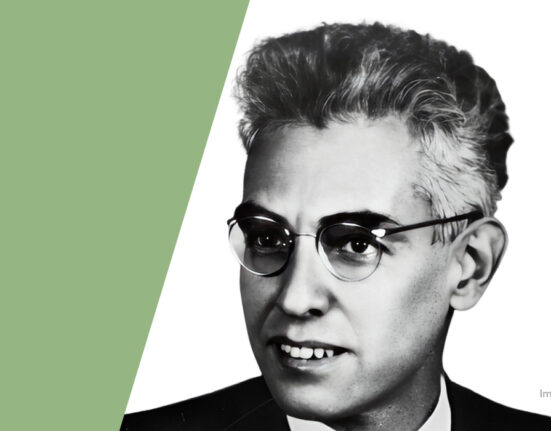
Imagine hearing that a psychologist raised his own child inside a box. Not a metaphorical one. A literal one. For many years, the literature reported an unbelievable incident regarding B. F. Skinner, one of the foremost psychologists of the twentieth century and a leading figure of behaviourism. He was reported to have placed his young daughter in a sealed experimental chamber, which was similar to the “Skinner box” he used to study rats and pigeons.
Critics of behaviourism used this narrative to argue that it reduced humans to the status of laboratory animals. This is one example of the kinds of incidents that are easily spread; they are dramatic, somewhat disturbing and fit the public’s perception of scientific manipulation of human nature. However, there was one small problem with this story (Slater, 2004).
The story isn’t true. What Skinner actually built was not an experimental device, but a crib, a carefully designed one meant to make childcare easier. Yet somewhere between a magazine headline, public imagination, and anxiety about behaviourism, a practical parenting invention turned into one of psychology’s most persistent myths (Slater, 2004). The story of the so-called “Baby in a Box” is less about a strange experiment and more about how scientific ideas become misunderstood once they leave the laboratory (Slater, 2004).
Read More: Remembering B.F. Skinner and His Contributions to Psychology
The Parenting Dilemma of Skinner
It was in the middle of the 1940s that B.F. Skinner and his wife were eager to welcome their second child into the world; at the same time, Skinner had already achieved considerable recognition for his research on learning and behaviour as a professor at Indiana University Bloomington (to this point) (Skinner, 1945). But, even within the confines of a laboratory, B.F. Skinner had to confront a “normal” everyday parenting issue: taking care of an infant child.
Childcare in that era required constant adjustments. Babies were wrapped in layers of clothing and blankets to keep them warm. Laundry piled up quickly. Blankets could slip and become unsafe. Parents were constantly worrying about temperature, hygiene, and comfort (Skinner, 1945). Skinner did what many scientists do when faced with a practical problem: he tried to design a solution.
The result was a device called the Air Crib, sometimes referred to as the “Baby Tender” (Skinner, 1945). The crib was different from many cribs. Instead of wood or metal, it was made of glass with clear plastic sides and a heating system to keep the inside of the crib warm.
The thought behind the crib was straightforward. By not having to cover the baby with heavy blankets or tight clothes, the baby would be healthier because his/her environment would always be warm and dry. They could move freely and sleep comfortably while parents had less laundry and fewer safety concerns (Skinner, 1945). Skinner described the invention in a 1945 article published in Ladies’ Home Journal titled “Baby in a Box” (Skinner, 1945). And that headline would change everything.
Read More: The Role of Sociopolitical Context in Shaping 20th Century Psychological Paradigms
How a Headline Created a Psychological Myth
The phrase “Baby in a Box” was catchy. Maybe too catchy.
Readers who encountered the headline often imagined something far more extreme than what Skinner had built. The words evoked images of confinement of a child sealed inside a container for observation (Slater, 2004). Some critics went even further, describing the Air Crib as a “human goldfish bowl” (Slater, 2004).
The metaphor remained in use for many years. Skinner had achieved notoriety in other research fields before creating his “Skinner Box.” The Skinner Box was a research apparatus used to investigate the basic principles of operant conditioning. Animals, particularly pigeons and rats, could learn certain behaviours (like pressing on a lever or pecking at a key) for the purpose of obtaining reinforcement from their environment. (Skinner, 1938)
For the public, it wasn’t difficult to connect the two ideas. If Skinner studied animals in boxes, the reasoning went, perhaps he had decided to study babies the same way. The Air Crib became, in popular imagination, a human version of the Skinner Box (Slater, 2004). The interpretation of Skinner’s Air Crib was based on a misconception regarding the intention of the device.
In actuality, the Skinner Box was an experimental tool in behavioural research, while the Air Crib was nothing more than a standard crib designed to control the climate and provide ease in caring for an infant (Skinner, 1945). The Air Crib soon gained notoriety, largely due to the dissemination of misinformation via the media, psychology courses, and general discussions of behaviourism (Slater, 2004).
Read More: John B. Watson’s Personal Scandal and the Fall of Behaviourism’s Public Image
Eventual Misunderstanding Regarding Skinner’s Air Crib
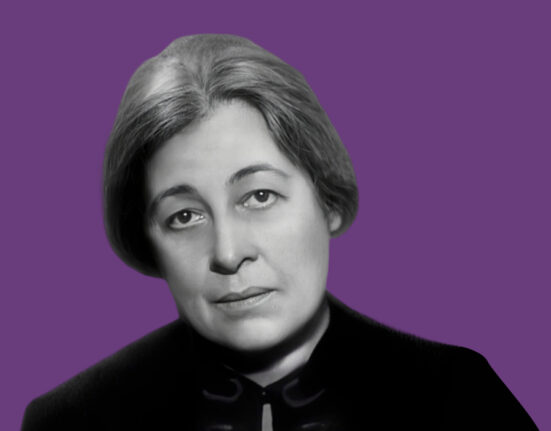
As time progressed, so did the amount of erroneous information circulating regarding the Air Crib; eventually leading to a need for Skinner’s daughter to speak about the Air Crib to clarify the accusations against her father. Deborah Skinner Buzan has indicated in her comments about her childhood that she grew up in an entirely average and regular manner.
When she talked about the Air Crib, she stated it served as a simple and standard way of sleeping comfortably when she was a baby. The Air Crib was not a tool intended to isolate her or experiment with her; it was just another form of crib. In addition, she stated positively about the use of Air Cribs, noting that babies had the ability to freely move around as opposed to being wrapped up in various layers of clothing. (Skinner Buzan, 2004)
Over time, Deborah grew up to become an artist and writer. She repeatedly rejected the myths surrounding her childhood and defended her father’s intentions (Skinner Buzan, 2004). Some rumours had even claimed that she had suffered severe psychological harm or died by suicide. These claims were entirely false. (Skinner Buzan, 2004). Yet the myth proved remarkably durable.
Read More: The Language Barrier: How Soviet-Era Russian Delayed Lev Vygotsky’s Global Impact in Psychology
Why the Story Refused to Die
The persistence of the “Baby in a Box” story tells us something interesting—not about Skinner, but about how people interpret science. The study of behaviour, an approach Skinner helped develop, deals primarily with people’s observable and environmental behaviours. Some critics found this philosophy to come close to that of treating human beings as machines, which can be programmed through environmental influences (Myers, 2014).
Furthermore, in Skinner’s later work, titled Beyond Freedom and Dignity, he reiterated this concern by claiming most human behaviour is a result of one’s environment and not his or her individual free will (Skinner, 1971).
Despite Skinner’s original intent for this thesis to be viewed primarily through a scientific/philosophical lens, many readers viewed it as a purely social control theory. In the atmosphere of the time, the “Baby in a Box” story supported fears that behaviourism was going to try to manipulate humans’ lives from the moment they were born (Slater, 2004). However, the truth is, the Air Crib had nothing to do with conditioning behaviorally. But from a psychological standpoint, the myth supported the existing story that people had believed.
The Device That Actually Existed
Despite the controversy, the Air Crib was not merely a theoretical idea. It was actually manufactured commercially in the late 1940s. A company called Air crib Corporation produced several units that were purchased by families interested in the design. According to many parents who used the crib, they were very happy with their experience.
The temperature-controlled environment helped keep children at a comfortable temperature, reduced the need for layering/upgrading clothing, simplified cleaning and made it easier for babies to sleep well. However, despite these benefits, the device was never adopted by the majority of families, mostly due to the public’s distrust of the “Baby in a Box” story. Many parents saw this product as an experimental product; they were reluctant to try it. Therefore, perception superseded actual verifiable results (Slater, 2004).
When Science Meets Storytelling
The Air Crib controversy offers a revealing lesson about how scientific ideas travel through society. Once a dramatic narrative emerges, it can overshadow the original facts. A headline becomes a story. The story becomes a cautionary tale. And eventually the tale becomes part of cultural memory (Slater, 2004). Although Skinner’s device was intended to reduce the need to wash clothes for babies and keep them from being cold, it, ironically, became a symbol of something darker in our minds.
In this way, it represents an example of something that Skinner himself would have appreciated. That is, behaviour is influenced by the environment we live in—including the information we are exposed to (Skinner, 1971). When the news media reinforces some fears or beliefs, then the next piece of information will be interpreted in a way that confirms what the person already believes.
The Real Legacy of the “Baby in a Box”
These days, folks still talk about the Air Crib like it’s a classic myth in psychology. It was never what people thought.
One small start meant for families soon faced suspicion as science seemed to go too far. At first, just a practical fix, it slowly changed shape in people’s minds. A clearer story took hold – not because it was true, but because it stuck. Over time, messy details faded out; only bold pictures remained in view. Those snapshots misled, yet they stayed fixed in how folks saw the whole thing.
Truth hides in plain sight here. Science fills our heads with facts, yet slips stories into the mix at the same time – stories about who we are, how minds grow, what surroundings shape inside us. These tales stick fast once believed. Fact fades behind them, even though fact started it all.
Truth slips out now and then when tales are told.
Now and then, like with Skinner’s “Baby in a Box,” what we see mirrors worry more than fact. Yet hidden behind such inventions lies unease shaped by culture, not clarity from labs. That setup didn’t teach us much about child growth; instead, it exposed nerves around control and machines shaping lives. While claimed as research, its real impact was lighting up discomfort in how far science might go. Because reactions came less from data and more from images of cold mechanics cradling infants.
References +
- Buzan, D. S. (2004, March 12). I was not a lab rat. The Guardian. https://www.theguardian.com/education/2004/mar/12/highereducation.uk
- Harvard University. (2007). B. F. Skinner. Harvard.edu; Department of Psychology. https://psychology.fas.harvard.edu/people/b-f-skinner
- Jean-Richard-Dit-Bressel, P., Killcross, S., & McNally, G. P. (2018). Behavioural and neurobiological mechanisms of punishment: implications for psychiatric disorders. Neuropsychopharmacology, 43(8), 1639–1650. https://doi.org/10.1038/s41386-018- 0047-3
- Joyce, N., & Faye, C. (2010). Skinner Air Crib. APS Observer, 23(7). https://www.psychologicalscience.org/observer/skinner-air-crib
- Murtoff, J. (2019). Operant conditioning. In Encyclopædia Britannica. https://www.britannica.com/science/operant-conditioning
- Myers, D. G. (2026). staff.ces.funai.edu.ng – Behaviour Principles In Everyday Life. Funai.edu.ng. https://staff.ces.funai.edu.ng/papersCollection/uploaded files/_pdfs/Behavior_Principles_In_Everyday_Life.pdf
- Peter Berger, & Luckmann, T. (2016, April 8). Social Construction of Reality. Pressbooks.howardcc.edu; University of Minnesota Libraries Publishing edition, 2016. This edition is adapted from a Work Originally Produced in 2010 by a Publisher Who Has Requested That It Not Receive attribution. https://pressbooks.howardcc.edu/soci101/chapter/social-construction-of-reality/ Schultz
- D. P., & Schultz, S. A. (2017). CHOICE: Multiple format options including textbook, eBook and eChapter rentals. https://dspmuranchi.ac.in/pdf/Blog/Theories%20of%20Personality.pdf
- Skinner, B. F. (1945). BABY IN A BOX. https://www.aubreydaniels.com/sites/default/files/pdf/skinner_baby_in_a_box-Ladies Home-Journal.pdf
- Spitzer, R. L., Lilienfeld, S. O., & Miller, M. B. (2005). Rosenhan Revisited. The Journal of Nervous and Mental Disease, 193(11), 734–739. https://doi.org/10.1097/01.nmd.0000185992.16053.5c