This research explores how the brain creates and reuses abstract “symbols” to support creative thinking and problem solving. Understanding this process is important because abilities like language, math, drawing, and tool use all depend on combining simple elements into new ideas. The main issue studied in this paper was about which region of the brain represents these reusable symbolic units and how the system of the brain works in completely solving new problems.
Understanding the Main Theme
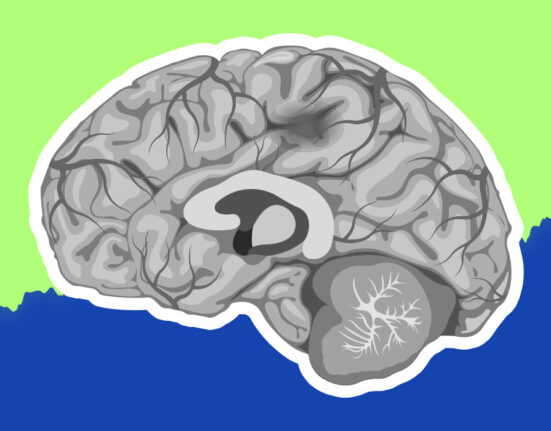
The core concept is compositional generalisation: the brain learns simple units (like lines or curves) and then combines them to create complex, new patterns or ideas. The study focuses on the ventral premotor cortex, a frontal lobe region usually considered as a movement-planning area, and shows that it also works like a “mental typewriter” that holds abstract action symbols before they are turned into actual movements.
Research Details
The study, led by Lucas Y.Tian as first author, was published in the Journal Nature. The co-authors were Kedar Garzón Gupta, Daniel J. Hanuska, Adam G. Rouse, Mark A. G. Eldridge, Marc H. Schieber, Xiao‑Jing Wang, Joshua B. Tenenbaum, and senior author Winrich A. Freiwald. Researchers at Rockefeller University conducted the work in collaboration with researchers from other institutions.
Researchers at Rockefeller University allowed the macaque monkeys to perform drawing-like tasks on touch screens while simultaneously recording their brain activity. The monkeys initially learned to draw simple geometric shapes (lines, arcs, squares, circles, triangles), each treated as a separate “action symbol,” and later they were asked to create new, more complex shapes from these elements. During this time, the electrodes recorded neurons across eight different brain regions. The main objective was to find a neural population that encodes these reusable action symbols and to see which brain area is highly involved in this process of creating invariance, category structure, and recombination.
Major Findings
The study results showed that neurons in the ventral premotor cortex encoded planned drawing actions, which stayed stable across low-level movement details, grouped actions into discrete categories, and facilitated those actions to be recombined into new sequences. Later, in behavioural terms, the monkeys chose to build new shapes by strategically combining learned symbols. Rather than just tracing edges, showing they understood these actions as abstract building blocks rather than simple motor patterns.
Authors’ Perspective
The researchers interpreted these findings as the first clear neural evidence for symbolic units in the brain, solving a long-standing question about where the “basic units of thought” come from. They also argue that the ventral medial cortex is not only perceived as a motor planning area but also works as a high- level symbolic hub that coordinates between abstract planning in the prefrontal cortex and concrete movement in the motor cortex. The implications suggested that understanding psychiatric and action-planning disorders is important for improving brain-computer interfaces that translate thought into speech or movement.
Conclusion
Overall, the research shows that the brain’s ventral premotor cortex creates abstract action symbols and flexibly combines them. It provides a neural basis for understanding the brain’s role in generating new ideas and behaviours from familiar components. This study emphasised the broad importance of understanding human creativity, diagnosing cognitive and action-planning disorders. Designing better brain-computer interfaces that read symbolic intent rather than just raw movement signals.
Read More: Beyond the Synapse: The Future of Psychology Beyond AI and Brain-Computer Interfaces
References +
- News, N. (2026b, May 23). Brain Region Discovered for Abstract Thought – Neuroscience News. Neuroscience News. https://neurosciencenews.com/ventral-premotor-cortex-abstract-thinking-30753/
- Fine, J. M., & Hayden, B. Y. (2021). The whole prefrontal cortex is the premotor cortex. Philosophical Transactions of the Royal Society B: Biological Sciences, 377(1844). https://doi.org/10.1098/rstb.2020.0524