Can the belief of a teacher about their student improve the performance of the latter? According to Robert Rosenthal and Lenore Jacobson, psychologists who conducted an experiment in 1968, the answer is yes. Since then, the so-called “Rosenthal effect” or “Pygmalion effect” has been implemented in various fields, ranging from teaching to parenting.
Nevertheless, the theory has been opposed by a growing number of critics. Subsequent studies have produced conflicting results, which cast a shadow over the credibility of the initial findings. This article addresses the questions raised by the public. Firstly, does Rosenthal’s theory actually work, and to what extent? Secondly, how can the expectations of a person influence the behaviors of another? The following paragraphs will discuss these issues and present the conclusions of multiple studies.
The Original Classroom Study
Rosenthal and Jacobson (1968) conducted their experiment in an elementary school in California. At the beginning of the school year, all students underwent an IQ test, which is a standard test measuring one’s general intellectual capacity. Their teacher was led to believe that this test can identify those students that are about to experience a significant intellectual growth spurt, called “bloomers.” In reality, such a test does not exist, and approximately 20% of students were randomly selected and told to their teachers to expect them to bloom.
Random selection made the design strong. If the labeled children later did better, the cause could not be higher natural ability. When the two groups of children were tested again, those labeled as bloomers had improved their IQ more than the other children, who had either gained little or even lost IQ points, especially during the first and second grades (Rosenthal & Jacobson, 1968). The authors attributed this to teachers’ expectations, which contributed to the children’s development. Besides, in the broader context, the book became a success, as education directors and policymakers relied on the evidence provided to argue that negative expectations led to worse results.
Nevertheless, the theory was criticized shortly after the book was published. Thus, Thorndike (1968) stated that the test used in the study was inappropriate for young children, and the results obtained were exaggerated. Moreover, Spitz (1999) believed that after decades of debates, it was time to put the issue to rest, claiming that initial gains were smaller than previously thought, and subsequent studies failed to provide consistent evidence. As such, the 1968 article by Rosenthal and Jacobson, which laid the foundation for the discussion, should be perceived as a beginning of something bigger. Therefore, it is difficult to say for now whether the effect exists or not, as further research is needed.
Read More: Boredom Playing a Positive Role in a Child’s Development
How Expectations Reach Students
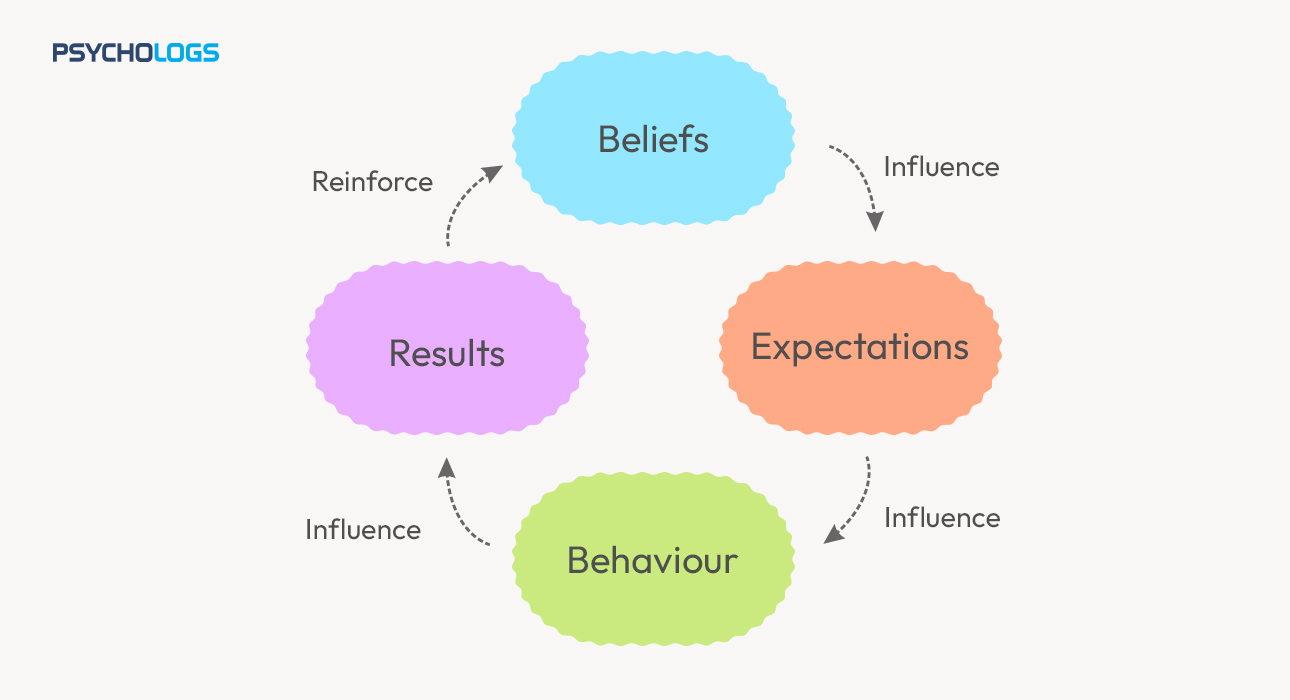
Rosenthal argued that teachers communicated their expectations to students through everyday interactions and behaviors, intentionally or not. Many studies’ reviews reveal four main ways in which teacher expectations could affect students’ behaviors (Harris & Rosenthal, 1985). These are:
1. Climate: Teachers were generally nicer to those students who they expected to be successful, smiling and nodding more often at them.
2. Input: Teachers provided more material for these students, more challenging.
3. Output: Teachers gave these students more response and time for reflection.
4. Feedback: Teachers offered more detailed feedback to these students.
It could lead to the fact that such students would learn more, thus, actually being more successful. This could be explained via the self-fulfilling prophecy concept. According to Merton (1948), self-fulfilling prophecy is a process where a certain idea or guess leads to behaviors from people that make the idea come true, even if it was initially false. An example could be when a manager believes that a new employee is talented, so they give him more responsibilities and offer assistance when he needs it, and finally, the employee becomes successful.
The pattern can also work in reverse. Babad et al. (1982) introduced what they called the Golem effect – a situation when lowering expectations leads to a decrease in performance. Thus, teachers who have low expectations from certain students are likely to address them less frequently, ask fewer challenging questions, and give less praise, thus, subconsciously pushing their performance down.
Rosenthal and Rubin (1978), having analyzed 345 studies investigating “the expectancy effects” in classrooms, labs, and other settings, concluded that the phenomenon was not unique to the educational environment. The mechanism by which the teacher expectations theory operates is thus not some kind of mysterious force confined exclusively to the classroom but a set of actions the teacher performs unconsciously, which the student can easily notice and respond to.
What Later Research Shows
The key question is how strong these effects are in practice. Raudenbush (1984) combined the results of 18 experiments that tried to create false teacher expectations. The overall effect on IQ was small, and it depended on timing. When teachers had known their students for two weeks or more before being given false information, the effect was nearly nonexistent. Once teachers have developed a certain image of their students based on their own experience, unsubstantiated information has little effect on these attitudes.
Jussim and Harber (2005) agree, concluding from their extensive survey of the literature that while there may be such a thing as self-fulfilling prophecies in the classroom, they tended to be small and sometimes nonexistent. They conclude that teachers’ expectations are largely accurate. Because they are formed on the basis of students’ actual performance up to that point. The expectations may influence results to a certain extent, but the results also determine expectation. This may be especially true for students from negatively stereotyped groups who may not have had many opportunities to learn in school.
Combined, the evidence suggests that the Rosenthal effect is real but small. It is easiest to see when teachers know little about a student and least noticeable when they know a lot. This may also help explain why the original study was hard to repeat, since its conditions, new students and teachers with no independent view, are the ones under which expectations work best. The claim that a teacher’s belief alone can raise a child’s intelligence is not supported.
Read More: Exploring the Many Facets of Intelligence in Children
Conclusion
So, does the Rosenthal effect exist? The best answer comes from the research is yes but in a more limited and qualified way than was first claimed. The study conducted in 1968 was faulty, and the increases in IQ test scores were not actually significant. However, subsequent research has shown that high expectations could affect performance through such means as warmth, amount of material presented, opportunity to respond, and feedback.
The effects were strongest when the person with the expectations had the least amount of information on the subject, and the effects of high expectations were most minimized when the expectations were established. For teachers, parents, and managers, the lesson is not that they should attempt to turn pygmies into giants or vice versa. However, their interactions are likely to be ruled by the expectations, which means it is important to evaluate those expectations. Always questioning one’s first impressions and treating everyone equally and giving equal opportunity to improve are good ways to prevent the detrimental effects of low expectations.
References +
- Babad, E. Y., Inbar, J., & Rosenthal, R. (1982). Pygmalion, Galatea, and the Golem: Investigations of biased and unbiased teachers. *Journal of Educational Psychology, 74*(4), 459–474.
- Harris, M. J., & Rosenthal, R. (1985). Mediation of interpersonal expectancy effects: 31 meta-analyses. *Psychological Bulletin, 97*(3), 363–386.
- Jussim, L., & Harber, K. D. (2005). Teacher expectations and self-fulfilling prophecies: Knowns and unknowns, resolved and unresolved controversies. *Personality and Social Psychology Review, 9*(2), 131–155.
- Merton, R. K. (1948). The self-fulfilling prophecy. *The Antioch Review, 8*(2), 193–210.
- Raudenbush, S. W. (1984). Magnitude of teacher expectancy effects on pupil IQ as a function of the credibility of expectancy induction: A synthesis of findings from 18 experiments. *Journal of Educational Psychology, 76*(1), 85–97.
- Rosenthal, R., & Jacobson, L. (1968). *Pygmalion in the classroom: Teacher expectation and pupils’ intellectual development*. Holt, Rinehart & Winston.
- Rosenthal, R., & Rubin, D. B. (1978). Interpersonal expectancy effects: The first 345 studies. *Behavioral and Brain Sciences, 1*(3), 377–386.
- Spitz, H. H. (1999). Beleaguered Pygmalion: A history of the controversy over claims that teacher expectancy raises intelligence. *Intelligence, 27*(3), 199–234.
- Thorndike, R. L. (1968). Review of *Pygmalion in the classroom*. *American Educational Research Journal, 5*(4), 708–711.