Our consciousness is something that we are constantly aware of, but it actually has to work to do it. The study published in Neuroscience News works to understand the patterns that make us aware and how they change when we are put under anaesthesia. These patterns, called “travelling waves” by the authors, are found in the cortex of the brain.
This article is of great importance because the problems of anaesthesia, coma, and disorders of consciousness in general are poorly predictable, and it is hard for clinicians to tell what state a patient’s brain is in regardless of all the technology they may have at their disposal. The study gives an insight into such states of consciousness and provides possible ways of predicting them, which will make the work of anaesthetists safer and contribute to the understanding of how consciousness works at the level of the human brain.
Read More: Cerebral Cortex: The most important part of human brain
Information Tuning Through Cortical Waves
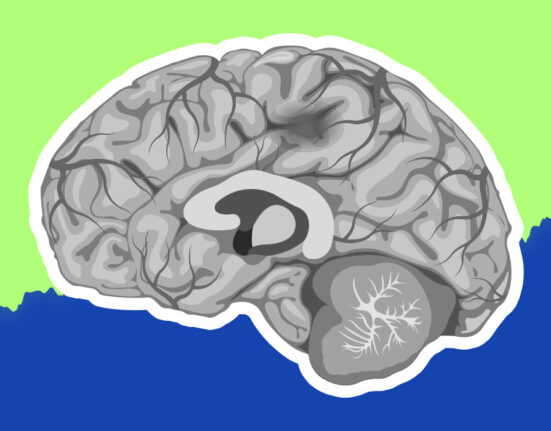
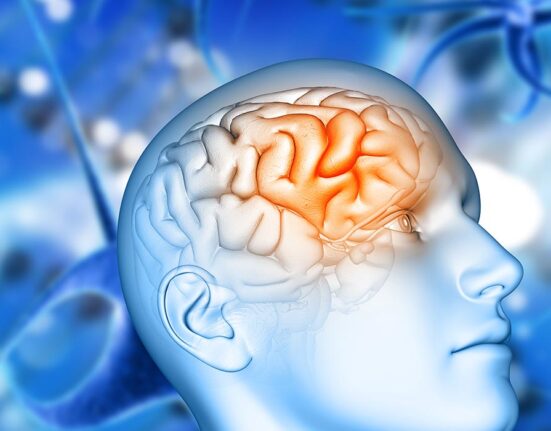
The main point of the research is called “informational tuning in cortical travelling waves.” The cortex is the surface of the brain that has ridges and furrows. The electrical signals, which travel across it, take the shape of waves. These waves carry information much like how a radio signal carries music, but they can also be “tuned” to hold certain types of information such as sound waves.
Under normal conditions, when a brain is awake and in a normal state of consciousness, these travelling waves are organised in such a way that they allow for effective communication and information transfer between different brain regions. This allows for normal perception, attention, and consciousness. When the brain is under anaesthesia, consciousness is lost, and the question this study poses is whether these travelling waves, responsible for transferring information between different parts of the brain, lose their information-organising ability, possibly leading to loss of consciousness.
In simplest terms, the hypothesis is that consciousness arises not merely from the strength of neural oscillations but from their fidelity to the information content, like a radio signal not just being powerful but properly tuned to the station it aims to receive.
Read More: What is the ‘Social Drift’ Hypothesis?
Experimental Design
The study investigated neuronal activity in the cortex associated with alterations in consciousness level as a result of anesthetization. The research team measured brain signals on the surface of the cortex, most probably by using highly sensitive electrodes and/or advanced EEG techniques, and analysed the patterns of moving waves in terms of their propagation characteristics during the procedure.
The subjects were most likely human patients or test animals placed under anaesthesia, with the researchers tracking the transition from conscious to unconscious. Their goal was to determine how the “informationally tuned” nature of these rolling waves changed as the patients lost awareness. In other words, they wanted to see if the waves retained their informational structure and pattern or became more chaotic and less informative as consciousness was lost.
The researchers are members of a neuroscience team investigating brain rhythms and consciousness. Their work has been inspired by related research that has uncovered particular patterns of neuronal activity characteristic of conscious states in the thalamus and cortex.
Read More: Anaesthesia Awareness Explained: When Patients Wake Up During Surgery
The Impact of Anaesthesia in Terms of Consciousness
The central finding is that loss of consciousness under anaesthesia is associated with a breakdown in the informational tuning of cortical travelling waves. In conscious subjects, travelling waves exhibited rich, variable patterns that reflected the flexible processing of sensory inputs, internal thoughts, and interactions between different cortical areas. Anaesthesia rendered these patterns less diverse and less informative.
In unconscious states, the waves were not absent, but their nature was found to be different: instead of being flexible and variable, they seemed to follow stereotyped patterns that did not allow for the representation of complex information characteristic of conscious thought and perception. In other words, anaesthetic drugs do not “turn off” the brain, but rather push it into a different mode of operation that is not suitable for processing complex information.
Psychologically, this might explain why patients under anaesthesia don’t feel any sensation or pain: during such procedures they are unaware of what happens around them and unable to recall the lost time afterwards. Moreover, from the practical standpoint, the study indicates how the state of consciousness can be distinguished from unconsciousness based on such subtle features of brain activity as specific patterns of brain waves. Not only are the amplitude and frequency of the waves important in this regard, but also their arrangement in space.
Read More: Awake While Giving Birth: The Psychological Impact of Regional Anaesthesia During Childbirth
Results From Author’s Lens
From the researchers’ point of view, these findings support the idea that consciousness depends on how brain networks are dynamically tuned to information, not just on raw activity level. They argue that travelling waves act as carriers of information across the cortex and that their informational tuning is a key marker of conscious states. When anaesthetics disrupt this tuning, consciousness fades because the brain can no longer integrate information into a unified experience.
They also note that the ability to measure the amount of information in the tuning of waves could be used to make consciousness monitoring more mechanistic in a clinical setting. Say, an anaesthesia machine or ICU monitors could be able to track how much information the waves contain to make sure drugs are not inducing conscious awareness or suppressing it too much.
Ultimately, the authors conclude the discussion by evaluating their findings alongside other theories of consciousness that also utilise the concepts of information and the level of integration within the entire brain. Furthermore, the article connects abstract concepts of consciousness to actual patterns of cortical waves.
Conclusion
In general, the study found that consciousness is significantly correlated with the tuning of cortical travelling waves to information. Moreover, the researchers have found evidence that loss of consciousness under anaesthesia occurs through the disruption of this specific type of tuning. Even though waves exist in the brain, their absence of tuning leads to the deprivation of conscious awareness.
The main point of this passage is that decoding of informational tuning in brain activity is significant for the development of both scientific understanding of consciousness and clinical practice of anaesthesia and care. The research has demonstrated that consciousness is not only about having active brain activity but also about how this activity is organised to process meaningful information in the cortex.
References +
- 1. Neuroscience News. (2025b, April 27). Neuroscience News Science Magazine – Research Articles – Psychology Neurology Brains AI. https://neurosciencenews.com/b%E2%80%A6e-tuning-consciousness-31112/