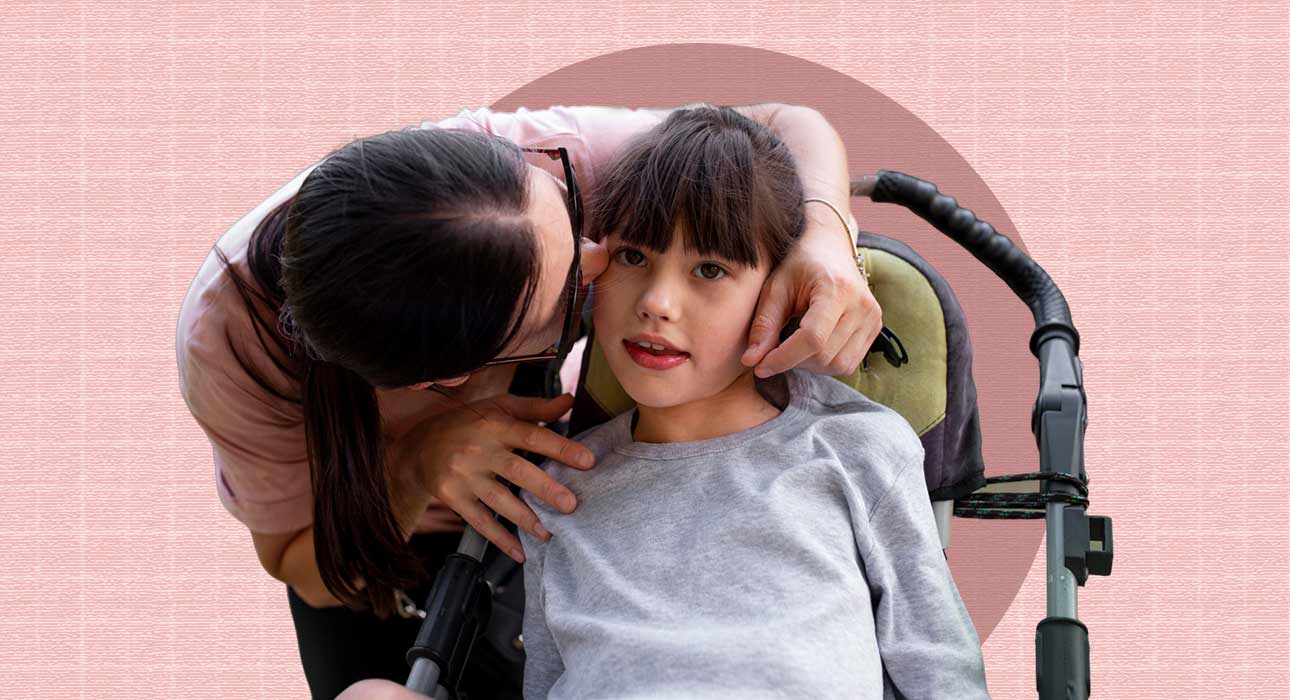
Imagine a parent who never lets their teenage child cross the road alone, make simple decisions, or take risks that most young people experience every day, not because they doubt their child’s worth, but because they fear the world may hurt them. Now imagine that child has a disability. What begins as love and protection can slowly become something more complicated: guilt, fear, dependence, and overprotection.
For family members of people with disabilities, there can be feelings of love, care and responsibility; however, feelings of guilt, fear and anxiety can also surface. These feelings can lead to overprotection of the individual with a disability, which can have both positive and negative effects on their autonomy and self-development.
Read More: Am I Enough?” Understanding How Conditional Love Shapes a Child’s Inner World
Understanding Family Dynamics through Family Systems Theory
The Family Systems Theory (1950s) views a family as an emotional system of interconnected individuals where every individual’s behaviour affects others and is affected by others. As Murray Bowen originally described, “an individual’s functioning is best viewed within the context of the functioning of his or her family system.” A family with a family member who has a disability is not necessarily a disabled family; rather, the family system reorganises itself in response to a family member with a disability. The family members’ typical roles and boundaries may change, and their emotional responses to typical family circumstances may be more intense. A common adaptation of a family with a member with a disability is the overprotective behaviour of the family members, especially parents.
Love & Fear: The Roots of Overprotection
When a child has a disability, the entire system adjusts, roles shift, and parental control may increase. Siblings may step into greater responsibility. What we see is a great degree of dependence in family members on each other, but at times that dependency goes too far. For instance, parents may make all the decisions even when the child is capable of doing so by his/her own. Healthy families maintain a balance between closeness and independence. In families that have a disabled member, this balance may go towards too much closeness, which is where the overprotection starts to breathe.
Overprotection is not a result of neglect; it is mixed with love and fear. Parents worry about the threat, rejection, and failure and try to prevent pain before it happens. For example, a parent may stop their child from going out alone, not because the child can’t handle it, but because the parent is afraid of something going wrong. While this may reduce the parent’s anxiety, it limits the child’s growth.
Guilt & Overcompensation:
Guilt plays a large role in how parents act. Parents may feel responsible for the disability, which could be due to their genetics, medical complications, or social reasons. Even when this responsibility is not real, the feeling persists. To deal with guilt, parents may overcompensate. They try to remove every difficulty from their child’s life, including doing tasks for the child, avoiding discipline, or giving excessive attention. While these acts may seem caring, apparently, it sends an indirect message to the children: “You’re not capable enough to handle things on your own.” This may lead to learned helplessness (Seligman, 1975), where the child stops trying because they believe they are incapable. Instead of building skills, they become dependent on others for even simple tasks.
Read More: Overcoming Learned Helplessness for Mental Well-Being
Impact on Social Skills & Self-development
Children with disabilities who grow up in an overprotected family environment may have a hard time in terms of autonomy, the ability to make decisions, and act independently (Ryan & Deci, 2000). As a result, they do not get any chance to explore things, or make any mistakes, take a risk in life or solve a problem on their own. So, they may have issues with self-development. They may also lack in developing self-efficacy, meaning a person’s belief in their own abilities (Bandura, 1997). If parents tend to step into every aspect of the disabled children’s lives, it may lead to lower self-efficacy. In adulthood, we may see this play out as hesitation, a fear of failure, or they may seek out other people’s help to make decisions for them, even when they can do it by themselves, because they lack faith in themselves.
Overprotection from family members not only affects independence but also the social development of the child with disability. In early life, children tend to learn social skills through experience of conflict, interaction, and adaptation to various situations, but when such experiences lag, social confidence suffers. The child may feel left out in new environments or completely stay away from social interactions.
The Role of Setting Boundaries
Surprisingly, parents should not question themselves for overdoing their part, but they must understand how to take care of their child in a balanced way. The goal is to provide support without being controlling at the same time. Families have to support their children with disabilities by giving them some personal space. For example, parents can allow the child to make some of the daily choices or to take on simple responsibilities for their day-to-day tasks. These small actions can help them to build up confidence over time.
The way relatives interact has a heavy influence on how the journey of individuals with disabilities is formed. While affection, fear, and shame are feelings that happen naturally, these feelings can restrict the way a person develops when they result in too much protection. It has been observed that higher levels of shielding can stop a person from standing on their own.
Read More: How Childhood Praise Affects Adult Confidence
Possible Interventions
- Parents must develop the ability to separate actual dangers from the ones that only exist in their heads because not every single event requires them to step in and act.
- Experts claim that permitting the offspring to encounter difficult hurdles is frequently more helpful than shielding the young one from uneasy feelings.
- Professional support, such as family therapy, can help as it provides a safe space to understand patterns and make healthier changes.
- Open communication can help to build a healthy family relationship among all members. As misunderstandings are decreased when the household speaks about what they fear, what they expect, and what the young one can do (Bowen, 1978).
Conclusion
Families are very influential in the lives of individuals with disabilities. Love, guilt and fear are natural human emotions; however, if these emotions lead to over-protective behaviour, growth and independence are not fostered in an individual with a disability.
Looking at the family system through the theoretical framework of Family Systems Theory demonstrates that an issue within an individual is not truly an issue only with that individual, but rather an issue of the entire family system (Bowen, 1978). Alteration is difficult as it will involve the realisation and integration of all members within the family system.
The most critical factor is not eliminating support but modifying support; when families build support around their disabled member in a way that promotes independence, the individual is allowed to develop, gain identity, and have a fulfilled life. The key is – not to remove support but to reshape it.
References +
- Minuchin, S. (1974). Families and family therapy. Harvard University Press. ∙ Seligman, M. E. P. (1975). Helplessness: On depression, development, and death. W. H. Freeman.
- Bowen, M. (1978). Family therapy in clinical practice. Jason Aronson.
- Bandura, A. (1997). Self-efficacy: The exercise of control. W. H. Freeman.
- Deci, E. L., & Ryan, R. M. (2000). The “what” and “why” of goal pursuits: Human needs and the self-determination of behaviour. Psychological Inquiry, 11(4), 227–268.
- Olsson, M. B., & Hwang, C. P. (2001). Depression in parents of children with intellectual disability. Journal of Intellectual Disability Research, 45(6), 535–543.
- Knafl, K., & Deatrick, J. (2003). Further refinement of the family management style framework. Journal of Family Nursing, 9(3), 232–256.
- Carter, B., & McGoldrick, M. (2005). The expanded family life cycle: Individual, family, and social perspectives (3rd ed.). Pearson.
- Woodman, A. C. (2014). Trajectories of stress among parents of children with disabilities: A dyadic analysis. Family Relations, 63(1), 39–54.