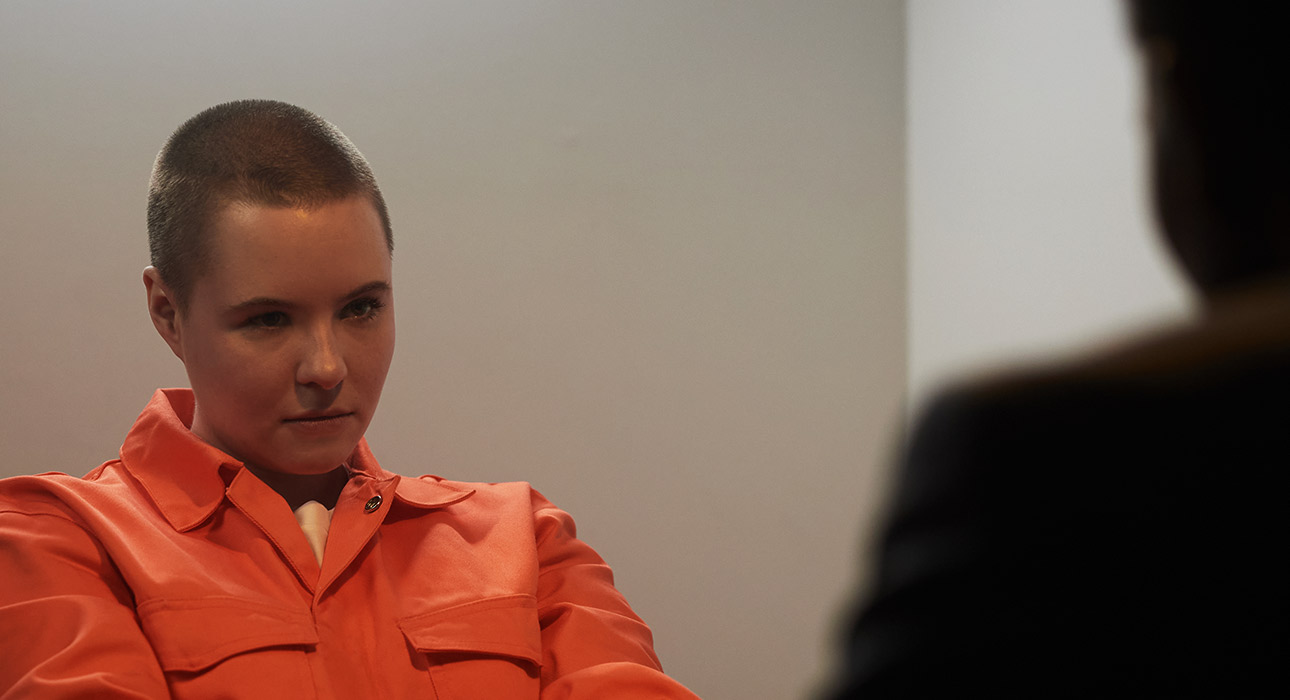
Imagine the scenario of two individuals who both engaged in the same illegal activity. As a matter of fact, during the interviews, neither individual maintained eye contact, neither spoke before pausing briefly to consider their answers, and neither seemed to display any particular interest in the interview itself. An unaware clinician might label this type of conduct as a sign of deception, apathy, and lack of empathy. However, what if these behaviours were really an artefact of an ingrained culturally conditioned attitude of humility, restraint of emotions or respect for persons with authority and not an indicator of lack of honest intent?
That raises the issue as to whether a person can actually be dealt justly if their cultural context is ignored by the mental-health evaluators. Differing cultural backgrounds have become increasingly more common than ever before as psychologists evaluate persons for diverse racial, ethnic, linguistic, cultural and socio-economic backgrounds to consider their psychological state about legal questions related to criminal responsibility, claims of insanity defence, questions concerning capacity to stand trial, immigration procedures, child custody and evaluations of likelihood to offend (American Psychological Association [APA] 2017).
Despite cultural factors being crucial, most standardised psychological tests and diagnostic criteria, as well as clinical practices, are based on Western culture. Consequently, psychologists could make inaccurate assumptions when evaluating individuals whose cultures differ from their own, and as such, may provide inaccurate evaluations that lead to inequitable justice outcomes (Sue & Sue, 2022). The legal system is responsible for minimising the influence of bias during evaluations, so this article will explore the role of culture in forensic psychology, discuss the implications of cultural misunderstanding during legal evaluations, and provide suggestions to promote culturally fair forensic practices.
What is Forensic Psychological Evaluation?
Forensic psychologists conduct examinations to respond to questions in a legal context. Unlike most clinical psychology practice, their role is to offer expert opinions and insights to judges and juries (Heilbrun et al., 2021). Their expertise helps to answer questions related to the legal process, such as:
- Is the defendant competent to stand trial?
- Is the defendant legally reckless or not guilty by reason of insanity?
- How likely is the defendant to commit future acts of violence or to reoffend?
- Which parent is more likely to provide a safe environment in a child custody case?
- Has the plaintiff experienced significant psychological damage in a personal injury case?
- Would this applicant be suitable for a law enforcement or other sensitive position?
The forensic evaluation itself often includes: information gleaned from interviews with the client; direct behavioural observations; review of collateral information such as medical records, school records, and reports from law enforcement; administration of standardised psychological assessment measures; and standardised risk assessment procedures (APA, 2013). Given the seriousness of legal implications of these evaluations, the accuracy and cultural sensitivity of an evaluation are critically important.
Read More: Forensic Psychology vs Criminal Psychology
More Than Ethnicity: What Is Culture?
Culture involves not just the client’s race or ethnicity; it actually includes a complex web of elements such as shared beliefs, practices, communication style, language, history, values, social and religious norms, gender roles, economic status, and family structures. These factors shape a person’s unique way of seeing and navigating the world (Sue & Sue, 2022). Several dimensions of culture can influence forensic evaluation:
- Communication patterns (direct vs. indirect)
- Emotional expression
- The concept of “mental illness”
- Attitude towards authority figures
- Family obligations and collective decision-making
- Religious beliefs
- Cultural experiences including immigration or trauma.
- Language fluency
Some examples of how these elements could be observed in cultures where modesty is paramount: a client may not maintain eye contact when interviewed, whereas in the U.S. this may be seen as disinterest or dishonesty. In many Western cultures, a direct, assertive style of communication is expected, whereas in some collectivistic cultures, an indirect style is used to save face or to avoid imposing on others.
If an evaluation doesn’t consider these differences, what appear as symptoms can be instead culturally normative responses or communication patterns. Emotional restraint during stressful interviews may reflect cultural expectations rather than psychopathy or lack of empathy (Hall et al., 2016).
Sources of Cultural Bias in Forensic Evaluations
1. Bias in Standardised Psychological Measures:
Most standardised tests are developed based on a normative sample comprised of a predominantly Western, English-speaking population. The psychometric properties and normative data derived from these tests are often not applicable to non-English-speaking populations or diverse ethnic groups (Dana, 2005). Potential problems include:
- Language barriers affecting comprehension
- Different interpretations of test items
- Cultural unfamiliarity with testing formats
- Normative data lacking minority representation.
For these reasons, test interpretations may be flawed and have the potential to misidentify strengths and weaknesses, resulting in overpathologizing in minority groups. For example, a minority student may be considered hyperactive based on behaviours that are culturally sanctioned and appropriate.
2. The Evaluator and the ‘Cultural Lens’:
Whether it is explicit (consciously held biases) or implicit (unconscious biases), psychologists bring their own cultural baggage to every evaluation. These automatic beliefs can subtly influence interpretations of behaviour despite good intentions (Greenwald & Krieger, 2006).
Psychologists may unconsciously expect people from certain ethnic backgrounds to behave in certain ways, or have preconceived notions about what is acceptable in terms of demeanour. Many research studies on racial biases suggest that Western clinicians may have lower accuracy in diagnosing clients who don’t belong to the same background.
Clinical Interviews: A Crossroads of Culture and Interpretation
The interview is one of the most critical aspects of a forensic evaluation. During this process, a psychologist gathers information directly from the individual while also making direct observations of their behaviours. However, interview interactions may be a minefield of cultural misunderstanding. What a person chooses to say, how they say it, when and in which way they look you in the eye – all are subject to cultural influence.
For example, is this patient refusing to discuss his religious beliefs because he’s delusional, or because religion is a highly sacred part of his life and he’s uncomfortable disclosing such information? Perhaps the client doesn’t talk about mental illness because it is taboo in his culture. If a psychologist is not aware of this cultural difference, she may assume mental illness is prevalent based on other behaviours in the client’s life. A misunderstanding in the interpretation of these subtle cues may have huge ramifications for legal and clinical decision-making.
Also, language barrier issues, even with interpreters, may cause loss of nuance, specific cultural expressions, idioms, and the underlying emotion and tone that accompany it (APA, 2017). This could lead legal personnel to communicate inaccurate or unreliable information.
Consequences of Cultural Misunderstandings in the Courtroom
The impact of cultural misunderstandings in forensic psychological evaluation extends far beyond the psychologist’s report itself. The court, which is often dependent upon psychological evaluations for crucial decision-making, can rely on flawed conclusions that result in unjust legal outcomes. For example:
- Misdiagnosing mental disorders by assuming Western standards of psychological functioning are universal.
- Incorrectly assessing competency, especially if the client’s language barrier is seen as evidence of cognitive impairment.
- Providing inaccurate risk assessment scores based on factors that have cultural meanings that are not captured in the instrument’s scoring algorithms (Heilbrun et al., 2021).
- Contributing to unwarranted harsh sentences if the psychologist incorrectly assesses the client’s empathy, remorse, or dangerousness due to cultural differences in their expression.
Ultimately, allowing culture to be a disregarded factor in a forensic evaluation process will compromise justice by prioritising an evaluator’s worldview over the individuality and specific context of the individual being assessed.
Evidence of Cultural Bias in the Criminal Justice System
A 2014 article in the Journal of Public Health showed disparities in mental health diagnoses and criminal justice outcomes across racial and ethnic groups, which may be due to a culturally bound way of expressing distress (Schwartz & Blankenship, 2014). Other studies, such as one in Social Psychiatry and Psychiatric Epidemiology, indicate that ethnic marginalised groups receive higher rates of involuntary psychiatric hospitalisation (Bhui et al., 2015).
In the area of criminal justice, a large study published in 2005 by Dana found that many standardised tests exhibit lower levels of reliability and validity when given to diverse populations outside of those they were developed for. Although these statistics involve multiple complex societal factors, cultural biases in evaluation are clearly a part of the picture.
Read More: When Religion Becomes Social Control: The Psychology of Authority Bias and Patriarchy
Ethical Obligations of Forensic Psychologists
The fundamental duty for all psychologists is to be competent, to conduct their practice with honesty, fairness and respect for the rights and dignity of individuals. The APA ethical principles for psychologists and code of conduct are clear that culture should be considered, and psychologists must not discriminate. For forensic psychologists, this translates to a requirement that:
- Practitioners only work within areas where they feel that they possess adequate cultural competence
- Be aware of their own biases
- Use culturally valid assessment methods
- Accurately explain any limitations of their findings
- Seek assistance where an individual is from a culture in which they have little experience.
Cultural competence is therefore not something which can be overlooked when providing an evaluation. This not only means learning about the client’s culture, it also requires understanding that your own culturally based assumptions may need to be adjusted, challenged, or discarded in order to achieve a truly objective and just evaluation.
Steps to Ensure Cultural Competence & Fairness
There is a desire to make the assessments more equitable, and there are several steps that can be taken to avoid bias. Reducing cultural bias requires changes at both individual and institutional levels, and some measures that can help achieve these are:
1. Cultural competency training
Continuing professional development training that focuses on cross-cultural communication, understanding implicit biases, multi-cultural interviewing skills, culturally influenced diagnosis, and much more would be a useful inclusion.
Read More: Know About Cross-Cultural Psychology: History, Types, And Impacts
2. Use of a range of information
For any evaluator, this may involve using a range of data sources which includes but is not limited to:
- Clinical reports,
- Medical history,
- Collateral information,
- Observation,
- Interviews with family members,
- Relevant personal information including cultural background, religious beliefs, etc.
3. The use of culturally appropriate test and assessment procedures
When an appropriate test is available, this is usually best to use, rather than trying to find a test that would not be ideal enough to measure a particular domain of concern. This includes whether a test’s norm groups are representative of the population in question and whether it has demonstrated validity across different cultures and is available in the appropriate language.
4. Working with the assistance of qualified interpreters and cultural experts
The use of professional, mental health-specific interpreters will not only help prevent communication breakdown. But using the assistance of an intercultural expert who will have a deep understanding of an individual’s beliefs and behavioural patterns will also greatly reduce the chances of making cultural errors of interpretation.
5. Engage in Reflective Practice
All practitioners need to be able to critically analyse their work on a day-to-day basis, asking themselves:
- Could culture explain why an individual is behaving in such a way?
- Am I interpreting this evidence solely based on my cultural frame of reference?
- Do I have evidence which would support my decision outside of my cultural assumptions?
Reflective practice promotes objectivity and reduces unconscious bias.
The Future – Building A Culturally-Appropriate Forensic System
As societies become increasingly global and multicultural, so will the need for cultural sensitivity in forensic practice increase, as it becomes clear that models that work for one culture cannot be generalised for all. Future developments in the field of forensic practice include:
- Developing culturally valid tests;
- Increasing cultural diversity amongst practitioners;
- Developing research that examines culture in the field;
- Implementing cultural formulation into routine practice.
The future will involve a reliance on both cultural intelligence in practitioners and on technological tools which can provide further support for culturally sensitive assessment procedures, such as culturally adapting testing models and improving language access. Nevertheless, technology cannot replace skilled and knowledgeable human evaluation and insight. The principle of treating individuals equitably means understanding individuals uniquely and fairly in the context of their diverse backgrounds, not merely by providing similar treatment to everyone.
Conclusion
While legal systems aim to deliver fair judgments and impartial decisions, the evaluations on which such decisions often depend are far from inherently unbiased. In the realm of forensic psychology, where individual lives can hinge on diagnostic interpretations and risk assessments, the influence of cultural understanding can have a profound impact.
In cases where the evaluator fails to consider the role of culture in behaviour, seemingly ordinary conduct might be wrongly stigmatised, symptoms of psychological disorders can be misconstrued as evidence of psychopathology, and ultimately, the very fabric of the legal system can be distorted, reinforcing existing societal inequalities rather than rectifying them.
Therefore, to uphold scientific rigour and public trust, the practice of forensic psychology must actively cultivate cultural competence. This requires a commitment to ongoing education, introspection into one’s own cultural assumptions, careful selection and implementation of culturally sensitive assessment instruments, strategic collaboration with qualified interpreters and cultural consultants, and strict adherence to established ethical guidelines. Ultimately, by acknowledging that culture is a shaping force of communication, behaviour, and psychological well-being, forensic psychologists can render evaluations that are more accurate, objective, and equitable.
As the world grows more diverse, forensic practitioners must make cultural competence an essential part of their practice. Because genuine justice requires deep understanding rather than superficial uniformity.
References +
- Dana, R. H. (2005). Multicultural assessment: Principles, applications, and examples. Lawrence Erlbaum Associates.
- Greenwald, A. G., & Krieger, L. H. (2006). Implicit bias: Scientific foundations. California Law Review, 94(4), 945–967.
- American Psychological Association. (2013). Speciality guidelines for forensic psychology. American Psychologist, 68(1), 7–19. https://doi.org/10.1037/a0029889
- Schwartz, R. C., & Blankenship, D. M. (2014). Racial disparities in psychotic disorder diagnosis: A review of empirical literature. World Journal of Psychiatry, 4(4), 133–140.
- Bhui, K., Ascoli, M., & Nuamh, O. (2015). The place of race and racism in cultural competence: What can we learn from the English experience about the narratives of evidence and argument? Transcultural Psychiatry, 49(2), 185–205.
- Hall, G. C. N., Yip, T., & Zárate, M. A. (2016). On becoming multicultural in a monocultural research world: A conceptual approach to studying ethnocultural diversity. American Psychologist, 71(1), 40–51.
- American Psychological Association. (2017). Ethical principles of psychologists and code of conduct. American Psychological Association.
- Heilbrun, K., Marczyk, G., & DeMatteo, D. (2021). Forensic mental health assessment: A casebook (2nd ed.). Oxford University Press.
- American Psychiatric Association. (2022). Diagnostic and statistical manual of mental disorders (5th ed., text rev.; DSM-5-TR). American Psychiatric Association Publishing.
- Sue, D. W., & Sue, D. (2022). Counselling the culturally diverse: Theory and practice (9th ed.). John Wiley & Sons.