People communicate daily, but still, most people feel that no one hears or even understands them. Messages are exchanged fast, words are exchanged frequently, and screens are active at any given time. Still, an authentic connection is more difficult to find. This is a gap that shows that communication is not all about speaking more. It is more about understanding better.
It has been found that good communication makes individuals feel secure, appreciated and connected. The assistance of clear words, active listening, and emotional awareness is created to build trust and closeness. With poor communication skills, there is more misunderstanding and poor relationships. Communication skills are now more important than ever, particularly in a fast and digitalised world (Baumeister and Leary, 1995; Lieberman, 2013).
What Communication Really Means
Good communication is not about speaking or writing. It involves listening, facial expression, body language and tone of voice. Even silence can convey a message. People get to feel heard and valued when these cues go in line with the words spoken.
According to Psychology, communication happens when the meaning is shared and not just information. When people feel listened to and understood at the emotional level, they connect. Even the basic skills, such as listening without speaking and being attentive helps build this connection. This allows communication to build trust and emotional closeness (Rogers, 1957; Burleson, 2003).
Read More: Managing Dismissive Behaviour: Tips for Better Communication
The Brain And Social Interaction
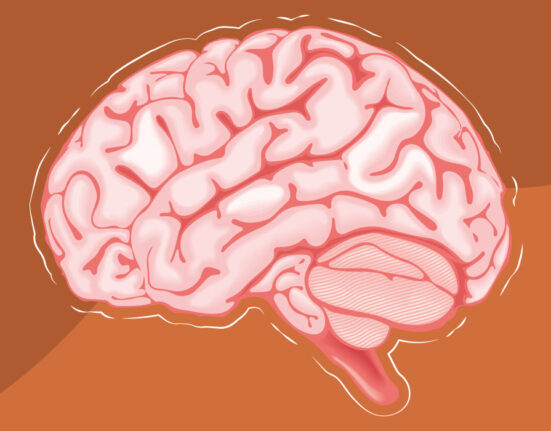
The human brain is designed to connect with others. The brain starts to interpret faces, voice tone and body language the moment they engage with one another. These clues are used to know how other people feel and what they mean. Because of this, communication is not just about words. It is also how those words are shared.
Research in cshows that social interaction activates the areas of the brain that are linked to emotions and understanding. Whenever individuals feel heard, the brain sends the message that they are safe and belong. This reaction supports empathy and emotional connection. Indirect and positive communication assists the brain in handling social situations positively (Lieberman, 2013).
The brain also learns from repetitive interactions. Positive communication builds trust over time. Lack of effective communication causes stress and misunderstanding. The brain is social, and thus, learning proper communication skills can make relationships and emotions positive. This shows why communication plays an important role in human connection (Decety and Jackson, 2004).
Read More: Social Psychology: The Landscape of Human Interaction
Communication Builds Emotional Bonds
Proper communication brings people close to each other emotionally. A person listens with care and responds kindly; it creates a sense of trust. This makes people feel that they are important and that people listen to them. This emotional security makes relationships stronger with time (Rogers, 1957).
Research shows that emotional bonds form when communication includes empathy and understanding. This is because even the smallest behaviour, such as paying attention to emotions and responding calmly, will help maintain the connection. Any form of communication should be done clearly and in a respectful manner to make people feel more comfortable in expressing their thoughts and feelings. This enhances connection and strengthens ties. (Burleson, 2003).
Read More: Mastering Effective Communication: Building Trust and Strong Relationships
The Cost Of Poor Communication
Lack of proper communication usually causes misunderstandings. Messages are not clearly understood when people do not listen attentively or clearly explain what they are thinking. Minor problems can become larger than they actually are. This can slowly create confusion and frustration in relationships (Burleson, 2003).
The absence of clear communication may also lead to emotional distance. In case people are not heard or taken care of, they might no longer express themselves and express their ideas and feelings. This would create a lack of trust in the long run. According to psychological studies, emotional well-being is influenced by the sense of disconnection and leads to stress (Baumeister and Leary, 1995).
Poor communication is also experienced in everyday life, both in the workplace and in the home. When the expectations are not clearly communicated, this increases the number of conflicts. It makes working as a team challenging, and the relationships feel strained. Healthy communication skills allow decreasing these issues and building stronger and supportive relationships (Holt-Lunstad et al., 2010).
Communication In The Digital Age
Digital communication is now a part of our daily lives. Messages, social media and emails are used by people to communicate with each other. These are tools that enable fast and easy communication. However, they tend to remove body language, voice tone and facial expression.
Messages will be unclear without these social cues. Even in a situation where the intention is not to sound rude or distant, a short reply may sound like it. According to psychological research, misunderstanding occurs more frequently in text-based communication. This can weaken the connection if people are not careful (Walther, 1996).
Because of this, communication skills are now more important than ever before. The use of simple language, considerate responses, and emotional sensitivity may be used to reduce misunderstandings on the Internet. One should also know how to effectively communicate in the digital setting to remain trusting and connected even without face-to-face communication (Turkle, 2011).
Read More: Emojis as Nonverbal Cues in Digital Communication: A Psychological Perspective
Learning Communication as a Life Skill
Communication is not just something people are born with. People can master and develop it as an art. Communication is something that develops with practice, just as reading or problem-solving. Even something as simple as listening and talking clearly is taken into consideration so much in everyday communication (Hargie, 2011).
The studies of psychology indicate that mastering communication skills improves relationships and emotional well-being. When individuals know how to frame thoughts and feelings, they are less insecure and isolated. People can also use these skills to manage conflict and reduce stress at work and in their personal lives (Burleson, 2003).
Small actions can achieve better communication. Listening, word selection and empathy are useful in ensuring that dialogues are respectful and encouraging. As time goes by, such skills build social bonds and form healthier relationships with other people (Baumeister and Leary, 1995).
Read More: Empathy in Action: How Communication Skills Foster Compassion and Inclusion
Conclusion
Connection among humans depends on communication. The use of words, tone and emotional understanding makes people feel heard and valued. Communication that is effective and respectful helps in making the relationships stronger and more supportive. Psychology demonstrates that having a sense of belonging is one of the fundamental human needs, and communication has a significant role in fulfilling the need (Baumeister and Leary, 1995).
There has never been a need to learn communication skills in the fast and digital world like in the modern world. These skills can be used to reduce misunderstandings and establish trust in both personal and social relationships. Improving listening and speaking processes helps establish healthier and better relationships. Good communication helps in forming empathy, understanding and long-term human relationships. (Lieberman, 2013).
References +
Baumeister, R. F., & Leary, M. R. (1995).
The need to belong: Desire for interpersonal attachments as a fundamental human motivation. Psychological Bulletin, 117(3), 497–529. https://doi.org/10.1037/0033-2909.117.3.497
Burleson, B. R. (2003).
The experience and effects of emotional support: What the study of cultural and interpersonal variation tells us about close relationships, emotion, and interpersonal communication. Communication Monographs, 70(1), 1–33. https://doi.org/10.1080/0363775032000133762
Decety, J., & Jackson, P. L. (2004).
The functional architecture of human empathy. Behavioural and Cognitive Neuroscience Reviews, 3(2), 71–100. https://doi.org/10.1177/1534582304267187
Hargie, O. (2011).
Skilled interpersonal communication: Research, theory, and practice (5th ed.). Routledge.
Holt-Lunstad, J., Smith, T. B., & Layton, J. B. (2010).
Social relationships and mortality risk: A meta-analytic review. PLoS Medicine, 7(7), e1000316. https://doi.org/10.1371/journal.pmed.1000316
Lieberman, M. D. (2013).
Social: Why our brains are wired to connect. Oxford University Press.
Rogers, C. R. (1957).
The necessary and sufficient conditions of therapeutic personality change. Journal of Consulting Psychology, 21(2), 95–103. https://doi.org/10.1037/h0045357
Turkle, S. (2011).
Alone together: Why we expect more from technology and less from each other. Basic Books.
Walther, J. B. (1996).
Computer-mediated communication: Impersonal, interpersonal, and hyperpersonal interaction. Communication Research, 23(1), 3–43. https://doi.org/10.1177/009365096023001001