Disclaimer: The following article may contain words and themes that are emotionally sensitive. This material is for awareness purposes only.
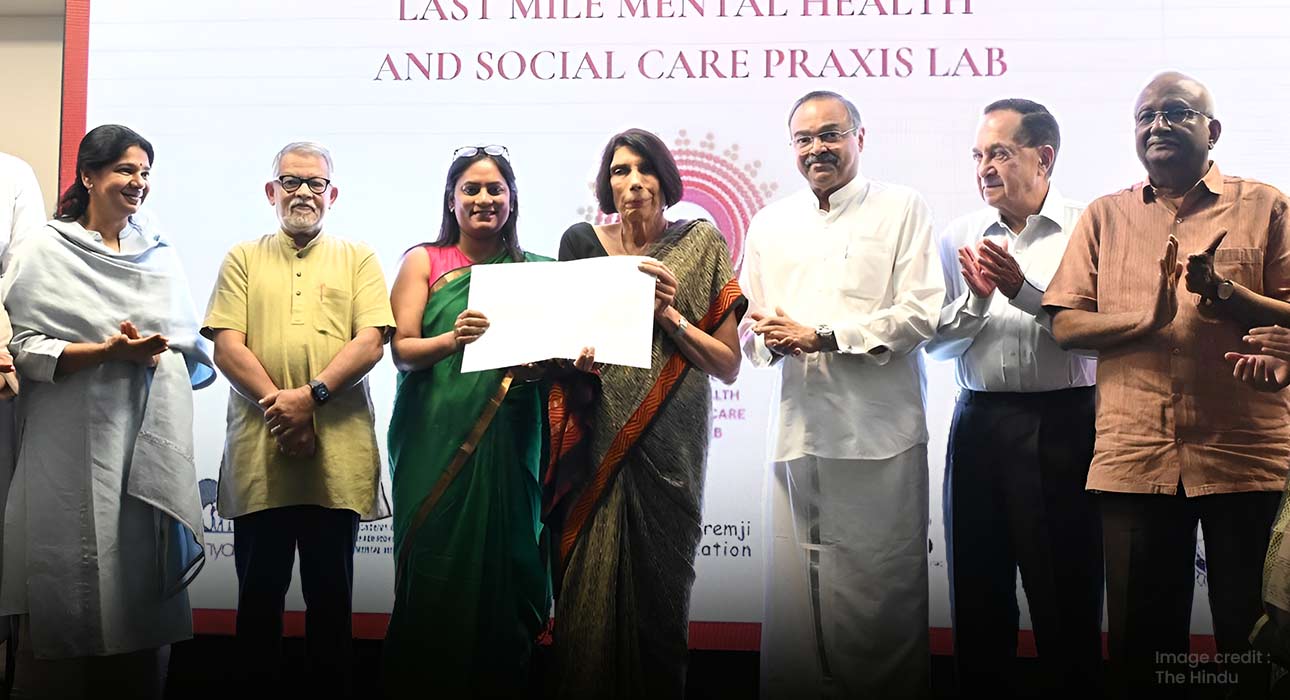
The Centre for Mental Health, Social Care and Livelihoods (CMHSCL) and the Last Mile Mental Health and Social Care Praxis Lab were recently inaugurated in Chennai. The CMHSCL will unite clinical, social and economic responses across five domains and provide integrated approaches to provide support and care for those with mental illness. The lab will study how social determinants and structural violence significantly shape mental healthcare practices.
The lab was inaugurated by Chennai-based NGO The Banyan Tree, Aaladamara Foundation and the Banyan Academy of Leadership in Mental Health (BALM). A press release stated that the lab will also study the impacts of poverty and homelessness that significantly contribute to social factors and structural violence that influence mental health.
The Role of CMHSCL
The Centre for Mental Health, Social Care and Livelihoods will focus on an integrated approach covering five domains. This includes income and social protection, livelihoods, relational stability, support for vulnerable caregivers and access to basic healthcare, according to The Hindu. This is a reminder that social inequalities like class, caste, education and gender still dictate access to basic healthcare in India. It will also provide other holistic services to help in this cause, according to The News Minute.
- Intensive Case Management
- Safe Spaces and Short Stay Community Units
- Social Care Fund and Livelihood Support
- Capacity Building for Mental Health Professionals
- Evaluation Intended To Inform Policy
Read Morning: Psychosocial Care during Emergencies
Role of The Last Mile Centre & Social Praxis Lab
In a country like India, where poverty still determines basic access and awareness of mental healthcare for many, the lab will focus on individual psychological needs. It will mainly focus on social experiences arising from mental health issues caused by shame, humiliation, rejection, dependence and violation of basic trust. This is extremely important for vulnerable communities who are always on the receiving end of mental manipulation and social abuse. The impact of such incidents on their mental health, along with limited access to or overpriced mental health treatments, is often ignored.
Social Inequality and Mental Health
Several studies have explored how social disparities, including caste oppression, poverty and gender-based exclusion, can cause severe mental health struggles like depression and suicidal tendencies. This is further extended by caste-based discrimination of specific communities like Adivasis and Dalits, who are usually robbed of basic human rights. Adding to this are other prejudices and infrastructural lapses that further this social divide.
Oppression Based On Caste And Class
Caste-based oppression is one of India’s leading social injustices, which is still widely prevalent, including in cities. The idea that some communities do not deserve basic human rights like treatment and access to education and healthcare proves a huge hurdle for India’s growth. Such ignorance also makes it difficult for smaller organisations to reach those in absolute need. Communities that are often excluded from dignified access to basic needs include members of the Dalit community, rag-pickers, sanitation workers, public sweepers, manual labourers, drain and sewage cleaners, etc.
Conclusion
The initiative by the CMHSCL, Last Mile Mental Health and Social Care Praxis Lab, sets an example of why including vulnerable communities and factors can lead to sustainable solutions. It especially highlights why mental healthcare needs to focus on the small and often sidelined aspects like homelessness, poverty and other social factors that can lead to disparities in mental healthcare. It also inspires such research and initiatives in other states, which can change the way mental healthcare is treated and made available in India.