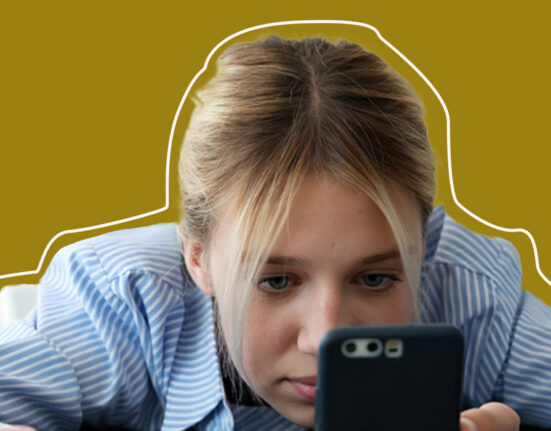
Open any app, and within seconds you’re looking at someone’s vacation, someone’s promotion, someone’s relationship anniversary, someone’s gym transformation. None of it is a lie exactly; it’s just carefully chosen. Psychologists have a term for what happens next inside your head, one that predates social media by 70 years: social comparison, the near-automatic habit of measuring your own life against someone else’s, first described by psychologist Leon Festinger as a basic human drive to evaluate ourselves by looking at others (Festinger, 1954). Social media didn’t invent this instinct, but it hands it an endless, algorithmically optimized supply of material to work with, and the research on what that does to people is now substantial.
Why Comparison Hits Differently Online
Not all comparisons are equal. Comparing yourself to someone you perceive as better off, known as upward comparison, tends to be the one that actually hurts. According to a study, upward social comparison directly explained why heavier social media use was linked to lower self-esteem and poorer subjective well-being (Wang et al., 2017). Similar findings were reported in research focused on Facebook. Vogel et al. (2014) demonstrated that higher use of the platform was associated with lower self-esteem, and this was particularly mediated by upward social comparisons while scrolling.
This is especially sharp in appearance. Even after taking into consideration how much time they spent on the site overall, women who concentrated more on appearance-based comparisons on Facebook expressed noticeably higher body image concerns (Fardouly & Vartanian, 2015). On top of all these factors is FOMO. It is the worry that other people are having a better time somewhere, and you are not.
Scientists have connected these ideas to frequent phone checking, less happiness with life, and feeling down (Przybylski et al., 2013). None of this is an accident of bad luck. The content that initially elicits comparison and urgency is often what drives engagement, and the algorithms that generate feeds are built to keep you interested. None of that means the answer is quitting social media altogether. It means using it differently. Here are seven strategies, each grounded in actual research, for doing that.
Read More: Social Comparison: Why Do We Compare Our Marks, Salaries and Marriage Timelines?
1. Audit who you follow
As the most damaging factor in this pattern is upward appearance and lifestyle comparison, reducing exposure is the most direct fix. Go through your account feed. Unfollow or mute those accounts that consistently make you feel bad, even if you think the content is cool or interesting. It’s not about following happy or positive stuff. It’s about paying attention to which specific accounts make you compare yourself. Because that’s different for everyone. You know your feelings best, so trust that.
It’s also worth turning that same lens on your own posting habits. A study of 220 Indian medical students found that “impression management,” carefully curating your own posts to look good, was itself linked to higher social comparison, anxiety, and depression scores, and that female students with fewer Instagram followers reported notably higher anxiety and depression (Ojha et al., 2021). Comparison, in other words, isn’t only about watching other people’s highlight reels. It can also come from the pressure of maintaining your own.
2. Set a real time limit, not a vague intention
One possible strategy for avoiding the trap of comparison is to limit how much time you spend engaging with social media. In one study, participants either had their social media usage restricted to just thirty minutes each day or continued to engage with Facebook, Instagram, and Snapchat as they normally would. By the end of the three weeks, it turned out that the limited usage group had lower levels of loneliness and depression than the control group (Hunt et al., 2018). Thirty minutes does not matter as a number, but it does prove that setting a specific limit each day is more effective than an ambiguous goal such as “try to spend less time on my phone”.
Read More: The Psychology Of Early Social Media Exposure: Growing Up Online
3. Scroll on purpose, not on autopilot
Recent research involving more than 450 adults showed something important. It was not the amount of content people saw that determined their resilience. Rather, it was how carefully they focused on that information. When exposed to the same amount of harmful content as others, those who approached media with deliberation and introspection were more robust (Sandra, 2025).
In general, it means taking a moment to consider why you’re about to open the app. Is it a result of your boredom? Are you attempting to stay away from something? Or is it really a desire to make contact? Whatever the honest answer is, that’s fine; you can still open the app. Just know why first. That small bit of awareness was the actual thing the research found made a difference.
4. Name the comparison when it happens
Most of the time, the power of comparison comes from how automatic and unconscious the upward comparison is. Noticing the moment it happens and labeling it as, “I’m comparing myself to the person’s photo,” rather than treating it as a fact about your own life, creates a small but real gap between the trigger and your reaction. That gap is where mindful use research suggests the actual protective effect lives.
5. Remember that real and curated are two different things
The appearance comparisons that hurt usually involve filtered or staged content. Reminding yourself that one photo is just a single chosen moment, not the whole story of someone’s life, can help.
6. Take scheduled breaks, not occasional ones
Take a break or incorporate brief pauses into your routine rather than waiting until social media becomes too much for you. You could schedule a no-phone time each night or take a day off each week. Planned breaks are more effective than reactive ones because FOMO itself is associated with checking behavior. Reactive breaks often get undone by the anxiety that made the break feel necessary in the first place.
Read More: FOMO at Night: How Social Media Habits Affect Sleep Quality
7. Invest the reclaimed time in person
The loneliness reduction Hunt and colleagues (2018) found wasn’t just about using less social media; it came from what participants did with the freed-up time and attention. Redirecting even some of that time toward an actual conversation, a shared meal, or a phone call rather than another platform tends to produce the wellbeing benefit that social media itself often promises but doesn’t reliably deliver.
Conclusion
None of these seven strategies require deleting your accounts or swearing off social media as some kind of digital detox. What the research actually supports is more modest and more sustainable: noticing when comparison is happening, curating what you’re exposed to, and using the platform with intention instead of letting the algorithm decide your emotional state for you. The comparison trap isn’t a personal failing. It’s a predictable response to a system built to hold your attention. Recognizing that is often the first real step out of it.
References +
- Fardouly, J., & Vartanian, L. R. (2015). Negative comparisons about one’s appearance mediate the relationship between Facebook usage and body image concerns. Body Image, 12, 82-88.
- Festinger, L. (1954). A theory of social comparison processes. Human Relations, 7, 117-140.
- Hunt, M. G., Marx, R., Lipson, C., & Young, J. (2018). No more FOMO: Limiting social media decreases loneliness and depression. Journal of Social and Clinical Psychology, 37(10), 751-768.
- Ojha, K., Soohinda, G., Sampath, H., & Dutta, S. (2021). Social networking sites and its relation to social comparison and psychological well-being among medical university students. Indian Journal of Psychiatry, 63(6), 593-596.
- Przybylski, A. K., Murayama, K., DeHaan, C. R., & Gladwell, V. (2013). Motivational, emotional, and behavioral correlates of fear of missing out. Computers in Human Behavior, 29(4), 1841-1848.
- Sandra, L. (2025). Digital emotional regulation paradox: A cross-sectional study on mindful technology use moderates the relationship between social media emotional content exposure and psychological resilience. BMC Psychology, 13, 1411.
- Vogel, E. A., Rose, J. P., Roberts, L. R., & Eckles, K. (2014). Social comparison, social media, and self-esteem. Psychology of Popular Media Culture, 3(4), 206-222.
- Wang, J.-L., Wang, H.-Z., Gaskin, J., & Hawk, S. (2017). The mediating roles of upward social comparison and self-esteem and the moderating role of social comparison orientation in the association between social networking site usage and subjective well-being. Frontiers in Psychology, 8, 771.