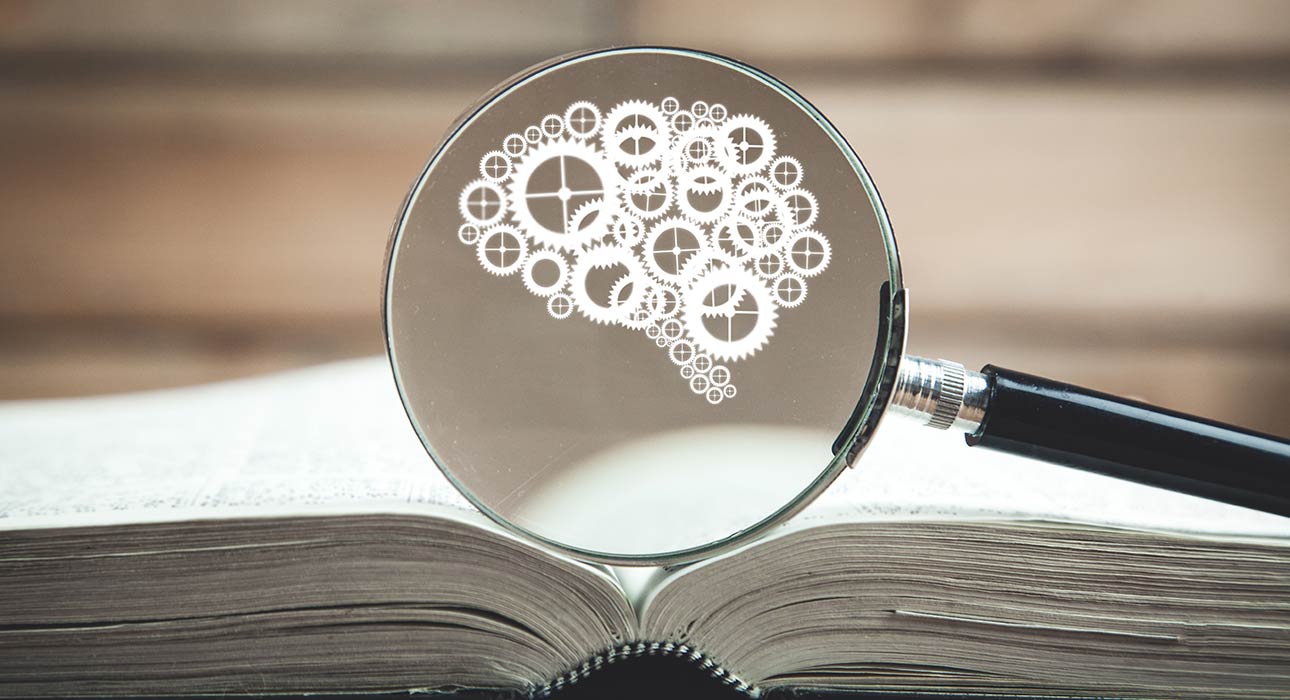
In the context of conspiracy theories and miracle cures, the community of humans are being continuously exposed to certain claims that often demand evaluation. The issue is with the brain because brains are not wired in such a way that it will understand objectivity naturally. It usually relies on shortcuts and the biases that are responsible to distort human ability for judgement (Psychology Today, 2026).
For instance, surveys show that nearly 30% of the adults from the USA believe in at least one medical conspiracy theory like the idea that vaccines cause autism even though there is numerous evidence on the contrary of it (Lewandowsky et al., 2012). The process of counteracting the visible claims and questioning them until there is enough evidence to support which can provide a safeguard against any kind of misinformation and faulty reasoning is called scientific skepticism.
Critical Thinking and Skepticism
The process of critical thinking is the analysis of data in a logical way, questioning the assumptions created, and the evaluation of sources. If skepticism is concerned it is no same as cynicism, it is a balanced path that holds the beliefs both negative and positive together till any proper or sufficient evidence is found to support the assumption. In the context of science, it is formulated along the null hypothesis. This is an assumption that has no effect until evidence is provided in support of it (Lilienfeld, 2007).
Cognitive Biases
Human beings usually rely on heuristics which are mental shortcuts which leads to systematic errors. Availability bias occurs when the likelihood of judging which is based on any recalled examples which could be easily recalled. Anchoring bias is the act of over dependency on the very initial information provided. Confirmation bias is the process of finding and interpreting evidence that will support the already existing beliefs (Fernandez Pinto, 2023). All these three biases indicate why scientists also have a tendency to misinterpret the data that has been provided or why they cannot resist contradictory findings of the studies done.
Read More: Cognitive Biases That Secretly Control Your Decisions – And How to Outsmart Them
Confirmation Bias and Extraordinary Claims
When considering confirmation bias especially, it is the most dangerous among all the other biases while evaluating any extraordinary claims. The tendency of people is to notice the evidence that will support their beliefs while dismissing contradictory data. This kind of selective attention makes pseudoscience and misinformation appealing to others as they tend to give satisfying narratives which are emotionally suitable (Nickerson, 1998; Sagan, 1996).
Misinformation and the Modern World
The age of the digital environment has only intensified misinformation because social media platforms apply the algorithms that reward the contents which are emotionally charged, which spreads false claims rather than their corrections. The psychological studies indicate that the misinformation which once internalized, becomes very difficult to correct and when presented with strong evidence (Lewandowsky et al., 2012). Emotional appeal increases sharing, repetition creates familiarity mistaken for truth and cognitive biases reinforce pre-existing beliefs (Fernandez Pinto, 2023).
For instance, during the time of COVID-19 pandemic the repeated exposure to false claims about vaccines created familiarity that some individuals mistook for truth, despite scientific consensus, this illustrates how misinformation exploits psychological vulnerabilities.
Read MORE: Misinformation in Your Feed: When Social Media Becomes a Mental Health Risk
Evidence, Replication, and Scientific Reasoning
Evidence and replication are two concepts which are emphasized in skepticism. The process of replication in psychology reveals that many study findings could not be analysed. This indicates the requirement for methodologies which are rigorous and transparent in nature (Open Science Collaboration, 2015). The key principles which are to be followed are:
- If the claims are extraordinary then the evidence to support those claims should also be extraordinary (Sagan, 1996).
- The process of replication ensures reliability across all the contexts.
- The peer review always filters the reasoning which have flaws.
- Scientific reasoning has demands that are open to revision when there is accumulation of evidence.
Read More: The Replication Crisis in Psychology: Flaw in Research or Path to Better Science?
Cognitive Dissonance and Resistance to New Evidence
One of the reasons skepticism is very hard to practice is because people do not always pay attention or react to the evidence practically. So when the information is new it contradicts the beliefs of the individuals which are deeply rooted within them and usually face cognitive dissonance, a state of mind where the individual feels discomfort when their beliefs, attitudes and behaviors oppose one another (Festinger, 1957).
In most of the cases rather than changing the beliefs individuals often try to reduce the discomfort by questioning, arguing, or reinterpreting the evidence that states the fact. It usually supports why scientific facts always do not change perspectives. Although much evidence might get rejected if it risks the person’s identity worldwide or in a social group.
For instance we can see the misinformation provided in health. Suppose a person who strongly believes that a specific remedy can cure any illness but a scientific study indicates that remedy has negligible effect on that illness and the whole world accepts that fact because it is supported by evidence. So as to reduce the discomfort the people might argue, and state that the research studies are wrong or have some flaws in them so in this manner cognitive dissonance becomes a barrier to evidence-based thinking.
Read More: How to Work Through Cognitive Distortions: Practical Strategies for Healthier Thinking
Learning to Think Beyond Our Assumptions
The term scientific skepticism is about examining the assumptions as well as questioning the extraordinary claims we make everyday. We as human beings automatically rely on shortcuts, previous experiences and cultural beliefs while interpreting information. These shortcuts help us to make decisions quickly but they can also contribute to inaccuracy in decisions (Fernandez Pinto, 2023).
Although to think of learning assumptions involves slowing down and asking questions like what evidence, any alternatives are available or not, am I accepting this idea because it supports my beliefs or what kind of evidence might convince me that I am wrong.
For instance, suppose a student gets a poor grade that student might immediately assume that the teacher was unfair while giving the marks. An approach which is skeptical in nature contributes to considering the possibilities like insufficient preparation, misunderstanding of the concepts or any errors. By evaluating the multiple options the individual can make more balanced and accurate judgements.
Why Evidence Matters
In the absence of evidence, beliefs are meant to be vulnerable to biases, misinformation, and manipulation of any kind. The evidence amplifies the shared standard of truth which allows the claims to be retested and revised again. The process of skepticism ensures that the acceptance of ideas is not simply accepted just. Because they are more opinionated, popular among people, assertive and appealing emotionally (Lilienfeld, 2007).
Conclusion
The concept of scientific skepticism is an idea of culturally safeguarding psychological context against any error. By this, the growth of critical thinking, recognizing and understanding the biases, pushing over the misinformation and demanding evidence and the process of replication, the human mind can evaluate the claims made more accurately.
In the saturated world where information is misinterpreted the concept or act of skepticism is not an option rather it is a necessary part for making any rational decision and scientific progress. By learning to think beyond assumptions and questioning the pre-existing beliefs and not only relying on the evidence but on your own intuitions will make the individual more informed and responsible to a society that allows critical thinking and scientific progress.
References +
- Fernandez Pinto, M. (2023). Methodological and cognitive biases in science: Issues for current research and ways to counteract them. Perspectives on Science, 31(5), 535-554. https://doi.org/10.1162/posc_a_00589
- Lewandowsky, S., Ecker, U.K.H., Seifert, C.M., Schwarz, N., & Cook, J. (2012). Misinformation and its correction: Continued influence and successful debiasing. Psychological Science in the Public Interest, 13(3), 106–131. https://doi.org/10.1177/1529100612451018
- Lilienfeld, S. O. (2007). Psychological treatments that cause harm. Perspectives on Psychological Science, 2(1), 53–70. https://doi.org/10.1111/j.1745-6916.2007.00029.x
- Nickerson, R. S. (1998). Confirmation bias: A ubiquitous phenomenon in many guises. Review of General Psychology, 2(2), 175–220. https://doi.org/10.1037/1089-2680.2.2.175
- Open Science Collaboration. (2015). Estimating the reproducibility of psychological science. Science, 349(6251), aac4716. https://doi.org/10.1126/science.aac4716
- Psychology Today. (2026). Why skeptics can’t see the evidence they demand. Retrieved from https://www.psychologytoday.com
- Sagan, C. (1996). The demon‑haunted world: Science as a candle in the dark. New York: Random House.