A lot of individuals go about living their lives, but they are not seen. They go through schools, workplaces, media and even open areas, and their experiences are not noticed. This invisibility is typical in the case of persons with disabilities. Disability, which is rarely shown or talked about, is an unspoken word that conveys that these lives are of lesser importance.
Psychology shows that visibility is deeply connected with identity and well-being. Its representation and visibility make people feel valued and part of the group. Disability expressed respectfully and realistically removes fear and misunderstanding among the social communities. It also helps people with disabilities to have a sense of belonging and self-esteem (Link & Phelan, 2001; World Health Organisation, 2011).
What visibility really means
Visibility does not just consist of being present. It means being known, understood and respected. In the context of disability, visibility is about showing real life, real abilities and real challenges. It is not the attention or sympathy. It is the recognition of the fact that individuals with disabilities are part of normal society.
True visibility also means no stereotypes. Disability presented as nothing but weakness, tragedy, or inspiration forms a shallow profile. Psychology demonstrates that being exposed to a limited number of images repeatedly defines the way of thinking and acting of individuals. When there is a single way that society perceives the people who have a disability, there is an increase of misunderstanding as well as prejudice (Corrigan and Watson, 2002).
Diversity in disability is presented by respectful visibility. The people who have a disability have different skills, personalities and various roles in life. As the media, education and the physical space mirror this diversity, understanding improves. Such visibility assists individuals to get out of assumptions and favour more accommodating sociality (American Psychological Association, n.d.).
How the mind understands difference
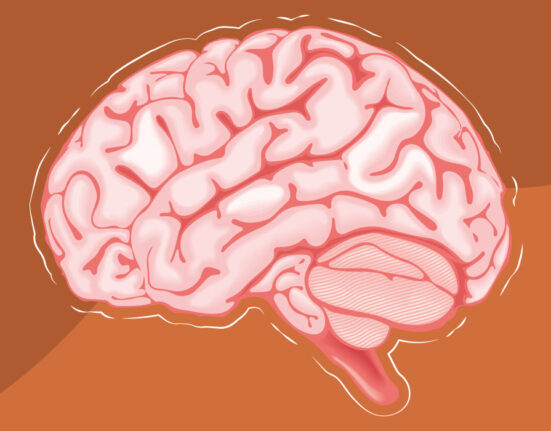
Experience teaches the human mind about the world. The brain gets used to the differences when individuals are exposed to various kinds of people on a regular basis. In cases where disability is not common, the mind can perceive it as something strange or foreign. This may cause fear, confusion or avoidance even without ill intentions.
Research in psychology shows that bias is increased by the absence of exposure. In the absence of real-life or media examples of disability, stereotypes take their place. The brain attempts to simplify what it does not understand. This may eventually become negative beliefs and social distance (Link and Phelan, 2001).
This process can be changed through positive and repeated exposure. The presence of people with disabilities in regular positions, students, workers, parents, leaders, etc., helps the mind to adapt. Knowing someone helps to reduce fear and increase empathy. This demonstrates the importance of visibility in defining the way society understands and accepts difference (World Health Organisation, 2011).
Representation shapes attitude
The concept of representation is very powerful in the way individuals consider disability. Ideas regarding what is normal or acceptable are developed through movies, news, books, and social media. Disability, when presented in a balanced and respectful manner, assists in reducing fear and misunderstanding. Individuals start seeing disability as a part of human diversity and not as something separate.
Psychology shows that repeated messages affect the attitude in the long run. When disability is presented negatively or extremely, society gets to know that this is what to expect. This may result in pity, discomfort or avoidance. On the other hand, positive representation supports acceptance and more open social behaviour (Corrigan and Watson, 2002).
Stories are especially powerful in shaping beliefs. When individuals listen to real stories of individuals with disabilities, their understanding increases. These stories help in breaking the stereotypes of the past and create a space for empathy. Real-life representation helps society to develop healthier and more inclusive attitudes (Verywell Mind, n.d.).
Psychological impact on people with disability
Exposure has a strong effect on mental well-being. In situations where people with disabilities rarely see themselves represented, they can feel neglected or excluded. This may imply self-esteem and identity. The sense of invisibility may gradually result in isolation and self-doubt (Santuzzi et al., 2014).
According to research in psychology, representation helps one to belong. Interacting with others who have undergone the same experience in normal jobs makes people feel they belong. It includes a message that their lives and their contributions are important. This confirmation leads to confidence and emotional well-being (Darling, 2013).
Negative or limited representation, on the contrary, is harmful. A disability that is expressed in the form of pity or struggle can increase shame and stress. Respectful visibility helps to reduce these effects. It enables individuals with disabilities to feel acknowledged as complete personalities, not as individuals with a particular characteristic (Healthline, n.d.).
Visibility and social inclusion
Transparency helps in establishing social inclusion. The society is more friendly and open when people who have a disability are observed in the schools, job places, and elsewhere. The visualisation of various abilities in real life makes fear and discomfort less. It helps people remember that disability is a common phenomenon of human diversity (World Health Organisation, 2011).
Equal participation is also facilitated by inclusive representation. When the environment shows and supports disability, the barriers start to reduce. Individuals will be willing to provide support, adapt, and involve others in common activities. Psychology shows that inclusion increases when individuals feel familiar and comfortable with differences (Link and Phelan, 2001). Visibility also affects the policies and attitudes. When disability is represented in a public discussion, needs are taken seriously. This results in improved access, equal opportunities and respectful treatment. Both visibility and understanding go hand in hand with social inclusion (UNICEF, n.d.).
Read More: Inclusive Mannequins: How Retail Displays are Normalising Disability
When representation is harmful
Representation may be harmful when it is based on stereotypes. The presentation of disability as a sign of weakness, tragedy, or being under constant attack develops a problematic image. These characters can be more pitied than respected. Psychology shows that these images strengthen the bias and restrict understanding (Corrigan and Watson, 2002).
Another problem is tokenism. This occurs during the inclusion of disability in a way that it can be seen as inclusive without voices and depth. Representation by people other than the people who have a disability is offensive when they are not allowed to tell their own stories. Respectful visibility must have accuracy, respect and room for actual experiences (American Psychological Association, n.d.).
Conclusion
Visibility plays an important role in how society understands disability. When people with disabilities are seen and represented respectfully, it increases empathy and acceptance. Psychology shows that recognition makes people feel that they are valued and welcomed. Visibility does not imply attention. It concerns dignity, comprehension and belonging (Link and Phelan 2001).
Authentic representation supports building a more equal society. It breaks the stereotypes and creates a space where the real experiences can be shared. Fear decreases and connection increases when disability is observed in real life. When society selects respectful and accurate representation, it is making a key move towards inclusion and psychological wellness in everyone (World Health Organisation, 2011).
Refrences +
American Psychological Association. (n.d.). Disability and stigma. https://www.apa.org/topics/disability/stigma
Corrigan, P. W., & Watson, A. C. (2002). Understanding the impact of stigma on people with mental illness. World Psychiatry, 1(1), 16–20. https://www.ncbi.nlm.nih.gov/pmc/articles/PMC1489832
Darling, R. B. (2013). Disability and identity: Negotiating self in a changing society. Lynne Rienner Publishers.
Healthline. (n.d.). Ableism and mental health. https://www.healthline.com/health/mental-health/ableism
Link, B. G., & Phelan, J. C. (2001). Conceptualizing stigma. Annual Review of Sociology, 27, 363–385. https://doi.org/10.1146/annurev.soc.27.1.363
Santuzzi, A. M., Waltz, P. R., Finkelstein, L. M., & Rupp, D. E. (2014). Invisible disabilities: Unique challenges for employees and organizations. Journal of Applied Psychology, 99(4), 684–698. https://doi.org/10.1037/a0036207
Stanford Encyclopedia of Philosophy. (n.d.). Disability: Definitions, models, and ethics. https://plato.stanford.edu/entries/disability/
UNICEF. (n.d.). Disability inclusion. https://www.unicef.org/disability
Verywell Mind. (n.d.). Understanding stigma and mental health. https://www.verywellmind.com/mental-health-stigma-4157128
World Health Organization. (2011). World report on disability. https://www.who.int/publications/i/item/9789241564182