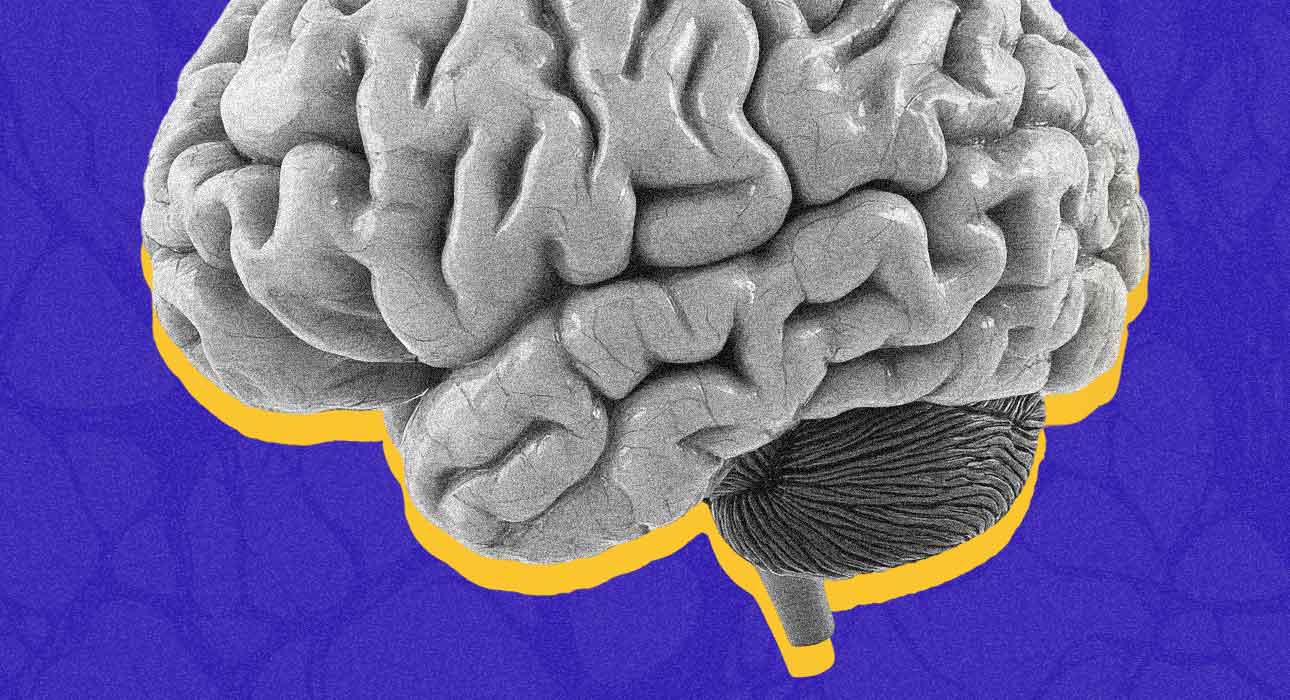
In a 2014 survey of school teachers across seventeen countries, 48% agreed with the statement that people use only 10% of their brains (Howard-Jones, 2014). The claim is one of the most enduring myths in public understanding of science, yet it has appeared in self-help books, motivational speeches, advertisements, and even films. The idea is intuitive: if most of the brain remains unused, perhaps there is a vast reserve of intelligence and potential waiting to be unlocked. The possibility of possessing enormous untapped mental potential is particularly appealing. Because it suggests that human abilities are not fixed and that individuals might be capable of achieving extraordinary things if they could somehow access the “unused” portion of their brains. The problem is that there is no such reserve- the 10% claim is simply untrue.
Neuroscience provides compelling evidence that the brain is highly active across its different regions, with virtually all areas serving important functions. Modern brain-imaging techniques have demonstrated activity across the brain even when a person is resting, while different tasks recruit different networks and regions depending on the cognitive, emotional, sensory, or motor demands involved. Rather than having large portions of the brain sitting dormant, the brain operates as an interconnected system in which different areas work together and continuously communicate.
Yet, despite this evidence, the 10% myth continues to persist and is still widely accepted. This raises a more interesting question: why does a scientifically disproven idea continue to have such a powerful hold on public imagination? The article explains the origin of this myth, the biology of the brain, and why so little of it can afford to be idle, and considers why such misinformation gets so readily accepted and remains so long.
The source of the “10% Myth”
There is no one source or author for the 10% myth, and it is more of a patchwork of misattributions and plausible. But untrue fragments that, over time, have become a popular and confident belief. Researchers have been able to trace its history to a number of likely origins. But none of them can be proven to be the first point of origin (Beyerstein, 1999).
William James, the psychologist who lived in the early 20th century, actually and truthfully observed that most people, at best, live and work at less than their intellectual-psychological potential (most people live and work below their actual capacity). This assertion, which was not about the structure of the brain but the function, was plausible and fascinating. Eventually, it became a neuro-claim: a certain proportion of the brain’s physical structure was being utilised. While James never said this, this myth has been repeated in popular literature many times (Chudler 2019).
How Early Science Added to the Confusion
A second source is from early neuroscientific studies. Neurosurgeon Wilder Penfield stimulated the exposed brains of patients during surgery in the 1930s. He discovered that stimulation of large areas of the cerebral cortex (the outer layer of the brain, which is responsible for higher thought) resulted in no observable movement, sensation, or reaction. This led some observers to the false conclusion that these are not areas of use. It is not actually a sign of inactivity if there is no simple motor or sensory response. This is because the function of the region is more complex and less directly related to a single behavioural output (Beyerstein, 1999).
A third thread is derived from the biology of the neurons, or individual nerve cells that comprise the brain. About 90 per cent of cells in the brain are non-neuronal supporting cells called glial cells that play critical roles in insulation, nutrition and repair. Early researchers observed that only approximately 10% of brain cells were neurons. Over the years, this was incorrectly interpreted as a usage of only 10 per cent of the brain, mixing up the number of cells that are engaged in thinking with the percentage of the brain that is active (Chudler, 2019; Fields, 2009).
The 10% myth that has seeped into the culture has built up tremendous momentum from the self-help industry of the twentieth century, regardless of its exact origins. The notion that anyone is utilising only 10% of their brain was too good to be true to the marketing pitch: Read this book, attend this seminar, take this supplement, and learn to tap into that 90%. The myth served a commercial purpose and, in that sense, did not matter if it was true or not (Lilienfeld et al., 2010).
Understanding the brain’s function
fMRI has allowed the measurement of brain activity by modern brain imaging techniques, which was not possible for earlier researchers. The way functional magnetic resonance imaging (fMRI) detects changes in blood flow to different areas of the brain is by measuring the amount of oxygen consumed in the brain when a region is activated (the more oxygen consumed in a region, the more blood is flowing there). PET scans, or positron emission tomography, are similar; they monitor metabolic activity in the brain. For both, the key result has been the same: Any given area of the brain is busy at some point during a normal day. A single silent 90% (also known as a large dormant region) has never been found (Lilienfeld et al., 2010; Raichle & Snyder, 2007).
Indeed, not all parts of the brain are active at all times- this would be when abnormal electrical activity spreads all over the brain, leading to a seizure. Different brain regions perform specific functions and activate according to the task at hand. When someone is viewing an image, the visual cortex in the back of the brain is very active. But when they are listening or performing mental calculations, this area does not become active. The phrases “less active right now” and “unused” don’t mean the same thing. The visual cortex is not “sleeping” when performing arithmetic; it is just not the main processor for arithmetic (Beyerstein, 1999).
Read More: What is Pediatric Neuropsychology? Study of the brain and behaviour in children
The Brain Is Active Even at Rest
Perhaps the most compelling evidence to the contrary of the 10% myth comes from research into the default mode network. The default mode network (DMN) is a group of brain regions that are very active during a period of relaxation for a person who is not performing an external task. But rather thinking about internal matters, relaxing, daydreaming, and letting the mind wander. The brain doesn’t shut down when it’s not in use. Instead, it engages a specific network of brain areas that are involved in thinking about oneself, consolidating memories, planning for the future, and thinking about others and relationships. The brain, however, does not “go to sleep” when the person is not doing anything. Hence, the brain is always active (Raichle & Snyder, 2007).
A further argument refuting the myth comes from evolution. The human brain, with its weight of about 2 per cent of the body, uses about 20 per cent of the body’s energy- a disproportionate and high metabolic cost for which there is a biological rationale. The brain is constantly and intensely active. That 90 per cent of the brain, if not dormant, would represent an evolutionary burden- it would be energy-draining without any yield. Natural selection would have eliminated such metabolic waste long ago (Herculano-Houzel, 2012).
What Brain Damage Tells Us
If 90 per cent of the brain wasn’t used. It would be logical that damage to most parts of the brain would result in little or no impact on an individual’s functioning. This is emphatically not what clinical neuroscience sees. Any part of the brain that is damaged, either by stroke, traumatic injury, tumour, or disease, has very specific measurable and often devastating effects on the person’s abilities, personality or behaviour (Kolb & Whishaw, 2015).
Brain damage to the frontal lobes (behind the forehead) impairs planning, impulse control, personality and social behaviour. One of the best-known historical examples is Phineas Gage, who survived being hit by a metal rod in the front of his brain in 1848. But he was so drastically changed that his friends and associates reported that he was completely different. Aphasia caused by damage to Broca’s area, an area of the left frontal lobe. It is the inability to express language fluently, even though a person’s mouth and vocal cords are intact. Lesions to the hippocampus (as in Patient H.M. and in Alzheimer’s disease) impair the ability to form new memories. It turns out that each region is performing a vital function (Sacks, 1985; Kolb & Whishaw, 2015).
The neuroplasticity argument, stating that the brain can reorganise and regain function after injury, can be used to support the 10% myth. When the brain can use other parts of the brain to compensate for the damage, maybe much of the brain was unused and at your disposal. However, this is an incorrect application of neuroplasticity. Brain damage recovery is only partial, careful and in most cases incomplete. The brain redistributes the intact functions and calls in the neighbouring functions. But does not turn on dormant reserves (Doidge, 2007).
The Psychology Behind False Beliefs
To understand why the 10% myth persists despite scientific evidence disproving it. It’s necessary to examine the psychology of belief briefly. According to research on neuromyths (false beliefs about the brain that are widely held, despite scientific evidence to the contrary). They tend to have three common characteristics: being simple, optimistic and able to fit existing mental frameworks (Howard-Jones, 2014). So, the 10% myth has all three of them:
- It provides an easy-to-understand reason why people feel they can be or do more.
- It’s a positive outlook- it’s a promise of unexploited potential.
- The cultural narrative suggests that people can achieve extraordinary abilities if they find the right key.
The tendency to notice and remember information that confirms one’s beliefs while ignoring information that contradicts them, also known as confirmation bias, contributes to the ease of the spread of the myth. After seeing and accepting the 10% idea, a person will recall everything that supports the idea and forget everything that goes against it, even neuroscience articles. Social transmission magnifies this: the ideas that people want to share are meaningful and surprising to them. The 10% claim is both (Lilienfeld et al., 2010).
Neuromyths aren’t just a nuisance to have in the brain. Educational programs based on neuromyths- such as left-brain versus right-brain learning and the Mozart effect (positive effects on children from listening to classical music)- waste valuable time and money, which should otherwise be spent on evidence-based programs. If teachers think that students use 10 per cent of their brain, they might have misconceptions about the learning process and the human brain. An accurate understanding of neuroscience is not a luxury. But influences decisions in schools, hospitals, in court and in policy chambers (Howard-Jones, 2014).
Conclusion
The 10% brain myth is entirely wrong in every way. All regions of the brain are active throughout the day, as demonstrated by brain imaging. The evolutionary sense of the brain’s metabolic cost is only possible because it is always working. Each part of the brain, if injured, causes certain specific disabilities. Even at rest, the brain processes a complex network of “default” modes of thinking, reflecting on yourself, consolidating memory, and thinking socially.
The reason the myth was accepted and has endured is that most people simply don’t reach their psychological and intellectual potential. But that’s not a statement about brain anatomy- that’s a statement about habits, motivation, education, opportunity and mental health. The possibilities exist; people simply have not fully tapped into them. The brain here in use to read and understand these words is not operating at 10 per cent effectiveness. It’s working hard, and doing it without any fanfare, and it’s doing it very effectively.
References +
- Beyerstein, B. L. (1999). Whence cometh the myth that we only use 10% of our brains? In S. Della Sala (Ed.), Mind myths: Exploring popular assumptions about the mind and brain (pp. 3–24). Wiley.
- Chudler, E. H. (2019). Do we really use only 10 per cent of our brain? National Institute of Neurological Disorders and Stroke. https://www.neuroscience.uw.edu/about/brain-facts
- Doidge, N. (2007). The brain that changes itself: Stories of personal triumph from the frontiers of brain science. Viking.
- Fields, R. D. (2009). The other brain: From dementia to schizophrenia, how new discoveries about the brain are revolutionising medicine and science. Simon & Schuster.
- Herculano-Houzel, S. (2012). The remarkable, yet not extraordinary, human brain as a scaled-up primate brain and its associated cost. Proceedings of the National Academy of Sciences, 109(Suppl 1), 10661–10668. https://doi.org/10.1073/pnas.1201895109
- Howard-Jones, P. A. (2014). Neuroscience and education: Myths and messages. Nature Reviews Neuroscience, 15(12), 817–824. https://doi.org/10.1038/nrn3817
- Kolb, B., & Whishaw, I. Q. (2015). Fundamentals of human neuropsychology (7th ed.). Worth Publishers.
- Lilienfeld, S. O., Lynn, S. J., Ruscio, J., & Beyerstein, B. L. (2010). 50 great myths of popular psychology: Shattering widespread misconceptions about human behavior. Wiley-Blackwell.
- Raichle, M. E., & Snyder, A. Z. (2007). A default mode of brain function: A brief history of an evolving idea. NeuroImage, 37(4), 1083–1090. https://doi.org/10.1016/j.neuroimage.2007.02.041
- Sacks, O. (1985). The man who mistook his wife for a hat and other clinical tales. Summit Books.