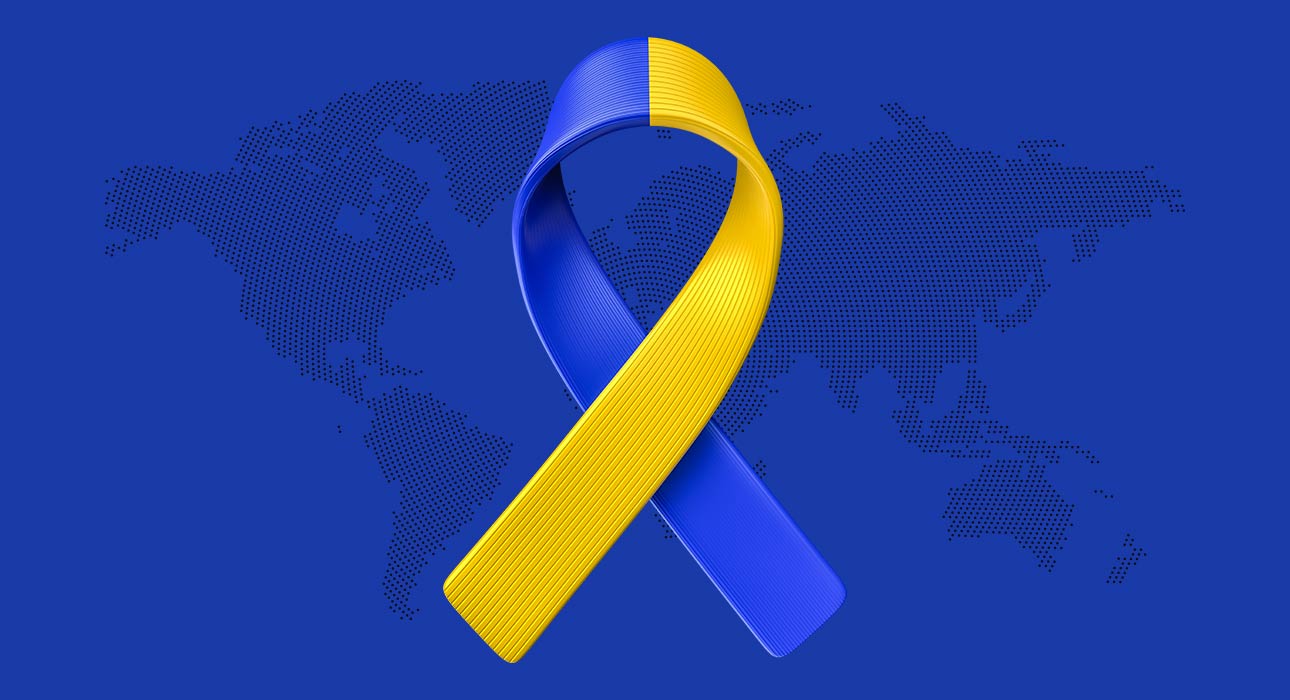
On the 21st of March every year, the world takes some time to honour, commemorate and promote awareness of individuals with Down syndrome. This is not just selected at random; the 21st day of the 3rd month is a direct reflection of the biology of the condition itself, the triplication of the 21st chromosome that defines Down syndrome, also known as Trisomy 21. Since 2012, when the General Assembly of the United Nations officially recognised the observation of the day, World Down Syndrome Day (WDSD) has been an official day of inclusion, dignity, and equal rights of people with Down syndrome worldwide (United Nations, 2012).
Read More: Down Syndrome: A Guide to Symptoms and Treatments
Why the World Celebrates This Day
WDSD is a global call to action – uniting people with Down syndrome, family members, educators, policymakers, and healthcare professionals to break the stigma and use it for advocacy. In Down syndrome, the person has an additional copy of the partial or full chromosome 21 that is usually unpredictable in terms of its impact on the learning styles, bodily appearance, and health (Down Syndrome International, 2026). Although they have played a role in all of human history, those with Down syndrome have experienced exclusion and low expectations. WDSD exists to challenge those realities.
The celebration takes place worldwide with activities like a flagship conference in the United Nations headquarters in New York, where people with Down syndrome speak on their own behalf about their lives to governments and decision-makers (United Nations, 2012). The most well-known custom is wearing brightly coloured, mismatched socks, which is a playful yet powerful symbol of solidarity and visibility.
Read More: Woman with Down Syndrome Lives her Dream of becoming an Air Hostess
The Statistics: How Common Is Down Syndrome?
Down syndrome is approximated to be 1 in 1,000 to 1,100 live births globally, and 3,000-5,000 children are known to be born with the chromosomal disorder each year. (Global Down Syndrome Foundation, 2024). It has a prevalence rate of 1 per 700 live births and has remained the most prevalent chromosomal disorder in the United States after diagnosis (Centres for Disease Control and Prevention, 2026). About 95 per cent of them are non-disjunction, where the chromosomes fail to separate during cell division. (Global Down Syndrome Foundation, 2024). Maternal age is a risk factor, but 80 per cent of the children with Trisomy 21 are born to mothers younger than 35 years old, simply because young women are the majority of pregnancies (Global Down Syndrome Foundation, 2024).
Life expectancy has also changed drastically. In the modern world, the average lifespan of an individual with Down syndrome is about 60 years, as compared to only 25 years in 1983 (Centres for Disease Control and Prevention, 2026) – a change that occurred due to the medical care, early intervention, and inclusion education. Studies also note that, in addition to a longer life expectancy, the quality of life outcomes, especially social participation and relations, are one of the primary concerns among adults with Down syndrome (Ijezie et al., 2023).
The 2026 Theme: Together Against Loneliness
The theme of this year is Together against Loneliness. The theme is focused on bringing awareness about how loneliness will affect people with Down syndrome and other intellectual disabilities and their families to a disproportionately high level (Down Syndrome International, 2026). It is discovered that a significant proportion of 39 per cent of the intellectually disabled individuals are lonely, more than 14 per cent of the individuals who have no disability are not, as a result of the situation, but due to the failure of the system to appreciate the fact that persons with Down syndrome have been involved in normal day-to-day life.
Loneliness may refer to the absence of friends or a community to belong to, or the absence of a close person to share feelings with (Down Syndrome International, 2026). Families have also been impacted as they tend to feel disconnected to support themselves (Down Syndrome International, 2026). The experiences of adults with Down syndrome indicate that lack of meaningful involvement in society has been hindered by barriers like insufficient social opportunities and a lack of community support (Shields and Tennison, 2025).
Key Aspects of the Theme
The theme highlights that loneliness is not just a mental state but a serious health condition linked to anxiety. And it also highlights that simply being present does not mean being included. The person with Down syndrome may be in the same room with other individuals and feel completely isolated. This calls schools, workplaces, and communities to go past the superficial nature of inclusion to actual connection.
The campaign also frames loneliness as a human rights concern. This demands governments to turn the UN Convention on the Rights of Persons with disabilities into tangible action, which will end isolation. (Down Syndrome International, 2026). After all, the point is that each of us, as an individual, family, school, employer, and even government, can do something to create the spaces where people can truly belong (Down Syndrome International, 2026).
Conclusion
World Down Syndrome Day is a day of celebration, introspection, and renewed commitment. The theme this year, Together Against Loneliness, acknowledges that true inclusion has yet to be achieved. True inclusiveness fosters friendship, builds community, and makes people feel noticed, appreciated, and included in everyday life. That is the world this day is heading to, one sock, one tale, and one connection at a time.
References +
Centres for Disease Control and Prevention. (2026). Down syndrome. https://www.cdc.gov/birth-defects/about/down-syndrome.html
Down Syndrome International. (2026). Together against loneliness: 2026 theme guide. https://www.worlddownsyndromeday.org/about-the-2026-theme/
Global Down Syndrome Foundation. (2024). Facts about Down syndrome. https://www.globaldownsyndrome.org/about-down-syndrome/facts-about-down-syndrome/
Ijezie, O. A., Healy, J., Davies, P., Balaguer-Ballester, E., & Heaslip, V. (2023). Quality of life in adults with Down syndrome: A mixed methods systematic review. PLOS ONE, 18(5), e0280014. https://doi.org/10.1371/journal.pone.0280014
Shields, N., & Tennison, A. (2025). Community participation in adults with Down syndrome: A scoping review. Disability and Rehabilitation, 47(20), 5451–5461. https://doi.org/10.1080/09638288.2025.2476731
United Nations. (2012). Resolution A/RES/66/149: World Down Syndrome Day. https://www.un.org/en/observances/down-syndrome-day