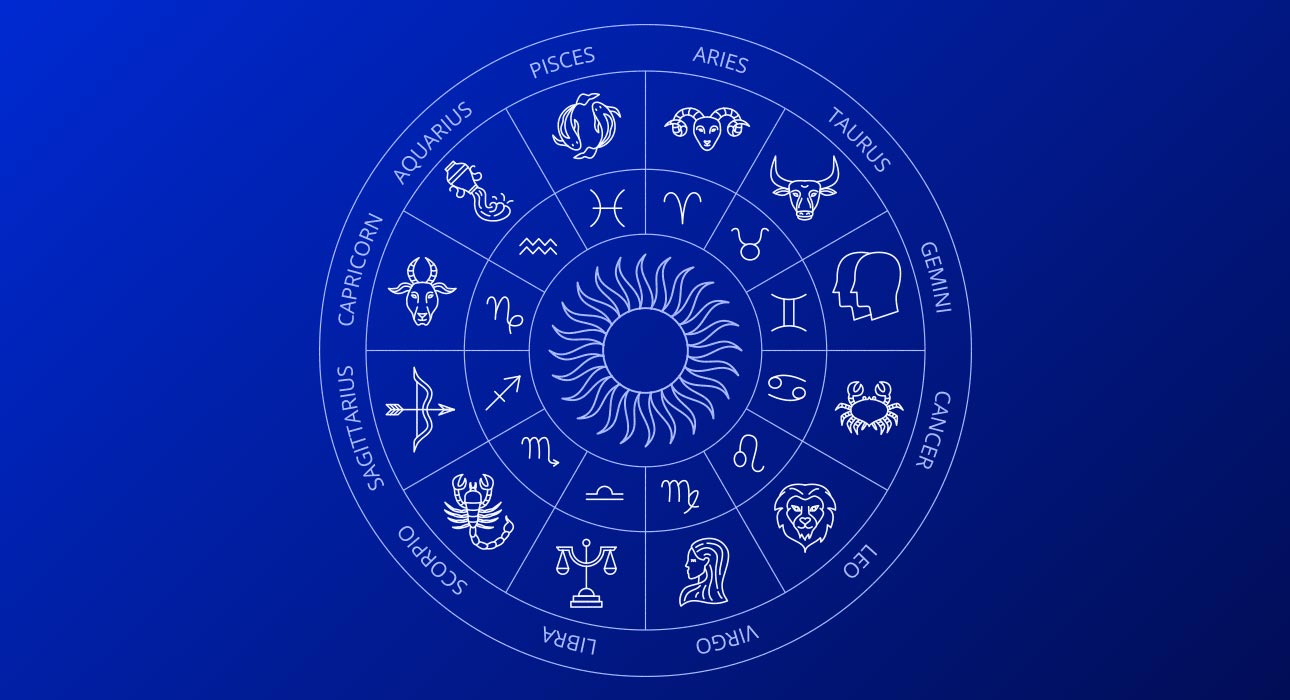
“You appear to be calm but experience inner tension and worry.” Does this seem to be true for you? Statements like these are a determinant of personality. Have you ever taken a personality test and felt that the results were too accurate? The test feels as if it understood you completely. But have you thought that such statements are too broad and may be applicable to almost every person? Let’s consider another example of horoscopes. Reading horoscopes every day provides a certainty in the unpredictable future. Horoscopes, too, appear to be accurate and may influence our decision-making and behaviour. These are two accurate examples of the BARNUM EFFECT. It is a cognitive bias explaining why general descriptions and statements appear to be so accurate.
What is the Barnum Effect?
Barnum effect, also termed as Forer effect, is understood as a psychological phenomenon where individuals accept broad and vague statements and generalisations as personally meaningful and accurate. It was named after Phineas Taylor Barnum, who was an American entertainer. He was popular for exploiting people’s gullibility at his circuses and shows.
A famous example of what he did was the “FeeJee Mermain” display, where he advertised for a mermaid mummy, but it was actually a combination of the remains of a monkey and a fish. What was astonishing was that people believed it was real, while it was not. There was no harm to the people, but it was observed that people could be easily convinced using attractive, believable stories (EBSCO Research).
Read More: Barnum Effect: How General Statements Can Feel Uniquely Personal
Psychology behind The Barnum Effect
One explanation behind the Barnum effect is the brain’s tendency to automatically associate flattering statements. The desire for validation leads to acceptance of such general statements as “you have a strong desire for success”. We naturally seek identity, and hence, such statements, especially from perceived authority, are easily believed (Kamal Shukla, 2025). For example, in a study by Bertram R. Forer with college students, the students were asked to answer a few questions, and they would receive a brief psychological profile the following week. Forer then presented profiles, but the statements were vague and taken from a book of horoscopes. When asked to assess the accuracy, the majority of them felt that the statements were true.
Another reason behind the Barnum effect is that humans need to connect and make meaning of the world around us. (House et al. , 1988). In addition, life seems happy when we believe positive things about ourselves rather than the negative ones. Hence, this need to make meaning leads us to believe the horoscopes that we are presented with. Another major role is played by the cognitive biases. When reading about ourselves, we tend to focus on information that aligns with our perception and beliefs about ourselves, our lives and the world around us. This is called the confirmation bias. In doing so, we may also ignore the contradictory information and evidence present (Classic Pages).
Another phenomenon that explains the Barnum effect is the self-fulfilling prophecy. This accurately explains why horoscopes appear to be accurate. A self-fulfilling prophecy is a phenomenon where our beliefs about future outcomes function to bring their fulfilment. For example, you have a presentation, and you already believe that it will not go well. During the presentation, your voice shakes because you become nervous. You may not feel surprised because you already believed that it wouldn’t go well. This is called self fulfilling prophecy. This is exactly how horoscopes work. Horoscopes instil beliefs in our minds about how our coming days or week will be. These unconscious expectations cause the horoscope predictions to be true (Kassiani Nikolopoulou, 2023)
Read More: The Illusion of Control: How Horoscopes Reduce Uncertainty and Anxiety
IMPLICATIONS OF THE Barnum effect
The Barnum effect is widely used in marketing, astrology, as well as by psychics, online personality tests and even fortune tellers. The main implication of the Barnum effect is that it makes us gullible, which makes us prone to being taken advantage of. Studies show that individuals with a higher level of anxiety are more prone to the Barnum effect. This is also evident in how such horoscopes, psychics and tarot card readers target people who are struggling in some way (Very Well Mind). Such people may easily believe false news and rumours.
Not only this, when people internalise such generic, superficial and distorted statements, they may develop a false or distorted understanding of themselves. It impacts our decision-making and behaviour. Hence, it is important to recognise how we fall prey to the Barnum effect and how to avoid it. In order to avoid it, we must engage in critical thinking. Engaging in questions like whether the statements apply to everyone or solely to oneself helps in recognising it.
Reflecting on your emotions helps in recognising how emotions influence the accuracy of statements (Mindpeers). Also, it is important that instead of solely relying on external information, one must engage in self-reflection and introspection. We must learn to acknowledge uncertainty and avoid the urge to oversimplify reality on the basis of vague information.
Read More: How Zodiac Signs Help People Bond Through Astrology
Conclusion
The Barnum effect can be understood as a cognitive bias that makes the human mind vulnerable to accepting and believing vague and general statements by assigning personal meaning to them. It is influenced by our gullibility, need for validation, need for assigning meaning and whether the statement is coming from authority figures. Not only this, but it is also influenced by pthe henomenon by self fulfilling prophecy.
It majorly impacts our decision-making and critical thinking. Believing in such statements impacts our locus of control, where we believe that our events in our life are controlled by fate and luck and not by our actions. Hence, we must be aware and recognise its implications in our lives.
References +
Barnum effect | Shortcuts. (n.d.). Shortcuts. https://www.shortcogs.com/bias/barnum-effect
Barnum Effect – The Decision Lab. (n.d.). The Decision Lab. https://thedecisionlab.com/biases/barnum-effect
Clinic, C. (2024, August 2). Don’t Get Tricked by the Barnum Effect. Cleveland Clinic. https://health.clevelandclinic.org/barnum-effect
Cnc, A. R. (2023, July 21). Are you a victim of the Barnum effect? Understanding the psychology of generalisations. Verywell Mind. https://www.verywellmind.com/barnum-effect-7561323
Forer Effect & Barnum Statements: Psychology explained. (n.d.-b). Classic Pages. https://www.classicpages.in/blog/forer-effect-and-barnum-statements-psychology-explained
Schild, S., PhD. (n.d.). The Barnum Effect: Why we believe in vague descriptions. Sven Schild, PhD. https://svenschild.com/blog/f/the-barnum-effect-why-we-believe-in-vague-descriptions
Barnum effect | Research Starters | EBSCO Research. (n.d.). EBSCO. https://www.ebsco.com/research-starters/psychology/barnum-effect
House, J. S., Landis, K. R., & Umberson, D. (1988). Social relationships and health. Science, 241(4865), 540–545. https://doi.org/10.1126/science.3399889