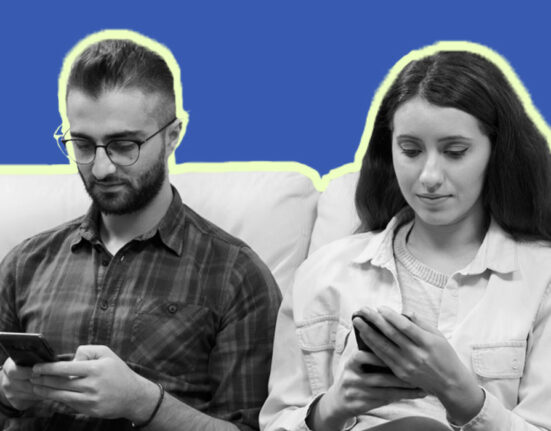
Think of one sitting in a sunlit home office in quietness. They have just revised their LinkedIn profile(Social Media), made sure the headline of their profile indicates that they are a Results-Oriented Project Manager, and their headshot presents an ideal mix of competence and friendliness. They are professional, strict, and maybe a little stiff. Then, they grab their phone, open TikTok(Social Media), and just a few seconds later, they are shooting a hectic “Day in the Life vlog,” with their messy hair, with sarcastic remarks on their caffeinated morning and a viral audio clip.
It takes them less than two minutes to transform into the “Corporate Professional” and the “Relatable Creative”. However, leaving the phone, there is a troubling thought in their minds, and it is Which one of these people am I? Or rather, why is it so tiresome to have both copies of the self?
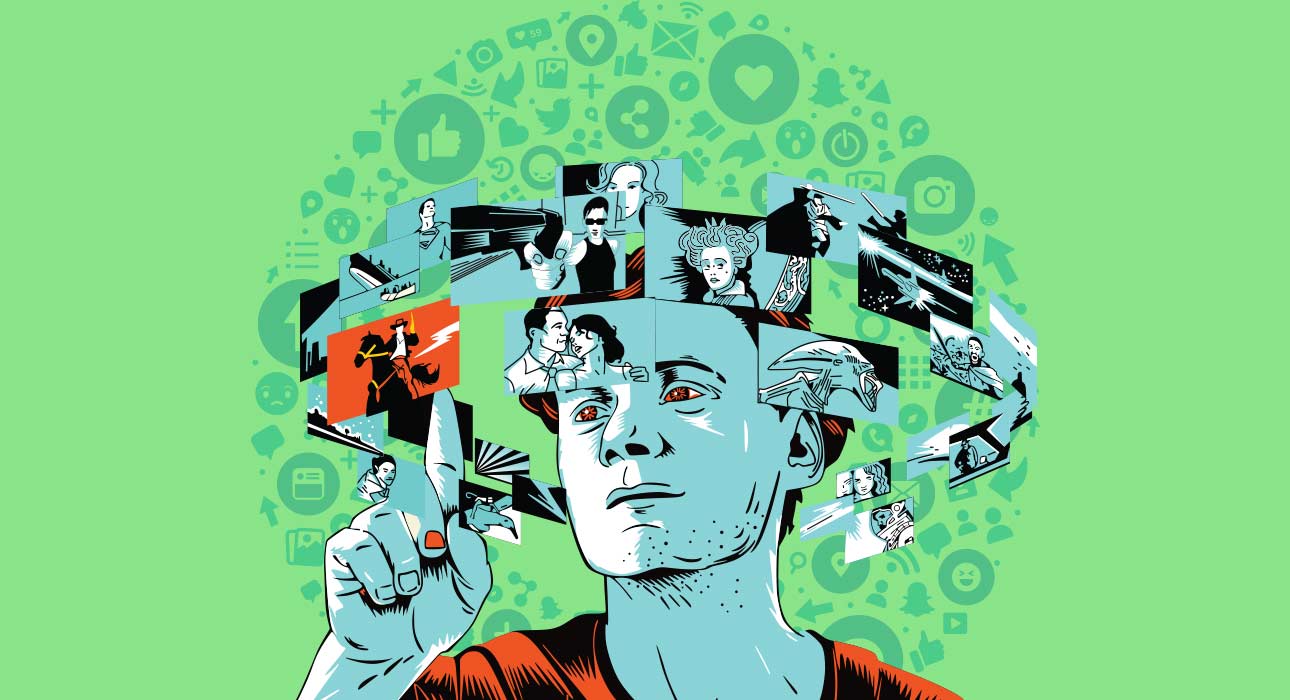
They do not simply post online; they are managing multiple “selves.” Although such flexibility allows them to succeed in various social settings, it has an unknown psychological cost, which is cognitive load. The combination of the classic psychological theory and the contemporary studies on mindfulness and extraversion allows one to start having ideas about the mechanics of the digital masquerade.
Read More: Why LinkedIn Makes Us Feel Like We’re Falling Behind
One Personality, Many Stages
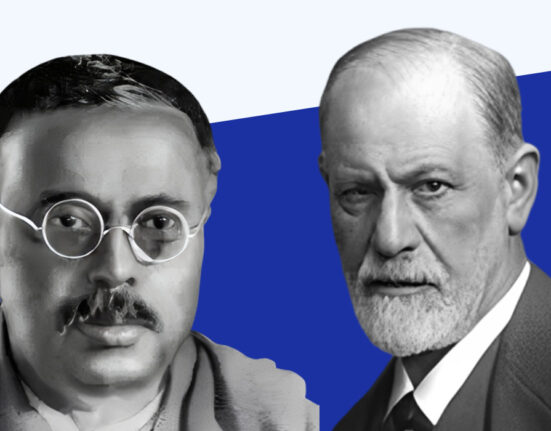
The notion that individuals have more than one version of themselves is not a recent one. More than a century ago, William James (1890) wrote a well-known quote that a person possesses as many social selves as groups who acknowledge them. This was further advanced in the 1990s when psychologists Brent Roberts and Eileen Donahue researched how individuals combine these roles into one personality. Roberts and Donahue (1994) hold that self-conceptions are role-specific. People don’t just have one “self-esteem” or one set of “traits”; they have a “worker self,” a “friend self,” and a “student self.”
Their study discovered that though these versions are highly correlated, i.e. core personality tends to shine through, they are different. On social media, the platforms serve as the social roles of the present day. The digital boardroom is LinkedIn, where the self-concept requires a focus on high conscientiousness and professional success. TikTok, on the other hand, is the online cafe or theatre that favours excessive extraversion, openness, and emotionality. When the norms of these platforms draw self-presentation in different directions, the fragmentation occurs.
Read More: Social Media’s Role in Redefining Personal and Societal Values
The Mental Toll: The Physics of “Acting”
It does not come free and easy to keep these separate personas. This is where the theory of cognitive load comes in. The mental cost is minimal when individuals present themselves in a manner that they find natural, that is, in a manner which psychologists refer to as congruent self-presentation. The brain, however, must overwork when a person attempts to create an impression that is against his or her natural inclination.
A study by Pontari et al. (2000) was interesting, and it was done on cognitive busyness. They found that in situations where individuals attempted to show an incongruent form of themselves (such as when an extrovert attempts to play an introvert), performance becomes poor when the mind is busy with other activities. The brain just becomes exhausted of the resources to maintain the act.
Applied to the digital life of the modern user, if someone is naturally reserved and private, the “performance” required to be a high-energy TikTok creator is a massive drain on their cognitive resources. On the other hand, when onon-onlinene is a high-energy and informal communicator, the formal, strict language of LinkedIn might seem like a prison around their head. This endless rotation between the selves causes digital burnout, when the work of having to manage different masks exhausts individuals in their non-online lives.
Read More: How Chronic Overwork Impairs Memory and Cognitive Performance
Digital Paradox of the Introvert
Interestingly, not all people find the digital masquerade tiring. Surprisingly, a busyness buffer was discovered by Pontari et al. (2000). In the case of introverts (usually high in social anxiety and self-putdowns), high cognitive load in fact enhanced their performance in acting extraverted. Why? The psychological distraction prevented them from being self-critical about their perceived imperfections.
That is why several individuals who are socially awkward in the real world become famous on TikTok. The speed and overall engaging nature of the platform offers them enough of a cognitive distraction to shut their inner critic, and thus, enables them to act a version of themselves that they feel they would never do in a slow-moving, in-person boardroom. However, this doesn’t mean the fragmentation isn’t happening; it simply means the “mask” is easier to wear when the music is loud and the edits are fast.
Mindfulness: The Shield against Division
When LinkedIn makes it a stressor to be a Competent Leader, and TikTok makes it one to be a Whimsical Creator, how can one preserve his or her identity? Recent studies indicate that mindfulness is the final remedial instrument. The paper by You and Liu (2022) investigates the impact of mindfulness on online self-presentation and addiction. They found that individuals with high levels of mindfulness are less likely to engage in “strategic self-presentation.”
Since mindful individuals tend to be more present in the moment and are not so preoccupied with external approval, they do not experience the same pressure to select an ideal, albeit fragmented image, before others. Moreover, you and Liu (2022) show that mindfulness decreases social media pressure. Knowing their internal conditions, individuals are able to understand when the performance of a digital role is being taxing. Mindfulness enables people to perceive their LinkedIn and TikTok personas not as fake versions of themselves, but as specialised tools to perform certain tasks, keeping their core self intact and integrated.
Read More: Mindfulness Meditation has a Positive Effect on Mental Health
The Integrated Self in a Fragmented World
Does identity fragmentation inherently exist? Not necessarily. Roberts and Donahue (1994) discovered that individuals are most content when the role-specific self-conception resembles their overall self-conception. That is, as long as a person can work out how to be a “Professional” on LinkedIn and a “Creative” on TikTok, and make it feel like this in the process, the cognitive load becomes much lower. When a LinkedIn profile becomes a “hustle-culture” caricature and a TikTok becomes a “performance of joy” that the creator doesn’t actually feel, the integration of the self is lost. The person will turn out to be a bunch of distorted mirrors that do not mirror the entire image.
To survive and thrive across these platforms, users are encouraged to adopt a strategy of Authentic Adaptation:
- Reduce the Acting Stakes: The user must cease attempting to display a 180-degree personality that is the opposite of themselves.
- Keep an eye on the Load: It is necessary to realise that switching platforms is an intellectual matter. The presence of the offline transitions will allow us to put cognitive resources back into place.
- Digital Mindfulness: Be intentional, not compulsive, about the platforms you use. It is important to ask yourself: Am I posting this because it is an aspect of who I am, or am I posting to an audience?
Read More: Behind The Scenes: Inside the World of Kid Influencers
Conclusion
Nowadays, people are living in a time where everyone is a multi-hyphenate who plays on various digital stages daily. Their selves are being tugged in a dozen different directions out of the collars of LinkedIn, and the ring-lights of TikTok. Although there is a real cognitive burden associated with this fragmentation, it can be overcome. The key to the bridge happens to be by realising that social roles are different and connected, consciously seeing the mental effort it takes to act, and to remain in the present with all their mindfulness. One does not need to be a single manifestation of herself, but she needs to be the one who holds all that into place.
References +
Hjetland, G. J., Finserås, T. R., Sivertsen, B., Colman, I., Hella, R. T., & Skogen, J. C. (2022). Focus on self-presentation on social media across sociodemographic variables, lifestyles, and personalities: A cross-sectional study. International Journal of Environmental Research and Public Health, 19(17), Article 11133. https://doi.org/10.3390/ijerph191711133
James, W. (1950). The principles of psychology. Dover Publications. (Original work published 1890)
Pontari, B. A., & Schlenker, B. R. (2000). The influence of cognitive load on self-presentation: Can cognitive busyness help as well as harm social performance? Journal of Personality and Social Psychology, 78(6), 1092–1108. https://doi.org/10.1037/0022-3514.78.6.1092
Ribáry, G., Lajtai, L., Demetrovics, Z., & Maraz, A. (2017). Multiplicity: An Explorative Interview Study on Personal Experiences of People with Multiple Selves. Frontiers in Psychology, 8, 938. https://doi.org/10.3389/fpsyg.2017.00938
Roberts, B. W., & Donahue, E. M. (1994). One personality, multiple selves: Integrating personality and social roles. Journal of Personality, 62(2), 199–218. https://doi.org/10.1111/j.1467-6494.1994.tb00291.x
Suszek, H., Kopera, M., & Jakubczyk, A. (2025). The multiple self and psychological openness. Frontiers in Psychology, 15, Article 1441953. https://doi.org/10.3389/fpsyg.2024.1441953
You, C., & Liu, Y. (2022). The effect of mindfulness on online self-presentation, pressure, and addiction on social media. Frontiers in Psychology, 13, Article 1034495. https://doi.org/10.3389/fpsyg.2022.1034495