Disclaimer: No confirmed clinical diagnosis exists for Van Gogh. The theories discussed in this article are drawn from historical records and scholarly analysis, not a definitive medical conclusion.
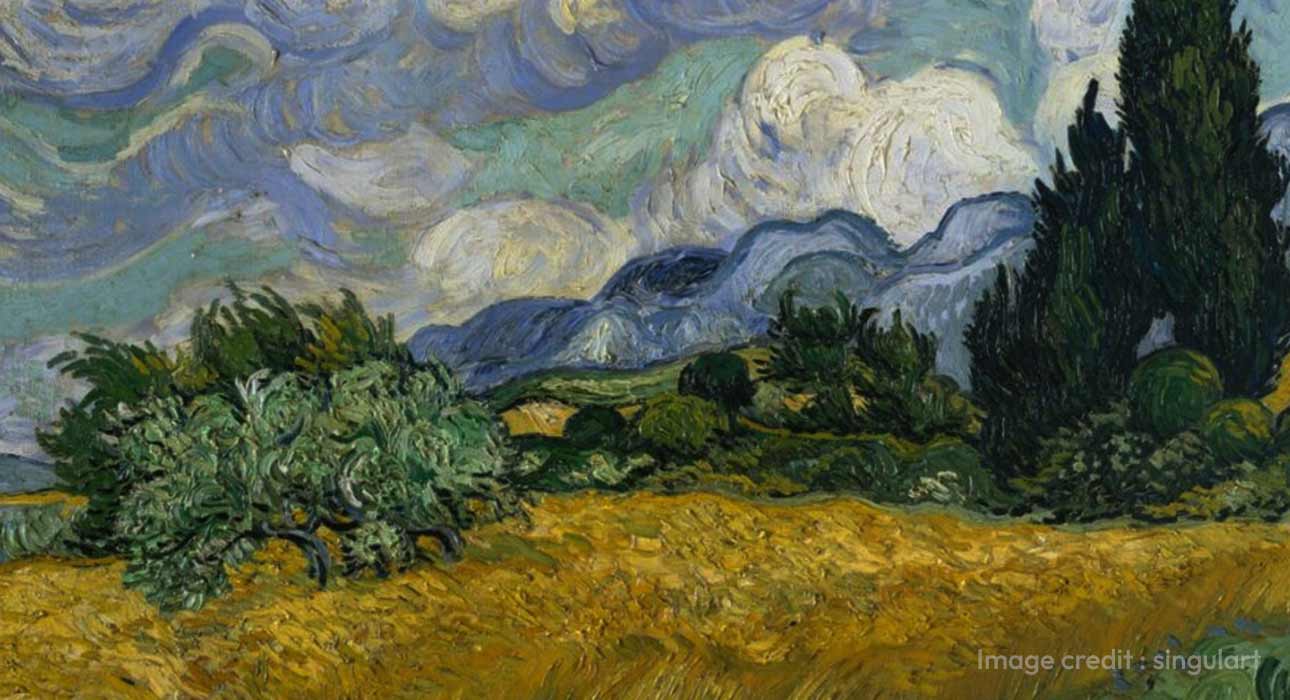
We all know Vincent van Gogh as a world-renowned painter, but do we know that he was once famous as a ‘Tortured Genius’?. The Starry Night by Vincent van Gogh was painted when Vincent van Gogh was in a tough spot in his life. He was in an asylum in Saint-Rémy. A lot of people think that Vincent van Gogh being unhappy is what made him such a great artist. Is that really true?.
Is it just easier to think that way? Vincent van Gogh had some problems like psychosis and depression, and he would get really unstable. When he was not going through a tough time, Vincent van Gogh was actually very disciplined and aware of himself. He could produce a lot of work. In this article, we will look at what helped Vincent van Gogh make his amazing art. We will separate what is true from what’s not and think about what we can learn from Vincent van Gogh’s life about being healthy and making art.
What History Tells Us About His Mental Health
Making a diagnosis of someone who has died more than 130 years ago is not an easy task, and psychiatrists will be the first to tell you that. There have been close to 30 theories suggested on what might have been bothering van Gogh, from lead poisoning and Ménière’s disease all the way through a multitude of psychiatric illnesses (Blumer, 2002). However, one thing is obvious – van Gogh was always eccentric and had unstable moods. In his last two years, he had psychotic experiences, and he died by suicide at the age of 37 (Blumer, 2002).
Nevertheless, most of the researchers lean towards the diagnosis of bipolar disorder, but do not say anything for sure. The Dutch psychiatrist Willem Nolen, studying the letters and the doctors’ notes about Vincent van Gogh, found numerous proofs about bipolar disorder; yet, there is no special explanation for his problems, and it seems like he suffered from several diseases at once (as cited in Newswise, 2026). There were more than 2,000 letters written by Van Gogh, mostly addressed to his brother Theo, describing the cycle of mood swings, going from extreme energy and creativity up to anxiety and depression (Guggenheim Museums and Foundation, n.d.).
A particular aspect of the popular story which is often overlooked is that he did not paint very much during his worst spells. During his big crises, very little was produced on his part, except for one particular instance while he was staying in the asylum during his last days (Blumer, 2002). This is an important aspect to note, since it disproves the myth about his work being influenced by his sickness.
Some scholars have even taken it a step further by analysing his paintings for evidence of what he experienced. In a 2024 study, it was proposed that the strange figures incorporated into his paintings of gardens and landscapes may be due to hallucinations that he mentions in his letters, in which he refers to psychotic experiences as “deliriums.” Even then, however, the scholars were careful to say it may have influenced his work but not be the cause.
The “Tortured Genius” Myth
The idea that suffering and genius are connected is really old. It did not start with van Gogh. This idea of the ” genius” became popular in the 19th century just before van Gogh started painting. People have believed that madness and creativity are related for a long time (Bilis, 2025). Laura Prins is an art historian. She has studied van Gogh’s self-image a lot. Laura Prins thinks that the term “tortured genius” is not a way to describe van Gogh. She thinks this because the term is too vague.
Van Gogh himself thought about this idea when he was alive. He was aware of the connection between suffering and genius. Van Gogh looked at the lives of artists to see if he could understand his own life. He had thoughts about how madness and creativity’re related, and these thoughts changed over time. They were not always the same. Van Gogh was not an object of mythology. He was struggling to solve the same mystery that scientists do today.
Kay Redfield Jamison, a clinical psychologist and an expert in studying mood disorders, has written about this trend through many years of experience in the past, even as it pertains to Van Gogh. The biographical studies conducted by Kay Redfield Jamison have found that there have been more than a few renowned artists and writers whose creations might have been influenced by their mania, including figures such as Byron, Woolf, and van Gogh (Jamison, 1993). However, it is important to note that Kay Redfield Jamison clearly distinguished this link from being an explanation. The subsequent researchers, based on the works of Jamison, have suggested that creativity is more linked to mild symptoms of mood disorder or its family history.
And this is where the connection is usually misunderstood in popular accounts: The link is not “mental disorder leads to great art,” but something more complex, an interplay whereby certain personalities can be associated with a combination of creativity and vulnerability to mental disorder.
Emotion, Discipline, and the Mechanism
What else was motivating him if illness was not the source of his inspiration? One part of the answer could be that his paintings were motivated by intense emotions. In Van Gogh’s case, these emotions were channelled into great discipline, because he viewed painting as a skill. He talked about techniques, colours, and composition of painting like a student of a certain craft would.
From his letters, one can see that he was someone who employed art as a means of working through his emotions in real-time as well, in effect acting as a primitive method of emotional regulation. This ties in with the modern understanding of the general relationship between creativity and wellness since artistic expression does not only reflect distress, but can be seen as a means of coping with it. Studies have been done on the general relationship between creativity and wellness, and it has shown that particular thought processes associated with mental illness could actually promote creativity, whereas artistic expression can serve as therapy for distress (Kampala International University, n.d.).
We should clarify one point right away: romanticising this relationship is extremely harmful; it is not even true. In her writings, Jamison has debunked the romanticised perception of the sufferings a person goes through as a prerequisite for the development of one’s talent, saying that “bipolar is an illness that ‘destroys everything, your life, your relationships, everything'” and in no way is the notion of the tortured artist romanticised (as cited in Guggenheim Museums and Foundation, n.d.). Van Gogh himself is the perfect example of this. He did not paint in a state of being ill. He painted only when he was well enough to do that.
Conclusion
The biography of Van Gogh is not a biography of a “mad genius.” The story was about an extremely diligent painter who happened to live with serious mental illness, not about a troubled mind that happened to produce great art because of it. In any case, one thing is clear: the periods when Van Gogh was at his worst were also the periods when he produced the smallest amount of work.
What made Van Gogh different from other painters was not his mental illness itself. But his responsiveness to emotions, along with technical abilities. However, it is sad to say that such an idea of a tortured genius can be very harmful to aspiring artists, as they may assume that mental illness is an inseparable part of their work process and even useful for it. From a practical point of view, one must note that the most important thing for an artist to produce a great painting is support and stability.
References +
- Bilis, M. (2025). Van Gogh at the intersection of creativity and mental illness. Museum of Fine Arts Boston. https://www.mfa.org/article/2025/van-gogh-at-the-intersection-of-creativity-and-mental-illness
- Blumer, D. (2002). The illness of Vincent van Gogh. American Journal of Psychiatry, 159(4), 519–526. https://doi.org/10.1176/appi.ajp.159.4.519
- Flaherty, A. W. (2024). The psychiatric profile of Vincent van Gogh: An analysis. Cogent Arts & Humanities. https://www.tandfonline.com/doi/full/10.1080/13554794.2024.2424190
- Guggenheim Museums and Foundation. (n.d.). What Vincent van Gogh’s art can teach us about mental health. https://www.guggenheim.org/articles/checklist/what-vincent-van-goghs-art-can-teach-us-about-mental-health
- Jamison, K. R. (1993). Touched with fire: Manic-depressive illness and the artistic temperament. Free Press.
- Johnson, S. L., Murray, G., Fredrickson, B., Youngstrom, E. A., Hinshaw, S., Bass, J. M., Deckersbach, T., Schooler, J., & Salloum, I. (2012). Creativity and bipolar disorder: Touched by fire or burning with questions? Clinical Psychology Review, 32(1), 1–12. https://doi.org/10.1016/j.cpr.2011.10.001
- Kampala International University. (n.d.). The relationship between creativity and mental illness: An artistic perspective. https://kiu.ac.ug/assets/publications/3161_the-relationship-between-creativity-and-mental-illness-an-artistic-perspective.pdf
- Newswise. (2026). Vincent Van Gogh’s revolutionary artwork was more than a product of mad genius, according to a mental health expert. https://www.newswise.com/articles/vincent-van-gogh-s-revolutionary-artwork-was-more-than-a-product-of-mad-genius-according-to-a-mental-health-expert
- World Health Organisation. (2022). Mental disorders fact sheet. https://www.who.int/news-room/fact-sheets/detail/mental-disorders