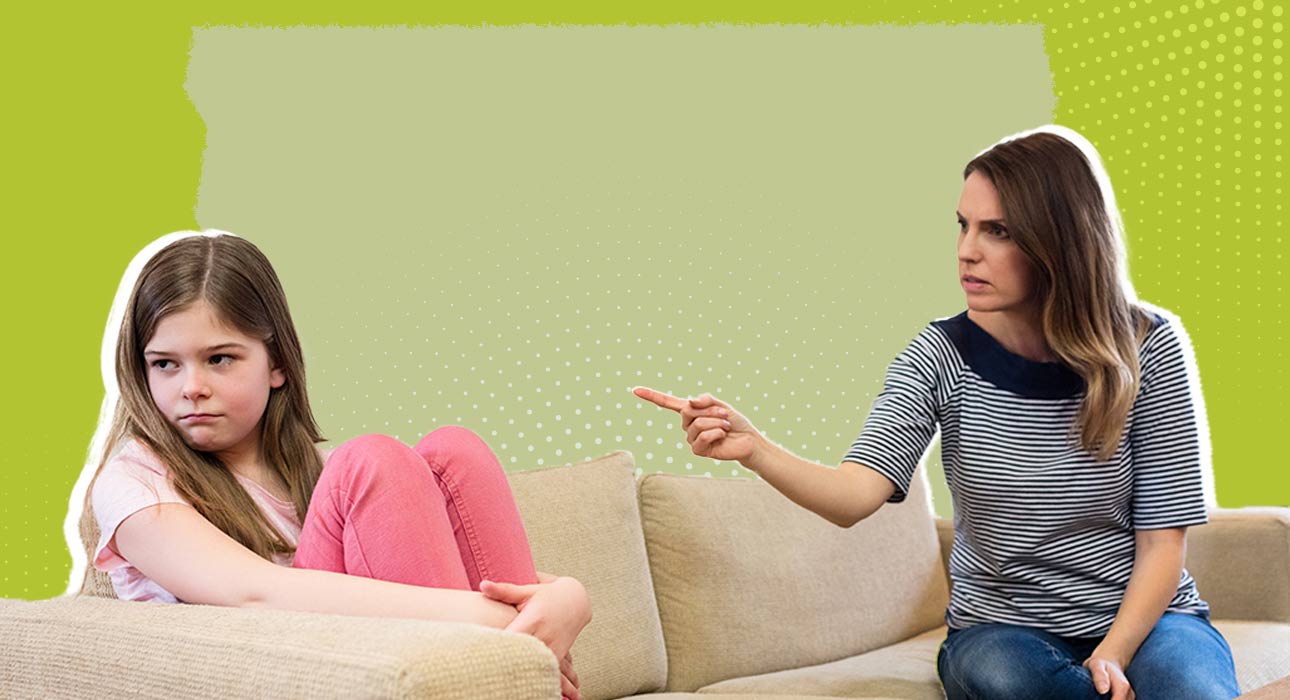
Here is a scene you might remember. You are eleven years old. You hear the front door open. Your stomach feels sick. Not because you have done anything bad, but because you haven’t done enough. Your parent only has one thing to ask you, “Where’s your test paper?”Not “How was your day?” Not “Are you okay?” Just the score. Always the score. Consider Riya, twenty-four years old, who experiences nausea before every meeting with her supervisor. As a child, her parents required a minimum of 95% on every exam. One time, she scored 94% on a math test. Her strict Parents did not yell or punish her. They simply stopped talking to her for two days. That experience has carried into adulthood.
This pattern is not rare. Adults who grew up with consistently strict parents, not merely disciplined parents, carry emotional patterns that can last decades (American Psychological Association, 2023). Rules are not inherently harmful. Children need boundaries. However, research distinguishes authoritative parenting (warmth with firmness) from authoritarian parenting (low warmth, high control). The former builds resilience; the latter builds anxiety.
When a small mistake occurs, spilling coffee or forgetting a deadline, what is the first internal response? If it is “You are so reckless” or “How could you be this lazy?” then a strict parent has been internalised. Developmentally, children who receive praise only for outcomes (grades, awards, compliance) stop asking whether they enjoy an activity and instead ask whether they will gain approval (Santrock, 2021). That shift rewires motivation.
Research from Chopra and Khanna (2019) found that young adults with highly strict, low-warmth parents have significantly higher rates of generalised anxiety disorder. Symptoms include:
- Over-preparation for simple tasks
- Physical illness before evaluations
- Inability to delegate tasks
One participant in a 2018 study stated: “I learned that love was a grade. And I was always one point away from failing” (Rana et al., 2018).
Guilt as the Engine: It Never Turns Off
Adults from strict backgrounds often cannot relax, not that they do not enjoy relaxation, but that they feel guilty sleeping in on weekends, watching television for an hour, or taking a lunch break. The mechanism is contingent self-worth (Rossen & Cowan, 2012). Value depends on what one produces. Rest is implicitly forbidden because rest produces nothing.
Over time, the parent’s voice becomes an internal supervisor that functions continuously. Limber (2011) describes this as “the collapse of intrinsic motivation” The individual stops asking what they want and only asks what they should do.
People-Pleasing Is Not Kindness: It Is Fear
Growing up with inflexible rules impairs social skills, not because the individual is rude, but because they never learned how to say no. Children raised in authoritarian homes are often not permitted to:
- Disagree with parents
- Express anger or frustration openly
- Negotiate rules or consequences
Two types arise in adult life. Firstly, avoidance of conflict, by agreeing to additional work shifts, difficult social engagements, and emotionally exhausting relationships, to avoid causing any anger among people around you. Secondly, unexpected emotional outbursts, since the individual was not taught to express their disagreements at an early stage; hence, they become frustrated after weeks or months and let it all out over a trivial matter (Srisiva et al., 2013).
Depression and the Conditional Love Trap
In a study conducted over a period ranging from 10 to 25 years, individuals who grew up in families characterised by high levels of strictness and low warmth had double the likelihood of experiencing depression as adults (Kamath, 2015). The explanation behind this effect is quite simple. If love and approval are always dependent on success, then the individual will never develop an inner sense of worth. Every failure is taken as proof of not being loved. Over time, the child stops trying new things.
Sigman (2017) explains this as “learned helplessness meets perfectionism.”Strictness alone is not the problem. The problem is strictness without warmth (American Psychological Association, 2023). Parents who are firm but affectionate, who explain rules, apologise when wrong, and provide physical affection after failures raise different children. Their adolescents still develop a work ethic, but they do not experience panic attacks before performance reviews.
Read More: Am I Enough?” Understanding How Conditional Love Shapes a Child’s Inner World
Pathways to Healing
If these patterns are recognised, healing is possible. Psychologists recommend the following strategies (Rossen & Cowan, 2012):
- Re-parent the inner voice. In case you have the thought “You are so lazy,” substitute that with “I have done enough for today.”
- Learn to argue. Begin with someone close to you and disagree about something trivial, like a film or a restaurant.
- Plan some relaxation time without anything planned. Use your phone’s timer to set 15 minutes during which you will not be doing anything, neither reading nor communicating.
- Cognitive behavioural therapy could help deal with conditional self-respect.
One Last Thing and This Matters
Most strict parents are not villains. Many are repeating patterns from their own childhoods, often in contexts of financial instability, migration trauma, or cultural pressure (Santrock, 2021). They were not trying to cause harm; they were trying to protect their children in the only way they knew. Understanding the emotional effects of strict parenting is not about blame. It is about breaking a cycle. One can appreciate what parents provided (work ethic, resilience, responsibility) while also healing what was accidentally harmed (the ability to rest without guilt). Individuals who grew up with strict parents often become extremely capable. That is a genuine strength. The additional goal is to cultivate the ability to fail without shame, to rest without permission, and to know that one’s worth was never a grade.
References +
- American Psychological Association. (2023). Parenting styles and child development. APA Publishing.
- Chopra, N., & Khanna, I. (2019). Play as a mechanism of promoting emergent literacy among young children: The Indian context. IntechOpen. https://doi.org/10.5772/intechopen.82363
- Kamath, S. (2015). Childhood disability our responsibility. Indian Pediatrics. https://www.indianpediatrics.net/jan2015/jan-13-14.htm
- Limber, S. P. (2011). The Olweus Bullying Prevention Program. American Psychologist, 66(2), 114–126.
- Maccoby, E. E., & Martin, J. A. (1983). Socialisation in the context of the family: Parent-child interaction. In P. H. Mussen (Ed.), Handbook of child psychology (4th ed., Vol. 4, pp. 1–101). Wiley. (Cited in Santrock, 2021)
- Rana, M., Gupta, M., Malhi, P., Grover, S., & Kaur, M. (2018). Effectiveness of a multicomponent school-based intervention to reduce bullying among adolescents in Chandigarh, North India. Journal of Public Health Research, 7(1). https://doi.org/10.4081/jphr.2018.1304
- Rossen, E., & Cowan, K. C. (2012). A framework for schoolwide bullying prevention and safety. National Association of School Psychologists.
- Santrock, J. W. (2021). Life-span development (18th ed.). McGraw-Hill.
- Sigman, A. (2017). Screen dependency disorders: A new challenge for child neurology. Journal of the International Child Neurology Association. https://doi.org/10.17724/jicna.2017.119
- Srisiva, R., Thirumoorthi, R., & Sujatha, P. (2013). Prevalence and prevention of school bullying – A case study of Coimbatore City, Tamil Nadu, India. International Journal of Humanities and Social Science Invention, 2(5), 36–45.