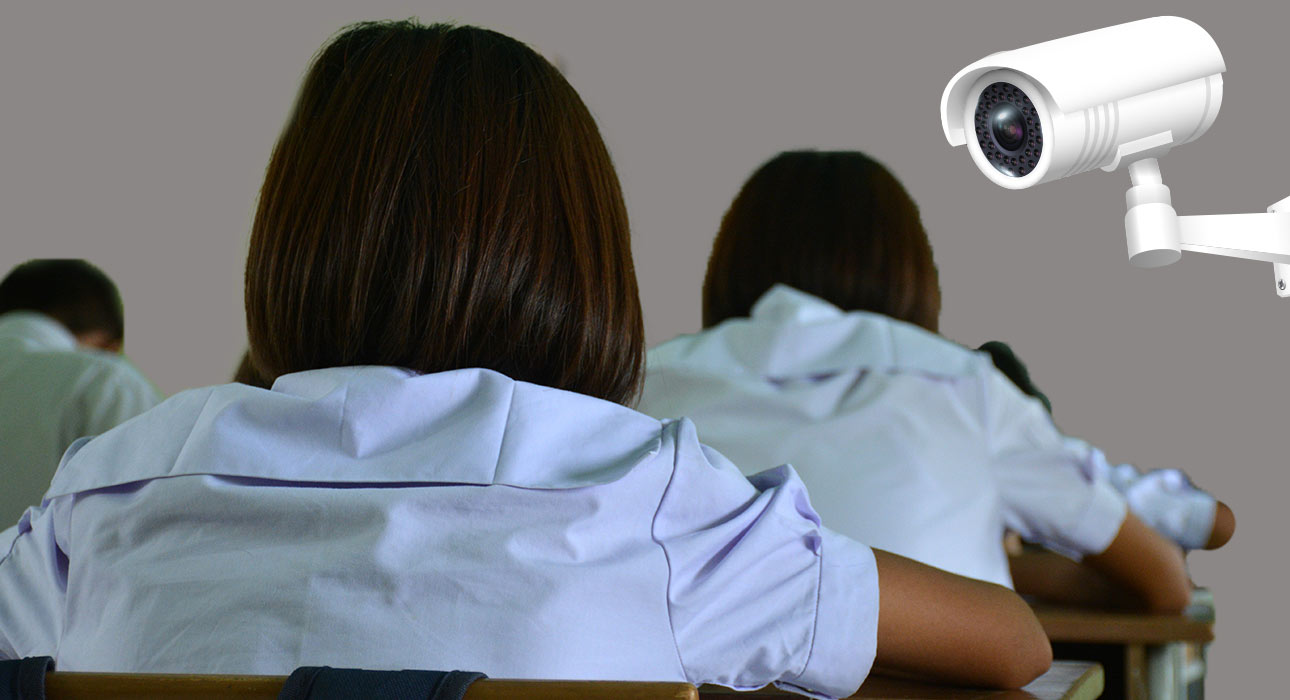
Schools should be places where children feel free to think, make mistakes, and grow. But today, more and more classrooms are being watched and recorded through security cameras, lesson recordings, and educational technology that tracks what children do online. It is claimed by supporters that recording keeps children safe and assists learning. Nevertheless, a closer look at the evidence will paint a much different picture. Capturing children in schools infringes their privacy rights, disrupts proper development, and complicates real learning. Please stop the regular recording and allow children the freedom to learn.
The Promise of Safety Is Not What It Seems
The most common reason given for recording in schools is safety. However, Steinberg (2024) states that the idea of saving children with the help of digital surveillance is quite deceptive. The legislation that is expected to ensure the safety of children’s data is insufficient for the contemporary world. By recording lessons, a permanent digital file is produced that can be stolen in a data breach, sold to third-party companies, or used by computer programmes to make unfair judgments about a student’s ability (Steinberg, 2024).
The United Nations Convention on the Rights of the Child (UNCRC) is categorical on this issue. According to Article 16, the privacy of any child is not supposed to be violated illegally or arbitrarily (United Nations, 1989). Whalen (2022) points out that privacy is not just something adults need, but it is something children need to develop into independent human beings. Schools sometimes use the idea of acting in the “best interests of the child” to justify recording.
Nonetheless, the principle cannot be used to deny a child his or her right to privacy as international child rights guidance indicates (Whalen, 2022). As soon as children are being video-taped all the time, the classroom is no longer a place to be explored but a platform where each moment is monitored and archived.
Read More: The Psychological Effects of Living in a Surveillance Society
Being Watched Stops Children From Learning Freely
Learning involves the liberty to make mistakes, to experiment with rough thoughts, and to switch thoughts. None of that can be easy when the camera is rolling. Steinberg (2024) points out that the obsession with keeping children safe online often ends up taking away the very independence they need to grow. This relates to a key concept in Article 5 of the UNCRC – as children mature, they become increasingly in need of privacy as they develop the ability to think independently (United Nations, 1989).
Many children become self-conscious when they are aware that they are being recorded. They would not answer the tough questions sincerely; instead, they are preoccupied with the need to say what the camera wants to hear. They avoid intellectual risks and play it safe instead. Whalen (2022) refers to it as a chilling effect- when children are constantly reminded that they are under observation, they tend to restrain. This kind of environment is the opposite of what good education requires. On top of this, when recordings are used by educational technology companies to collect and analyse student data, the child’s identity and behaviour become a commercial product, before they have even had the chance to fully understand who they are (Steinberg, 2024).
Digital Recording Is Affecting How Children Think
Recording in schools is increasingly connected to the use of artificial intelligence and digital monitoring tools. When learning environments are constantly mediated by recording and AI-driven analysis, students may lose the ability to think deeply without assistance. Selwyn (2019) argues that the rapid integration of digital technology into education has fundamentally altered the nature of learning, shifting the focus away from genuine understanding and toward measurable, data-driven outputs that serve institutional interests more than student development.
There is also growing concern about manipulative features built into educational software, sometimes called “dark patterns”, which are designed to collect more data from users than they realise or intended to share. If classroom recordings are fed into these kinds of systems, schools are effectively allowing student data to be collected and used in ways that parents and children are never told about. According to Southgate et al. (2019), schools frequently lack the technical knowledge and policy infrastructure needed to critically evaluate the EdTech tools they adopt, meaning that student data often flows to third-party companies without meaningful oversight or transparency.
Read More: The Psychology of Self-Perception Under Surveillance
Recording Puts Children’s Reputations at Risk
The UNCRC also guarantees children against unjustified attacks on their reputation (United Nations, 1989). When videos can be sent across the world in real time and go viral, one in-class interaction, an incorrect answer, an emotional response, a misinterpreted comment, can be pulled out of context and used to humiliate or harass a child. Whalen (2022) cautions that online records can track an individual over decades and define how someone should be viewed even after the event has occurred.
Children themselves have spoken about this fear. Youths in different nations have indicated that they would like to have the opportunity to talk and express themselves without feeling that their message is going to be outed (Whalen, 2022). By recording classrooms, schools are creating a new kind of vulnerability. A child’s reputation is now only as safe as the data security system protecting the recording, and those systems are breached regularly.
Schools Must Choose People Over Surveillance
The answer is not simply better data protection laws, which Steinberg (2024) argues are rarely sufficient on their own. What is needed is a genuine change in the way schools operate. Routine recording must stop. Schools need to recognise that the classroom is a special kind of place, one where privacy is not optional but essential to the whole purpose of education.
This means removing cameras and recording devices from spaces where children interact every day. It means choosing educational software that protects privacy from the start. Rather than tools that collect audio, video, or personal data. It means giving older students, in particular, the right to discuss sensitive topics. Without fear of someone permanently storing those conversations somewhere. And it also means returning to what the UNCRC Preamble describes as an atmosphere of warmth, understanding, and human connection. Something that becomes very difficult to maintain when every interaction is logged as a data point (United Nations, 1989).
Conclusion
Recording children in schools places administrative convenience over the rights and needs of the students themselves. It disregards the psychology of healthy development. What the international law wants. And what is emerging as the body of research about the cognitive costs of continuous digital surveillance? To grow into true, full-fledged independent and critical thinkers, children must be allowed to be themselves. To make mistakes in private. And to study without being a show. Educators should safeguard the classroom as a space in which the experience of learning matters more than its online documentation. It is time to turn off the cameras and let children learn in peace.
References +
- Selwyn, N. (2019). What’s the problem with learning analytics? Journal of Learning Analytics, 6(3), 11–19. https://doi.org/10.18608/jla.2019.63.3
- Southgate, E., Groth, M., & colleagues. (2025). Towards a governance roadmap for educational technology in Australian schools. The Australian Educational Researcher. https://doi.org/10.1007/s13384-025-00916-3
- Steinberg, S. B. (2024). The myth of children’s online privacy protection. SMU Law Review, 77(2), 441–480. https://doi.org/10.25172/smulr.77.2.8
- United Nations General Assembly. (1989). Convention on the Rights of the Child. United Nations Treaty Series, 1577, 3. https://www.ohchr.org/en/instruments-mechanisms/instruments/convention-rights-child
- Whalen, C. (2022). Article 16: The right to protection of privacy. In Z. Vaghri, J. Zermatten, G. Lansdown, & R. Ruggiero (Eds.), Monitoring state compliance with the UN Convention on the Rights of the Child (pp. 93–102). Springer. https://doi.org/10.1007/978-3-030-84647-3_11