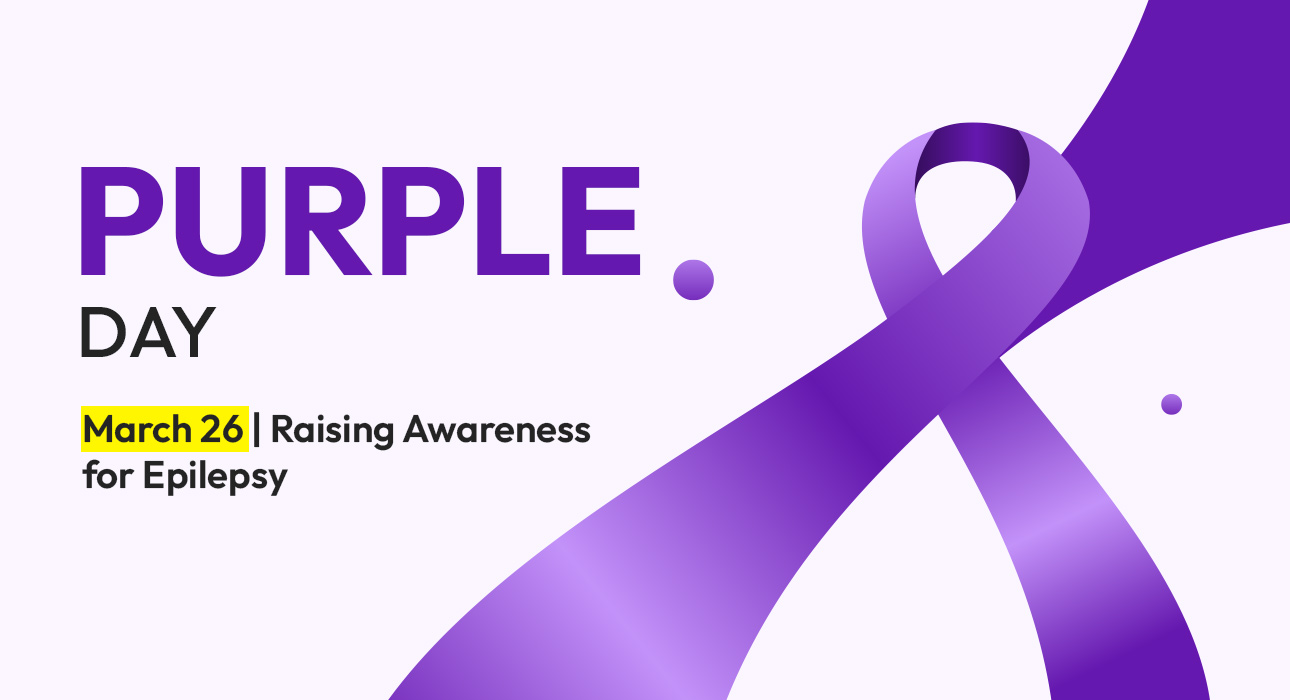
Purple Day is on March 26, and to most individuals, the meaning of this day is not known. There are approximately 65 million epilepsy patients throughout the globe, with 1 out of 26 Americans being diagnosed with the disease at one time or another (Epilepsy Foundation, 2024). That is not a small number. And still, epilepsy is among the most misconceived neurological disorders that exist. Individuals mistake it for seizures. They panic when they see one. They avoid the topic altogether. This article cuts through that clutter, looking into what epilepsy truly is, what it does to an individual beyond the body, and what the studies have identified as working.
Seizures and Epilepsy Are Not the Same: Here Is Why It Matters
It is likely the most widespread confusion, and it brings actual issues.
A seizure is a one-time event. The electrical activity in the brain malfunctions, suddenly and temporarily, and this influences the movement, the feeling, or the behaviour of a person. That is it. One seizure. It may occur due to high fever of a child, low blood sugar, alcohol withdrawal or even without any clear justification. When a person has a seizure, it does not imply that they have epilepsy (Moshé et al., 2015).
Epilepsy is different. It is chronic- that is, a long-term neurological disorder in which seizures are recurrent. At the clinical level, physicians can diagnose epilepsy when a patient has experienced two or more unprovoked seizures separated by 24 hours or one seizure in case of the high risk of experiencing another one (Moshé et al., 2015).
Something most people do not know: not all seizures look dramatic. The classic image, someone falling, shaking violently, is just one type. There are also some insignificant seizures. One may just stand and stare, blink, or experience deja vu. These are still seizures. They are just quieter ones. And because they do not look like what people expect, they often go unrecognised, sometimes for years.
Getting this distinction wrong is not just a matter of medical accuracy. When people do not understand what epilepsy is, they fear it. When they fear it, they stigmatise it. And when they stigmatise it, people with epilepsy hide it, which means they delay getting help (Yeni et al., 2018).
What Epilepsy Actually Does to a Person
Its seizures are only the tip of the iceberg.
The statistics are simple to follow: approximately 23 per cent of individuals with epilepsy develop depression, with 20 per cent of them living with clinical anxiety (Qin et al., 2022). Those are quite large numbers in comparison with the general population. And the explanation is simple when it comes to the nature of the condition itself. Epilepsy is unpredictable. An individual is not always in a position to know when a seizure is impending. That unpredictability creates a kind of background anxiety that never fully goes away, a constant low hum of worry about when the next episode might occur and where (Yeni et al., 2018).
For younger people, this gets more complicated. Adolescence itself is a time when identity is weak, and it is devastating to be perceived as different. Adding an epilepsy diagnosis to it can seem like it is swallowing everything. Research has found that how a young person processes their diagnosis early on significantly shapes their emotional well-being years down the line (Yeni et al., 2018). The early emotional response is not a minor detail; it is actually predictive of long-term outcomes.
Then there is stigma. Nearly half, 49% of people with epilepsy in one study reported experiencing stigma directly (Yeni et al., 2018). Lower emotional well-being, reduced social functioning, and poorer quality of life were all significantly more common in those who had faced stigmatising treatment. The condition itself is hard enough. The social response to it should not make things worse. But often it does.
What Actually Helps
There are real, evidence-backed options, not just generic advice.
Cognitive Behavioural Therapy, or CBT, is a form of talking therapy that focuses on unhelpful thought patterns. An epileptic may also believe that they are not able to go anywhere without an escort, as they may have a seizure and be embarrassed. That thought feels true and real. CBT does not dismiss it; it helps the person examine whether it is actually as inevitable as it feels, and gradually build up more balanced ways of thinking. A meta-analysis of 1,222 patients found CBT to be effective in reducing both depression and anxiety and in improving overall quality of life in people with epilepsy (Li et al., 2023). Those are not small outcomes.
Mindfulness acts differently. Instead of questioning thoughts, mindfulness helps individuals to observe them without being carried away by them. This could be like an epileptic sitting and trying to fear the next seizure instead of trying to either overpower it or letting it take full control. Studies show mindfulness-based approaches reduce stress and depression in people with epilepsy, and that acknowledging difficult feelings, rather than fighting them, is associated with better psychological wellbeing (Wood et al., 2017).
Beyond therapy, smaller things matter too. Regular sleep.Consistent routines. Peer support groups that allow individuals to get things off their chest with people who truly understand. These are not glamorous interventions. Yet they are always present in research as valuable contributors to improved results.
Read More: Mindfulness Meditation has a Positive Effect on Mental Health
The Reason to Have Purple Day and Why It Mattered
In 2008, a nine-year-old girl called Cassidy Megan decided that she no longer wished to be alone with her epilepsy. So she created Purple Day. It is known today in more than 85 countries (Epilepsy Foundation, 2024).
That creation myth is relevant since it is truthful. Epilepsy can be isolating. The misconception, the stigma, the uncertainty, all that adds up. Such activities as Purple Day are present, due to the awareness that knowledge is really protective. Studies support the notion that stigma is reduced and quality of life is increased when communities have a more positive idea of epilepsy, including what it is, what it is not, and how it impacts others other than the physical (Yeni et al., 2018).
A little thing is wearing purple on March 26. But little things done by too many people add to something bigger. It is a collective statement that epilepsy will not be misunderstood in silence.
Read More: 10 Tips to Deal with Childhood Epilepsy
Conclusion
It should be noted that a seizure and epilepsy are not interchangeable, and that the distinction is more important than most individuals can appreciate. Epilepsy is a chronic condition of the brain that influences the body significantly, but even more affects the person, their identity, and the relationships with other people (Moshé et al., 2015; Qin et al., 2022).
Unfortunately, most individuals continue to experience unjust treatment (stigma) due to popular myths and scarcity of information (Yeni et al., 2018). However, there is also the good news: we are aware of what works. The approaches, such as talking therapy (CBT) and mindfulness, have been shown to have a tangible impact on the way individuals feel (Li et al., 2023; Wood et al., 2017).
The greatest impact that we can make during Purple Day is to know what epilepsy really is and to make other people know. The population of people living with this condition across the globe is 65 million. They have the right to face facts, rather than to be afraid of something, and to be able to comprehend, not to be confused (Epilepsy Foundation, 2024).
References +
Epilepsy Foundation. (2024). Purple Day: Raise epilepsy awareness. https://www.epilepsy.com/stories/purple-day-raise-epilepsy-awareness
Li, D., Song, Y., Zhang, S., Qiu, J., Zhang, R., Wu, J., Wu, Z., Wei, J., Xiang, X., Zhang, Y., Yu, L., Wang, H., Niu, P., Fan, C., & Li, X. (2023). Cognitive behaviour therapy for depression in people with epilepsy: A systematic review and meta-analysis. Epilepsy & Behaviour, 138, Article 109056. https://doi.org/10.1016/j.yebeh.2022.109056
Moshé, S. L., Perucca, E., Ryvlin, P., & Tomson, T. (2015). Epilepsy: New advances. The Lancet, 385(9971), 884–898. https://doi.org/10.1016/S0140-6736(14)60456-6
Qin, X., Chen, X., Wu, W., Pei, J., & Xu, J. (2022). Exploring the association between epilepsy and depression: A systematic review and meta-analysis. PLOS ONE, 17(12), Article e0278907. https://doi.org/10.1371/journal.pone.0278907
Wood, K., Lawrence, M., Jani, B., Simpson, R., & Mercer, S. W. (2017). Mindfulness-based interventions in epilepsy: A systematic review. BMC Neurology, 17, Article 52. https://doi.org/10.1186/s12883-017-0832-3
Yeni, K., Tulek, Z., Simsek, O. F., & Bebek, N. (2018). Relationships between knowledge, attitudes, stigma, anxiety, depression, and quality of life in epilepsy: A structural equation modelling study. Epilepsy & Behaviour, 85, 212–217. https://doi.org/10.1016/j.yebeh.2018.06.019